A practical framework for B2B buyers reading a leather shoe factory quotation, covering leather grade and yield, last and tooling costs, construction method, order volume and MOQ, and what a quotation should state in writing.
Why Two Quotes for the Same Shoe Never Match
Send the same design brief to three leather shoe factories and you will get three different unit prices. That gap is not random. It reflects real differences in leather grade, tooling, construction method and order volume, and a buyer who can read those differences negotiates from a position of knowledge instead of guessing which number is honest.
This guide breaks down what actually sits inside a leather footwear quotation, so you can compare offers on equal terms and ask the right questions before you commit to a program.
The Five Cost Drivers in a Leather Shoe Quotation
Almost every line in a factory quotation traces back to one of five inputs. Ask a supplier to break the price down against these, and the conversation becomes concrete.
| Cost driver | What changes the price | What to ask |
|---|---|---|
| Leather grade and yield | Full-grain versus corrected grain, hide size, cutting yield, colour consistency | Which grade is quoted, and what is the expected cutting yield per hide? |
| Last and tooling | Whether a last already exists or must be developed for your model | Is the last existing or new, and who owns it after the order? |
| Construction method | Cemented, stitched or welted construction, number of operations | Which construction is quoted, and how many hand operations does it involve? |
| Components and hardware | Lining, sole type, zips, buckles, footbed | Which components are included, and which are upgrades? |
| Order volume | How fixed costs spread across pairs, material buying tiers | What is the MOQ, and how does the unit price move at higher volumes? |
Leather Grade: The Largest Single Variable
Leather is usually the biggest material cost in a genuine leather shoe, and the grade you specify drives both the price and the factory's cutting yield. Full-grain leather keeps the natural surface and ages with character, which suits premium dress and boot lines. Corrected grain and split leathers cost less but behave differently in finishing and wear.
Two factories can quote the same "leather upper" and mean very different things. Ask for the grade in writing, and ask how many pairs the factory expects to cut from a hide. A lower yield quietly raises the effective material cost even when the headline price looks competitive.
Lasts and Tooling: The Fixed Cost You Only Pay Once
A last is the foot-shaped form the shoe is built around. If the factory already runs a last close to your target shape, you avoid a development cost. If your design needs a new last, that tooling is a one-time charge that must be amortised across the order.
This is why small trial orders often carry a higher unit price than the same shoe at volume: the fixed tooling cost is spread across fewer pairs. It also explains why the ownership of patterns and lasts belongs in your contract, not in an email thread. Confirm who owns the tooling developed for your program and whether the design can be sold to other buyers.
Construction Method Sets the Labour Content
Construction decides how much skilled hand work sits inside each pair. A cemented casual shoe involves fewer operations than a stitched dress shoe, and a welted construction adds further steps for durability and resoleability. Each additional operation adds labour time, and labour time is a direct cost line.
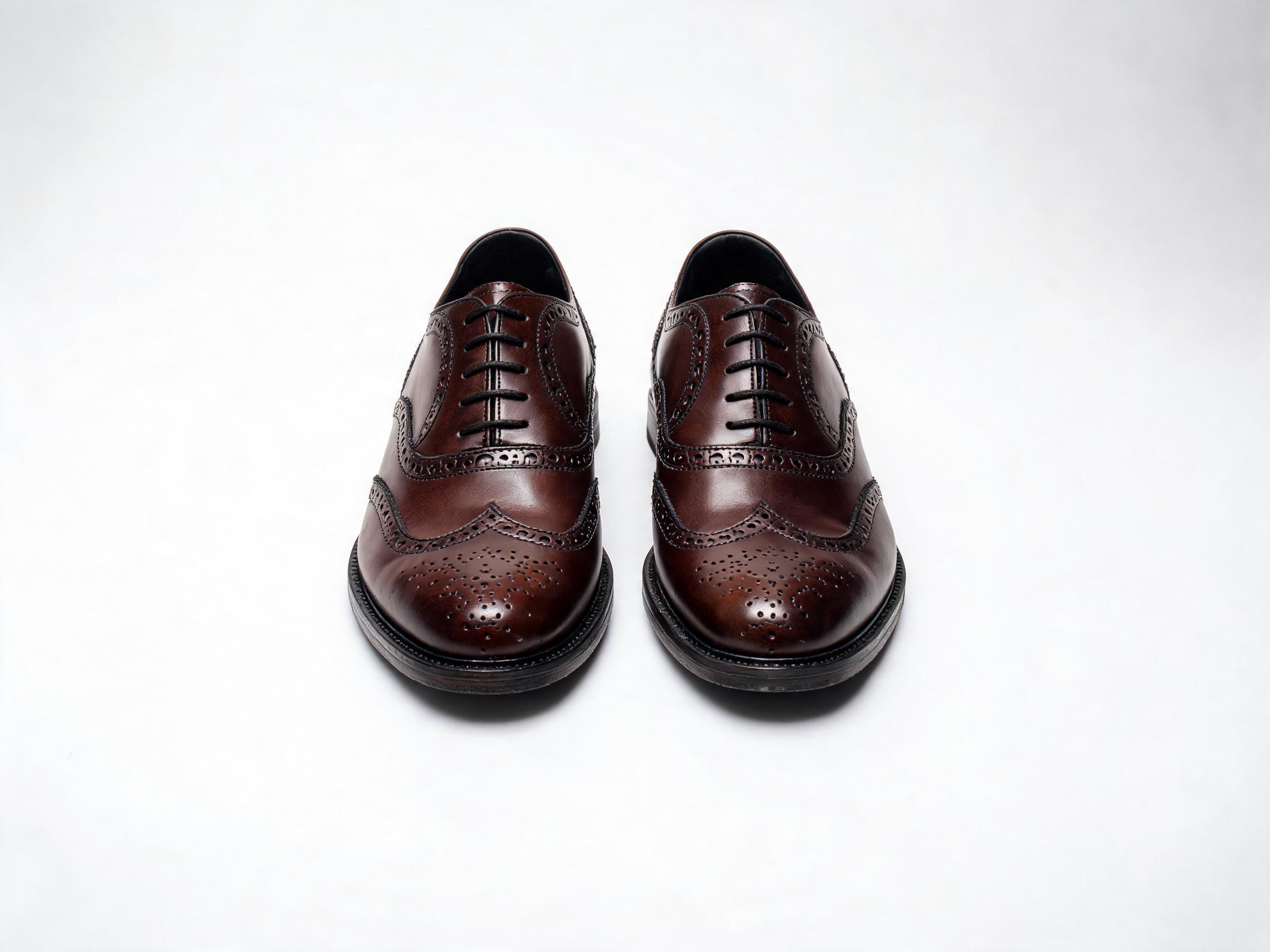
For reference, Aurevia's men's dress range includes a dark brown full brogue shoe built with stitched welt construction, while its black Chelsea boot uses twin elastic gores and a rubber outsole. The two sit at different points on the labour curve, and a quotation should reflect that.
How Order Volume and MOQ Move the Unit Price
MOQ exists because factories buy leather and components in tiers and set up production lines per model. Below a certain volume, setup and material buying become uneconomical. Above it, fixed costs spread further and the unit price falls.
Aurevia's leather footwear programs run on a minimum order quantity of 300 pairs per model, with bulk production lead time of approximately 30–45 days after sample approval. Half sizes and width options can be arranged on request for bulk orders. When you compare quotes, compare them at the same volume and the same specification, or the numbers are not comparable at all.
What a Quotation Should State in Writing
A professional quotation is more than a number. Before you compare offers, check that each one states:
- The leather grade and the components included in the price
- The construction method and the size range the factory can grade
- The MOQ per model and how the unit price changes at higher volumes
- Whether tooling or last development is a separate one-time charge
- Lead time measured from sample approval, not from enquiry
- Trade terms, so you can compare EXW, FOB and CIF offers on the same basis
- The warranty and how defect claims are handled
If a supplier cannot answer these in writing, the low price is not a bargain; it is an unknown. Aurevia states its terms plainly: 300 pairs MOQ per model, approximately 30–45 days bulk lead time after sample approval, EXW, FOB and CIF terms available, and a 6-month quality warranty covering manufacturing defects with free replacement or repair for confirmed issues. These figures describe the standard program; the terms that apply to a specific order, including the warranty start point and claim process, are confirmed in the quotation and order documents.
Where Buyers Lose Money on Price
The cheapest quotation is rarely the cheapest program. Three patterns cost buyers more than they save:
- Comparing different specifications. A lower price often means a lower leather grade or fewer included components. Normalise the spec before you compare.
- Ignoring yield and waste. A factory that cuts fewer pairs per hide carries a hidden material cost that shows up later as a price increase.
- Underestimating tooling. Treating a one-time last charge as if it were a per-pair cost distorts the comparison between a small trial and a full program.
Frequently Asked Questions
What is a typical minimum order quantity for leather footwear?
It varies by factory and model. Aurevia's leather footwear programs use a minimum order quantity of 300 pairs per model, with half sizes and width options arranged on request for bulk orders.
Why is the unit price higher on a small trial order?
Fixed costs such as last development and line setup are spread across fewer pairs. The same shoe at higher volume usually carries a lower unit price because those fixed costs are distributed further.
How long does bulk production take after sampling?
At Aurevia, bulk production runs approximately 30–45 days after sample approval, with EXW, FOB and CIF terms available for shipments to Europe, North America and the Middle East.
What warranty applies to bulk leather footwear orders?
Aurevia provides a 6-month quality warranty covering manufacturing defects, with free replacement or repair for confirmed issues. The warranty start point and claim process are set out in the order terms, and the after-sales team responds to claims within 48 hours.
Request a Cost Breakdown for Your Footwear Program
Share your target market, leather preference, construction method, size range and expected order volume. Our team will confirm the specifications that apply to your order and outline a sampling plan.
Request product details