Why Vegan Sandals Have Become a Standing Line Item
For European and North American buyers, non-animal footwear has moved from a niche request to a recurring line item. Retail chains that once tested a single vegan style now plan full seasonal ranges around it, and importers increasingly ask for material declarations before they will open a purchase order. The commercial reason is straightforward: a growing share of consumers reads the material label before the price tag, and a retailer that cannot answer "what is this sandal made of?" loses the sale.
For a sourcing team, the practical question is not whether vegan sandals sell. It is whether a supplier can produce them to the same standard as a leather program, document the materials honestly, and keep the specification stable across repeat orders. This guide walks through the decisions that determine whether a vegan sandal program runs smoothly or turns into a compliance problem.
What "Vegan" Actually Means in Footwear
"Vegan" is a material claim, not a marketing mood. In footwear it means the finished product contains no animal-derived components. That definition reaches further than the upper material, and this is where many programs fail.
- Upper: the visible material. Common non-animal options include cotton canvas, synthetic microfibre, polyurethane (PU) coated fabric, and plant-based alternatives.
- Lining: frequently overlooked. A vegan upper paired with a leather lining is not a vegan sandal.
- Insole and footbed: must be checked for leather board or animal-derived adhesives.
- Adhesives and finishes: some traditional adhesives and waxes use animal by-products.
- Trims: straps, buckles, threads and any decorative elements.
Because the claim covers the whole bill of materials, a supplier needs a documented component list rather than a verbal assurance. When a buyer asks for a vegan sandal, the useful response is a specification sheet that names each component and its material family.
Practical check: ask for the material breakdown at sampling stage, not after the order is placed. Changing a lining or adhesive after bulk production has started is expensive and usually means re-sampling.
Building a Vegan Sandal Specification
A workable vegan sandal specification answers four questions before sampling begins. Getting these on paper early prevents most disputes later.
| Decision | What to define | Why it matters |
|---|---|---|
| Upper material | Exact material family and finish (for example cotton canvas or PU-coated fabric) | Determines look, breathability and how the sandal ages |
| Lining and footbed | Non-animal lining and footbed construction | Protects the vegan claim across the whole product |
| Adhesives and finishes | Non-animal adhesive system | Closes the most common gap in vegan documentation |
| Hardware and trims | Strap, buckle and thread specification | Keeps the bill of materials consistent across sizes |
Once these are fixed, the specification becomes the reference point for sampling, bulk production and repeat orders. It also gives the buyer something concrete to show a compliance team.
Running Vegan and Leather Programs Side by Side
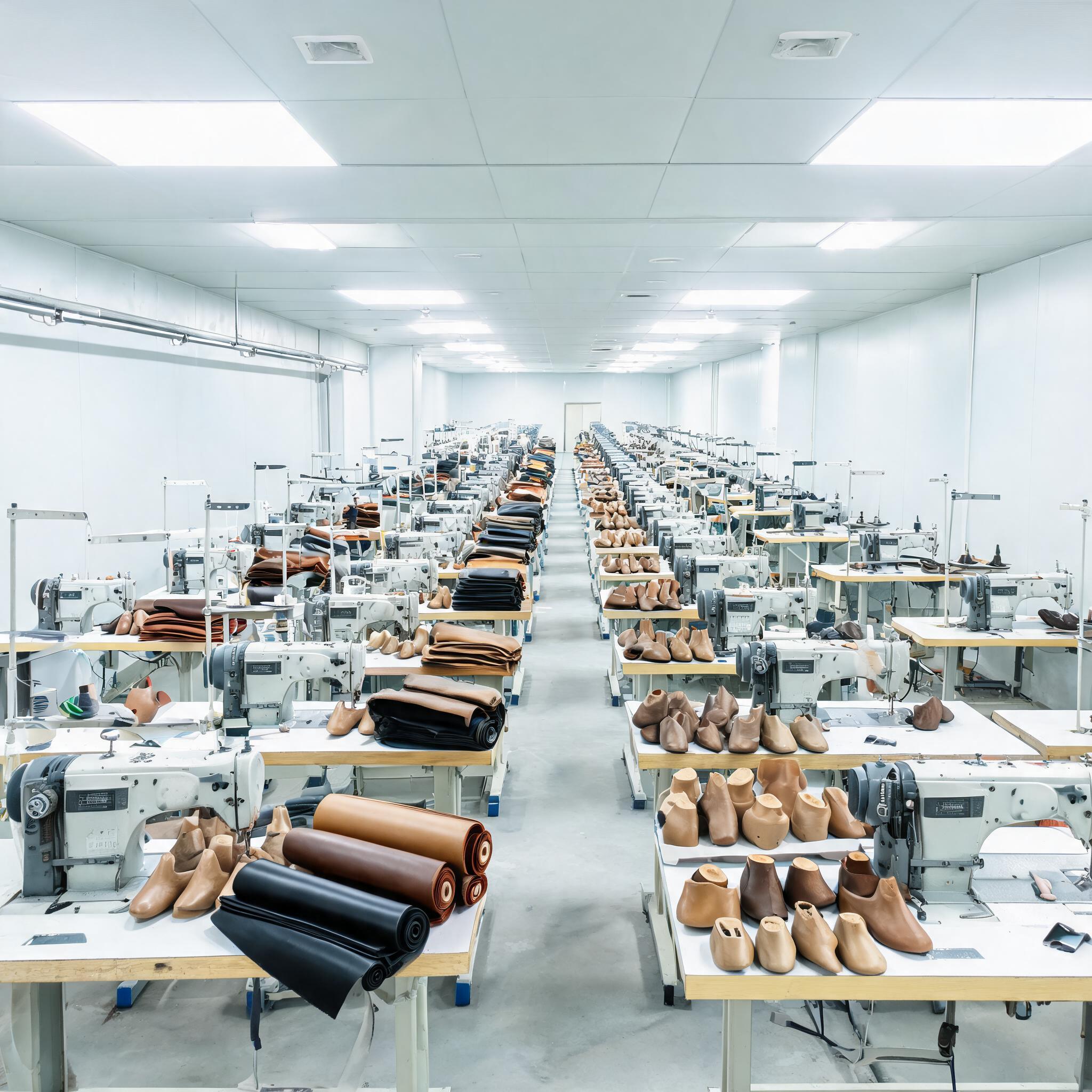
Many manufacturers, including Aurevia Footwear, run genuine leather lines and non-animal programs in the same facility. That is normal and workable, but it requires discipline in three areas.
Material segregation
Non-animal materials must be stored and issued separately from leather. Shared cutting tables and shared bins are the usual source of contamination, and contamination is the fastest way to invalidate a vegan claim.
Line scheduling
Where a vegan style and a leather style share tooling, the production plan should sequence them so that cleaning and changeover happen between runs. This is a planning question, not a materials question, and it is best agreed before the order is confirmed.
Documentation
Each program needs its own material records. A buyer sourcing a vegan sandal should be able to receive documentation that refers to that specific style, not a general company statement.
Keeping Material Consistency Across Bulk Orders
The hardest part of a vegan program is not the first order. It is the fourth order, when the buyer expects the same colour, hand-feel and finish as the approved sample. Three controls make that achievable.
- Approved material standard: keep a sealed reference sample of each material at the factory, and compare incoming lots against it.
- Colour control: agree a colour reference and check it under consistent lighting, because synthetic materials can shift tone between lots more visibly than leather.
- Incoming inspection: check thickness, coating adhesion and surface finish before cutting, so problems are caught before they become finished shoes.
These controls are the same discipline that keeps a leather program stable. The difference is that non-animal materials often behave differently from lot to lot, so the inspection step carries more weight.
Documentation Buyers Should Expect
Requirements vary by market and by retailer, so the honest position is that documentation is agreed per program rather than promised as a fixed package. In practice, buyers commonly ask for:
- A component-level material declaration for the specific style
- Confirmation that no animal-derived materials are used in the upper, lining, footbed, adhesives or trims
- Material supplier information where the retailer's own compliance process requires it
Because these requirements differ between European and North American retailers, the practical approach is to state the buyer's documentation needs at the enquiry stage. A supplier can then confirm what can be provided for that specific program instead of offering a generic promise.
Where Vegan Sandals Fit in a Range
Vegan sandals work best as a defined part of a summer or resort range rather than a one-off experiment. Buyers typically place them alongside leather sandals so that the range covers both material preferences without doubling the number of styles.
Styles that translate well into non-animal construction include flat and low-profile silhouettes, where the upper is simple and the material does most of the visual work. Aurevia's existing summer styles, such as the black leather casual sandals and the beige espadrille flats, show the kind of simple, strap-led construction that adapts well when the upper material is changed.
Common Mistakes in Vegan Sourcing
- Treating "vegan" as an upper-material question only, and missing the lining, footbed or adhesive.
- Accepting a verbal assurance instead of a component-level declaration.
- Changing a material after sampling to reduce cost, which invalidates the approved specification.
- Assuming a leather-focused factory cannot run non-animal lines, when the real issue is segregation and documentation discipline.
- Leaving documentation requirements until after the order is placed.
Frequently Asked Questions
Can a factory that mainly produces leather shoes also make vegan sandals?
Yes, provided non-animal materials are stored and issued separately, production is scheduled with proper changeover, and each program keeps its own material records. The capability is a process question rather than a materials question.
How do I confirm a sandal is genuinely vegan?
Ask for a component-level material declaration covering the upper, lining, footbed, adhesives and trims for that specific style. A general company statement is not enough to support a product-level claim.
Will a vegan sandal look different from a leather one?
It depends on the material chosen. Canvas and microfibre give a different surface character from leather, so the design should be developed around the material rather than imitating leather.
What should I prepare before requesting a quote?
Bring the target market, the style reference, the material direction, the size range and your documentation requirements. Those five inputs let a supplier respond with a realistic specification instead of a generic price.
Next Step
If you are planning a vegan sandal range for a European or North American retail program, the most useful first step is to define the material specification and the documentation you need. Share your style reference, target market and material direction, and Aurevia's team can review the requirement and prepare a sampling plan.