
Bulk shoe orders turn into dead stock when the assortment is built around styles rather than sell-through. This guide explains how to plan a resale mix — core vs trend styles, size and color spread against manufacturer MOQs, and how to read lead times and sampling before committing volume.
Sourcing guide
Buying shoes in bulk for resale is a simple decision on paper: pick the styles, place the order, sell the units. What turns that simple decision into a storage problem is that the order is built before the sell-through is known, so any wrong choice in style, size blend or color depth has to be carried until it clears. A bulk order works when the assortment is designed around what will actually leave the shelf, not around what looks best in a line sheet.
The practical answer is to separate the order into core styles and seasonal/trend styles, plan a size spread that matches the range your factory quotes, and use the MOQ structure of each style to decide how many colors and sizes you can afford to test. The rest of this article shows how to do that with the numbers a footwear supplier actually quotes.
- Dead stock usually starts with a style mix that is too wide and a size blend that does not match the MOQ.
- Core styles carry the repeat order; trend styles should earn their place in the next order, not the first.
- MOQ per color is the real constraint — it decides how many colors you can test at one time.
- Sample the exact upper/fit before committing to volume; a sample approval is cheaper than a re-order.
Why bulk shoe orders end in slow stock
Slow stock usually comes from one of three planning mistakes, and none of them are about the supplier's quality. The first is ordering too many styles in small quantities, which spreads the same budget across a wide range and leaves each style too thin to sell well. The second is ordering a size spread that does not match the range the factory produces; a style quoted in EU 39–45 cannot be re-ordered in a size the factory does not make, so any unsold tail sits. The third is ordering trend-led colorways or silhouettes as if they were core — trend styles that miss tend to stay on the shelf longer than the buying season.
A manufacturer's MOQ structure makes all three worse when ignored. MOQs are usually quoted per color, not per style, so a style that looks like a good test becomes expensive when you want it in three colors. Planning the order around the MOQ is not a restriction; it tells you what size of test is actually possible.
Build the style mix: core first, trend second
The most reliable way to structure a resale shoe order is to split it into two groups with different jobs.
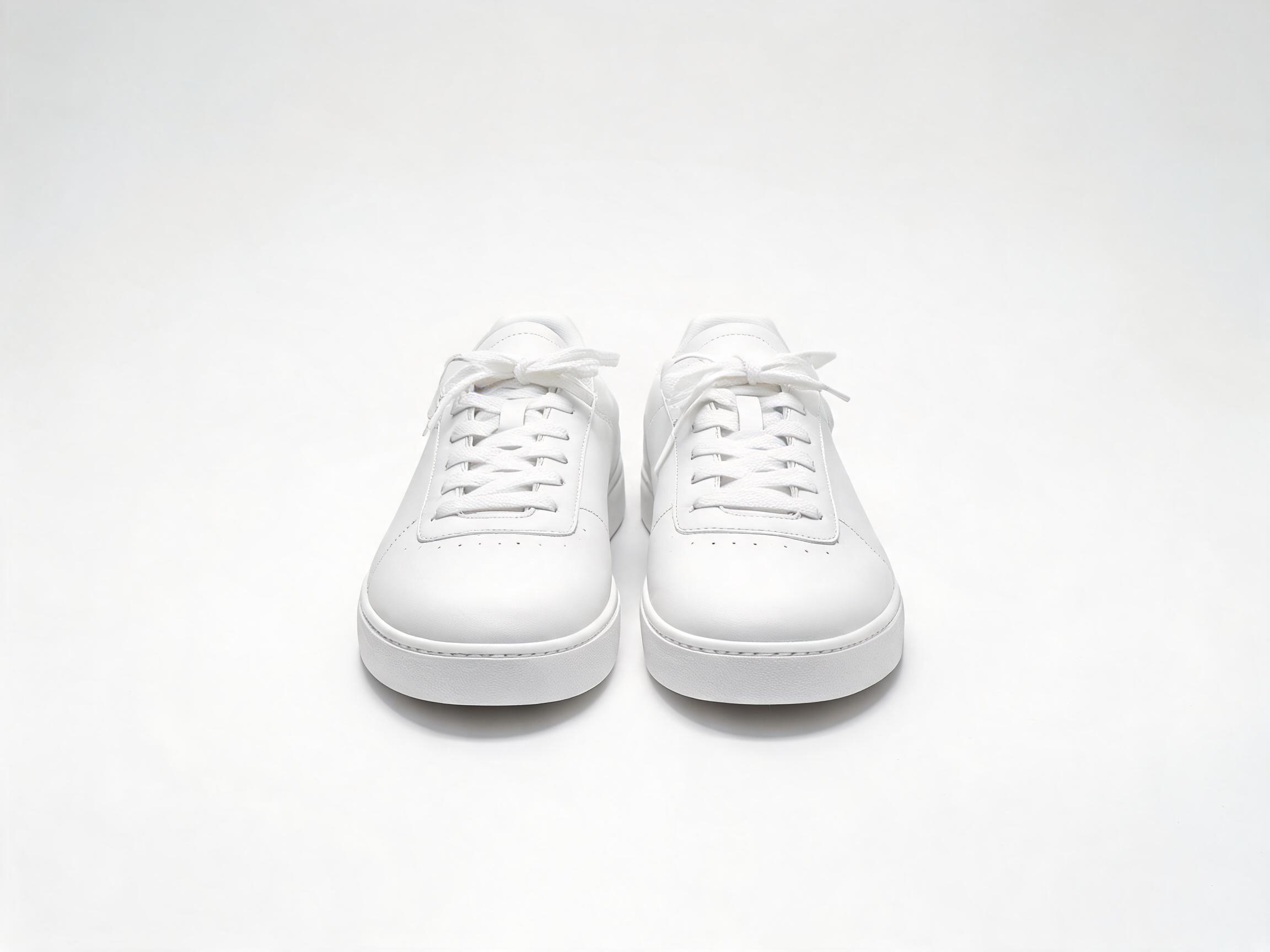
Core styles are the shoes you expect to sell steadily across the season — usually the plainest, most re-orderable silhouettes in neutral colors. They take the largest share of the order because they are the styles you can repeat once the first order sells through. A white leather low-top sneaker is a typical core style: a full-grain leather upper, a rubber cupsole, available in EU 39–45, and simple enough that the color and material decision is stable from one order to the next.
Trend styles are the seasonal or fashion-led buys — the ones you expect to sell in a shorter window. They should be a smaller share of the budget and should be tested in the smallest possible order that the factory's MOQ allows. If a trend style sells, it earns a repeat order; if it does not, the loss is limited to the tested quantity rather than a full-season commitment.
A useful rule when budgeting is: core styles carry the repeat orders, trend styles carry the risk. The order mix should reflect which of the two you are buying in each line, not treat every SKU as equally important.
Size and color spread against the MOQ rules
Most slow stock in footwear comes from a size or color decision, not from a style decision. Two habits prevent it.
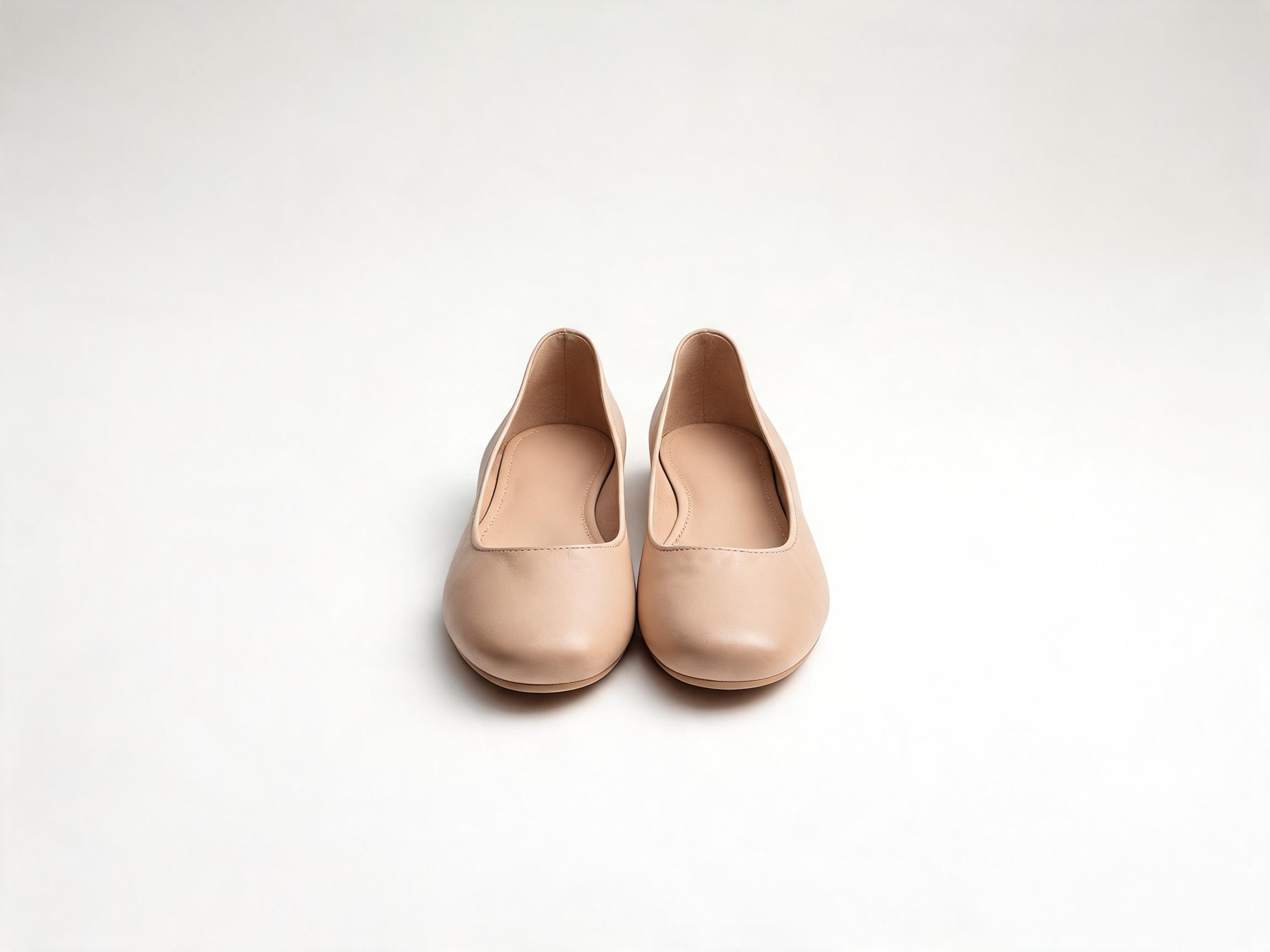
Plan sizes inside the quoted range. A style is only re-orderable in the sizes the factory actually makes. The white low-top sneaker is quoted in EU 39–45; the nude ballet flat is quoted in EU 35–41. If your customers buy a wider or narrower range than the quoted one, confirm what the factory can produce before you build the order around an assumed size spread.
Plan colors around MOQ per color. The MOQ is usually the smallest quantity the factory will produce for a single color, so the number of colors you can test is set by the MOQ and your budget, not by the number of colors in the line sheet. A style with a low MOQ per color allows a two- or three-color test; a style with a high one forces a narrower color choice. Either way, the decision should start from the MOQ, not from the color card.
Worked comparison using quoted terms
| Style | Quoted MOQ | Quoted size range | Lead time after order confirmation |
|---|---|---|---|
| White Leather Low-Top Sneakers | 200 pairs per color | EU 39–45 | 30–40 days |
| Nude Leather Ballet Flats | 100 pairs per color | EU 35–41 | 25–35 days |
These are the terms listed for these two styles. Buyers should confirm current MOQ and lead time with the sales team before ordering, because factory schedules and quoted terms can change.
Read together, the numbers explain why the two styles belong in different parts of an order. The ballet flat has the lower MOQ per color, so it can be tested in more colors without multiplying the order size, and its shorter lead time means a test can be re-ordered sooner if it sells. The white sneaker's 200-pair-per-color MOQ makes it a better fit as a core style where the color decision is stable and the size spread is already known. Neither number is inherently better; they simply set the smallest order you can place and the schedule you plan around.
How MOQ and lead time shape the resale mix
MOQ and lead time work together on the resale side. The MOQ sets the minimum cash commitment for a test; the lead time sets how long that commitment is locked before a repeat order can land. A style with a shorter lead time can be re-ordered closer to the sales period, which reduces the amount of stock held ahead of demand. A style with a longer lead time has to be planned further ahead, so its risk should be carried in the smaller, trend side of the mix.
None of these rules require a supplier to promise a result. They describe how to structure the order: choose the styles you can repeat, test trend items in the smallest MOQ-compatible quantity, and build the size and color spread within the range the factory quotes.
Sample before committing to volume
Sampling is the cheapest part of the order and the one that most directly reduces slow stock. Before committing to volume, request a sample of the exact style, upper material, fit and size range you intend to order. The sample lets you check the fit, the finish and the color against what your buyers expect, before the MOQ is locked.
For Aurevia Footwear Co., Ltd., existing samples ship in 3–5 days and customized samples in 7–12 days. OEM/ODM is supported, including custom colors, logo and packaging, so a sample can reflect the specific color or labeling you intend to sell. The same terms — MOQ and lead time — should be confirmed alongside the sample request, since those are the numbers the volume order is built on.
Putting the order structure together
A sell-through-friendly bulk shoe order has four parts, and all four are decided before the PO is placed:
- Style split. Choose the core styles that can be repeated and the trend styles that need a limited test. Assign the larger share of the order to core.
- Size spread. Confirm the size range the factory quotes for each style, and build the order inside that range.
- Color count. Use the MOQ per color to decide how many colors you can test, rather than ordering every color in the line sheet.
- Sampling and terms. Approve a sample of the exact style before volume, and confirm the current MOQ and lead time with the sales team before the order is confirmed.
That structure does not eliminate risk, because no order does. It puts the risk where it can be limited — a tested quantity in a trend style, a known size range, and an approved sample — instead of spreading it across a full-season commitment in every style.
Aurevia Footwear Co., Ltd. is a B2B footwear manufacturer and exporter established in 2011 in Quanzhou, China, with a 260-person team, OEM/ODM support (custom colors, logo and packaging), exports to Europe, North America and the Middle East, three-stage inspection, a 6-month quality warranty and after-sales response within 48 hours. Buyers planning a resale order can use the two quoted styles above as a starting point and confirm the current MOQ, lead time and size range with the sales team before committing to volume.
Frequently asked
How many styles should a first bulk order include?
Keep the core styles to a small number you can repeat and use the trend side of the order for limited testing. The exact count depends on the MOQ per color and the budget, so it should be calculated from the quoted terms rather than set in advance.
What does MOQ per color mean for resale?
It means the smallest quantity the factory will produce in one color, so it sets how many colors you can test at one time. A style with a lower MOQ per color allows a wider color test; a higher one means a narrower choice.
Can I order a size range outside the quoted one?
The quoted size range is the range the style is listed in — EU 39–45 for the white low-top sneaker and EU 35–41 for the ballet flat. If you need a different range, confirm what the factory can produce before building the order around it.