A boot-specific cost framework for wholesale buyers: which cost drivers you can trade down safely, where a lower unit price turns into returns and re-orders, and how MOQ, lead time and inspection protect the margin you are trying to gain.
A lower unit price on boots can be safe or expensive depending on which cost you cut. This guide sets out the three cost drivers that decide boot quality — upper material grade, sole construction, and hardware or zippers — then sorts them into savings that hold up and savings that come back as returns, re-orders and brand damage. It ends with how MOQ, lead time and inspection sit around that decision.
Key takeaways
- Material grade is the largest cost lever and the easiest one to verify in a counter-sample.
- Stitched construction constrains how far a sole can be cost-reduced before durability suffers.
- Zippers and hardware are small line items with a disproportionate effect on return rates.
- MOQ and lead time follow the boot category; confirm current figures with the sales team before you build a plan around them.
- Sampling and three-stage inspection are cost protection, not overhead.
What actually drives boot cost
Three variables carry most of the unit price difference between two boots that look the same in a photo: the upper material, the sole and its attachment, and the hardware. Each behaves differently when you cut it.
1. Upper material grade
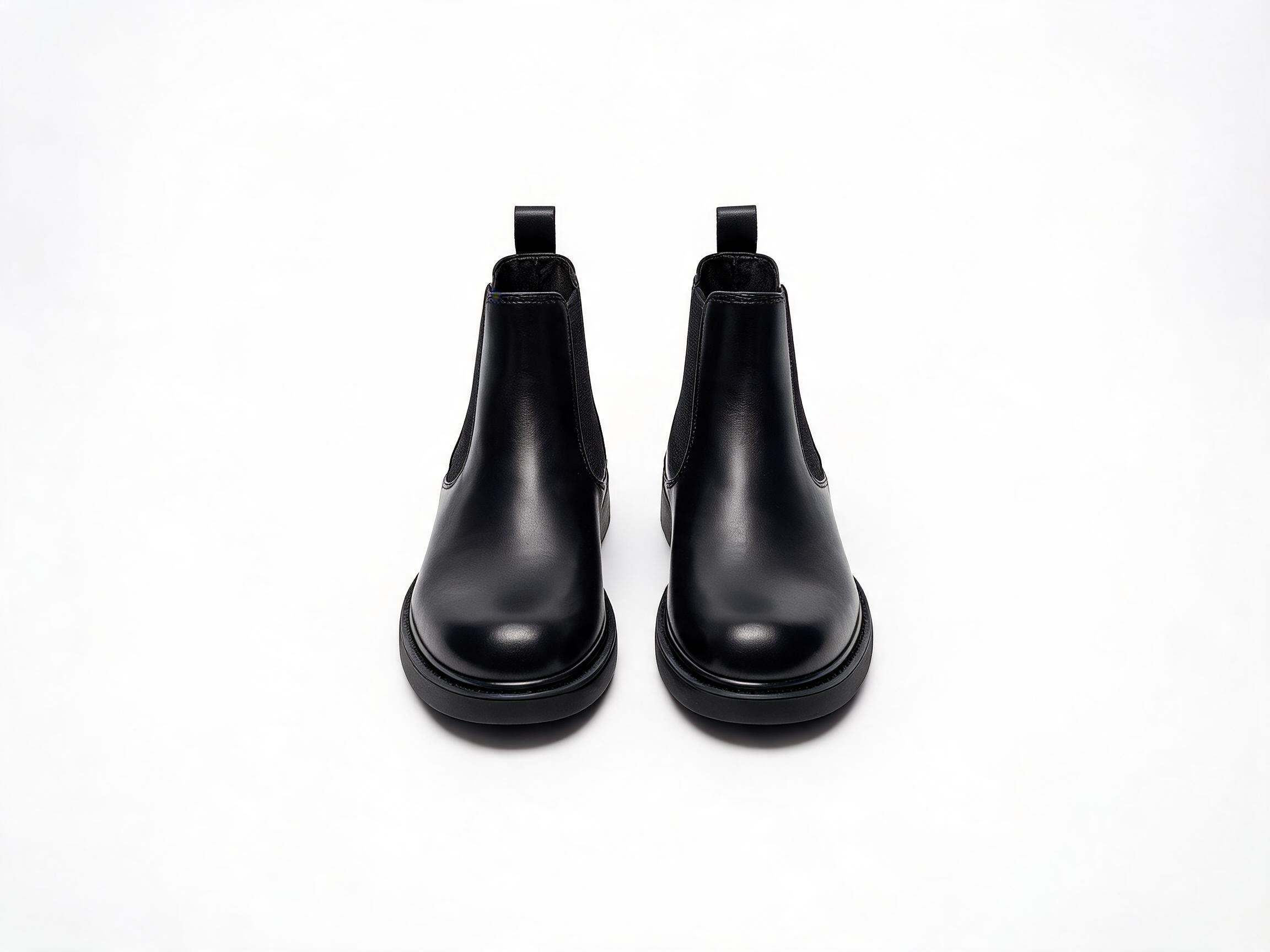
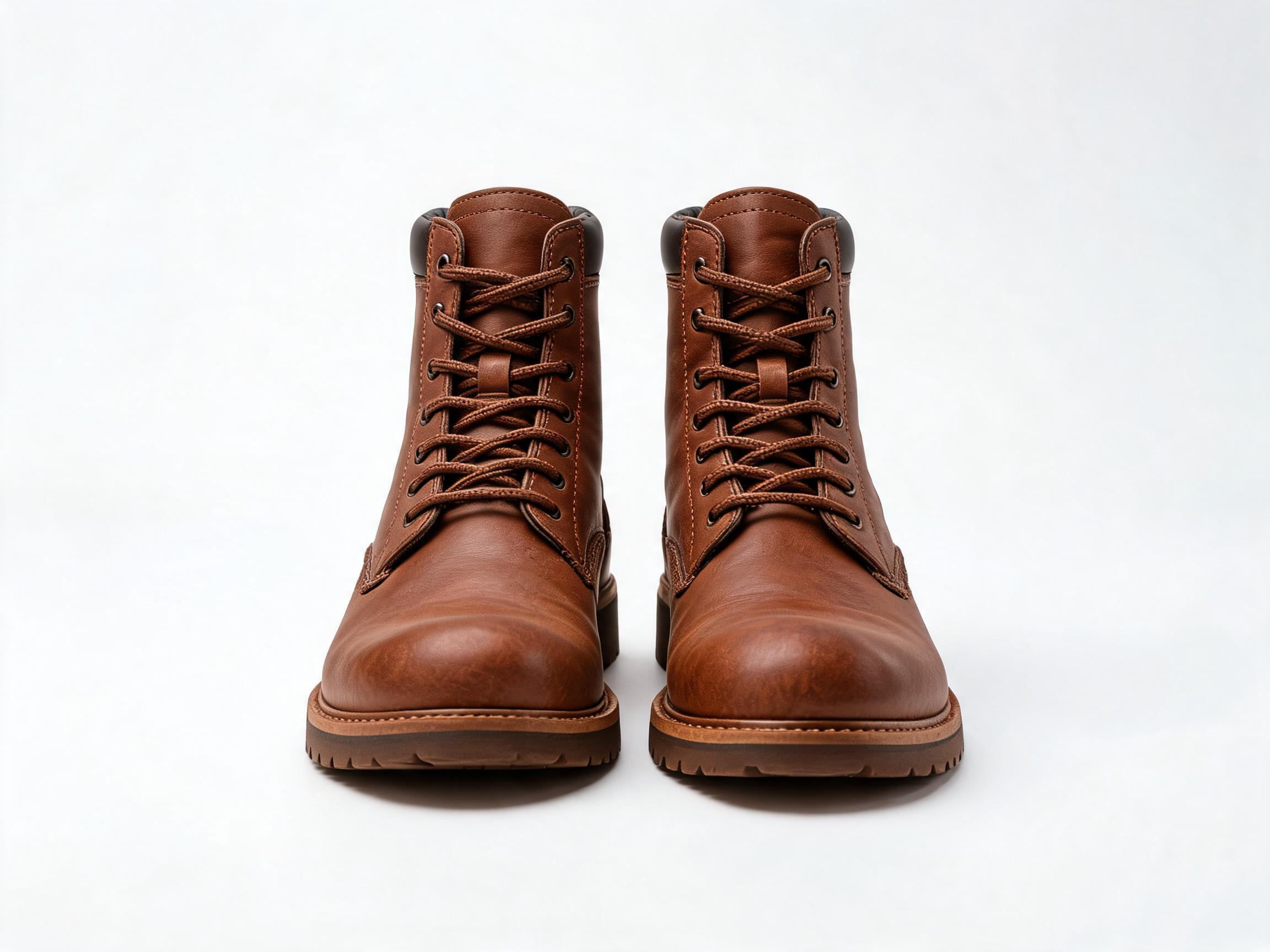
Within leather, the grade and finish are the first place a quoted price moves. A buyer comparing submissions is usually comparing different grades, not different suppliers. The three boot categories in a typical program sit at different points: a black Chelsea boot in full-grain leather, a work boot in oiled full-grain leather, and an ankle boot in full-grain leather are each a stated grade rather than a generic “leather”. When a quote comes in lower, ask which grade it specifies and request a swatch of the offered upper next to the one you approved. Material is the largest single cost line in a leather boot, so it is also the lever with the largest quality consequence.
2. Sole and construction
Construction constrains the other savings. A stitched rubber sole, as specified on the black Chelsea boot, is a construction decision before it is a cost decision. Stitching costs more than some cementing methods, but it also changes what happens if the sole bond fails later. On the brown leather work boot, the lug rubber outsole is the functional part — its pattern and compound determine grip and wear, and this is not a place to trade down for a lower unit cost. If a supplier offers to reduce the price by changing sole attachment, that is a construction change and needs to be treated as one: ask exactly what changes and request a sample.
3. Hardware and zippers
Zippers and trims are a small share of unit cost but a large share of field failures. The brown leather ankle boot uses a side zipper, and that zipper is the part a wearer operates every time the boot goes on. A cheaper zipper can look identical in a photo and separate at the pull or fail at the slider. When you approve a sample, test the zipper and any buckle or eyelet by hand before signing off, and record the hardware specification in writing so it is not silently substituted at production.
Where saving is safe, and where it is not
Sort candidate cost reductions by where the cost lands if the part fails. Savings in areas the wearer does not touch, or where a defect is caught before shipping, are usually safe. Savings in areas the wearer touches every day are the ones that come back.
| Cost lever | Save here if… | Do not save here if… |
|---|---|---|
| Upper leather grade | The boot is a fashion-led line and the approved swatch matches on colour and hand-feel | The boot is a work or daily-wear boot where the upper takes repeated flex and abrasion |
| Sole attachment | The construction and stitching remain as approved and the change is in sole compound only | The change moves the boot from a stitched sole to a cheaper attachment without testing |
| Zippers and hardware | Never — this is a high-return-risk line item on any zippered boot | The zipper is the primary closure and you have not tested the offered part |
| Lining and internals | The change is invisible, does not affect fit, and is confirmed in the approved sample | The lining change alters fit or comfort in a way the end customer will notice |
| Packaging and labelling | The private-label packaging is your own specification and cost is reduced within it | The packing change risks transit damage to a boot you cannot easily replace |
Two of the three boot categories in this program show why the framework matters. The black Chelsea boot is a clean style where the visible surface is large and the wearer judges quality by the leather and the sole; a material downgrade is visible on day one. The brown leather work boot is judged by how it performs under load, so sole and upper grade both fall on the “do not save” side. The brown leather ankle boot carries a side zipper, which puts hardware at the top of the risk list even though the boot is a smaller line.
MOQ and lead time by boot category
Minimum order quantities and lead times are set per style and colour, and they follow the boot's construction and material rather than a single blanket rule. The figures below are the basis this supplier works from. Buyers should confirm current MOQ and lead time with the sales team before ordering, because both can change with season, material availability and colour.
| Style | Upper | Sole | Size range | MOQ (per colour) | Lead time after order confirmation |
|---|---|---|---|---|---|
| Black Chelsea boot | Full-grain leather | Stitched rubber sole; heel approx. 3 cm | EU 39–45 | 100 pairs | 30–40 days |
| Brown leather work boot | Oiled full-grain leather | Lug rubber outsole | EU 39–46 | 200 pairs | 35–45 days |
| Brown leather ankle boot | Full-grain leather; side zipper | Approx. 6 cm block heel | EU 35–41 | 100 pairs | 30–40 days |
The MOQ pattern is informative on its own. The work boot carries the higher MOQ and the longer lead time because its material and outsole are the most constrained of the three. A buyer trying to lower the unit price by spreading a colour across fewer pairs will usually be pushed back to the per-colour minimum, so cost planning should start from MOQ, not from the quoted unit price alone. Confirm current MOQ and lead time with the sales team before ordering.
Sampling and inspection as cost protection
A boot program that saves a few percent per pair and then absorbs a return wave has not saved anything. Sampling and inspection are how a buyer converts the framework above into a defensible order.
On the supplier side, this manufacturer operates a three-stage inspection — incoming material, in-line, and finished shoe — including flex and adhesion checks. Those checks are relevant precisely because upper grade, sole attachment and hardware are the three drivers discussed above: adhesion checks target the sole bond, flex checks target the upper and its joins, and finished-shoe inspection is the last point at which a zipper failure can be caught before it ships. The same supplier offers a 6-month quality warranty and after-sales response within 48 hours, which is the recourse side of the same decision.
Sampling protects the price in a different way. Sampling turns an ambiguous quote into a defined product: the grade of upper, the sole construction and the hardware are all visible in the sample you approve. Once the sample is approved, a lower price offer from the same supplier becomes a question about what changed, and you have a physical reference to compare against. The workflow supports this: existing samples ship in 3–5 days, and customized samples with your own colour, logo and packaging take 7–12 days. For a buyer building a private-label boot line, the customized sample is where the cost trade-offs should be settled, not at the purchase order.
A short decision summary
Cut cost on the upper only when the boot is fashion-led and the approved swatch holds. Treat sole construction and attachment as fixed once approved. Do not cut the zipper or hardware on any zippered boot. Plan the unit price from the per-colour MOQ rather than from a comparison of head-line quotes, and confirm MOQ and lead time with the sales team before ordering. Approve a physical sample and agree the inspection points in writing; that is the step that decides whether a cheap boot order stays cheap after the first re-order.
Specifications and terms cited here are the listed basis for this product range. Buyers should confirm current MOQ, lead time and customization details with the sales team before placing an order.