
Most own-brand buyers treat custom shoes wholesale as a one-off sampling exercise. The harder question is how to turn a customized style into a bulk program you can reorder. This article covers which customization levers to lock first, how sampling freezes decisions into a stable bulk specification, and how to keep reorder rounds consistent.
Wholesale Program Guide
Custom shoes wholesale sounds simple until the second order. The first sampling round is exciting; the reorder is where programs quietly fall apart. This guide is about the operational side: choosing customization levers in the right order, using sampling to freeze decisions, and building a bulk spec that holds across repeated production rounds.
If you are developing your own brand and want custom styling, the risk is not usually whether a factory can make one good pair. It is whether that pair can be reproduced months later and in volume, consistently enough to sell under your own label. Aurevia Footwear Co., Ltd., based in Quanzhou, China, has supplied genuine-leather footwear and fashion accessories on an OEM/ODM basis since 2011, with a team of about 260, exporting to Europe, North America and the Middle East. The rest of this article is written from the perspective of building the program, not the sample.
Start with the levers that change tooling, not the ones that change mood
Buyers often begin with branding — a logo on the insole, a private-label box, a hangtag. It feels like the visible part of "own brand". Operationally, it is the cheapest and easiest part to revise. Start there and you waste sampling time reworking decisions that never needed a sample in the first place.
Sort your customization wishlist into three groups and work downward.
| Lever | What it affects | When to decide |
|---|---|---|
| Leather and colorway (including Pantone matching) | Material sourcing, panel cutting, color approval | First — before any sample is built |
| Construction and outsole material | Lasts, patterns, sole tooling or sourcing, bonding | First — hardest and slowest to change later |
| Hardware (buckles, eyelets, trims on relevant styles) | Sourcing, fitting, finish consistency | Second — after construction is fixed |
| Insole branding, logos, labels | Printing, stamping, placement | Third — can be revised with limited disruption |
| Packaging: private-label boxes, hangtags | Print approval, packing line | Last — often runs parallel to bulk, not sampling |
Two levers deserve patience. Leather and construction define the shoe; change either after sampling and you are effectively starting a new style. Color matching to Pantone is straightforward to request but still requires an approved color reference before bulk, because a screen or a verbally described shade is not a specification.
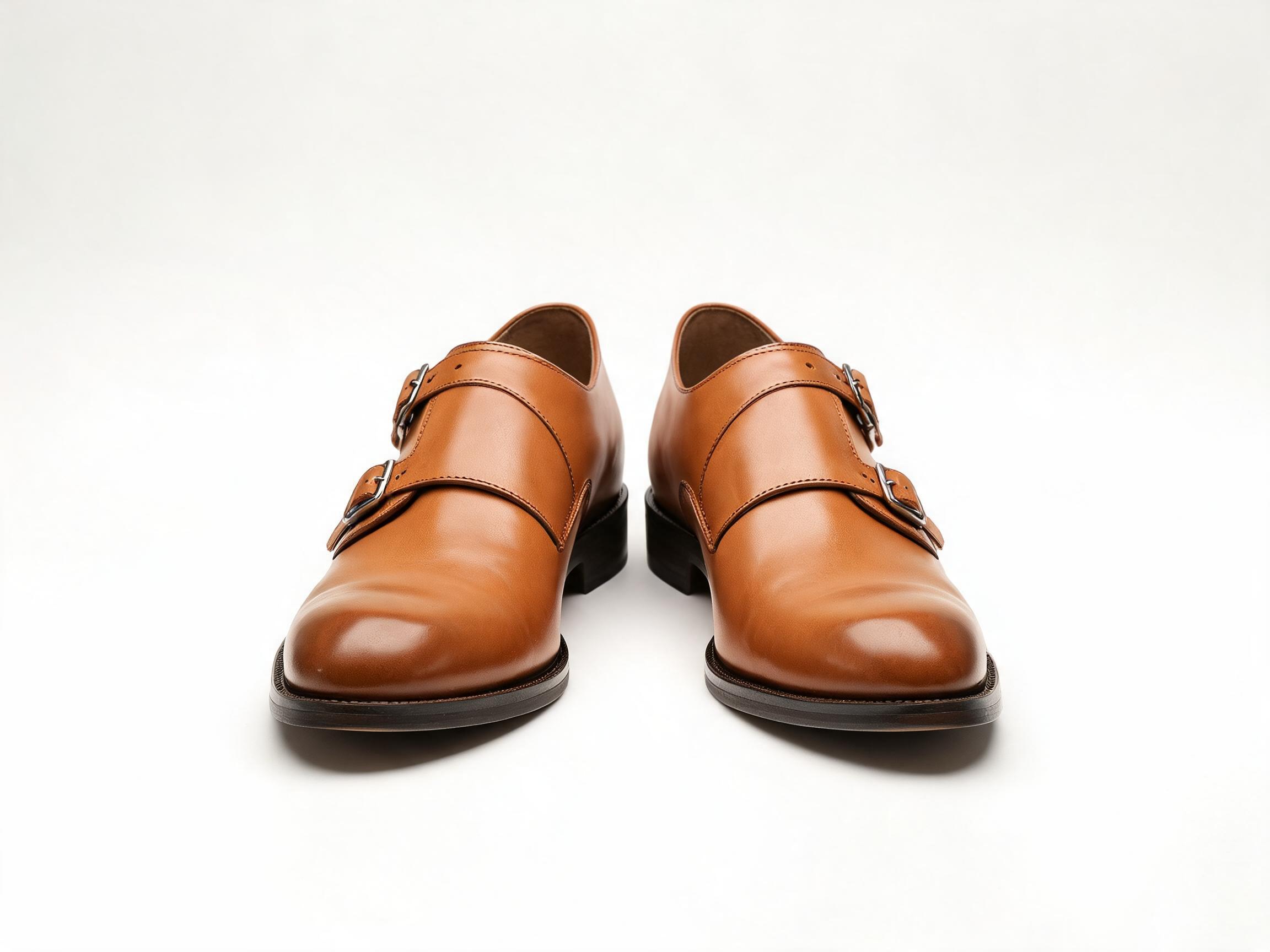
For styles where the hardware is the signature — a double monk strap, for example — swapping the buckle changes the character of the product as much as it changes sourcing. This is a lever to confirm early if your range depends on it. Aurevia lists hardware changes on relevant styles among its customization options, alongside outsole material changes, insole branding, custom colorways and logos.
Use sampling to convert opinions into decisions
A sample is not a mood board. It is the moment where your commercial choices become a written, repeatable bulk specification. Sampling with Aurevia runs roughly 7 to 12 days, which is short enough that poor preparation is expensive — you can lose a week to a question you should have answered before the first round.
Treat each sample round as a decision gate with named sign-offs, not a general "does it look good" review.
- Round one — structure and material. Approve leather, color against the approved reference, outsole and construction. Record what you approved, not just that you approved it.
- Round two — detailing. Hardware, insole branding, logo placement, stitching and finish. These are the elements most often changed on e-commerce imagery, so they need explicit approval.
- Round three — presentation. Packing, labeling, retail-ready presentation. You may finish this in parallel with bulk production if timing is tight, since it rarely affects the shoe itself.
The output of a good sampling process is a bulk spec sheet that a factory can produce from and a buyer can audit against — leather reference and color approval, construction and outsole, hardware item, logo and insole placement, packaging details, and a retained approved sample. Retain a physical approved sample with each party. When a question arises on round two of reordering, a signed sample ends the debate faster than any photo.
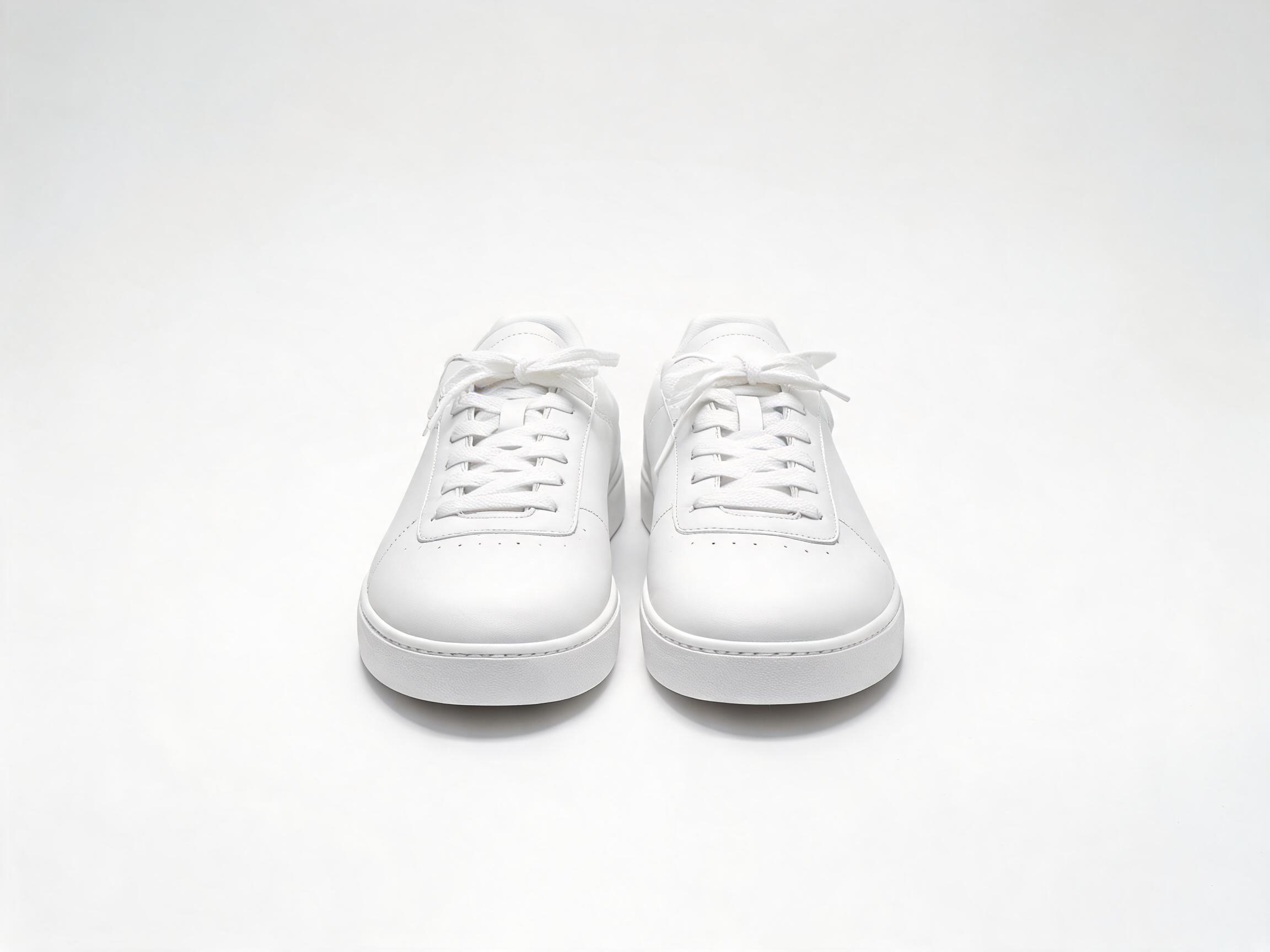
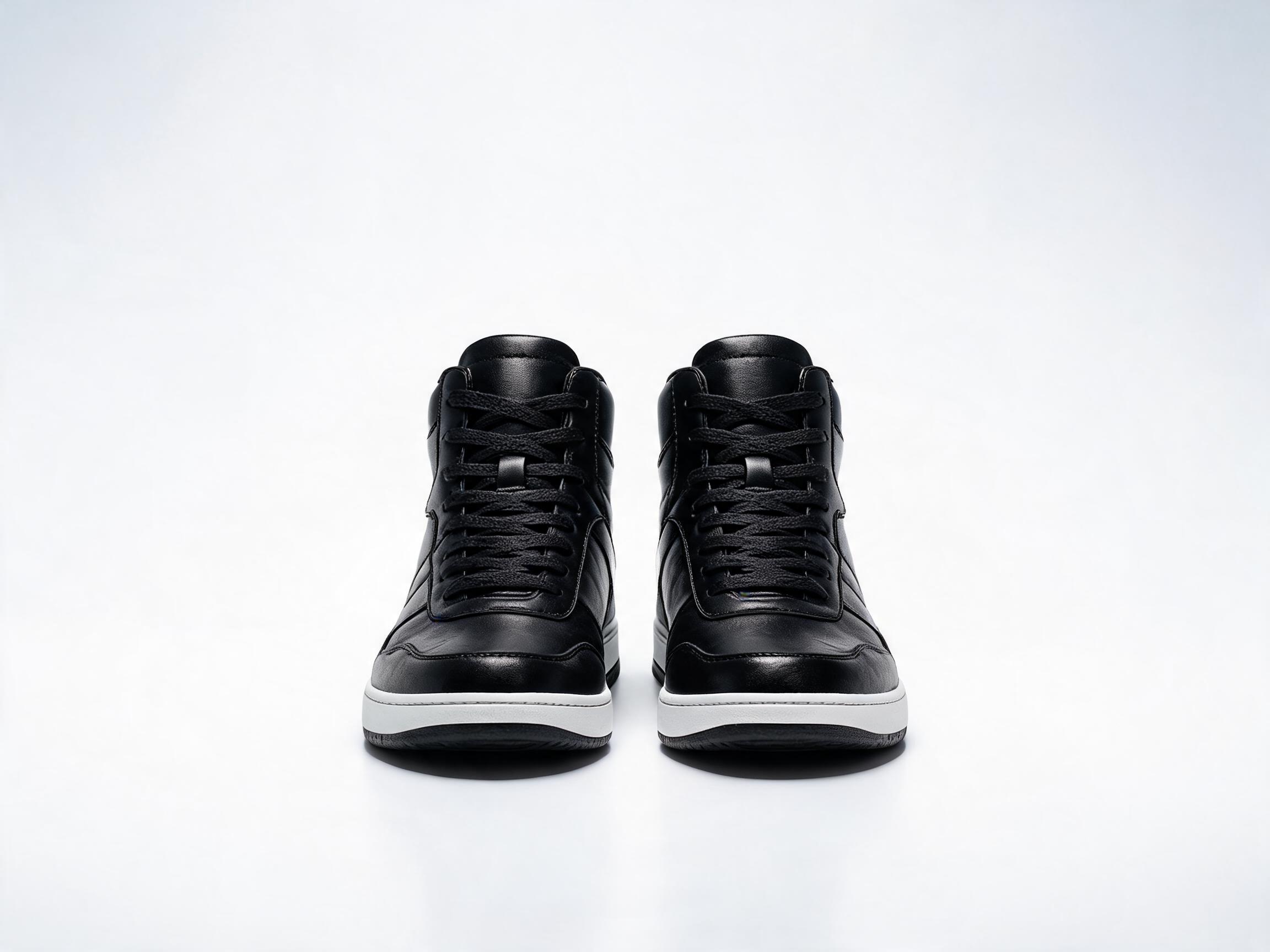
If you want a sense of how these decisions look on finished products, the White Leather Low-Top Sneakers are available with OEM colorway and label options, and the Black Leather High-Top Sneakers carry OEM colorway, logo and packaging options. For punchier hardware-led styling, the Tan Double Monk Strap Shoes use a double buckle that can be changed.
Build the bulk program before you place the bulk order
Converting a sample into a program is mostly a paperwork discipline. Before production begins, agree the bulk specification in writing, including what is fixed and what is allowed to vary. Minimum order quantities are confirmed per color, style and customization depth, so a program with four colorways and deep custom branding will not carry the same thresholds as a single-color basic style. Confirm these with your supplier while you still have room to adjust the range.
Production timing commonly runs 30 to 45 days depending on order content — the more customization, the more pre-production approval steps sit in front of that window. Plan backward from your selling season rather than forward from the order date.
Inspection is part of program design, not an emergency response. Aurevia runs three-stage quality control covering incoming materials, in-line production and finished goods, including forepart flexing and sole-bonding tests. Third-party inspection is welcome, and for a first bulk round on a new style, it is a sensible cost. Agree the inspection point and acceptable scope before production, so the result is judged against the spec you both signed.
Delivery terms are available as EXW, FOB or CIF. Choose based on who in your organization is genuinely equipped to handle the leg you are taking on, not simply which option looks cheapest on the quote.
Keep reorder rounds consistent — the part that decides whether the program works
Repeat orders fail for mundane reasons: a color approved by eye rather than by reference, a hardware supplier substituted without notice, a logo placement that was never written down, or a factory producing from a new sample that was never signed off against the original. None of these are manufacturing failures. They are specification failures.
Four practices carry most of the weight.
- One authoritative spec document. Version it, date it, and give both sides the same copy. Email threads are not a specification.
- Retained approved samples. Keep one at the factory and one in your office. Compare production against the physical reference, not against a screen.
- Change control. Any substitution — a leather lot, a buckle, a lining — should be raised before it happens, not discovered on arrival. A short written rule that substitution requires approval protects both sides.
- Reorder briefing. Even a repeat order deserves a short written confirmation of colorway, hardware and packaging, because your own range may have evolved since the last round.
Consistency also means allowing for the honest realities of leather. Color can vary between lots and panels; the answer is an approved reference range, agreed in sampling, rather than a promise of visual uniformity that leather cannot deliver.
- Decide leather, colorway and construction first; branding and packaging last.
- Use each sample round as a sign-off gate that writes a decision into the bulk spec.
- Retain an approved physical sample — it is the reference for every reorder.
- Confirm MOQ per color, style and customization depth, and plan production around 30–45 days plus approvals.
- Agree inspection points and change-control rules before the first bulk run, not after a problem.
Frequently asked questions
How long does sampling take before we can commit to bulk?
Sampling with Aurevia generally runs about 7 to 12 days. Bulk production commonly takes 30 to 45 days depending on order content. The total timeline also includes your own review time, so build that into the schedule.
Can we change packaging after sampling?
Yes, in most cases. Private-label boxes and hangtags are usually finalized in parallel with bulk production because they do not affect the shoe. Keep the packaging specification written down and versioned so a reorder does not arrive with different labels.
What customization can be applied to a leather style?
Available options include Pantone color matching, outsole material changes, insole branding, custom colorways, logos, private-label boxes and hangtags, and hardware changes on relevant styles. The right starting set depends on your range and order structure — confirm scope and minimums with the supplier.
Is third-party inspection possible?
Third-party inspection is welcome. Aurevia also applies three-stage quality control — incoming materials, in-line and finished goods — including forepart flexing and sole-bonding tests. Agree the inspection point and criteria before production begins.
Which delivery terms are offered?
EXW, FOB and CIF terms are available. The right term depends on your logistics capacity and who controls the shipment.
Next step
If you are planning a custom leather footwear or accessories program for Europe, North America or the Middle East, the most useful first message is a short brief: target styles or reference silhouettes, planned colorways, which customization levers matter most, your launch season and expected reorder pattern. That is enough to confirm minimum quantities per color and style, a realistic sampling schedule and a bulk window that fits your calendar. Share your brief with Aurevia Footwear and the program can be scoped from the first sample rather than pieced together after it.
Minimum order quantities, delivery schedules and customization scope are confirmed per color, style and project; the timings above are typical ranges, not a commitment for a specific order.