
A buyer's guide to sourcing foldable ballet flats at wholesale volume: how upper materials and construction affect foldability and comfort, what to verify in bulk QC before replenishment, and how to plan repeat orders. Grounded in real OEM/ODM flats from a Quanzhou factory founded in 2011.
Retail chains, hotel and airline amenity programs, and accessory brands source foldable ballet flats for one reason: they pack small, travel light, and can carry a label without carrying a heavy cost. The buying decision, though, usually comes down to three things — which upper material fits the program, whether the construction survives repeated folding and wear, and what to check in bulk before you commit to a replenishment order.
Key takeaways
- Nappa leather and suede behave differently in folding and in transit; match the upper to how the shoe will be stored and used.
- Elastic topline, cushioned or memory foam insoles, and a flexible outsole are the comfort features that matter most at volume.
- Pointed toes need a stiffer toe box than round toes — check this in sampling, not after bulk arrives.
- Three-stage QC (incoming materials, inline, final) catches the defects that ruin a repeat order.
- Plan replenishment around bulk production of roughly 25–45 days and sample lead times of 3–5 days (existing) or 7–12 days (custom).
Why foldable ballet flats are a different sourcing problem
A standard flat is judged on fit, finish, and price. A foldable flat adds a fourth test: it has to hold its shape after being folded, boxed, shipped, and unfolded by an end user. That single requirement pushes decisions back into material selection and construction — the upper has to flex without cracking, the topline has to keep its grip, and the sole has to bend without separating.
For amenity and travel programs, the shoe is often worn once or twice and packed again. For retail and accessory brands, it may be worn daily for a season. Those two use cases justify different materials, and the wholesale buyer should be able to say which one the order is for before sampling starts.
Upper materials: what each one does for the program
Four upper directions cover most foldable ballet flat programs. Each carries a different trade-off between softness, structure, and how the surface ages.
| Upper | Behavior in folding & wear | Typical program fit |
|---|---|---|
| Soft nappa leather | Supple and pliable; accepts folding without a stiff break line; surface is smooth and easy to keep clean. | Retail and branded programs where the shoe is worn repeatedly. |
| Suede | Soft hand-feel and good flexibility; surface is more sensitive to moisture and scuffing, so storage matters. | Fashion-led lines and amenity kits with controlled packing. |
| Pointed-toe construction | Silhouette is sharper; the toe box needs to hold shape so the point does not collapse in the box. | Brands where the visual line is the selling point. |
| Mary Jane strap construction | Adjustable instep strap secures the foot; strap hardware and stitching need their own QC checks. | Programs that want a more secure fit and a recognizable style. |
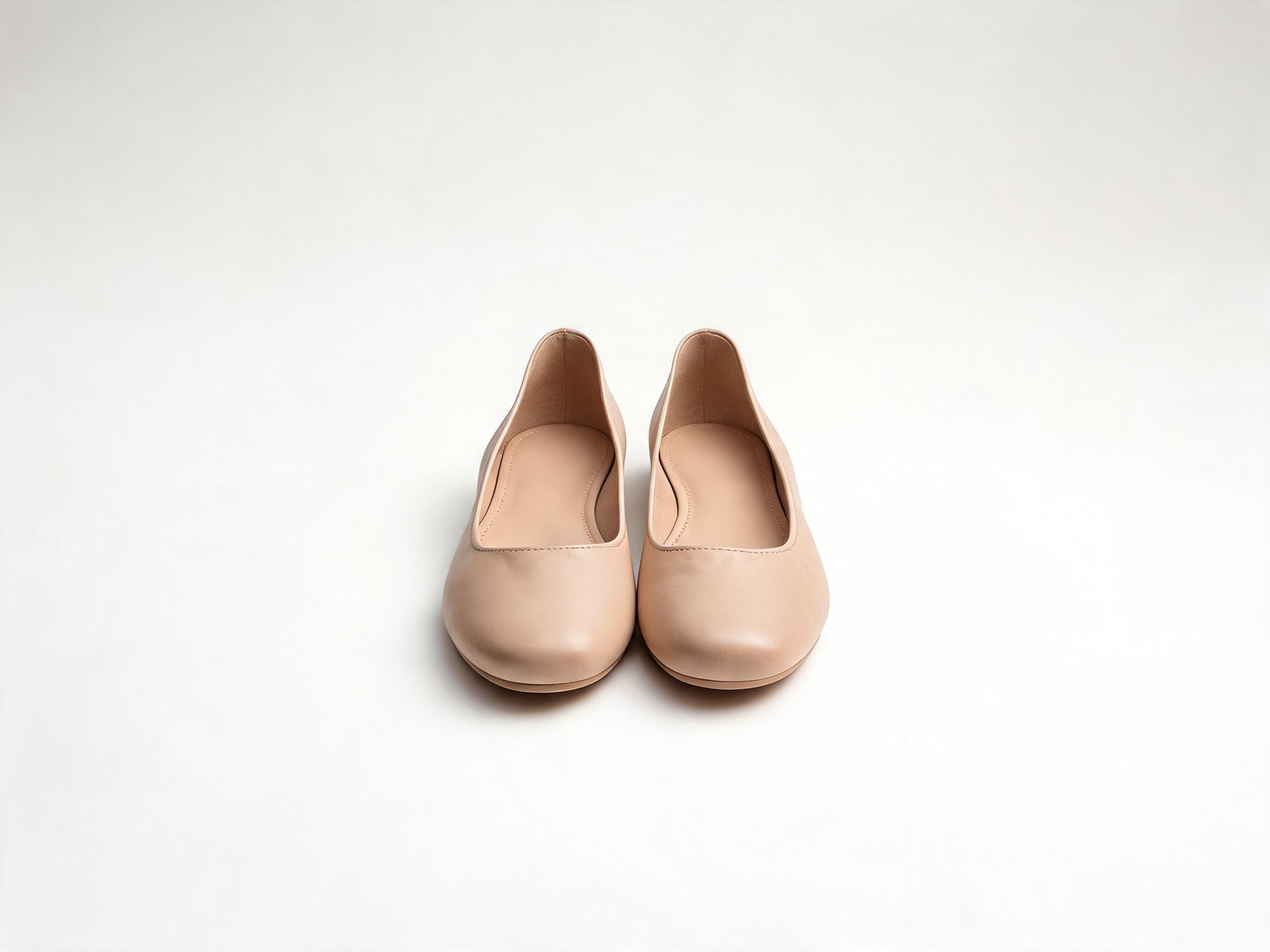
One real reference point: the Nude Leather Ballet Flats use a soft nappa leather upper with an elastic topline, cushioned insole, flexible outsole, and an approximately 1cm flat heel. That combination — soft upper plus elastic grip plus flexible sole — is the construction most buyers mean when they ask for a foldable flat that still feels like a shoe.
If the program is led by look rather than leather, a suede upper with a memory foam insole is the other common path. The Tan Suede Slip-On Flats pair a suede upper with a memory foam insole in a slip-on shape — the insole is what carries comfort here, while the suede carries the visual story. Buyers choosing suede should confirm how the packed product is protected, because suede shows handling marks sooner than nappa.
Construction and comfort features that matter at scale
Elastic topline
The elastic topline is what lets a flat stay on the foot without laces or a strap. In a foldable shoe, it also takes the strain when the shoe is folded and unfolded. At bulk volume, the check is consistency: the elastic should grip the same way across the run, not loose on some pairs and tight on others.
Cushioned and memory foam insoles
For amenity kits, a cushioned insole is often the difference between a shoe that is worn and one that is left in the box. For retail, memory foam insoles support the daily-wear story. Both should be inspected for flatness and bonding — a lifted insole edge is a common final-QC catch.
Flexible outsole and heel attachment
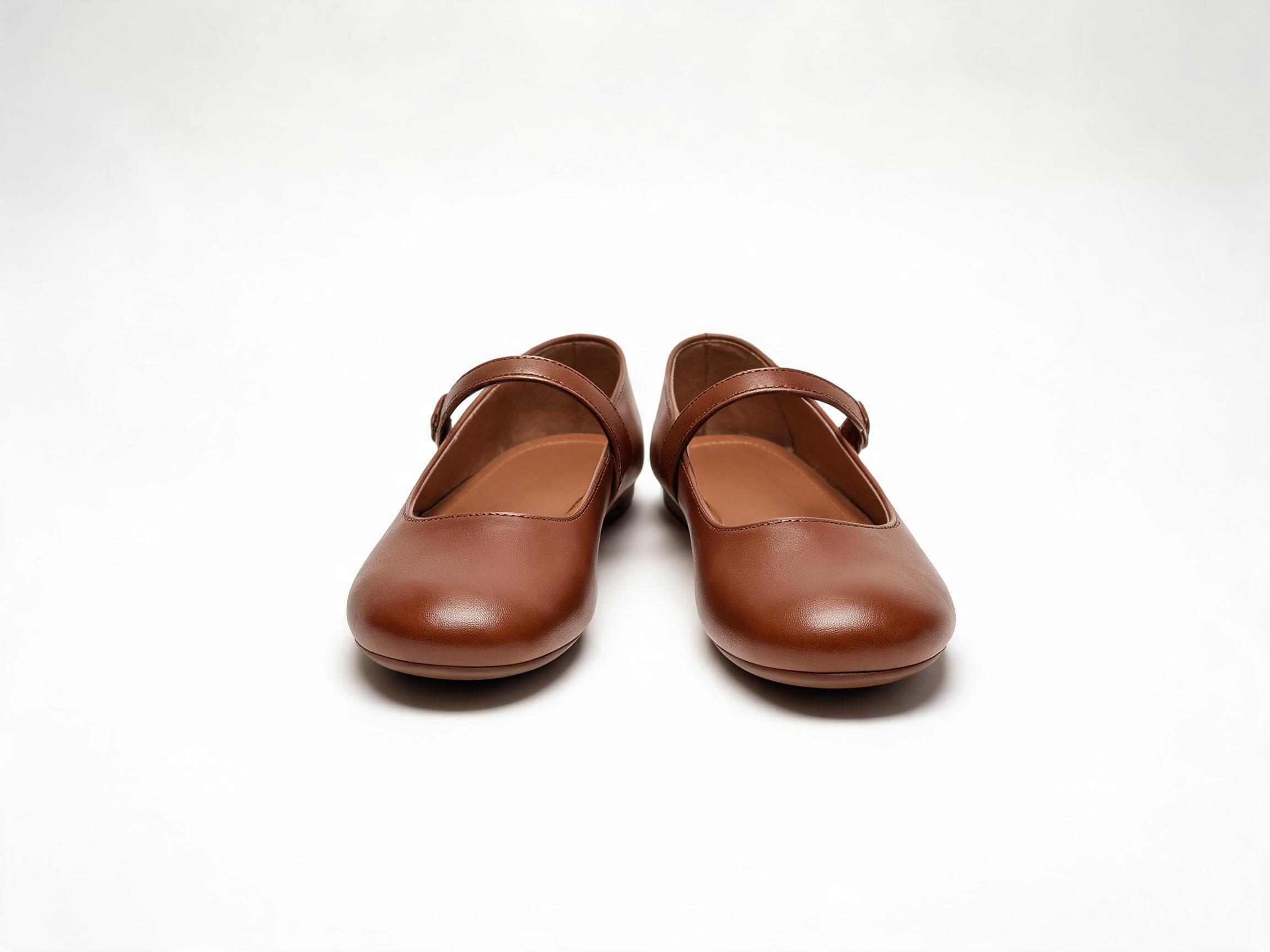
A flexible outsole allows the fold; heel attachment keeps the shoe intact after the fold. For a low flat heel (around 1cm to 1.5cm, depending on style), QC should verify bonding and heel attachment rather than height alone. The Brown Mary Jane Flats, for example, use an adjustable instep strap and an approximately 1.5cm heel — a construction where the strap, buckle, and heel all need separate checks in bulk.
Toe box stiffness for pointed toes
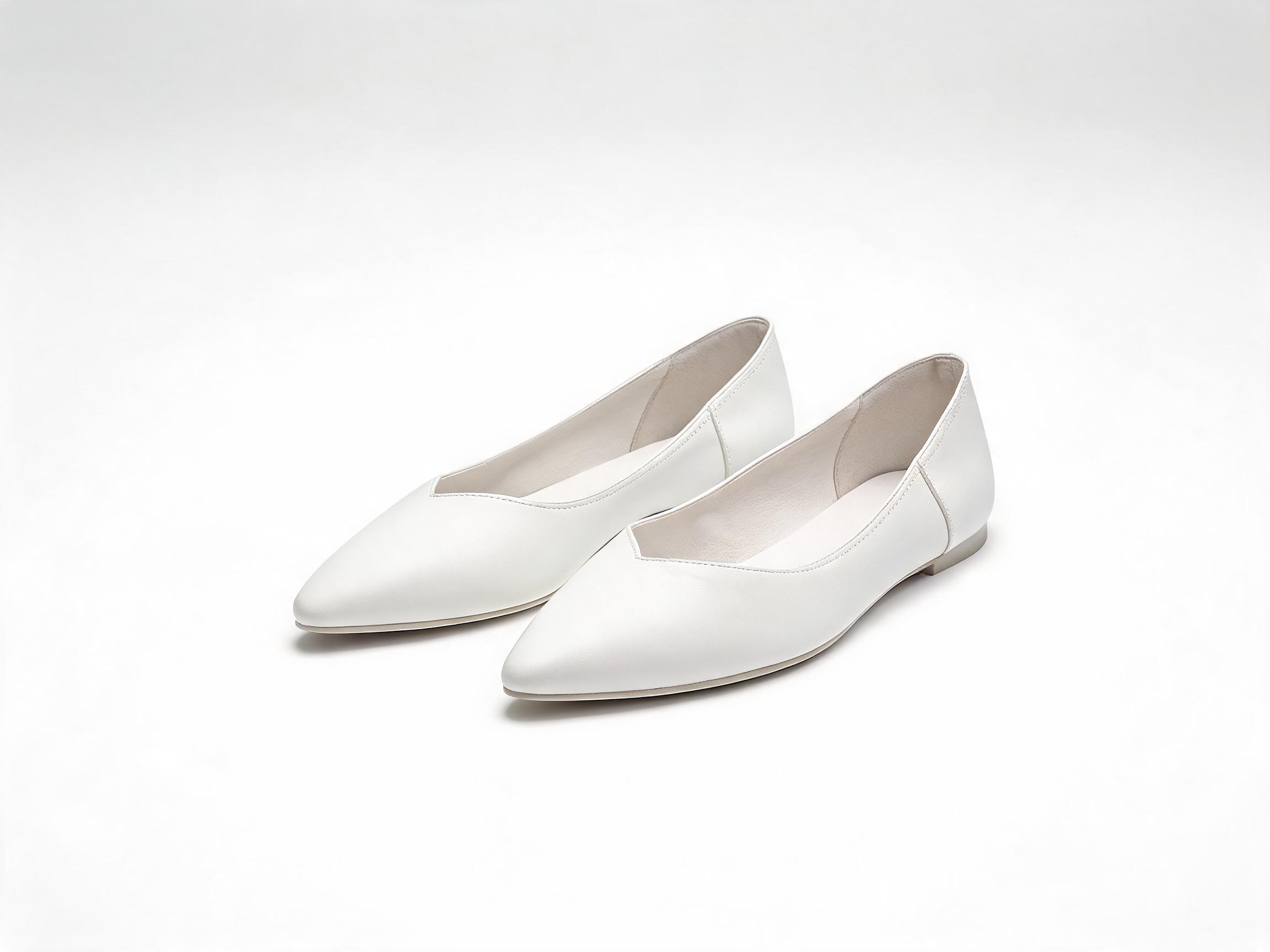
Pointed styles such as the White Pointed-Toe Flats need a toe box stiff enough to keep the point from collapsing during packing and transit. This is a sampling-stage decision: once the last and reinforcement are set, changing them in bulk is expensive.
Foldability vs. structure
There is a tension between a shoe that folds easily and a shoe that keeps its shape. Soft nappa and suede fold with less pressure; a firmer toe box holds the silhouette longer. The buyer's job is to state which one the program prioritizes — a travel kit usually favors folding, a fashion line usually favors shape.
Bulk QC: what to verify before the next order
For an OEM/ODM supplier in Quanzhou with in-house production, quality control usually runs in three stages. As a buyer, you do not need to run the tests yourself, but you should know what you are paying for and what to ask for in a QC report.
| QC stage | What is checked | Why it matters for foldable flats |
|---|---|---|
| Incoming materials | Upper material hand-feel and condition, lining, insole foam, elastic, sole components. | Folding stress starts with the material lot; a weaker lot folds differently. |
| Inline | Stitching, bonding, toe box setting, strap attachment, forepart flexing. | Catches construction faults before the shoe is finished. |
| Final | Color fastness, bonding and heel-attachment tests, insole flatness, pairing, packing. | Confirms the finished pair is consistent and ready to fold into the box. |
The forepart flexing check is the one most specific to this category: it confirms the shoe bends where it should, without the upper cracking or the sole separating. Color fastness matters because light nappa and suede show transfer marks. Bonding and heel-attachment tests cover the two failure points that generate returns.
Third-party inspection and warranty
Third-party inspection is welcome, so buyers who need an independent check before shipment can arrange it. Finished goods carry a 6-month quality warranty. For a replenishment order, ask for the final QC record from the first run and compare it with the new run — consistency between orders is the real signal of a stable supplier.
A practical pre-shipment checklist
- Upper material and color match the approved sample.
- Elastic topline tension is consistent across sampled pairs.
- Insole is flat and bonded at the edges.
- Forepart flexes without cracking or sole separation.
- Toe box holds shape, especially on pointed styles.
- Strap and buckle (Mary Jane styles) are secure and adjustable.
- Color fastness holds on light uppers.
- Packing protects suede and light leather in transit.
Planning the replenishment order
Once a style is approved, the timing is predictable. Existing samples ship in 3–5 days; custom samples take about 7–12 days. Bulk production runs about 25–45 days, depending on style and quantity. Trade terms are EXW, FOB, or CIF, so landed-cost planning should start from the term you choose.
For replenishment, the useful habits are simple. Keep the approved sample and the first bulk QC record on file. Reconfirm the upper material lot before the new run starts, since leather and suede vary between lots. If the program has a fixed in-market date, work backward from bulk production plus shipping, and decide early whether a custom sample change is worth the 7–12 day lead time.
Hotels and airlines often reorder the same amenity flat on a seasonal cycle; retail and accessory brands may rotate styles more often. The material decisions in this article are the ones that repeat either way.
FAQ
Which upper is best for a foldable travel flat?
Soft nappa leather is the usual choice when the shoe will be folded and packed repeatedly, because it stays pliable. Suede is a good option for fashion-led travel kits where packing is controlled.
Can pointed-toe flats be foldable?
Yes, but the toe box needs enough stiffness to keep the point from collapsing. Confirm this with the supplier at the sampling stage, because it is difficult to change after bulk production begins.
What should I ask for before a replenishment order?
Ask for the final QC record from the previous run, confirm the upper material lot, and restate the comfort features (elastic topline, insole type, heel height) so the new run matches the approved sample.
Do you support custom designs and private label?
Yes. The factory is an OEM/ODM footwear exporter founded in 2011, based in Quanzhou with approximately 260 staff, exporting to Europe, North America, and the Middle East. Custom samples take about 7–12 days.
Next step for buyers: send the program brief — use case, upper preference, heel height, and target market — and request a sample of the closest existing style. Existing samples ship in 3–5 days, so material and construction decisions can be tested before a bulk commitment.