
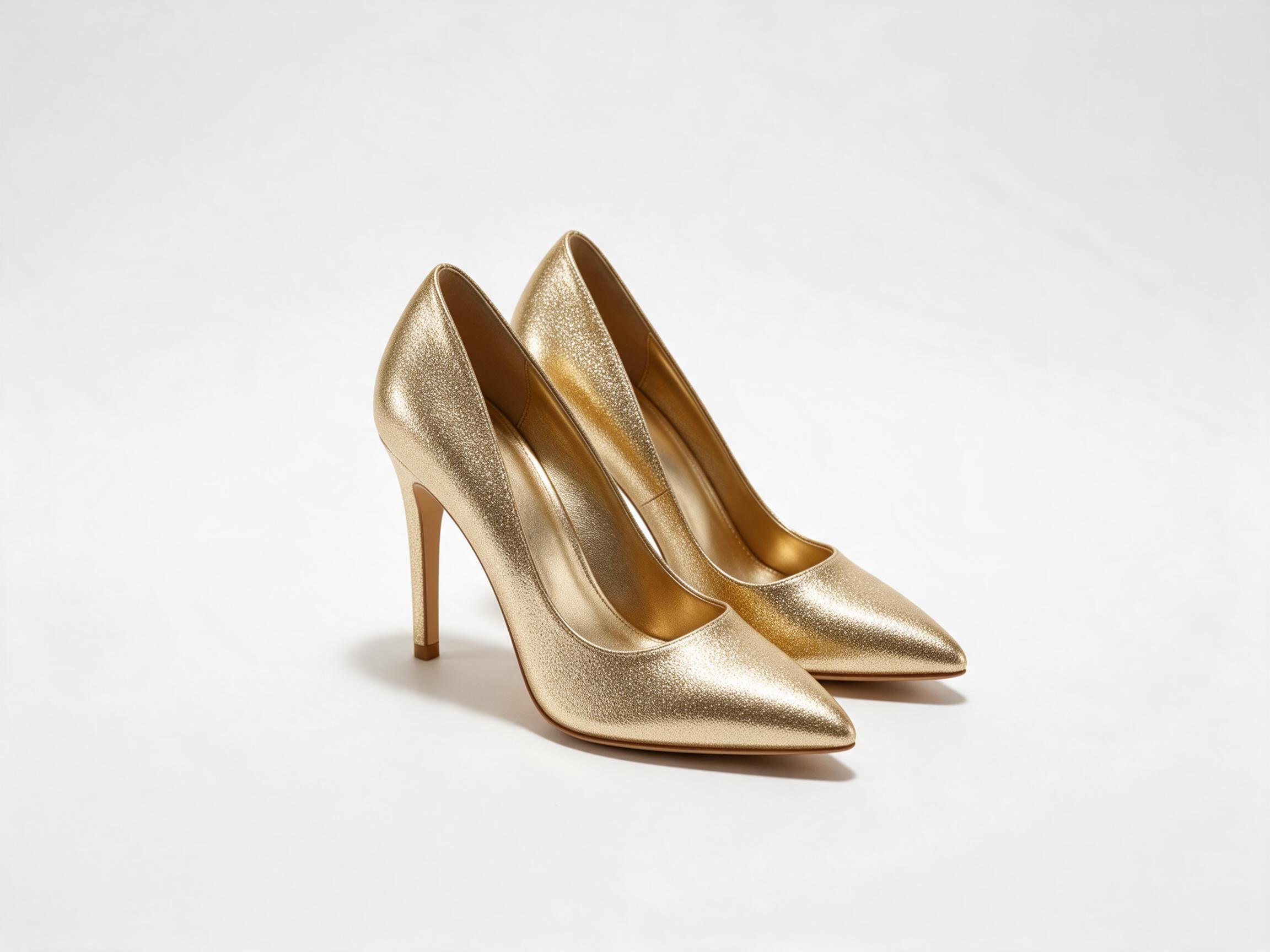
A B2B sourcing guide to metallic evening shoes for glitter shoes wholesale buyers: how to control finish and color consistency across production lots, using a signed counter sample as the color reference, pair-by-pair inspection, and light-controlled acceptance.
B2B Sourcing Guide
Metallic evening shoes are judged under party and evening lighting, where a small shift in surface finish or hue between the left and right shoe, or between one production lot and the next, is easy to see. For buyers sourcing these styles at volume, the practical question is not whether a metallic upper looks good in a single photo, but whether the finish and color can be held consistent across a bulk order. This guide sets out the controls that matter for metallic-finish evening heels: lot-to-lot gloss and color control, a signed counter sample as the color reference, pair-by-pair inspection, and acceptance under controlled lighting.
A note on scope: “glitter” covers several surface effects, and buyers searching for glitter shoes often mean more than one finish. This guide focuses on metallic-finish leather uppers. Sequin, rhinestone and other glued embellishments are a different construction with different inspection risks, and they are not covered here — confirm available finishes with the sales team.
The reference product for this discussion is a gold metallic evening heel with a 9 cm stiletto heel and a metallic-finish leather upper, listed at a minimum order quantity of 100 pairs per color and a lead time of 25–35 days. Confirm current MOQ and lead time with the sales team before ordering, as these terms can change by color and season.
Key takeaways
- Metallic finishes read differently under warm, cool and direct light; agree the acceptance lighting before production.
- A signed counter sample, kept as the master, is the only reliable color and gloss reference for bulk comparison.
- Inspect pair by pair, not just lot by lot: the two shoes in a pair must match each other first.
- Record the reference under defined lighting and keep that record with the purchase order.
- MOQ and lead time are product-page figures; reconfirm them with the sales team for your specific color and quantity.
Why metallic finish is harder to control than a plain upper
A metallic leather upper gets its appearance from a surface treatment that reflects light directionally. The same material can look warmer, cooler, brighter or duller depending on the angle of view and the color temperature of the light source. That directional reflection is what makes metallic evening shoes attractive on the shelf and on the dance floor, and it is also what makes consistency harder to define than with a matte or plain-colored leather.
For a buyer, this means two things. First, a color approval based on a phone photo taken under mixed light is weak evidence: the photo may not represent what the shoe looks like under the lighting your customer will actually use. Second, gloss and hue need to be treated as separate attributes. A lot can match the reference hue and still read glossier or flatter, and either difference shows up when the shoes are paired or lined up on display.
Use a signed counter sample as the color reference
The most practical control for metallic color consistency is a counter sample approved before bulk production and signed by both parties. The counter sample is a physical shoe, made with the intended upper material and finish, that both sides agree represents the target. It becomes the master against which production is compared.
Three details make the counter sample useful rather than decorative:
- Sign and date it, and keep it sealed. An unsigned sample invites disagreement later about which shoe was approved. Keep one copy with the buyer and one with the supplier, stored away from light and dust so the finish does not change.
- Record the lighting under which it was approved. Note whether approval happened under daylight, warm white or neutral white light, and at what intensity. The same shoe can look different under each; writing the condition down turns a subjective impression into a repeatable reference.
- State the acceptable tolerance in words, not only in photos. For example: “Hue to match the counter sample; gloss level to match the counter sample; no visible difference between left and right shoe in a pair under the agreed lighting.” Photos support the record but should not replace the physical sample.
If the buyer cannot visit the production site, the counter sample can be couriered for approval before the bulk run. The cost of that step is small compared with reworking or rejecting a lot that reads off-color under the customer's lighting.
Lot-to-lot gloss and color control during production
Metallic upper material is typically produced in rolls or batches, and different batches can vary in surface reflection even when the nominal color name is the same. A bulk order that draws on more than one batch therefore needs a plan for checking and, where needed, segregating material.
A practical production control sequence looks like this:
- Keep the approved counter sample at the line. The sample should be physically present where cutting and stitching happen, not filed in an office.
- Check incoming upper material against the sample under the agreed lighting before cutting. If a batch reads visibly different in gloss or hue, set it aside for review rather than mixing it into the run.
- Cut and pair within a batch where possible. Keeping the two shoes of a pair from the same material batch reduces the risk of a visible left-right mismatch.
- Record batch numbers on the work order. If a mismatch is found later, batch records show which shoes came from which material and make containment faster.
These steps do not guarantee identical appearance across a large order; they create checkpoints where a difference can be caught before it reaches the carton. That is the realistic goal for metallic finishes.
Pair-by-pair inspection, not just lot-level sampling
Lot-level sampling tells you whether a production run is broadly on target. It does not tell you whether the two shoes in a single pair match each other, which is what the end customer sees first. For metallic evening shoes, a pair-by-pair check should be built into final inspection.
A workable pair check covers:
- Left-right match: compare the two shoes of the pair side by side under the agreed lighting, looking for differences in gloss and hue.
- Surface condition: check the metallic upper for scuffs, uneven reflection, or handling marks that read as color variation.
- Heel and upper alignment: confirm the 9 cm stiletto heel is seated consistently, since a tilted heel changes how light hits the upper and can look like a finish difference.
- Pairing at packing: keep pairs together through packing so that shoes from different batches are not combined at the last step.
Where a pair fails the left-right match, the fix is to re-pair from matching material rather than to accept the mismatch. Recording the failure rate by batch helps decide whether a material batch should be reviewed.
Acceptance under controlled lighting
Final acceptance should happen under lighting that is defined in advance and written into the inspection record. Evening shoes are worn in dim, warm, often mixed lighting, so a check under a single bright source can miss differences that appear in a party setting. A defensible acceptance routine uses at least two conditions:
| Condition | What it reveals | How to use it |
|---|---|---|
| Neutral daylight or a neutral-white source | Hue differences between batches and between left and right shoe | Primary color check against the counter sample |
| Warm white light, similar to evening venue lighting | Gloss and reflection differences that neutral light can flatten | Secondary check; confirm the pair still reads as a matched set |
| Angled viewing | Directional reflection and surface unevenness | Tilt the shoe and compare how the highlight moves across left and right |
Whichever conditions are used, record them on the inspection sheet and attach the counter sample reference. Acceptance then rests on a stated method rather than on individual opinion at the loading dock. If the buyer and supplier inspect under different lighting, disagreements about “off-color” are almost guaranteed; agreeing the lighting in advance prevents most of them.
What to put in the purchase order
Much of the consistency control is decided before production starts, in how the order is written. A purchase order for metallic evening shoes can carry the following clauses:
- Reference to the signed counter sample by date and identifier, with the note that it is the master for hue and gloss.
- The lighting conditions for approval and final inspection.
- A left-right match requirement for every pair.
- A batch-record requirement for the upper material, so mismatches can be traced.
- The consequence of a failed pair check: re-pairing or replacement, agreed in advance.
These clauses are not unusual in footwear sourcing; their value here is that they turn a vague standard (“match the sample”) into a set of checks that can be carried out and recorded.
Product reference
The Gold Metallic Evening Heels page lists the 9 cm stiletto heel and metallic-finish leather upper referenced in this guide. The page also states a minimum order quantity of 100 pairs per color and a lead time of 25–35 days. Confirm current MOQ and lead time with the sales team before ordering, particularly for colors outside the standard range or for quantities that combine several colors in one shipment.
FAQ
Can a metallic finish be matched exactly from one lot to the next?
Metallic surfaces reflect light directionally, so exact identity across lots is difficult to guarantee. The practical standard is that each lot matches the signed counter sample under the agreed lighting, and that each pair matches within itself. Write that standard into the order rather than assuming it.
Should the counter sample be approved under daylight or store lighting?
Both are useful, but the primary approval is usually made under neutral daylight or a neutral-white source because it isolates hue differences. A secondary check under warm white light shows how the finish reads in evening settings. Record both conditions on the approval sheet.
How many pairs should be checked in final inspection?
Lot sampling alone does not catch left-right mismatches, so a pair check should cover the pairs being shipped. The exact inspection level is a commercial decision for the buyer and supplier to agree; what matters is that the pair check is defined and recorded.
What if the bulk order reads glossier than the counter sample?
Gloss differences are one reason to keep gloss level as a separate line in the counter-sample approval. If a lot reads glossier under the agreed lighting, the batch record shows which material was used, and the pair check shows how widely the difference appears. Resolution should follow the clause agreed in the purchase order.
Next step: Review the Gold Metallic Evening Heels listing for the current specification, then confirm MOQ, lead time and counter-sample arrangements with the sales team before placing a bulk order.