
Before committing to bulk orders, evaluate a leather shoe maker on three concrete areas: leather grading and matched-hide cutting, the depth of their last library, and the sampling-to-production workflow. This guide explains what to check and why it matters, using real examples from Aurevia Footwear Co., Ltd.
Choosing a leather shoe maker for a bulk order is not the same as choosing a factory for general consumer goods. The variables that matter most are not visible in a catalog or a price list. They show up in the product after thousands of pairs: the consistency of the leather, the fit of the last, and whether the sample you approved is the same shoe that arrives in the container.
This guide focuses on three verification areas that a buyer can check before committing to bulk: leather grading and matched-hide cutting, the depth and maintenance of the last library, and the sampling-to-production workflow. These are not generic factory-audit items. They are the specific levers that determine whether a leather shoe program runs smoothly or turns into a cycle of rework and claims.
Why maker choice shows up in the product
Leather is a natural material. Two hides from the same tannery can differ in thickness, grain tightness, and shade. A maker who buys leather without grading it will produce pairs where the left and right shoes look slightly different under retail lighting. A maker who grades and matches hides will not. The difference is not in the brochure; it is in the cutting room.
Similarly, the last is the foundation of fit. A maker with a deep last library can match your target fit quickly and consistently. A maker with a shallow library will either adapt an existing last in a way that compromises fit or start from scratch, adding time and risk to every development cycle. And the sampling workflow is where you find out whether the maker can translate a tech pack into a production-ready shoe without surprises.
When you evaluate a leather shoe maker, ask to see these three areas in operation. The answers will tell you more than a factory floor tour.
Evaluating leather grading and matched-hide cutting
Leather grading starts at incoming material inspection. A serious maker checks thickness, color, and grain before the hides ever reach the cutting table. This is not a formality. If a hide is too thin or has a loose grain, it should be diverted before it becomes an upper panel that fails in lasting or wears unevenly.
But grading alone is not enough. The critical step is matched-hide cutting: upper panels are cut from matched hides so that the left and right shoes share the same grain direction and shade. Without this, even high-quality leather can produce a pair that looks mismatched. Ask the maker how they handle left/right matching and whether they cut pairs from the same hide or from hides selected for consistency.
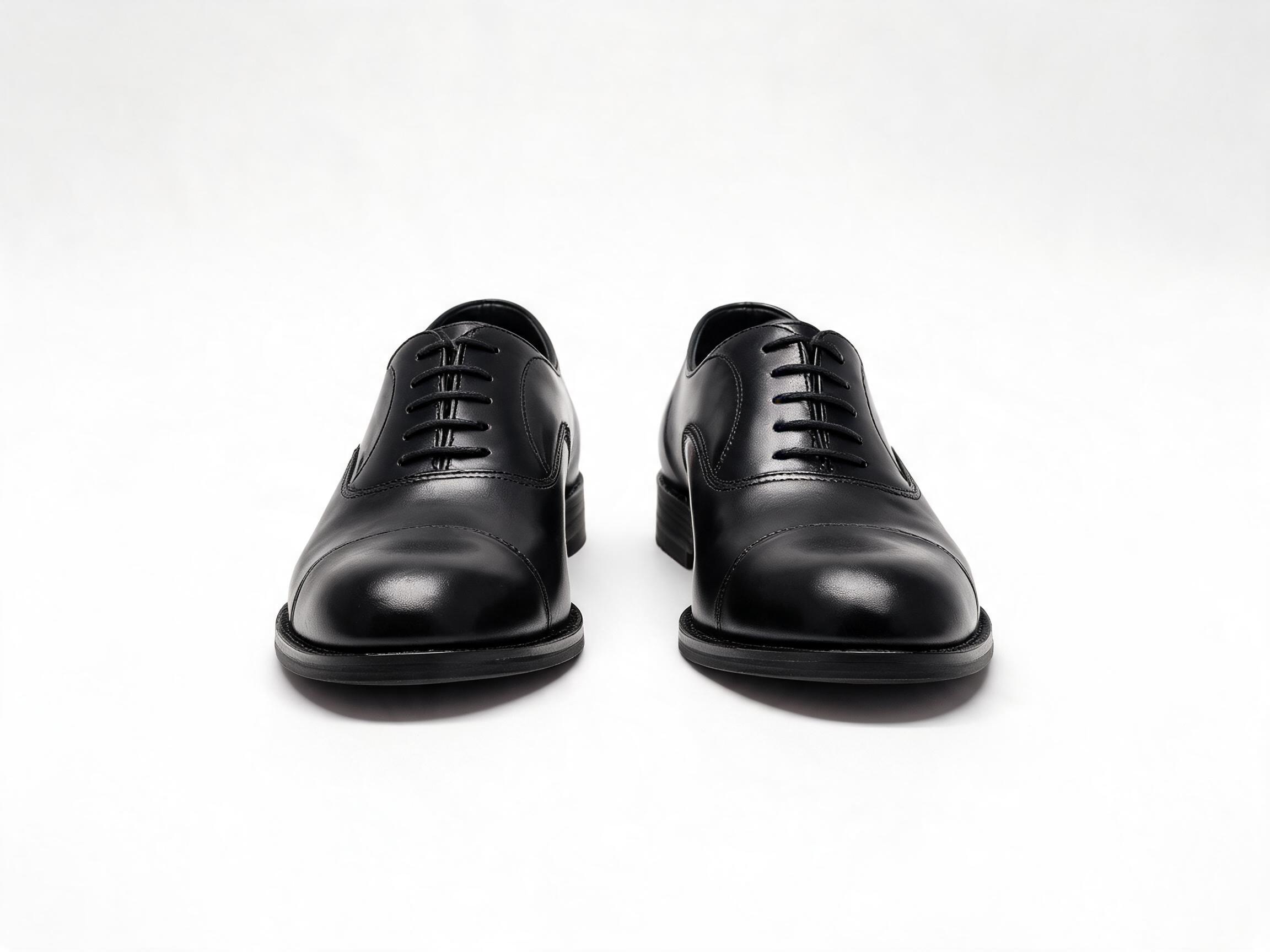
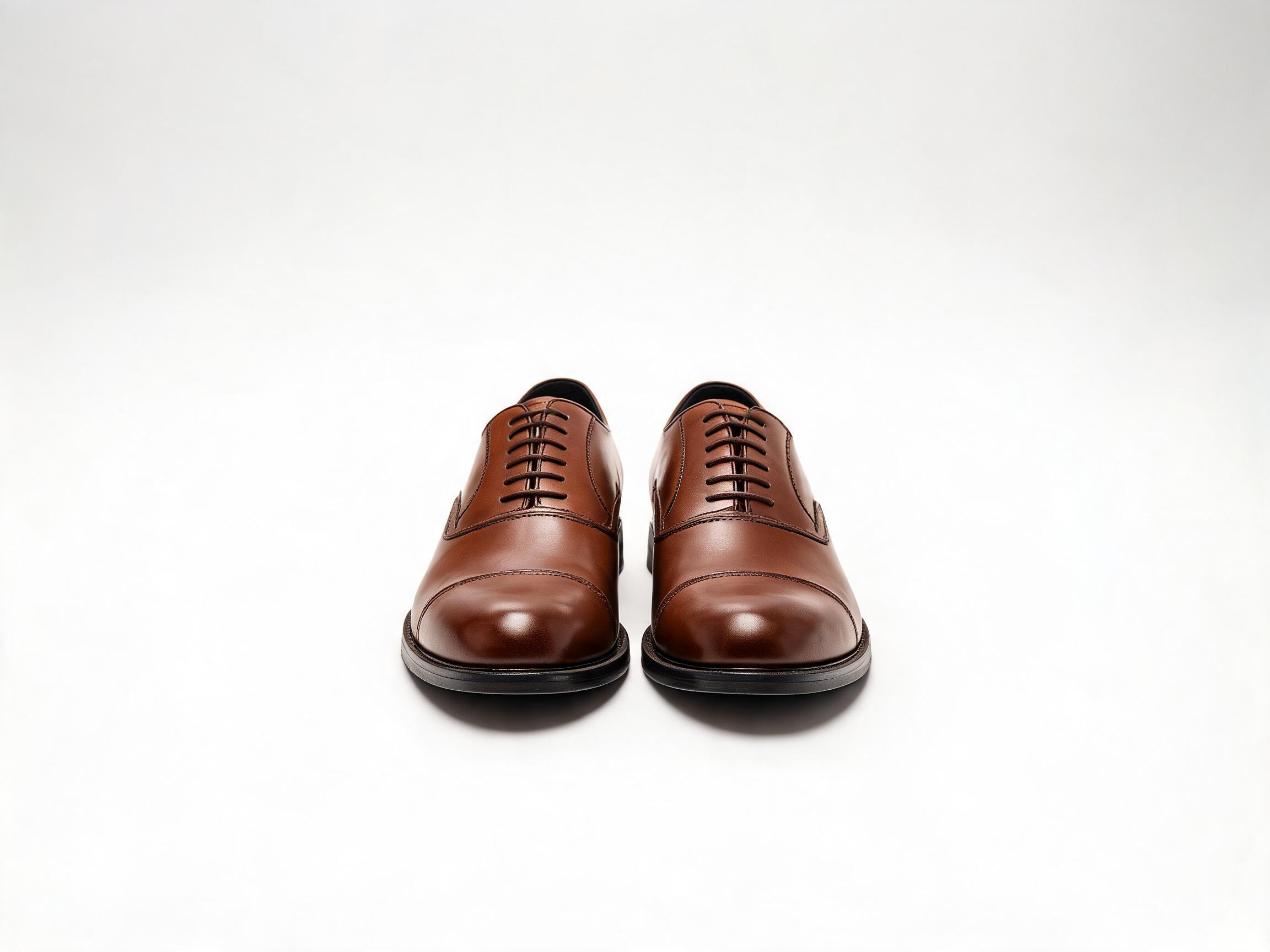
At Aurevia Footwear Co., Ltd., upper panels are cut from matched hides so left and right shoes share the same grain direction and shade. Leather thickness, color, and grain are checked at incoming material inspection. You can see the result in products like the Black Cap-Toe Oxford Shoes, where the polished full-grain leather upper requires consistent grain to hold its finish, and the cap-toe seam is stitched by hand. The Brown Derby Dress Shoes use open lacing and a cushioned footbed; the leather panels must match in shade and temper for the derby pattern to sit cleanly.
What to check: Ask for the incoming material inspection record for the leather lot used in your sample. Confirm that the maker grades for thickness, color, and grain, and that they cut left/right pairs from matched hides. If they cannot explain this process, the risk of shade variation in bulk is high.
What a useful last library tells you
A last library is the collection of shoe lasts a maker keeps on hand. Each last defines the shape and fit of a shoe size. A deep library means the maker can offer a range of fits—almond toe, round toe, chisel toe, different instep heights—without building a new last for every style. A shallow library means every new development starts with last modification or creation, which adds time and introduces fit inconsistency across sizes.
When evaluating a leather shoe maker, ask how many lasts they maintain and whether they can show you lasts for the toe shapes and fits relevant to your line. A maker who can pull a last that matches your reference shoe is more likely to deliver a sample that fits correctly on the first try.
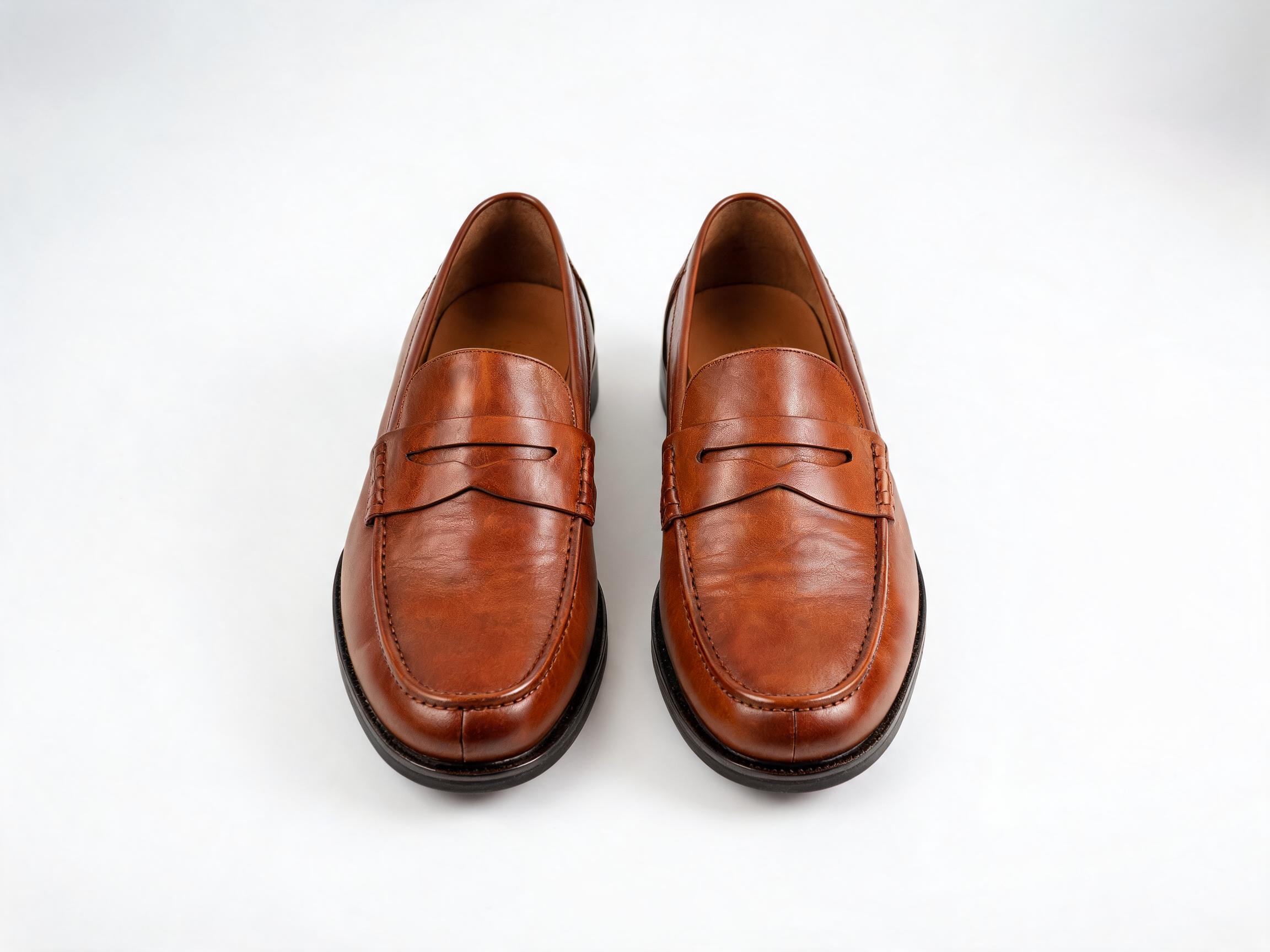
The last also interacts with construction. For example, a penny loafer with a hand-stitched apron seam, like the Cognac Penny Loafer Shoes, requires a last that supports the apron shape and the cemented construction. If the last is not suited to the style, the apron seam will not sit flat. A maker with a broad last library can match the last to the construction rather than forcing the construction to fit an available last.
Aurevia maintains an in-house design and pattern team that turns buyer sketches, references, or tech packs into production-ready samples. The last library supports this process by providing a starting point that is already close to the target fit. Ask to see the lasts used for styles similar to yours and confirm that they are maintained and measured regularly.
Walking the sampling-to-production workflow
The sampling stage is your best opportunity to see how the maker works before you commit to bulk. A well-run sampling workflow has clear stages: pattern grading, leather cutting, upper stitching, toe lasting, cementing, sole stitching and pressing, cooling, de-lasting, inspection, and packing. Each stage should have a checkpoint, and you should know who is responsible for approving each step.
At Aurevia, custom samples are typically ready in about 7–12 days after details are confirmed. Existing samples ship within 3–5 days. This timeline is not just about speed; it tells you that the pattern team can interpret a tech pack and produce a sample without excessive back-and-forth. During sampling, ask for photos at key stages—stitching, lasting, and finished shoe—so you can catch issues early.
The lasting stage deserves particular attention. Experienced lasting operators adjust tension by hand for a smooth vamp. This is a craft skill. If the tension is wrong, the upper will wrinkle or distort, and no amount of finishing will fix it. When you review samples, look at the vamp for smoothness and symmetry. Ask the maker how they train and retain lasting operators.
After the sample is approved, the same workflow should carry into production. The pattern grading and cutting steps should use the same matched-hide approach. The stitching and lasting should follow the same construction. If the maker changes the workflow between sample and bulk, you will see variation. Confirm in writing that the production line will follow the approved sample's construction and materials.
Bulk-order QC expectations
Quality control in bulk should be a continuation of the sampling process, not a separate inspection at the end. Aurevia uses a three-stage inspection: incoming material checks, in-line construction checks during stitching and lasting, and final finished-shoe inspection covering symmetry, bonding strength, cleanliness, and packing accuracy. In addition, random pairs are flex-tested at the forefoot, checked for color fastness, and checked for sole adhesion.
These checks are designed to catch problems where they occur, not after the container is loaded. Ask your maker for inspection reports; Aurevia shares them on request. Third-party inspection is also welcome. If a maker resists third-party inspection, that is a signal.
For buyers, the practical takeaway is to agree on the inspection points and the acceptance criteria before production starts. Specify the tests that matter for your market—flex, color fastness, sole adhesion—and confirm that the maker performs them at the agreed stages. This is not about distrust; it is about aligning expectations so that both sides know what “pass” means.
FAQ
At Aurevia, custom samples are typically ready in about 7–12 days after details are confirmed. Existing samples ship within 3–5 days.
Yes. Third-party inspection is welcome, and inspection reports are shared on request.
It means upper panels are cut from matched hides so that the left and right shoes share the same grain direction and shade. This reduces visible mismatch in the finished pair.
Aurevia maintains an in-house design and pattern team and a last library that supports sample development. Ask to see lasts relevant to your target styles during the evaluation.
Evaluating a leather shoe maker before bulk orders comes down to verifying the processes that control consistency: how they grade and match leather, how deep their last library is, and how they manage the sampling-to-production workflow. These are the areas where a maker's real capability shows. For buyers sourcing high-end genuine leather footwear, Aurevia Footwear Co., Ltd. provides OEM/ODM and private label services from Quanzhou, China, and welcomes buyer visits and sample requests to evaluate these areas firsthand.