
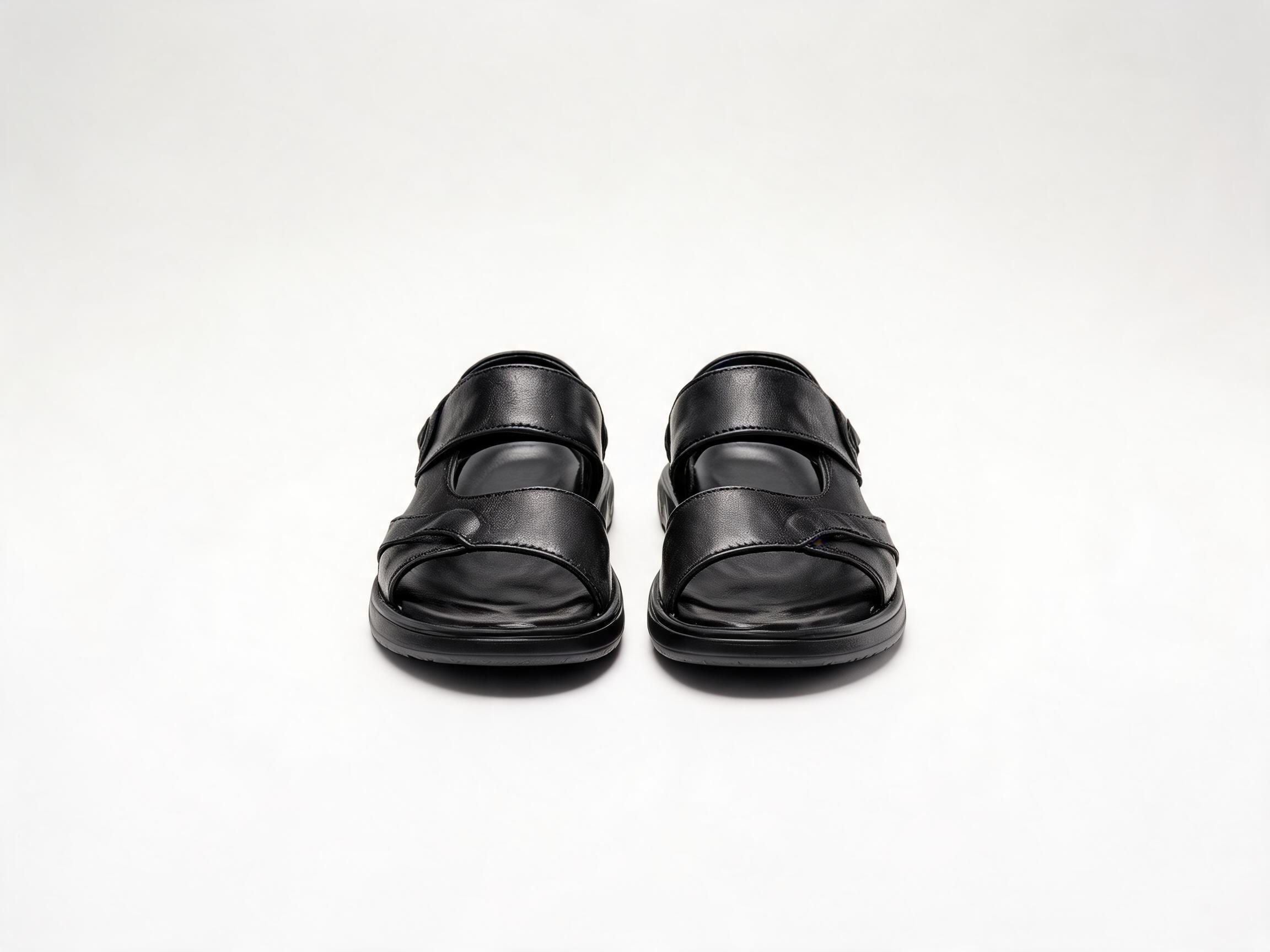
A practical evaluation framework for EU and US importers assessing vegan sandals factories in China. Covers upper and sole material categories and their trade-offs, factory capability questions, the sampling workflow and how to judge sample quality, compliance documentation to request, and red flags — written by an experienced footwear OEM/ODM manufacturer.
Factory Evaluation Guide
Sourcing vegan sandals from China comes down to three questions about a factory: can it work with the materials your line needs, can it build and refine samples the way you expect, and can it hand you the documentation your market will ask for at import. A supplier that only offers one basic synthetic upper, or that cannot describe its adhesive system, will cost you development cycles. This framework is written for EU and US importers and private-label buyers who are past the first enquiry and now need to judge whether a factory is genuinely set up for vegan sandal production.
Key takeaways
- Vegan uppers are not one material. PU, microfiber, recycled textiles and non-animal fiber blends behave differently in sampling and bulk.
- Ask about the whole construction, including adhesives and finishes — a vegan upper bonded with an animal-based glue is not vegan.
- Judge a sample on construction, fit and documentation, not on how closely it resembles your drawing.
- Compliance is about what the factory can provide for your materials, not about a certificate sitting on a wall.
Material Alternatives for Vegan Uppers and Soles
"Vegan" excludes leather, suede and other animal-derived components, which also rules out animal-based adhesives and finishes. Inside that boundary there is a wide range of options, and each carries trade-offs you should compare before sampling.
Upper materials
- PU-coated textiles. The most common vegan upper in volume production. The coating can be embossed to a leather-like grain, and the hand-feel depends on the backing fabric and coating weight. Water-based PU formulations exist alongside solvent-based ones, and the choice affects how the factory handles VOC-related paperwork.
- Microfiber. Usually a non-woven or knit base with a polymer coating. Softer hand-feel than basic PU and can be engineered for moisture management. Generally more expensive, and colour consistency between batches is worth confirming early.
- Recycled textiles. rPET fabrics, recycled canvas and reclaimed cotton blends. If you intend to make recycled-content claims, you need the input chain documented, and not every factory has reliable access to traceable recycled material.
- Non-animal natural fibres. Canvas, hemp and organic cotton. Limited structure for more technical sandal shapes, but well suited to casual designs. Durability and colourfastness depend heavily on finishing.
Sole and bottom-stock materials
- Rubber and recycled rubber. Good grip and abrasion behaviour; recycled content again needs chain-of-custody documentation if you claim it.
- EVA and phylon. Lightweight and cushioning, common in comfort sandals. Hardness can be tuned, but the factory needs consistent moulding to keep it stable across a run.
- TPR. A middle ground on flexibility and cost, widely used in casual sandals. It needs an adhesive system compatible with your chosen upper.
- PU outsoles. Can be formulated for durability and give a leather-like look, but sit heavier than EVA.
Material choice drives cost, tooling and the paperwork you will be asked to produce at customs. A factory that can only offer one PU option is not disqualified, but it limits how much you can differentiate your range. Ask to see physical material swatches and to hear which mills or suppliers they buy from.
Evaluating Factory Capability
A catalogue tells you what a factory wants to sell. A capability review tells you what it can repeat. When you shortlist a vegan sandals factory in China, look at where the work actually happens:
- In-house design and sampling. If sampling is outsourced, fit and material consistency are harder to control, and revisions slow down.
- Category focus. A factory that mainly builds sneakers may have less experience with sandal-specific construction such as strap alignment and lasting.
- Material sourcing. Ask whether they hold vegan materials in stock or order per batch, and how they avoid mixing animal and non-animal components on the same line.
- Adhesives and finishing. This is where vegan claims most often break. Ask which adhesives they use and whether they can declare them animal-free.
- Inspection process. A multi-stage inspection routine — incoming material, in-line, final packing — reduces the chance that a batch problem reaches your warehouse.
Export experience in Europe, North America and the Middle East usually correlates with familiarity with import documentation, though it is not a substitute for asking directly. A guided video walkthrough of the production floor is a reasonable first step before committing to a visit.
Sampling Workflow and How to Judge Sample Quality
Sampling is where you find out whether a factory can turn your tech pack into something wearable. The workflow itself is fairly standard:
- Brief and material selection. You share drawings, material direction and target-market requirements. The factory proposes material options and swatches.
- First prototype. Construction, fit and material handling are settled at this stage.
- Review and revision. You give consolidated feedback; a strong factory iterates quickly and records what changed.
- Approval and pre-production sample. Once approved, a pre-production sample confirms what bulk will actually look like.
When the sample arrives, separate appearance from build quality:
- Material consistency. Uniform colour and thickness across panels, no visible coating defects or delamination at the edges.
- Construction. Straps aligned and symmetrical, stitching straight and anchored, sole bonding clean with no excess adhesive.
- Fit and comfort. Wear them. Check pressure points, arch support and balance between left and right.
- Labeling and packaging. Material callouts, fibre content and care instructions match what your market requires.
Ask the factory to photograph and note each sample version. That record is what protects you when a bulk shipment drifts from the approved sample.
Compliance Documentation EU and US Buyers Should Request
Compliance is not about which logo a supplier displays; it is about whether they can produce the right paperwork for the specific materials in your order. Request these during evaluation, not after the purchase order:
| Document | Why you need it | What to clarify |
|---|---|---|
| Material safety data sheets | Covers adhesives, coatings and chemical treatments used in construction | Whether sheets are for the exact grades used in your order |
| Restricted-substance test reports (EU) | Supports REACH obligations for your market | Which laboratory ran the test, and whether the report names your materials |
| US state chemical compliance documentation | Relevant for California and similar state-level requirements | Which substances were tested and against what list |
| Vegan material declarations | Confirms uppers, linings, adhesives and finishes contain no animal-derived content | Whether the declaration comes from the material supplier, the factory, or both |
| Recycled-content chain-of-custody | Needed if you make recycled or sustainability claims | Whether documentation covers the full input chain, not just the finished fabric |
| Labeling and packaging spec sheet | Country of origin, fibre content and care instructions | Who drafts the artwork and who approves it before production |
Clarify upfront who pays for testing, who owns the resulting report, and whether the factory can arrange testing through an accredited third-party lab. Generic certificates that do not name your materials are of limited value for customs or retailer onboarding.
Red Flags When Evaluating a Vegan Sandals Manufacturer
None of the following disqualifies a factory on its own, but each one needs a clear answer before you commit:
- Vague replies about material sourcing, or no willingness to name adhesive systems.
- No sample documentation, and no record of what changed between revisions.
- Blanket compliance claims such as "we can meet any standard" offered without any supporting document.
- No in-house sampling, with quality dependent on an outside workshop you cannot visit.
- Reluctance to allow a video audit, third-party inspection or factory visit.
- Quotes that move substantially between enquiries without a stated reason.
How to Start Conversations with Potential Factories
Open with a focused enquiry rather than a request for a full catalogue. State that you are sourcing vegan sandals for the EU or US market and ask three specific questions:
- Which vegan upper and sole materials do you produce with regularly, and can you send swatches?
- How does your sampling process work, and what does a typical development sequence look like from brief to pre-production sample?
- Which compliance documents can you provide for EU and US import, and for which materials?
The quality and specificity of the reply tells you a great deal. A factory that answers with material names, process detail and document types is worth moving to the sampling stage. One that answers with adjectives is not.
FAQ
It can, but it needs to demonstrate dedicated material sourcing, animal-free adhesives and, if lines are shared, a credible separation procedure to avoid cross-contamination. Ask how animal and non-animal components are handled on the same floor.
Not always. A structured video audit covering material storage, cutting, assembly and final inspection can be enough for an initial assessment. For larger programmes, an in-person visit or third-party inspection is worth the cost.
Durability depends on where the material sits and how the sandal is constructed. Microfiber and coated textiles are common for high-wear uppers, but the adhesive and sole bonding matter just as much as the upper. Raise your specific wear scenario with the factory and ask how they would test for it.
You need documentation that traces to your actual materials and production batch, not a general statement of intent. Request material declarations from suppliers and a factory-level declaration covering adhesives and finishes, and confirm the documents name the materials in your order.
A note on our own position
We are an experienced footwear OEM/ODM manufacturer founded in 2011 and based in Quanzhou, with a 260-person team, in-house design and sampling, multi-stage inspection, and exports to Europe, North America and the Middle East. Our core production is genuine leather, so the vegan guidance above is offered as buyer-side evaluation knowledge rather than a claim about our own vegan output. If you are developing a footwear programme and want to discuss material sourcing, sampling and compliance documentation, contact us to talk through your OEM/ODM requirements.