
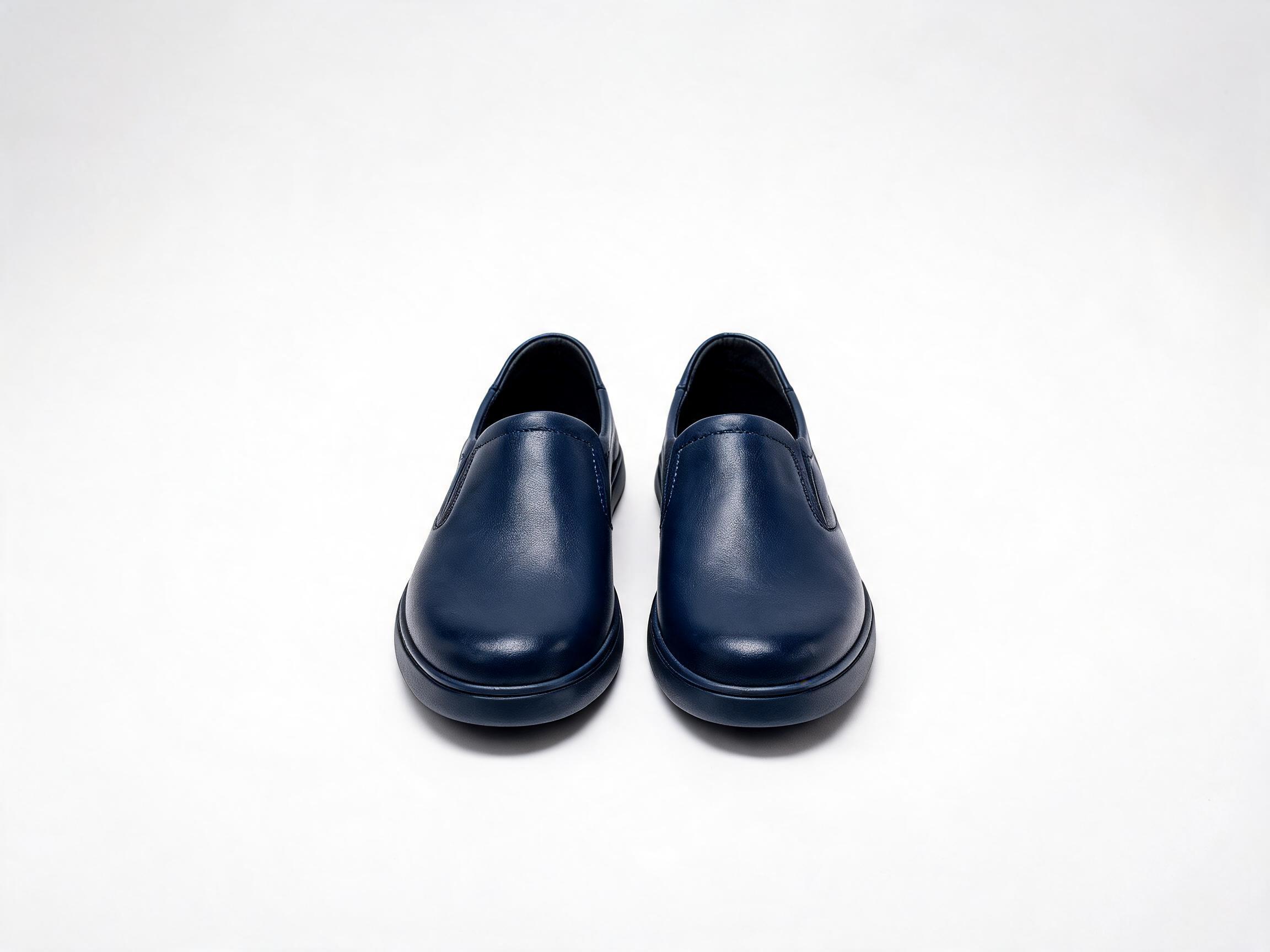
A category selection guide for wholesale buyers comparing slip-on and lace-up men's casual leather shoes. Covers structural trade-offs, daily-wear comfort features, outsole durability considerations, and mixed-order style planning, with reference to our Navy Leather Slip-On Shoes as a benchmark product.
Wholesale Selection Guide
Men's Casual Shoes Wholesale: Slip-On vs Lace-Up Selection for Daily Wear
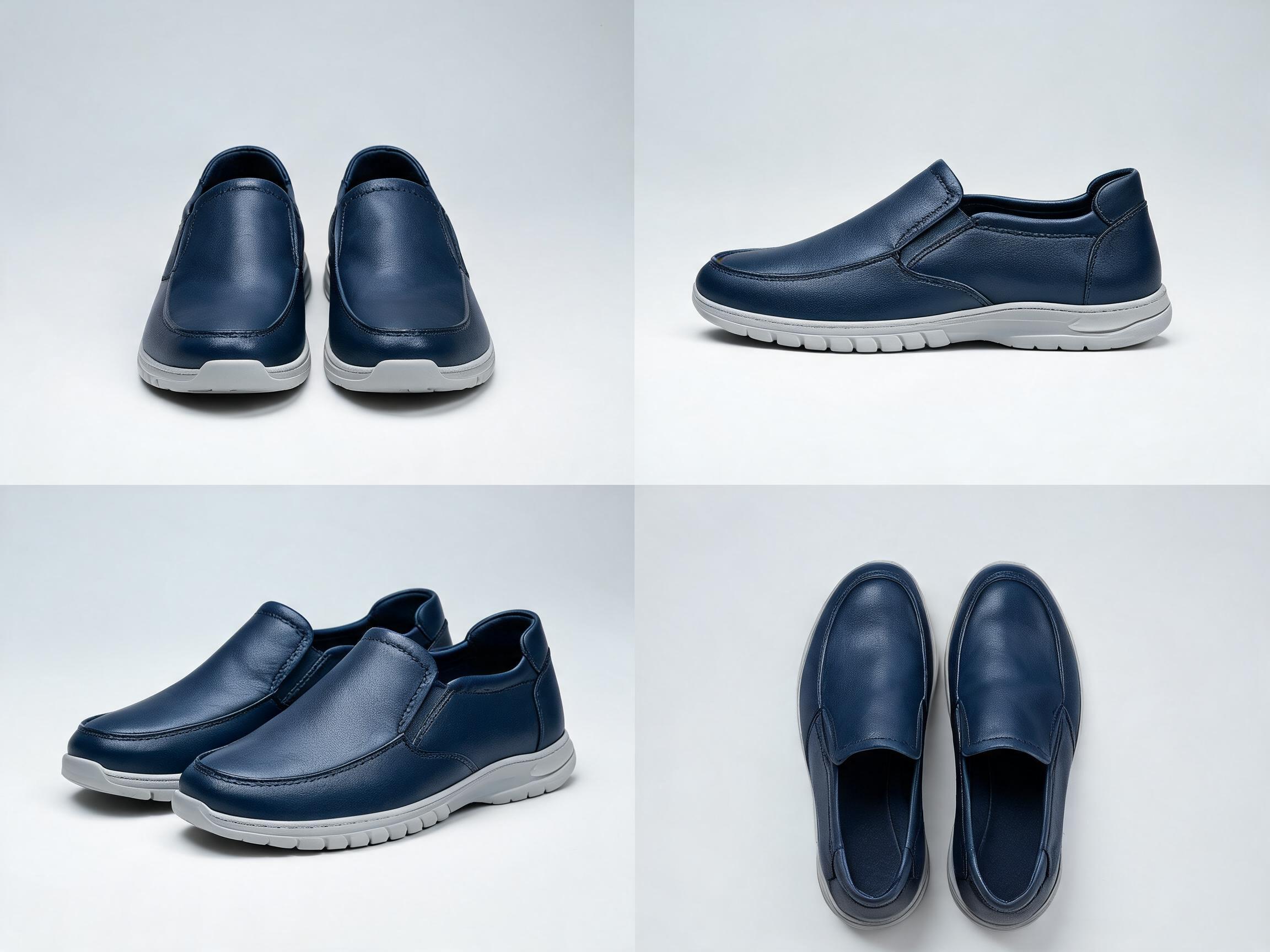
When building a men's casual leather shoe range for daily wear, the first structural decision is slip-on versus lace-up. Each closing system sets different expectations for fit, ease of entry, and upper pattern. For wholesale buyers, the choice is rarely binary: the stronger assortment usually stocks both, positioned against distinct wear occasions. This guide compares the two constructions on the criteria that matter to B2B buyers—daily-wear comfort, outsole durability, and mixed-order planning—and uses our Navy Leather Slip-On Shoes as a reference point for slip-on specifications.
Key takeaways
• Slip-on styles suit quick-entry daily wear and travel; lace-ups offer adjustable fit and a more secure instep.
• Comfort depends on last shape, lining, footbed, and flex—not on the closing type alone.
• Outsole durability is a function of material, construction, and wear pattern; request test data if needed.
• Mixed orders can balance sizes across both styles; our MOQ is 100 pairs per color for the referenced slip-on model. Confirm current MOQ and lead time with the sales team before ordering.
On this page
Structural trade-offs: slip-on vs lace-up
Slip-on shoes use an elastic gusset or a fixed throat to allow entry without laces. The upper pattern is usually cleaner, with fewer seams across the instep. This simplicity can reduce material layers and assembly steps, which may influence cost and lead time. However, a slip-on relies on the last fit and gusset tension to hold the foot; it offers no adjustment for instep height or width. Lace-ups, by contrast, use eyelets and laces to tighten the upper around the foot, providing adjustable closure and a more secure feel for varied foot shapes.
For wholesale buyers, the structural choice affects size curve planning. Slip-ons are less forgiving of half-size variations because the gusset tension is fixed; a customer who falls between sizes may find the fit too loose or too tight. Lace-ups accommodate a wider range within a given size. If your market includes customers with high insteps or wide feet, lace-up styles may reduce returns related to fit. Conversely, slip-ons appeal to customers who prioritize convenience and a streamlined look.
Both constructions can be built on the same last or different lasts. Our Navy Leather Slip-On Shoes, for example, use a polished full-grain leather apron-toe upper with a breathable leather lining and cushioned footbed. The stitched rubber sole and approximately 2.5 cm heel are typical for a casual slip-on. A lace-up counterpart would typically add eyelets, laces, and a tongue, with a similar sole construction possible.
Daily-wear comfort features
Daily-wear comfort is determined by several components that buyers should specify or verify: last shape, lining, footbed, flex point, and weight. The closing type influences how these components interact but does not guarantee comfort on its own.
- Last shape: A last designed for casual wear should provide room in the toe box and a snug heel. Slip-ons often use a slightly fuller last to ease entry; lace-ups can use a more anatomical last since the laces adjust fit.
- Lining: Breathable leather lining helps manage moisture. Our slip-on uses leather lining; buyers should confirm lining material for lace-up styles.
- Footbed: A cushioned footbed improves underfoot comfort. Removable footbeds allow customers to insert orthotics, which can be a selling point.
- Flex point: The shoe should flex at the ball of the foot without excessive force. Our three-stage QC includes forefoot flex testing in final inspection, which checks this property.
- Weight: Lighter shoes reduce fatigue. Slip-ons generally have less hardware (no eyelets or laces), which may reduce weight marginally.
When comparing samples, wear-test both styles for a full day if possible. Check for heel slip in slip-ons and pressure points from laces in lace-ups. Note that comfort is subjective; what works for one customer may not for another. For wholesale, consider offering both styles to cover different preferences.
Outsole durability considerations
Outsole durability depends on material, tread pattern, construction, and the user's wear pattern. Rubber is common for casual leather shoes due to its grip and abrasion resistance. Stitched construction, where the sole is sewn to the upper, can enhance durability by reducing the risk of sole separation. Our Navy Leather Slip-On Shoes feature a stitched rubber sole, which is a typical construction for casual styles.
Buyers should ask for specific information about outsole compound and hardness, and any abrasion test data the supplier can provide, if durability is a key selling point. Without standardized test results, claims of durability remain qualitative. For daily wear, consider the following:
- Material: Rubber outsoles vary in hardness and oil resistance. A softer compound may offer better grip but wear faster; a harder compound may last longer but be less comfortable.
- Tread pattern: A shallow, dense tread suits urban daily wear; a deeper tread may suit outdoor use.
- Construction: Stitched soles are generally more durable than cemented soles, but cementing is common and can be adequate if done well.
We do not publish specific durability test results for our products. Buyers requiring verified performance should request test reports from the supplier and evaluate them against their market requirements.
Mixed-order style planning
Wholesale buyers often order multiple styles to spread risk and meet diverse customer demands. When mixing slip-on and lace-up styles, consider these planning points:
- Size curve: Slip-ons may sell well in core sizes; lace-ups can accommodate extended sizes. Plan the size breakdown per style based on your historical sales or target market data.
- Color coordination: Using the same leather color across both styles can create a cohesive range. Our slip-on is available in navy, black, brown, and custom colors; lace-up styles could be coordinated if offered.
- MOQ and lead time: For our Navy Leather Slip-On Shoes, MOQ is 100 pairs per color, with a lead time of 25–35 days. Confirm current MOQ and lead time with the sales team before ordering. Sample shoes are available in 3–5 days; customized samples take 7–12 days.
- Order volume: Combining styles in one order may help meet container or shipping thresholds, but check with the supplier on how mixed orders are priced and produced.
Our three-stage QC (incoming material, in-line, final inspection) applies to all production, including mixed orders. A 6-month warranty and 48-hour after-sales response support after-sales service.
Reference product: Navy Leather Slip-On Shoes
To illustrate slip-on specifications, our Navy Leather Slip-On Shoes are a polished full-grain leather apron-toe slip-on with breathable leather lining, cushioned footbed, and stitched rubber sole. Heel height is approximately 2.5 cm. Sizes run EU 39–45 / US 6.5–12. Colors: navy, black, brown, and custom. MOQ is 100 pairs per color, lead time 25–35 days. Confirm current MOQ and lead time with the sales team before ordering.
Founded in 2011 in Quanzhou, China, we are a 260-person team exporting to Europe, North America, and the Middle East. We offer OEM/ODM services and maintain a 6-month warranty with 48-hour after-sales response. Our three-stage QC includes forefoot flex testing at final inspection.
FAQ
Can I mix slip-on and lace-up styles in one order?
Yes, mixed orders are possible. MOQ applies per style and color. Confirm details with the sales team.
What is the typical lead time for slip-on shoes?
For our Navy Leather Slip-On Shoes, lead time is 25–35 days. Confirm current lead time with the sales team before ordering.
Do you provide samples for fit evaluation?
Yes, sample shoes are available in 3–5 days; customized samples take 7–12 days.