

A technical guide for B2B buyers on developing platform heels from an existing stiletto last. It covers changes in last volume and fit, weight and balance, sole stacking and bonding, and the parameters to specify in your tech pack for sampling and bulk inspection.
Switching a stiletto to a platform is not a simple sole swap. The same upper pattern that fits well on a slim last will feel different once the forepart sits on a thick sole: the inside volume changes, the weight moves, and the bonding between sole layers becomes the main quality risk. For buyers sourcing platform heels wholesale, the practical question is not whether a factory can make a thick sole, but which parameters in the tech pack will keep fit, balance and bond strength consistent from sample to bulk.
This article uses our existing Black Leather Stiletto Heels as the baseline. It has a polished calf leather upper, leather lining, padded insole with arch support, a 10 cm stiletto heel with a reinforced heel core, pointed toe, anti-slip rubber outsole, cemented construction and a firm heel counter. Our current catalog does not include a platform style. Developing a platform heel means reworking the last and sole stack for a given upper, not selecting a ready-made item. The comparison below shows what changes when the same upper is moved onto a platform construction.
Key takeaways
- Platform development changes the last volume, weight distribution and sole bonding process; each needs its own spec in the tech pack.
- Fit evaluation must shift from heel-to-toe length to forefoot girth, instep clearance and half-size grading.
- Weight and balance depend on heel core design, insole support and sole material; specify target weight and test walking feel on the sample.
- Bonding failure is the main QC risk for stacked soles; define surface preparation, adhesive lot control and peel or flex checks at inspection.
- Your tech pack should include last dimensions, sole stack thickness, adhesive type, bonding process and inspection criteria.
Last and internal volume: forefoot space, instep wrap and size grading
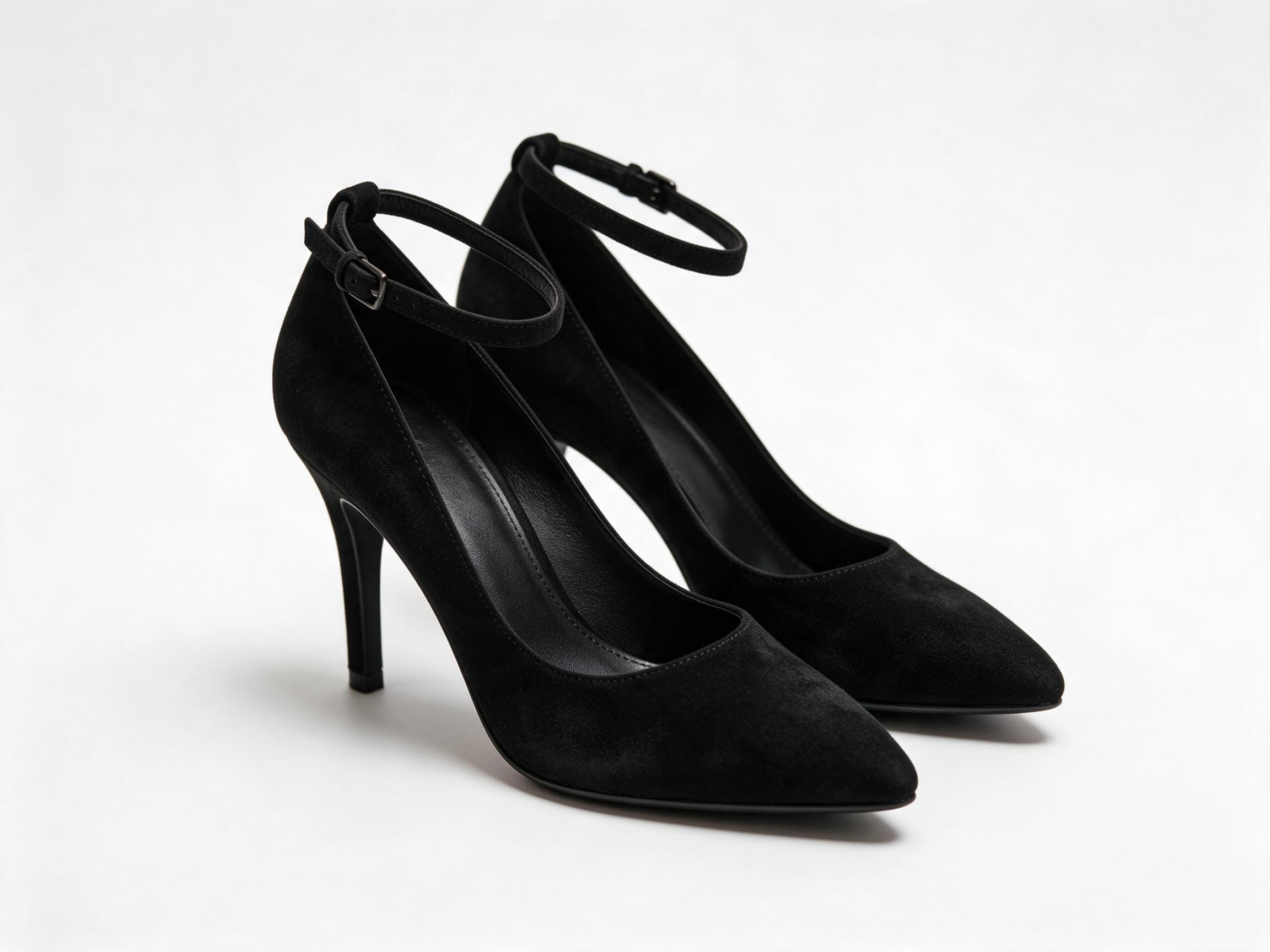
A stiletto last is shaped to hold the foot close to the ground with a thin sole. When you add a platform, the forepart of the last must be rebuilt to sit on top of the thicker sole unit. If the factory simply lifts the existing last, the internal volume above the toes increases. The foot then slides forward and the heel slips, especially in a pointed-toe design. The upper may look the same, but the fit changes.
For the Black Leather Stiletto Heels, the pointed toe and firm heel counter already give a close fit. On a platform version, the last needs a revised forefoot girth and a raised toe spring to match the sole thickness. The instep area also needs checking. A platform raises the whole foot, so the instep opening may press harder against the top of the foot unless the last is adjusted. The padded insole with arch support must be re-patterned to sit correctly on the new sole bed.
Fit testing should not rely on the original size. Ask for a fit sample in the target size and check three points:
- Forefoot girth: measure inside circumference at the ball of the foot. Compare with the stiletto version. If the platform last adds volume, the buyer may need to adjust the size grading or add a half-size option.
- Instep clearance: check that the top of the foot does not rub against the upper. A platform often requires a slightly higher instep pattern.
- Heel slip: walk in the sample. The heel counter should hold without pinching. If the heel slips, the last may need a tighter heel seat or the sole angle may be wrong.
Half-size grading is common in women's footwear, but the platform last may not grade linearly. The forefoot volume increase between sizes can differ from the stiletto last. Your tech pack should state whether half sizes are required and how the last is graded. This is a decision for you and the factory to confirm with fit samples, not an assumption from the existing stiletto line.
Other heels in our published range, such as the Red Leather Classic Pumps and the Black Suede Ankle-Strap Heels, show how heel height and strap detailing are handled across a lineup. They are useful references for upper patterns and for strap placement. Neither removes the need to develop a separate platform last.
Weight and balance: heel core, insole support and walking feel
Adding a platform increases the weight of the sole unit. A thicker sole also moves the center of gravity. For the wearer, the shoe may feel heavier and less flexible. For the buyer, this affects comfort perception and return rates. The tech pack should specify a target weight range for the sample size and require a walking test.

Weight distribution depends on three components:
- Heel core: The stiletto heel uses a reinforced core. On a platform, the heel height may be reduced or the heel shape changed, but the core must still support the wearer's weight. Specify the heel core material and diameter in the tech pack. The factory should run a stability test on the heel and check the heel attachment.
- Insole support: The padded insole with arch support works for the stiletto because the foot is close to the ground. On a platform, the insole needs to bridge the gap between the foot and the sole bed. A soft insole may compress and change the fit. Specify the insole material and thickness, and require that the arch support contour is maintained.
- Sole material: The anti-slip rubber outsole on the stiletto is thin. A platform sole stack may use rubber, PU or a combination, depending on what the buyer specifies. Each material has a different density. Your tech pack should state the sole material and target hardness. The sample should be weighed, and the weight compared with the target range.
Walking feel cannot be judged from a photo. Ask for a fit sample and walk in it on a hard surface before approval. Check that the foot does not slide forward, the heel does not wobble, and the forepart bends at the ball of the foot. Our existing closed-toe pump runs on a much lower heel and can serve as a reference for how a lower pitch feels, but the platform construction still needs its own balance check.
Sole stacking and bonding: alignment, surface preparation and edge trimming
The biggest quality risk in a platform heel is the bond between the sole layers. A stiletto has a relatively simple outsole attachment. A platform has multiple layers: midsole, platform layer, outsole. Each interface is a potential failure point. The tech pack must define the stacking order, adhesive type, surface preparation and inspection method.
Stacking alignment: the layers must be aligned to the last bottom. Any offset creates a visible edge and can cause the sole to peel. The factory should use a jig or marking system to align the layers. On the sample, check that the platform edge is even around the forepart and that the heel seat matches the heel block.
Surface preparation: before bonding, the surfaces must be roughened and cleaned. Some materials, such as PU or rubber with mold release agents, require primer. The tech pack should state the preparation method for each material. If the factory uses a different adhesive or primer, the buyer should approve the change.
Adhesive and bonding process: specify the adhesive type the program requires, the open time, and the pressing pressure and duration. These parameters affect bond strength. The factory should record the adhesive lot number and bonding conditions for each batch. During inspection, check for gaps, bubbles or uneven adhesion along the sole edge.
Edge trimming: after bonding, the sole edge is trimmed and finished. On a platform, the edge is thicker and more visible. The trimming must be smooth and consistent. Check for rough edges or exposed layers.
Our production process includes incoming material inspection, in-line inspection and final inspection. For platform heels, the final inspection should add a bonding check. We can provide inspection reports and welcome third-party inspection. The tech pack should list the specific bonding tests the buyer requires, such as a peel test or a flex test on the forepart.
Tech pack parameters and sample-to-bulk acceptance
To keep fit, weight and bonding consistent, your tech pack should include the following parameters. These are not a complete footwear tech pack, but they are the items that change when moving from a stiletto to a platform.
| Area | Parameter to specify | Why it matters |
|---|---|---|
| Last | Forefoot girth, instep height, toe spring, heel seat width, size grading and half-size availability | Controls internal volume and fit; prevents heel slip and toe pressure. |
| Sole stack | Layer order, material and thickness of each layer, total platform thickness (to be confirmed by the buyer against the sample), edge shape | Determines weight, balance and visual proportion. |
| Heel | Heel height, core material and diameter, attachment method | Affects stability and weight distribution. |
| Insole | Material, thickness, arch support contour, padding | Maintains comfort and fit on the platform bed. |
| Bonding | Adhesive type, primer, surface preparation, pressing pressure and time, adhesive lot control | Prevents delamination of sole layers. |
| Inspection | Fit check on sample, weight range, bonding visual check, peel or flex test, edge trimming check | Defines acceptance criteria for bulk. |
Sample-to-bulk acceptance should follow a written checklist. For the sample, approve the fit on a fit model or the buyer's fit team, record the weight, and check the bonding by hand flexing the forepart. For bulk, the factory should inspect each batch against the approved sample. The inspection should include a visual check of the sole edge, a random bonding check, and a fit check on a limited number of pairs. Our team can provide inspection reports and support third-party inspection. The buyer should state any specific tests required in the tech pack.
We can adjust sole material, heel height, insole branding and packaging according to your requirements. Our design team can develop samples from drawings, reference images or a tech pack. For platform heels, we recommend starting with a fit sample before committing to bulk.
Frequently asked questions
Do you have platform heels in your current catalog?
No. Our current catalog includes stiletto and cone heel styles, such as the Black Leather Stiletto Heels, but no platform styles are listed. Platform heels are developed as OEM/ODM projects. We rework the last and sole stack for your upper pattern.
Can you use the same upper as the Black Leather Stiletto Heels for a platform?
Yes, the upper pattern can be used as a starting point. However, the last and sole must be redesigned for the platform. The upper may need minor adjustments at the instep and toe to maintain fit.
What is the platform height?
Platform height is not fixed. It depends on your target market and the sample approval. We will confirm the height with you during sampling based on your requirements.
How do you check bonding on platform heels?
We inspect the bonded sole visually for gaps and uneven adhesion. We can also perform a peel or flex test on the forepart according to your tech pack. Each batch is checked against the approved sample.
If you are developing a platform heel line and need a manufacturing partner for OEM/ODM production, our team can review your tech pack and advise on last development and sole construction. We can provide samples based on your drawings or reference images. Contact us to discuss your project.