
A practical checklist for brands and retailers screening private label footwear factories. It covers last library and style adaptation, leather and material craftsmanship, packaging and labeling support, sampling discipline, and communication quality, with the specific evidence to request from each supplier.
Choosing a private label shoe manufacturer is less about finding a factory that can make shoes and more about finding one that can make your shoes, consistently, at the quality level your brand promises. The evaluation criteria are narrower than general sourcing. You are not buying a stock product; you are buying a development partner who will interpret your design intent, source materials to your standard, apply your labels and packaging, and repeat the result across seasons.
The checkpoints below are organized around the four capabilities that most often separate a workable private label partner from one that causes problems after the first bulk order: last and style adaptation, material craftsmanship, packaging and labeling support, and sampling and communication discipline. Each section explains what to check, why it matters, and what evidence to request.
- A private label factory needs a last library and pattern team, not just assembly capacity.
- Genuine leather quality is a sourcing and inspection process, not a single material claim.
- Packaging and labeling capability determines whether your brand arrives intact at retail.
- Sampling timelines and communication quality predict bulk-order reliability more than any showroom display.
What this checklist covers
1. Last library and style-adaptation ability
The last is the foundation of fit, and a private label program lives or dies on whether the factory can adapt your chosen style to a last that suits your market. A factory with a deep last library can often adapt an existing last to your design rather than building a new one from scratch, which reduces both sampling time and fit risk. Style adaptation covers more than the last: pattern engineering, toe spring, heel pitch, and the relationship between upper and sole all need to be adjusted when a reference style is translated into your own product.
What to check: Ask how many lasts they hold and in what size ranges. Ask whether they can show you a last that is close to your intended fit and explain what would need to change to match your target. Ask who does the pattern work and whether that person is in-house or outsourced.
Why it matters: If every style requires a new last, development costs and lead times multiply. If the factory only assembles to someone else’s patterns, your design intent may be lost in translation, and fit consistency across sizes becomes a recurring complaint.
Evidence to request: A list of representative lasts with their size ranges, photos of pattern room or CAD setup, and a short written explanation of how they would adapt one of your reference styles. A factory that can walk you through the adaptation logic is more useful than one that simply says yes to everything.
2. Genuine leather and material craftsmanship
Material quality is where private label programs most often drift between the sample and the bulk order. Genuine leather varies by tannery, batch, and finish, and a factory needs a sourcing and inspection process that keeps color, texture, and durability consistent across repeat orders. Craftsmanship questions should focus on how the factory selects, inspects, and stores leather, and how it handles lining, insoles, and sole bonding.
What to check: Ask where their leather comes from and how they verify consistency between batches. Ask what happens when a batch arrives with color variation or surface defects. Ask how they handle lining and insole materials, since these affect comfort and are often where lower-cost factories cut corners.
Why it matters: A private label brand cannot afford visible shade variation between production runs. Buyers notice color differences immediately, and returns from material inconsistency are expensive to resolve after the goods have shipped.
Evidence to request: A description of their leather inspection stages, including how color, texture, and durability are checked. Ask whether they can share inspection reports and whether third-party inspection is welcome. A factory that can explain a multi-stage inspection process, rather than simply naming a tannery, is showing you how they control repeatability.
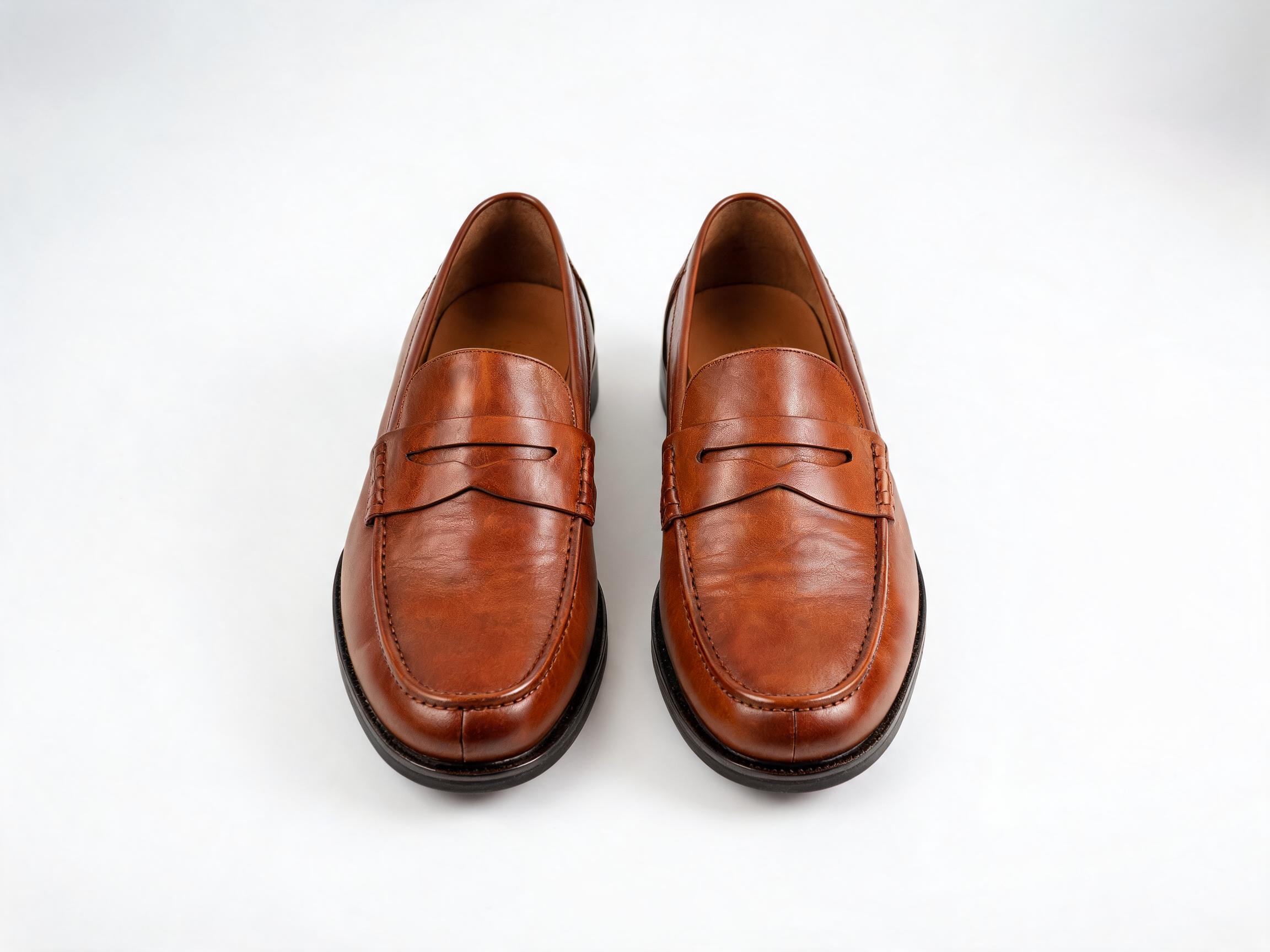
For an example of how material and construction choices come together in a private label program, the men’s cognac penny loafer shows hand-stitched apron detail and private-label box and hangtag support, which illustrates the level of material and finishing control a private label buyer should expect to see documented.
3. Brand-specific packaging and labeling support
Private label means your brand, not the factory’s. Packaging and labeling support is therefore a core capability, not an afterthought. This covers logo application, box and hangtag production, size grading, and the ability to handle full seasonal collections with consistent branding across styles.
What to check: Ask what branding elements they can apply in-house: logos on insoles, boxes, hangtags, tissue paper, and polybags. Ask how they manage size grading and whether they can produce a full seasonal range under one label. Ask what happens if your packaging artwork arrives late or changes mid-production.
Why it matters: A factory that cannot handle your packaging will either force you to use generic boxes or subcontract the work, adding cost and coordination risk. Inconsistent labeling across a collection undermines the brand impression at retail.
Evidence to request: Photos of previous private label packaging they have produced, a sample box or hangtag with a client logo (with permission), and a written list of which branding steps are done in-house. Ask specifically how they coordinate packaging timelines with production so that boxes are ready when the shoes are.
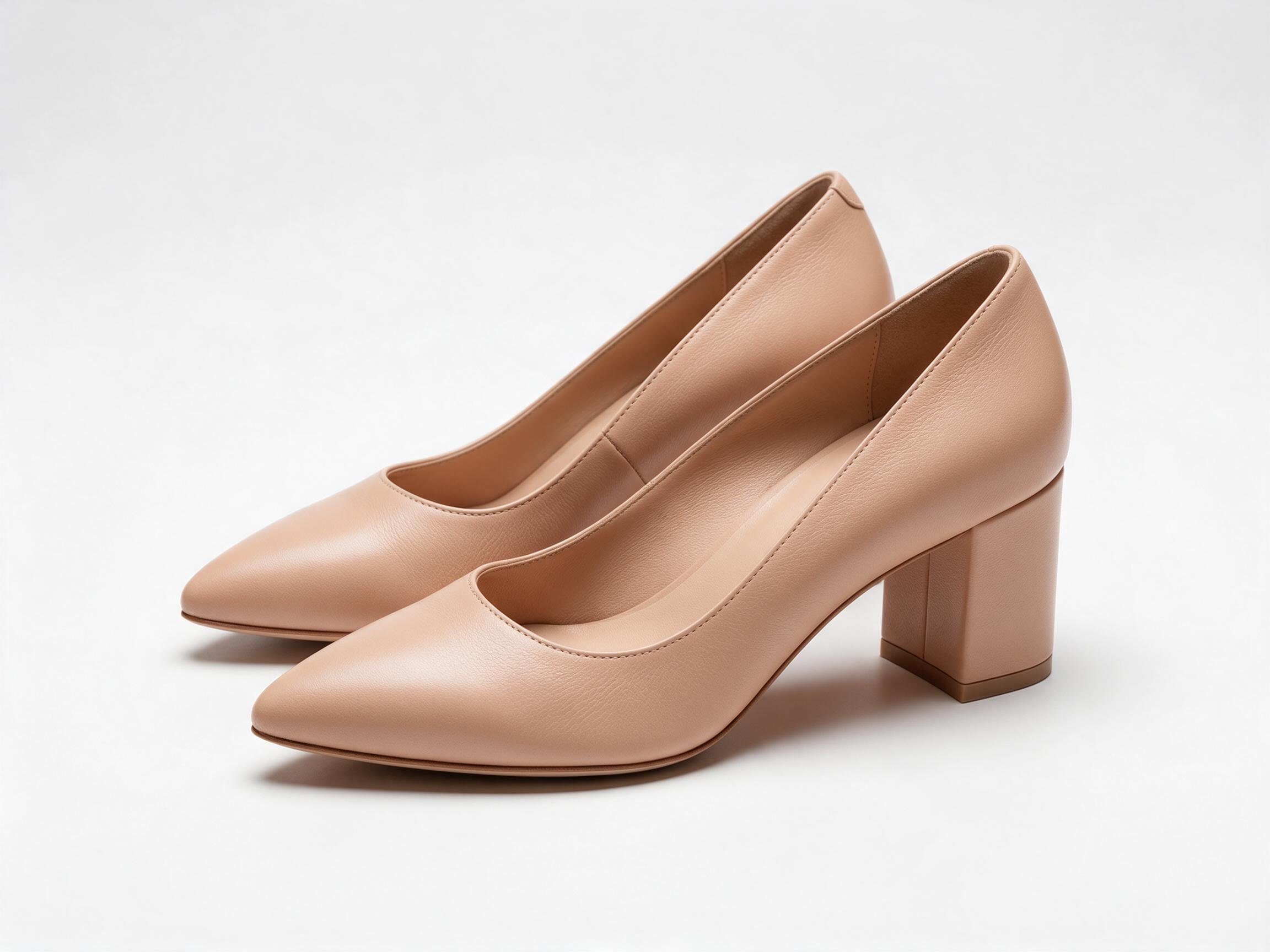
Branding also extends to product details that customers see and feel. The women’s nude block-heel shoes, a comfort repeat style with a padded insole and OEM/ODM customization, is the kind of item where insole branding, size grading, and packaging consistency directly affect whether the style works as a repeat private label product.
4. Sampling discipline and communication quality
Sampling is where you learn how the factory actually works. A factory that communicates clearly during sampling and delivers samples on the stated timeline is far more likely to manage bulk production well. Sampling discipline covers both the technical side—how they interpret your comments and revise—and the operational side—how they schedule, confirm details, and keep you informed.
What to check: Ask what their sampling timeline is for existing samples versus customized samples, and what information they need from you before the clock starts. Ask how many revision rounds are typical and how they document changes. Ask who your main contact will be and how often you should expect updates.
Why it matters: Sampling delays compound. A factory that gives vague timelines or changes contacts frequently will create uncertainty throughout the program. Clear communication during sampling is the best available signal of how they will handle problems in bulk production.
Evidence to request: A written sampling schedule with milestones, a sample request form or spec sheet they use, and the name and role of your account contact. Ask for a sample of their communication: a typical email thread or update template, and ask whether they share inspection reports and welcome third-party inspection.
As a reference point, Aurevia Footwear Co., Ltd., a B2B manufacturer and exporter established in 2011 in Quanzhou, China, with a 260-person team, states that existing samples take 3–5 days and customized samples take 7–12 days after details are confirmed. Those timelines are useful for comparison only; the important evaluation is whether a factory can commit to specific dates and meet them.
5. Summary comparison table
| Evaluation area | What to check | Evidence to request |
|---|---|---|
| Last library and style adaptation | Number and range of lasts; in-house pattern team; adaptation logic | Last list with size ranges; pattern room photos; written adaptation approach |
| Leather and materials | Tannery sources; batch consistency; inspection stages; lining and insole materials | Inspection process description; inspection reports; willingness to accept third-party inspection |
| Packaging and labeling | In-house branding capability; size grading; seasonal collection support | Photos of previous private label packaging; sample box or hangtag; list of in-house branding steps |
| Sampling discipline | Sample timelines; revision process; contact person; update frequency | Written sampling schedule; spec sheet; named account contact; communication sample |
| Communication quality | Responsiveness; documentation of changes; inspection reporting | Typical update template; confirmation that inspection reports are shared on request |
6. Frequently asked questions
How many sample rounds should I expect before approving a private label style?
There is no fixed number, but a factory that needs many rounds without converging may be signaling weak pattern capability or unclear communication. Ask upfront how they document revisions and who signs off on sample approval. The goal is a clear path to a production-ready sample, not an open-ended process.
Should I require third-party inspection for private label orders?
It depends on your risk tolerance and the factory’s own inspection process. A factory that shares its inspection reports on request and welcomes third-party inspection is generally easier to work with, because you have independent verification options. Ask about their pre-shipment inspection stages and what the reports cover.
Can a private label factory handle a full seasonal collection, or only single styles?
This varies. Some factories are set up for single-style programs; others can manage a full seasonal range with consistent branding, size grading, and materials. Ask directly and request examples of collections they have produced under one label. If you plan to scale, this capability matters early.
What is the most common mistake buyers make when evaluating private label shoe manufacturers?
Focusing on price per pair before confirming style-adaptation capability, material consistency, and packaging support. A low unit price is meaningless if the factory cannot repeat the quality or apply your branding correctly. Evaluate the four checklist areas first, then compare pricing on a like-for-like basis.
If you are building a private label footwear program and want to discuss last adaptation, leather sourcing, packaging, and sampling timelines with a factory that supports OEM/ODM and private label production, you can reach out to Aurevia Footwear Co., Ltd. through the contact details on their website. The most useful first step is to share your reference styles, target materials, and branding requirements so the factory can respond with specific capabilities and a sampling plan.