A sourcing guide for B2B buyers on wedge sandal construction: how the last and midsole shape stability, how to control heel-height consistency in bulk production, and how Europe, North America and the Middle East differ in wedge preferences.
Wedge Sandals Wholesale Sourcing Guide
Wedge sandals look simple on a shelf, but the construction underneath is where bulk orders succeed or fail. A wedge is a one-piece midsole that runs from heel to forefoot, so the last, the midsole profile and the bonding process all have to agree before you can promise a stable shoe in every size and every colourway. This guide explains what to check when sourcing wedge sandals wholesale from China, how to keep heel-height consistent across a bulk run, and how buyer expectations differ in Europe, North America and the Middle East.
Key takeaways
- The wedge midsole is a structural component, not a cosmetic add-on; its density and bonding decide stability.
- Heel-height consistency in bulk production depends on the last, the midsole mould and the lasting process being controlled together.
- Europe, North America and the Middle East differ in wedge height, upper material and colour direction — a single spec rarely fits all three.
- Ask for a construction sample and a size-set sample before committing to a bulk run.
Why wedge construction is a different sourcing problem
In a stiletto or block heel, the heel and forefoot are separate components joined by a shank. In a wedge, the midsole is a continuous piece, usually moulded or built up from layers, and the outsole is bonded to its underside. That single piece carries the wearer's weight from heel to toe, so any inconsistency in the midsole — density, thickness, curvature — shows up as a wobbly shoe, a tilted stance or a visible gap at the bond line.
For a B2B buyer, this matters because wedge defects rarely appear in a single sample. They appear in size runs, in the third colourway, or after a few weeks of wear. The sourcing question is not "can this factory make a wedge?" but "can this factory repeat the same wedge across a bulk order?"
What the last and midsole demand
The last must match the wedge profile
A wedge last is not a standard heel last with a thicker sole attached. The bottom curve of the last has to follow the top curve of the midsole, or the upper will pull away from the wedge during lasting. When a buyer sends a reference sample or a trend board, the pattern team should confirm the last bottom profile before cutting uppers. If the last is reused from a different heel style, expect fit and stability problems in the bulk run.
Midsole density and bonding
Wedge midsoles are commonly made from moulded EVA, polyurethane, cork or layered board, and each material behaves differently under load. A softer midsole feels comfortable in the showroom but can compress unevenly, which makes the heel height drop after wear. A harder midsole holds shape but may need a cushioned insole to stay wearable. The bond between the midsole and outsole is equally important: a clean, even bond line with no gaps is the first thing to inspect on a finished shoe.
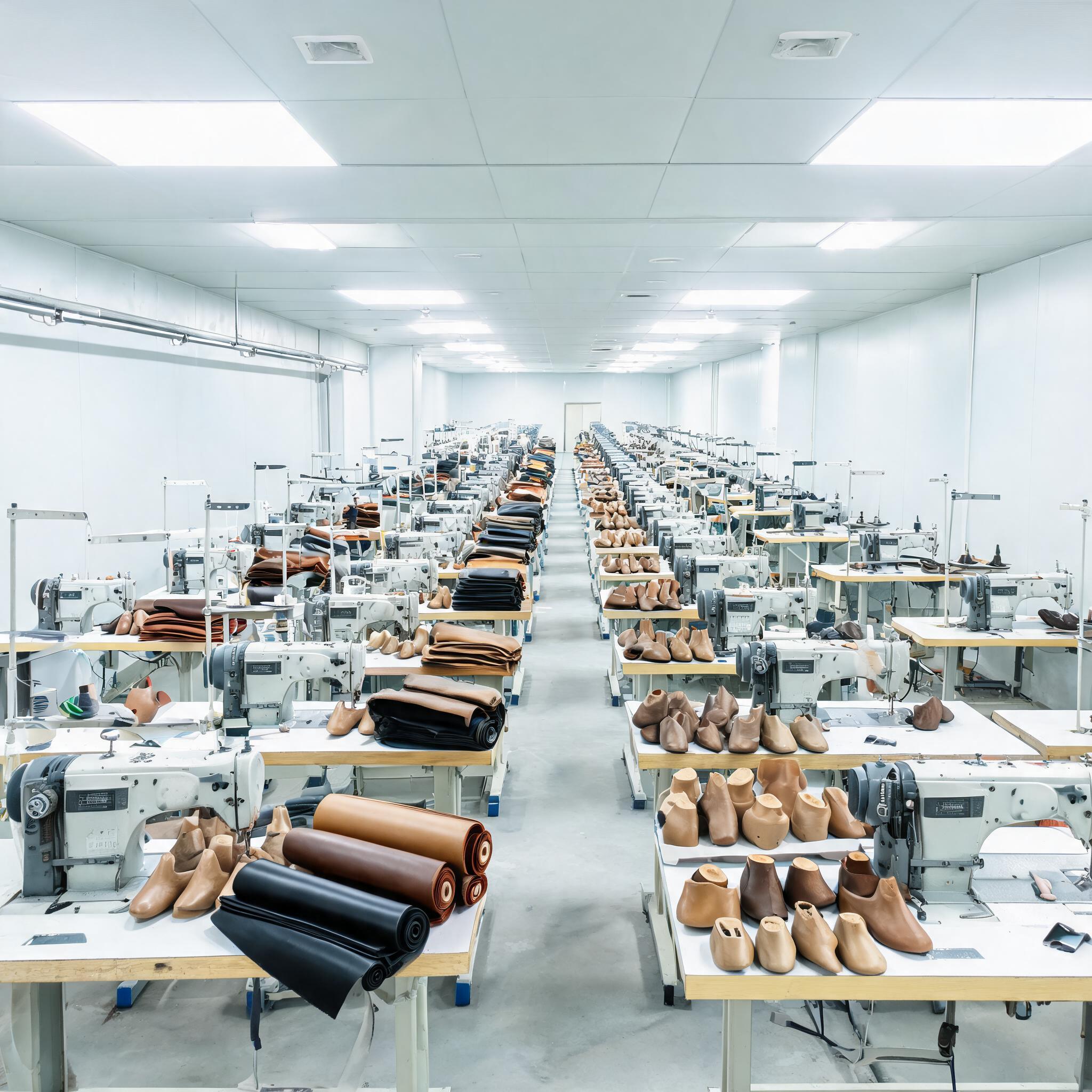
At Aurevia Footwear Co., Ltd., genuine leather and premium materials are sourced through stable supply channels, and multi-stage inspection is used to keep colour, texture and durability consistent across repeat orders. For wedge styles, the same inspection logic applies to the midsole and bond line, not just the upper.
Controlling wedge stability and heel-height consistency in bulk
Heel-height drift is the most common complaint in wedge sandal bulk orders. It usually comes from three places: the midsole mould, the lasting process, or the bonding temperature and pressure. A supplier that controls all three can hold a wedge profile across sizes and colourways.
- Mould control: the midsole mould should be checked against the approved sample before each production run, and the mould cavity should be inspected for wear.
- Lasting control: uppers should be lasted to the same tension and moisture level; inconsistent lasting pulls the wedge out of shape.
- Bonding control: outsole bonding needs consistent adhesive coverage, temperature and pressure. A weak bond shows up as a lifted edge or a gap at the heel.
- Size-set check: measure heel height at the same point on each size in the run, not just the middle size.
Every bulk order at Aurevia passes material, construction and finished-shoe inspections against international quality standards before shipment. For wedge sandals, that inspection should include a stability check — placing the shoe on a flat surface and checking for rocking — and a heel-height measurement across the size set.

Market differences: Europe, North America and the Middle East
Wedge sandals are not one product across markets. Buyers in different regions tend to specify different heights, materials and colour directions, and a supplier that understands this can help you avoid over-ordering a style that only sells in one market.
| Market | Typical wedge direction | Material and finish notes | What to confirm before bulk |
|---|---|---|---|
| Europe | Moderate wedge heights, clean lines, espadrille and jute-look midsoles | Natural materials, muted and earthy colours, leather or canvas uppers | Colour consistency across repeat orders; jute or textile midsole finish |
| North America | Broader height range, casual and comfort-led wedges | Cushioned footbeds, adjustable straps, easy-care uppers | Comfort feel and insole cushioning; strap hardware durability |
| Middle East | Higher wedges and platform looks, often with decorative uppers | Richer colours, metallic or embellished trims, leather uppers | Bond strength under heat; trim attachment and colour fastness |
These are directional patterns, not fixed rules. The practical step is to confirm the target market before sampling, because a wedge developed for a comfort-led North American programme will not automatically suit a Middle East buyer looking for a higher, more decorative profile.
Related styles for wedge and sandal programmes
Buyers building a wedge or sandal range often combine it with flat and casual styles from the same supplier. Two current references:
- Beige Espadrille Flats — a relaxed espadrille silhouette with a natural jute sole, cotton canvas upper, soft textile lining and cushioned insole. OEM/ODM is available on fabric, colour, trim and logo, and the style suits resort, beach and lifestyle collections.
- Black Leather Casual Sandals — breathable black leather casual sandals with adjustable straps, a cushioned leather footbed and a lightweight anti-slip rubber outsole.
For wedge programmes, these styles are useful references for upper construction, strap design and insole feel, even when the wedge midsole itself is developed separately.
How to evaluate a wedge sandal supplier
When you compare suppliers for wedge sandals wholesale, the evaluation should go beyond the sample photo. A practical checklist:
- Ask for a construction sample, not just a finished sample, so you can see the midsole and bond line.
- Request a size-set sample to check heel-height consistency across sizes.
- Confirm how the midsole material is specified and how it is inspected.
- Ask how colour and material consistency is maintained across repeat orders.
- Confirm the sampling process for OEM and ODM work, including who owns the pattern and last.
- Ask what happens if a bulk order fails the stability or heel-height check.
Aurevia Footwear Co., Ltd. was founded in 2011 in Quanzhou, China, and operates with a 260-person team as a B2B manufacturer and exporter of high-end footwear and fashion accessories. The company supports OEM and ODM through an in-house design team, with in-house design and pattern teams turning buyer sketches, references or trend boards into production-ready samples. Exports go to Europe, North America and the Middle East, with flexible customisation for private label programmes.
FAQ
Can a wedge sandal be developed from a reference sample?
Yes. A reference sample or trend board can be used as the starting point, but the last bottom profile and midsole should be confirmed before upper cutting begins. The sampling stage is where fit and stability issues are resolved.
How do I check heel-height consistency in a bulk order?
Measure heel height at the same reference point on each size in the run, and check the shoe on a flat surface for rocking. This should be part of the finished-shoe inspection, not a one-off sample check.
Is the same wedge spec suitable for Europe, North America and the Middle East?
Not usually. Wedge height, upper material and colour direction tend to differ by market. Confirm the target market before sampling so the construction and materials match the buyer's range.
What should I ask for before placing a bulk wedge order?
Ask for a construction sample, a size-set sample, the midsole material specification, and the inspection criteria for stability and heel-height consistency. These four items cover most of the risk in a wedge programme.
If you are developing a wedge sandal or espadrille programme for Europe, North America or the Middle East, send your reference sample, sketch or trend board to Aurevia Footwear Co., Ltd. The in-house design and pattern teams can turn it into a production-ready sample, and OEM/ODM and private label options are available. Share your target market and construction requirements to start the sampling discussion.