
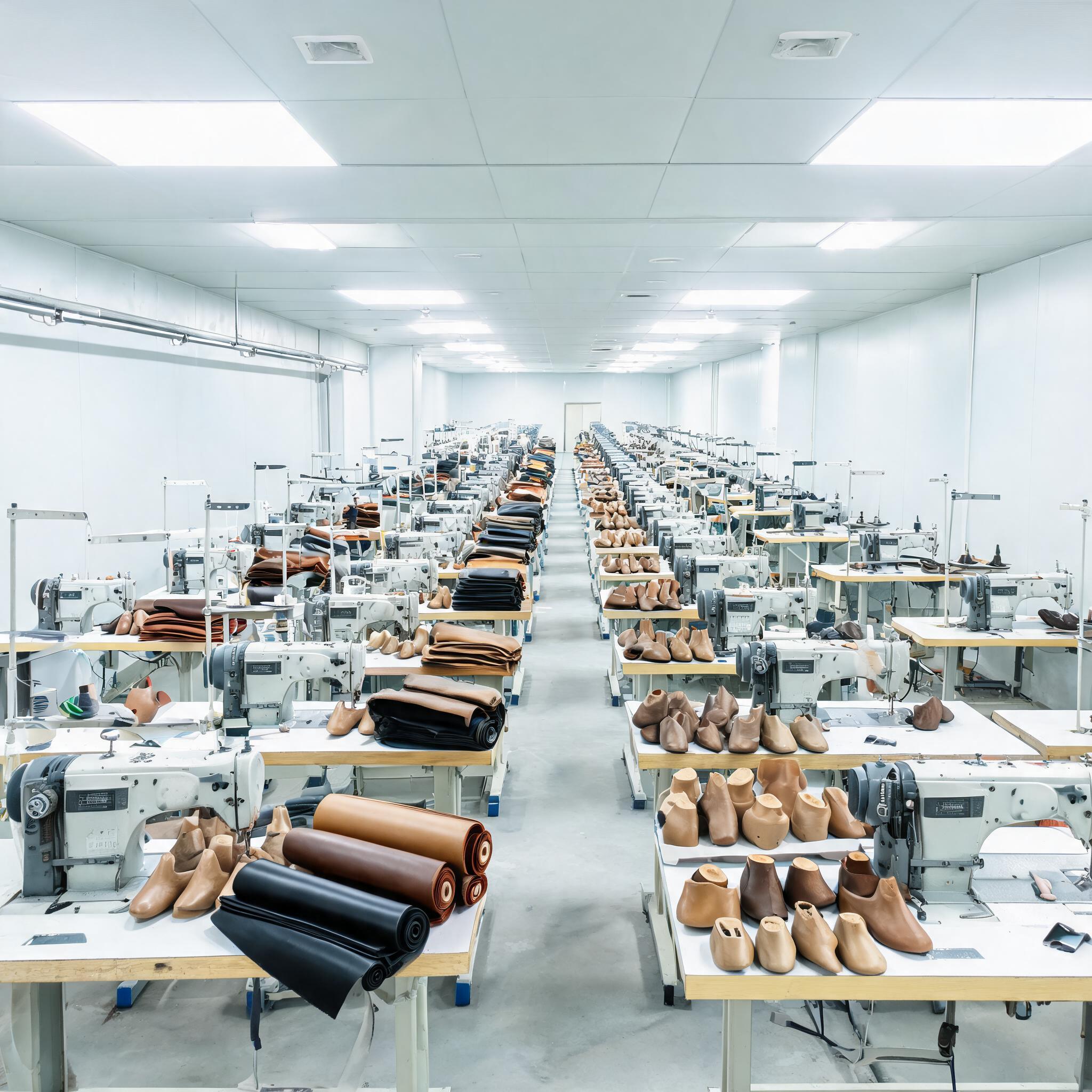
A practical procurement guide for B2B buyers sourcing genuine leather footwear. Learn how to assess leather craftsmanship, sample development, production lead times, and quality assurance before choosing a shoe factory.
Procurement Decision Guide
Choosing the right shoe factory for genuine leather footwear is a high-stakes decision. The wrong partner can mean delayed seasons, inconsistent quality, or shipments that fail to meet your market's expectations. This guide gives you a practical evaluation framework to use before you commit—covering leather craftsmanship, sample development, production lead times, and quality assurance.
Evaluate Genuine Leather Craftsmanship
For leather footwear, the factory's skill with genuine leather is non-negotiable. You are not buying a generic product; you are buying a material that behaves differently across hides, cuts, and tanning processes. A factory that treats leather like synthetic fabric will produce inconsistent results.
Ask these questions during your evaluation:
- How does the factory source its leather? Stable supply channels matter because leather batches vary. A good factory will have relationships with tanneries that can deliver consistent color and texture—or at least flag variations before production.
- What is their cutting process? Skilled cutting reduces waste and ensures that grain direction and stretch are appropriate for each shoe part. A factory with organized cutting lines is more likely to control these details.
- How do they handle lasting and stitching? The lasting process determines how well the shoe holds its shape. Stitching tension and seam placement are critical for durability. Look for a factory that has modern production lines and trained operators.
For example, black leather loafers require clean, even stitching and a smooth upper—both are direct results of craftsmanship. If the factory cannot show you samples that demonstrate these qualities, consider that a red flag.
Assess Sample Development & Prototyping
Before any bulk order, you will need samples. The sample development process tells you a lot about how the factory will handle your actual order. You want a partner that can turn your sketches, reference images, or trend boards into production-ready samples quickly.
Key points to evaluate:
- In-house design and pattern teams: A factory with its own design team can interpret your ideas without outsourcing, which speeds up the process and reduces miscommunication.
- Sampling cycle speed: While specific timelines vary, a factory that can produce samples in a reasonable time frame shows that it has the capacity and workflow in place. Ask for their typical sampling cycle and how they handle revisions.
- Private label support: If you need your own brand on the shoes, the factory should handle logo placement, packaging, and size grading. This is part of full private label service.
Consider requesting samples for multiple products to test their range. For instance, you might ask for a brown leather ankle boot sample alongside a tan leather oxford shoe sample to see how they handle different constructions.
Understand Production Lead Times & Capacity
Lead times directly affect your inventory planning and cash flow. A reliable footwear factory should be able to give you realistic timelines and stick to them. During your evaluation, ask about:
- Production planning: How do they schedule orders? A factory with stable production planning can avoid bottlenecks and prioritize your order appropriately.
- Export logistics: Mature logistics partners ensure that your goods leave the factory on time and arrive at the port without unnecessary delays. Ask about their experience with your destination market.
- Capacity: Can they handle your order volume? A factory with a 260-person team, for example, likely has the manpower to manage medium to large orders, but you should confirm based on your specific needs.
Remember that lead times are not just about production. They include sample approval, material sourcing, and shipping. Get a clear breakdown from the factory.
Scrutinize Quality Assurance & Inspection
Quality assurance is the backbone of a dependable leather shoe factory. Without rigorous checks, you risk receiving shoes with defects that damage your brand's reputation. Here's what to look for:
- Multi-stage inspection: The factory should inspect materials, construction, and finished shoes. For leather, this includes checking color consistency, texture, and durability across repeat orders.
- International quality standards: Ask if they have inspection processes aligned with international standards. While specific certifications should be verified with the factory, their process should be documented and transparent.
- Finished-shoe checks: Before shipment, every bulk order should pass a final inspection. This includes checking for loose threads, adhesive marks, and proper sizing.
You can also request a pre-shipment inspection report for your order. A factory that welcomes third-party inspections is generally more confident in its quality control.
Supplier Evaluation Checklist
Use this checklist when you visit or vet a potential shoe manufacturing partner:
| Area | What to Check |
|---|---|
| Leather sourcing | Stable supply channels, ability to match color/texture across batches |
| Craftsmanship | Cutting precision, stitching quality, lasting technique |
| Sample development | In-house design team, fast sampling, revision handling |
| Production capacity | Team size, production lines, ability to meet your order volume |
| Lead times | Clear production schedule, export logistics, realistic timelines |
| Quality assurance | Multi-stage inspections, finished-shoe checks, transparency |
Frequently Asked Questions
What is the difference between OEM and ODM services?
OEM (Original Equipment Manufacturing) means you provide the design and the factory produces it to your specifications. ODM (Original Design Manufacturing) means the factory uses its in-house design team to create products based on your ideas, references, or trend boards. Both are valid; the choice depends on how much design control you want.
How do I know if a shoe factory uses genuine leather?
Ask for material certifications and inspect samples. Genuine leather has a natural grain and will develop a patina over time. A reputable factory will be transparent about its leather sources and may offer to show you the tanning process.
What should I do if I need a custom design?
Work with a factory that has an in-house design team. They can turn your sketches or reference images into production-ready samples. Be clear about your target market and price point so they can recommend appropriate materials and construction methods.
Next step: When you have shortlisted a few factories, request samples and ask for a detailed production timeline. A reliable partner will be happy to walk you through their process. For genuine leather footwear with OEM/ODM support and a 260-person team, consider contacting Aurevia Footwear Co., Ltd.—established in 2011 and exporting to Europe, North America, and the Middle East.