
A B2B range-planning guide for retail chains, importers and private-label brands: how to split a pump collection by heel height and toe shape, what to confirm before committing to bulk, and the quality checks that keep a wholesale pumps shoes program consistent across sizes and reorders.
A pump collection rarely fails because a buyer picked the wrong style. It fails because the range has no internal logic: three heel heights that overlap, two toe shapes that read the same on the shelf, and no clear story for the comfort-led customer. For retail chains, importers and private-label brands in Europe, North America and the Middle East, the practical way to build a pump line is to let heel height set the price and comfort tiers, then let toe shape create visual separation within each tier.
This guide covers how heel heights and toe shapes split a private-label pump range, what to confirm before bulk, and the quality checks that keep a program consistent across sizes and reorders. Aurevia Footwear Co., Ltd. is a genuine-leather footwear manufacturer and exporter based in Quanzhou, China, founded in 2011, with a 260-person team, in-house design and sampling, and OEM/ODM and private-label work including logo, packaging and size grading.
Key takeaways
- Organize a pump range by heel height first, because heel height drives comfort positioning, price tier and wear occasion.
- Use toe shape as the second axis: within one heel height, two or three toe shapes create visible variety without duplicating the last.
- Anchor the range with published models at 5 cm, 7 cm and 8 cm to see how the tiers sit together.
- Confirm four things before bulk: exact heel height per style, toe shape and last, upper leather, and size grading across EU 34-41 / US 4-10.
- Keep consistency with three-stage inspection covering material, in-line and finished shoe, including forefoot flex, colour fastness, heel attachment and sole adhesion.
Start with heel height, not with style names
Heel height is the cleanest organizing variable in a pump range. It tells the buyer where a style sits in the store, and it tells the factory what construction and reinforcement the last will need. A low block heel and a tall slim stiletto may share a toe shape, but they do not share a customer.
For most private-label programs, a workable structure is three tiers:
- Comfort-led tier (around 5 cm): daywear, commuting, travel retail and market segments where all-day wear matters more than height.
- Core tier (around 7 cm): the volume driver. Office, events and general evening use; broad size run, broad colour range.
- Statement tier (around 8 cm and above): occasion and fashion-forward lines where silhouette leads and the range can be narrower.
Kitten heels sit at the low end of the comfort-led tier. They are a low-heel option brands use for comfort-focused ranges rather than a single fixed specification, so the exact height should be confirmed with the factory style by style. Treating "kitten" as a feeling rather than a number prevents mismatched expectations later.
Three anchor models show how the tiers read
Aurevia's published pump models map onto the three tiers. They are useful as reference points when briefing a private-label range, because each one already fixes a toe shape, heel type and upper material combination.
| Model | Toe shape | Heel | Upper / build notes | Size run |
|---|---|---|---|---|
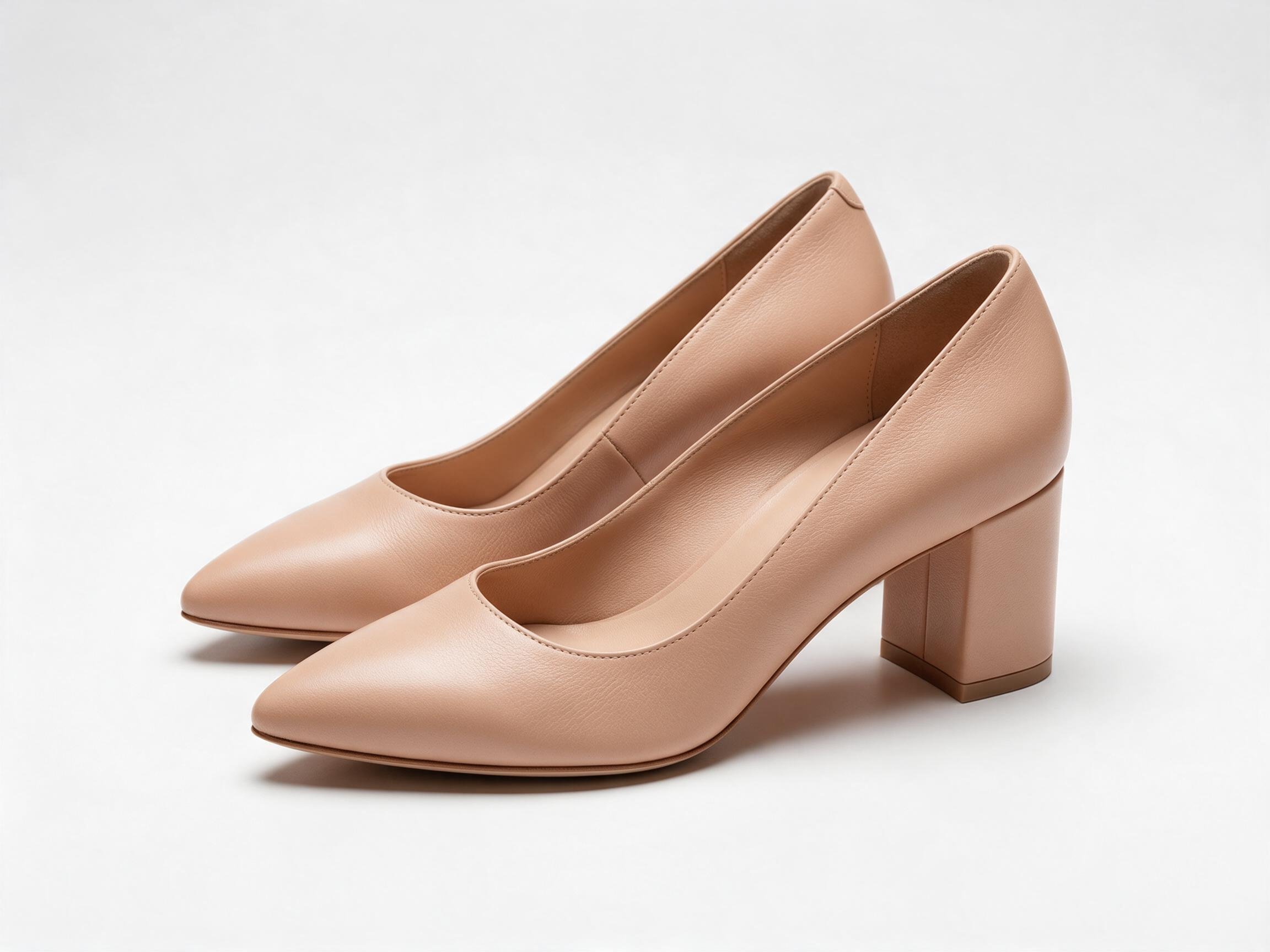
| Nude Block-Heel Shoes | Rounded pointed toe | Approx. 5 cm block heel with reinforced core | Soft kid leather upper, padded footbed | EU 34-41 / US 4-10 |
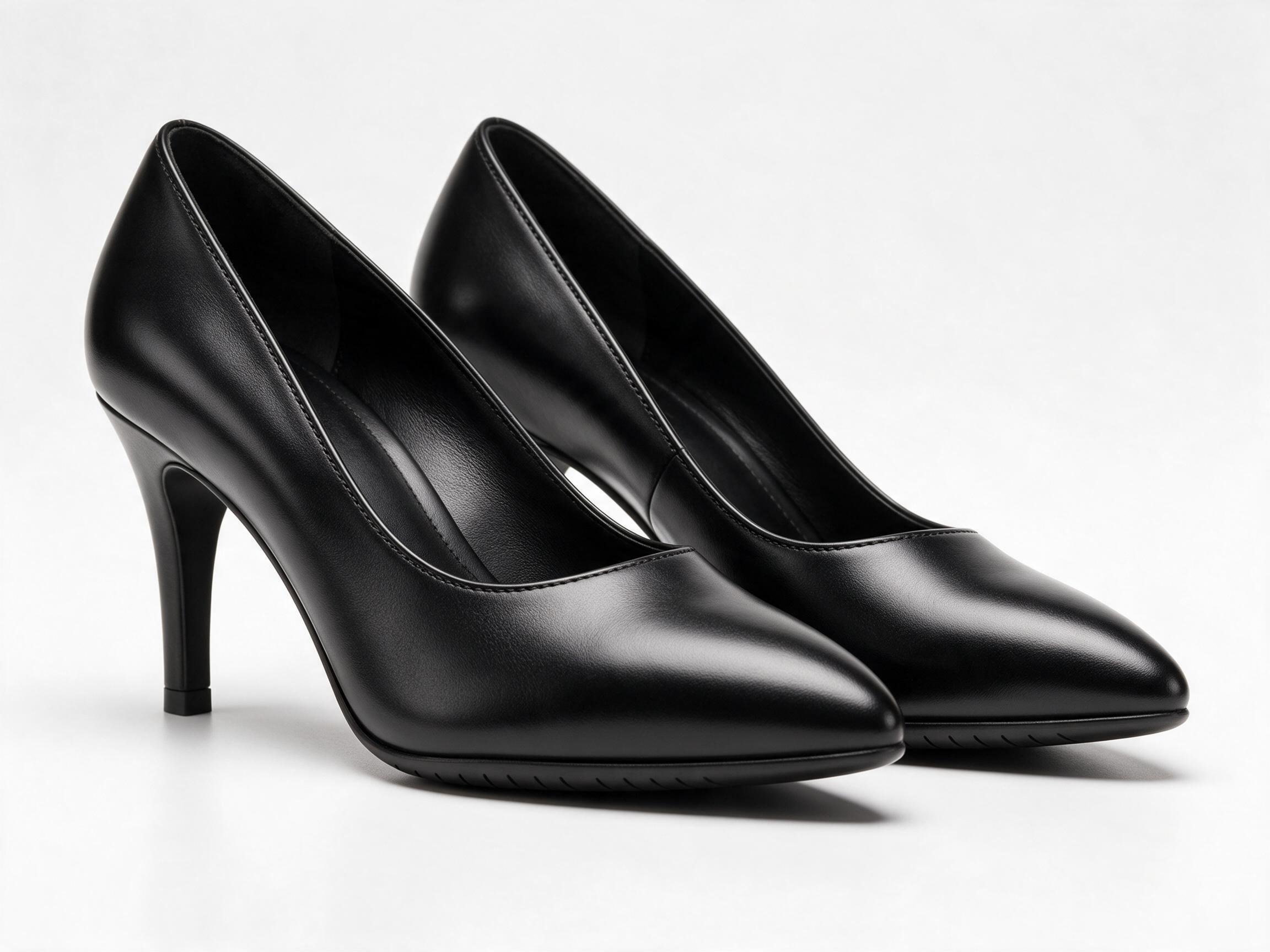
| Black Leather Classic Pumps | Pointed toe | Approx. 7 cm slim stiletto heel with reinforced core | Soft leather lining, padded insole, anti-slip rubber outsole, cemented construction, scuff-resistant finish | EU 34-41 / US 4-10 |
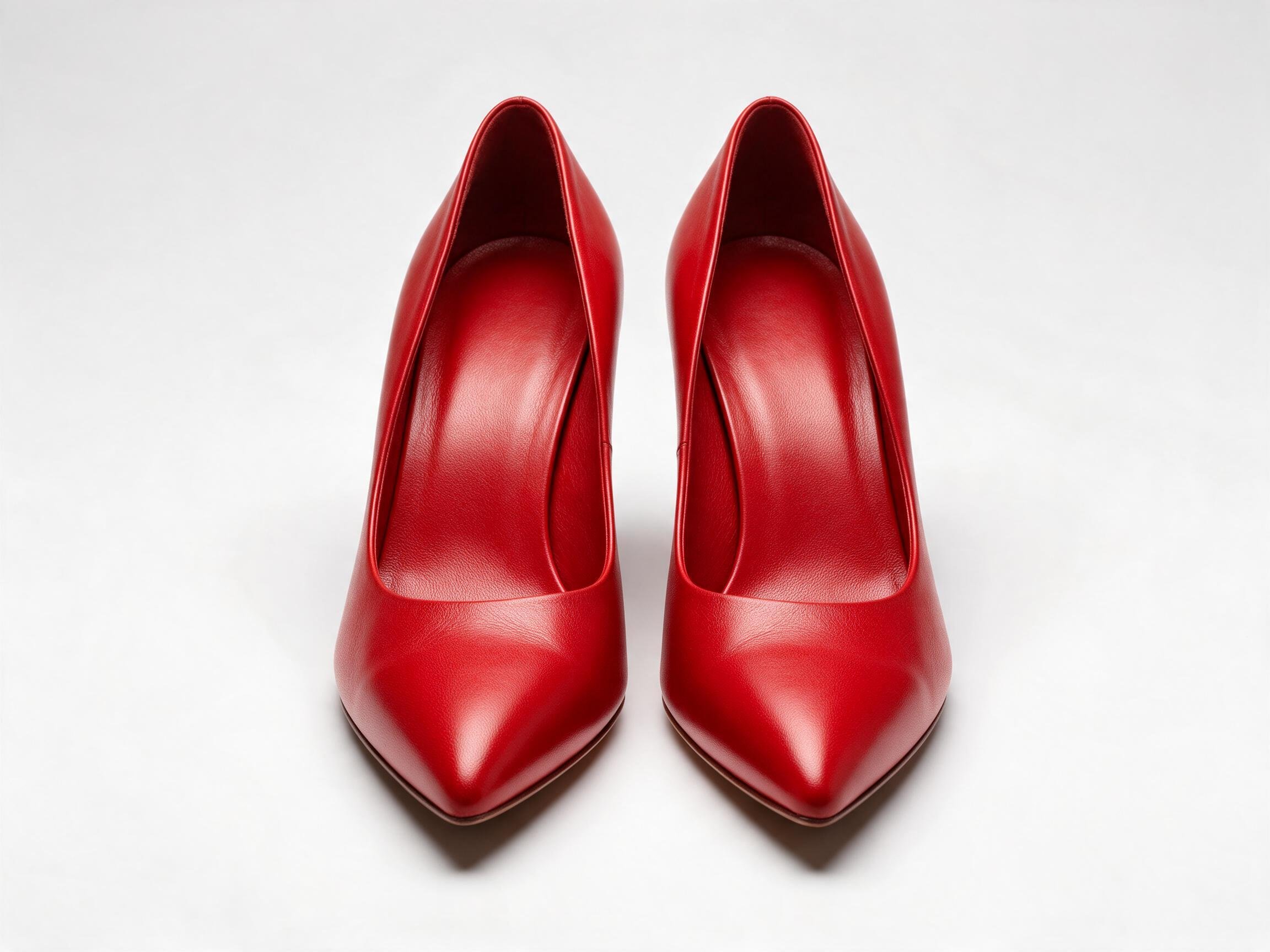
| Red Leather Classic Pumps | Pointed toe | Approx. 8 cm slim stiletto heel | Colour-fastness treated finish | EU 34-41 / US 4-10 |
Read together, the three models cover a low block heel, a mid slim stiletto and a taller slim stiletto, with one rounded toe and two pointed toes. That is already enough shape variety for a first private-label collection without adding complexity to the lasts.
Use toe shape as the second axis
Once heel height sets the tiers, toe shape gives each tier visual range. Toe shape is also a fit variable, not a cosmetic one: a pointed toe and a rounded pointed toe sit differently on the forefoot, and the difference shows up most in the larger sizes.
Practical ways to split by toe shape:
- Pointed toe: the classic pump silhouette. Strong in black, nude and red; works from office through evening. Best when the range needs a formal anchor.
- Rounded pointed toe: softer line, usually paired with lower heels. Useful for comfort-led and daytime collections where a strict point looks too formal.
- Two toe shapes maximum per heel height: more than that, and buyers hesitate between near-identical options instead of choosing one.
Colour should follow toe shape and heel height, not run independently. A practical pattern is to keep the pointed-toe core style in the widest colour spread and limit the statement heel to a narrower, on-trend set. Colour-fastness treatment matters more as the palette moves away from black, since reds and strong tones are the ones customers notice when they fade.
What to confirm before committing to bulk
A pump is a small object with a lot of decisions inside it. Before a bulk order is placed, four items should be written down and agreed per style, not per collection.
- Exact heel height and heel construction. Confirm the finished heel height in centimetres and whether the heel has a reinforced core. "Mid heel" is not a specification; 5 cm and 7 cm are.
- Toe shape and last. Confirm the toe shape and, for larger sizes, how the forefoot volume is handled. If you are running a pointed toe, ask how the fit is checked across the full run.
- Upper material and lining. Genuine leather upper and soft leather lining behave differently from synthetic alternatives in fit, breathability and how the shoe ages. Decide the material before sampling, not after.
- Size grading. Confirm the technical grade, not just the size range. EU 34-41 / US 4-10 is the published range on Aurevia's pump models; how the last scales from 34 to 41 is what determines whether the range feels consistent on the shelf.
Two more items shape the commercial side. First, sample timing: existing samples can be arranged in 3-5 days, while custom samples typically take 7-12 days. Second, customisation scope: OEM options include Pantone colour matching, heel height changes, insole branding, private-label boxes and hangtags. If logo and packaging are part of your brand plan, raise them at sampling so the first sample round covers them.
The private-label program flow
A private-label pump range moves through a predictable sequence. The goal at each stage is to reduce the number of changes that happen after bulk starts.
| Stage | What happens | What the buyer should confirm |
|---|---|---|
| Range brief | Heel heights, toe shapes, colours and target tiers are mapped to styles | How many styles per heel height; which tier carries the volume |
| Sampling | Existing or custom samples are produced; in-house design and sampling team builds the reference shoe | Exact heel height, toe shape, upper material, fit on the full size run |
| Branding | Pantone colour matching, insole branding, boxes and hangtags are applied | Logo placement, packaging artwork, colour approval against physical standard |
| Bulk production | Styles run on dedicated women's heel lines with matched-hide cutting and hand-burnished edges | Approved sample as the sealed reference; agreed inspection points |
| Inspection and release | Three-stage inspection: incoming material, in-line and finished shoe | Which defects are acceptable; how reorders are matched to the original standard |
Manufacturing and delivery terms are quoted per project, so MOQ and lead time should be requested style by style rather than assumed from a general figure.
QC that keeps a pump range consistent
Consistency is what makes a wholesale pumps shoes program repeatable. The checks below are the ones that matter specifically for heels, because they catch the failures a customer will actually feel.
- Incoming material inspection: leather and components are checked against the approved standard before cutting. Matched-hide cutting keeps colour and grain consistent across a pair.
- In-line inspection: heel attachment is checked during assembly, and the forefoot flex test confirms the shoe bends where a foot bends rather than at the shank.
- Finished shoe inspection: colour fastness, heel attachment and sole adhesion are verified on the finished pair, together with the scuff-resistant finish where specified.
Cemented construction, a reinforced heel core and an anti-slip rubber outsole are the structural choices that show up in these checks. Hand-burnished edges are a finishing step that affects how the upper meets the sole line, so they belong in the same inspection loop as sole adhesion.
For reorders, the sealed approved sample is the reference. If a second run uses a different leather lot, matched-hide cutting and the same three-stage inspection are what keep the colour and hand feel aligned with the first delivery.
Where to start
If you are building a first private-label pump range, a sensible starting structure is one style per tier: a comfort-led block heel at around 5 cm, a core pointed pump at around 7 cm, and a statement pointed pump at around 8 cm. From there, colour and branding extend the range without adding lasts. Review the nude block-heel shoes, the black leather classic pumps and the red leather classic pumps as reference points, then brief your heel heights, toe shapes and size grading in one document so sampling answers all of them at once.
Frequently asked questions
What counts as a pump shoe in a wholesale range?
A pump is a closed-toe, low-cut women's shoe without fastenings, defined in a range by three variables: heel height, heel type (block or stiletto) and toe shape. Those three are what buyers compare when they plan a collection.
Are kitten heels a fixed heel height?
No. Kitten heel is a low-heel category used for comfort-led ranges rather than one standard measurement. Confirm the exact finished height with the factory for each style before sampling.
How many toe shapes should one pump range carry?
Two per heel height is usually enough to give visible variety without forcing buyers to choose between near-identical options. A pointed toe and a rounded pointed toe cover most formal and comfort-led needs.
Can heel height be changed on an existing pump style?
Yes, heel height changes are among the OEM options. Because a height change affects the last balance and heel attachment, it should be raised at sampling so the revised shoe can be checked as a finished pair.
How long do samples take?
Existing samples can be arranged in 3-5 days; custom samples typically take 7-12 days. Bulk lead time is quoted per project, as it depends on styles, materials and order structure.
What keeps a reorder consistent with the first delivery?
The sealed approved sample as the reference, matched-hide cutting to control colour and grain, and the same three-stage inspection covering incoming material, in-line assembly and the finished shoe.