
A buyer's guide to testing whether a shoe factory can actually run wholesale volume — capacity ramp-up, repeat-style stability, batch-to-batch QC, and how the re-order path differs from a custom development project.
Buyer Evaluation Guide
Most buyers shortlist a wholesale shoes manufacturer on two things: the sample looks right and the price works. Neither tells you whether the factory can ship your second, third and tenth order at the same standard. Bulk capability is a separate question, and it is the one that decides whether a wholesale relationship survives its first re-order.
This guide sets out what to inspect before you commit volume: how to judge capacity ramp-up and repeat-style stability, what batch-to-batch QC actually looks like on a production floor, and why the re-order path is not the same as running a custom development project. It is written for importers, retail chains and private-label buyers sourcing leather footwear.
- Ask how a repeat order is scheduled, not just how a first order is quoted.
- Repeat-style stability depends on pattern and material records that survive staff turnover.
- Batch consistency is proven by what the factory measures per batch, not by a single approved sample.
- Wholesale re-orders skip most development steps — the information that carries over must be documented.
- Independent inspection access is a stronger signal than any self-reported QC claim.
Start with the right question
"Can you handle our volume?" invites a yes. A better question is: "If we place the same style again in six months, what in your process changes, and what stays fixed?" A factory built for wholesale has a clear answer about the parts that must stay fixed — pattern, last, material specification, construction, packing — and a clear answer about the parts that flex, such as line scheduling and material booking.
That distinction matters because wholesale buying is mostly repetition. Your margin depends on the second shipment matching the first, not on the first being excellent. Evaluate the factory on its ability to hold a standard, and treat the sample as the opening of the conversation rather than the conclusion.
Capacity ramp-up: can the line scale without changing the shoe?
Bulk capacity is not a single figure. It is a set of dependencies — cutting, stitching, lasting, sole attachment, finishing and packing — and the constraint is usually whichever of those is dedicated to your type of footwear rather than shared across everything the factory makes.
Ask the factory to walk you through this sequence for your model and confirm where the bottleneck sits:
- Cutting: is leather cut on dedicated cutting lines, and how are matched hides handled when the order repeats?
- Stitching: which stitching line would take your upper, and what else runs on it at the same time?
- Lasting and sole attachment: dedicated lasting lines or shared? This is where construction consistency is won or lost.
- Finishing and packing: how finished pairs are held, checked and boxed before shipment.
A factory with dedicated cutting, stitching and lasting lines for leather footwear can usually explain this in concrete terms, because the answer is a scheduling decision rather than a hope. Aurevia Footwear Co., Ltd., a B2B manufacturer and exporter based in Quanzhou, China, established in 2011 with a 260-person team, runs dedicated lines of this kind for leather footwear and works on OEM/ODM and private label programs with in-house design and sampling teams.
Then ask the ramp-up question directly: if your order doubles for a peak season, what is added first — shifts, lines, or subcontracting? Subcontracting is not automatically disqualifying, but it changes who controls quality. If any step leaves the building, ask which step, which workshop, and who inspects it. Get the factory to confirm the ramp-up plan for your specific model rather than a general statement about capacity.
Repeat-style stability: what survives between orders
The most common wholesale failure is drift. The second batch is slightly narrower, the leather is a shade off, the sole edge is finished differently. None of these are dramatic, and all of them generate retail complaints.
Stability comes from records, not memory. When you visit or audit, ask to see how a repeat style is held:
- Is there a retained approved sample, sealed and dated, that production compares against?
- Are patterns and lasts stored under a style reference, and is there a version history when a change is approved?
- Is the material specification written down — tannery, article, thickness range, finish — or does it live in one person's head?
- When a leather article is discontinued or a shade shifts, who tells the buyer, and when?
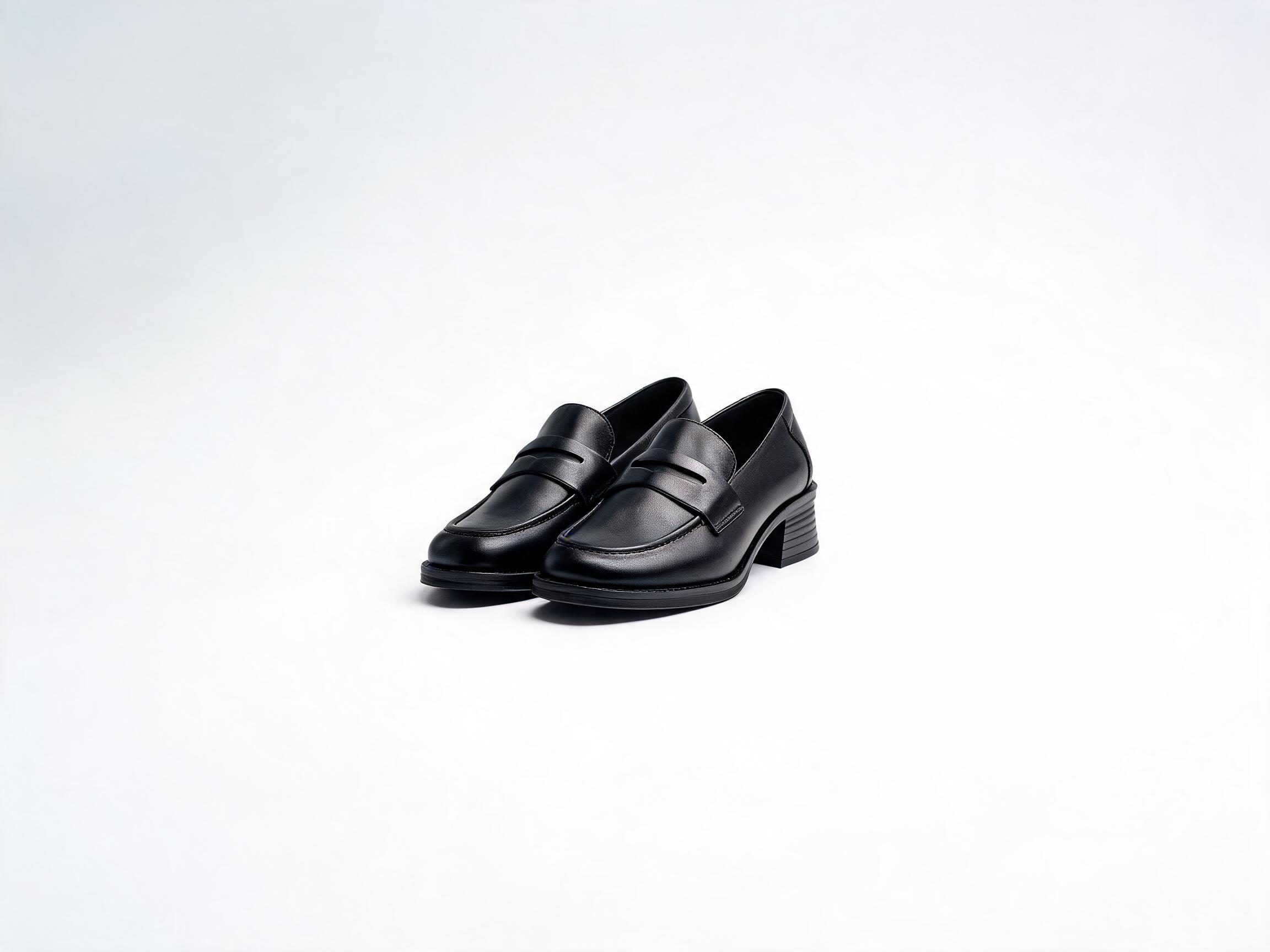
Repeat core styles are the real test. A style the factory already produces in volume, such as the women's black leather loafers with cemented construction and matched-hide cutting, should have an established material and pattern record. Ask what changes and what does not when that style is re-ordered — the answer reveals whether the factory treats a repeat as a repeat or as a new project each time.
Batch-to-batch consistency: what the factory measures
Consistency is not a promise; it is a measurement routine. The question is not whether the factory inspects, but what it inspects, on how many pairs, and at which stages.
A credible wholesale QC path covers three points: incoming material, in-line construction, and finished shoes before shipment. Ask for the specifics at each:
| Stage | What to ask is checked | Why it matters for wholesale |
|---|---|---|
| Incoming material | Leather inspection against the approved specification; lining, sole and hardware checks | Catches shade, thickness and defect issues before they enter the line |
| In-line construction | Stitching density and alignment, lasting symmetry, sole attachment | Stops systematic error from running through an entire batch |
| Finished shoe | Forefoot flex testing, color fastness, heel and sole attachment checks on random pairs per batch | Tests what the end customer will actually do with the shoe |
Ask two follow-up questions that separate a routine from a real control system. First: what happens to the rest of the batch when a random pair fails a check? Second: can you see the inspection report for a recent batch of a comparable style? Reports shared on request, plus a willingness to welcome third-party inspection, give you an independent read on whether the routine is followed. Aurevia runs this three-stage inspection on leather footwear and shares inspection reports on request; third-party inspection is welcome.
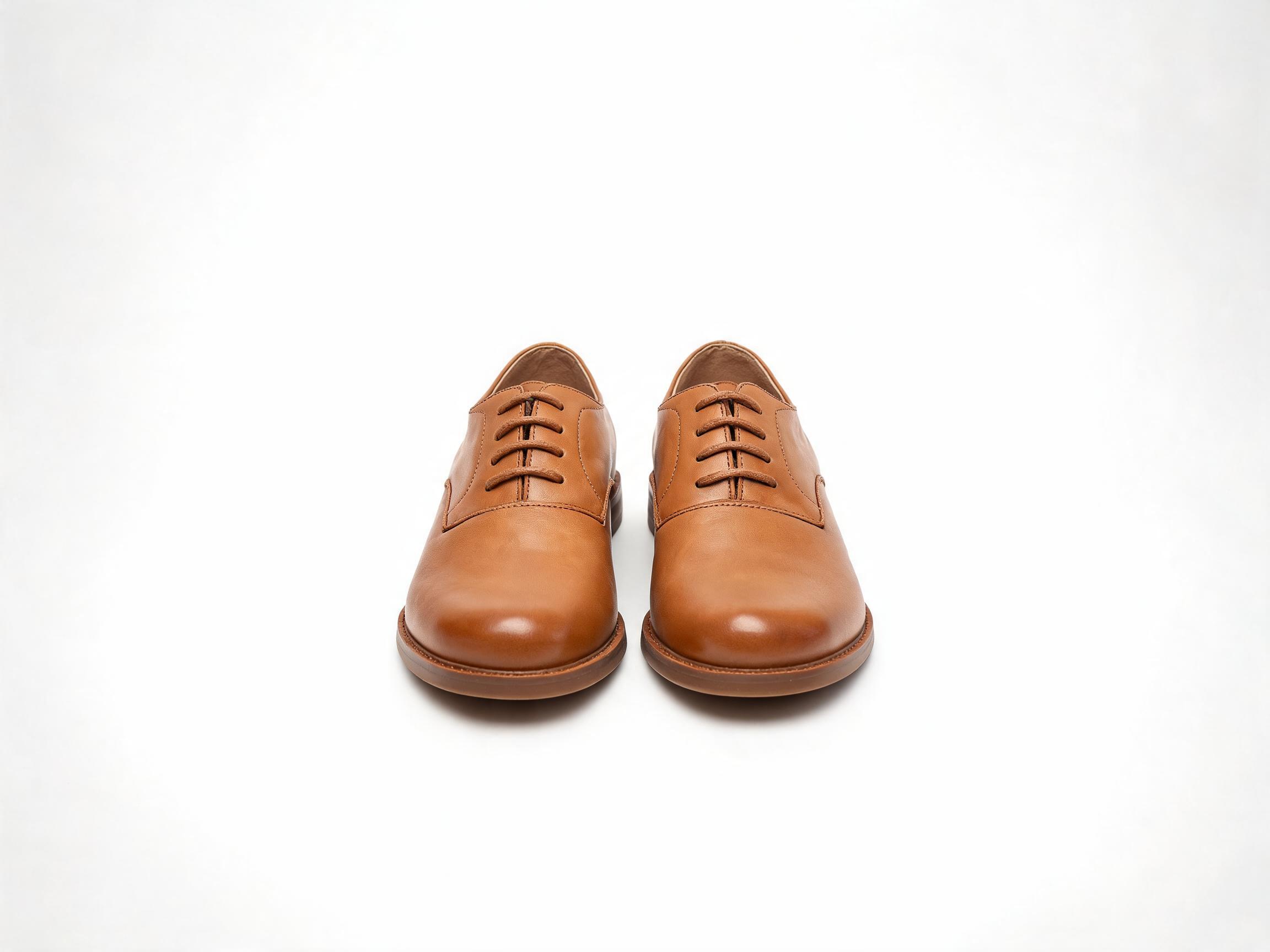
For office and uniform programs, where a single style may be ordered in large runs across several sizes, consistency across sizes matters as much as consistency across batches. A closed-lacing style like the women's tan leather oxford shoes is a useful reference point: ask how size-grading is controlled and how the factory confirms that the fifth size and the ninth size are built to the same standard.
The re-order path is not a development project
Custom development and wholesale re-ordering run on different logic, and mixing them up is where timelines slip. A development project moves from brief to sample to approval, with iteration at each stage. A re-order should be a production instruction against a fixed record: pattern, last, material spec, construction, and packing all already approved.
When vetting a wholesale shoes manufacturer, ask them to describe the re-order path as its own process:
- Which documents does the factory need from you to open a re-order?
- Does material booking happen against the approved specification automatically, or does it re-enter a quoting cycle?
- Is a pre-production sample required on a repeat, and if so, why?
- What is the approval step before the line starts, and who signs it off?
A factory that needs to re-quote and re-sample every repeat will not give you wholesale rhythm. A factory that can move from your purchase order straight to material booking and scheduling, with a retained approved sample as the reference, can. This is also where sample turnaround tells you something useful: existing samples in 3–5 days and customized samples in 7–12 days after details are confirmed indicate a sampling team that is not the bottleneck — relevant when a repeat needs a quick confirmation pair before a large run.
Commercial terms that support repeat buying
Wholesale buyers need terms that work order after order. Ask the factory to state its trade terms clearly — EXW, FOB and CIF are the usual options — and to confirm which one applies to your destination and who arranges inspection access at origin.
On quantity, do not assume a number from another supplier applies. Site records for MOQ can conflict even within one factory, so ask the factory to confirm the minimum for your specific model, material and colour, and to explain whether that minimum changes for repeat orders. The same applies to lead time: ask for the lead time for a first bulk order and separately for a repeat of the same style, because they are rarely identical.
- Which dedicated lines will run my model, and what is the ramp-up plan if volume increases?
- Where is my approved sample retained, and how is it referenced in production?
- What is checked at incoming, in-line and finished stages, and on how many pairs per batch?
- What happens to a batch when a random check fails?
- Can I see a recent inspection report and arrange third-party inspection?
- What is the re-order path from PO to line start, and what is needed from me?
- What is the MOQ and lead time for this model, and does it differ for repeats?
What a site visit should settle
If you can visit, spend the time on flow rather than showpieces. Watch how cut uppers move to stitching, how lasted shoes are held before sole attachment, and how finished pairs are staged for packing. Look for the retained sample board and see whether workers can point to it. Ask a line supervisor, not a sales manager, what happens when a pair fails a check.
If you cannot visit, replace the walk-through with a structured video call along the same route, and ask for the inspection report from a recent comparable batch. The goal is the same: confirm that the factory's bulk capability is a system, not a sales answer.
Next step
Send the factory your intended style, material direction, size range and expected repeat pattern. Ask for the re-order path, the QC checkpoints per batch, and the MOQ and lead time for that specific model. Aurevia Footwear Co., Ltd. exports leather footwear to Europe, North America and the Middle East and works on OEM/ODM and private label programs; you can share your requirements and request sample and inspection details directly.