
A practical guide for boutique and chain-store buyers on structuring orders with women's shoe vendors: how to split core, carryover and seasonal styles, build size runs that match real sell-through, plan restock frequency, and set returns and inspection terms in writing before the first PO.
Boutique Buying Guide
Most first-order conversations with wholesale women's shoe vendors go wrong for a simple reason: the buyer and the vendor are talking about different things. The buyer is thinking about sell-through and shelf space. The vendor is thinking about run structure, cutting efficiency and production scheduling. The order that satisfies both is written down before sampling ends, not negotiated after the first container lands.
This guide covers the four structural decisions that decide whether a shoe program works for a boutique: how to split core and seasonal styles, how to build a size run, how often to restock, and which inspection and returns terms belong in the written agreement.
Key takeaways
- Split the buy into core/carryover and seasonal styles, and negotiate them under different terms.
- Build size runs from your own sell-through data, not from a vendor's default balanced run.
- Set restock cadence and the style-protection window in writing at the start of the season.
- Agree inspection method, defect definitions and return responsibility before the first PO.
On this page
- Why order structure matters more than unit price
- Core and carryover styles vs. seasonal styles
- Size-run structure
- Restock frequency and depth
- Inspection and returns terms to agree in writing
- Questions to ask before the first order
Why order structure matters more than unit price
A boutique can usually absorb a slightly higher unit cost. It struggles to absorb a style that arrives in the wrong size ratios, sells out in one size in three weeks, and cannot be replenished until the next season. Size-run mismatch is the most common invisible cost in footwear buying: the total unit count is right, the sell-through is half, and the remainder is a markdown line in six months.
A vendor with in-house sampling and a defined production sequence can hold a run open. One that assembles orders from third-party factories cannot. That difference decides whether you can ask for a mid-season top-up, so it is worth clarifying early in vendor evaluation rather than at the second order.
Core and carryover styles vs. seasonal styles
Treat the assortment as two separate order books with different terms, even when a single vendor makes both.
Core and carryover styles
Core styles are the ones you intend to keep on the floor for multiple seasons — plain leather flats, basic loafers, simple heel heights in stable colors. They are predictable, they do not need a trend argument, and they generate most of the baseline volume a vendor values because they allow longer production runs and consistent material purchasing.
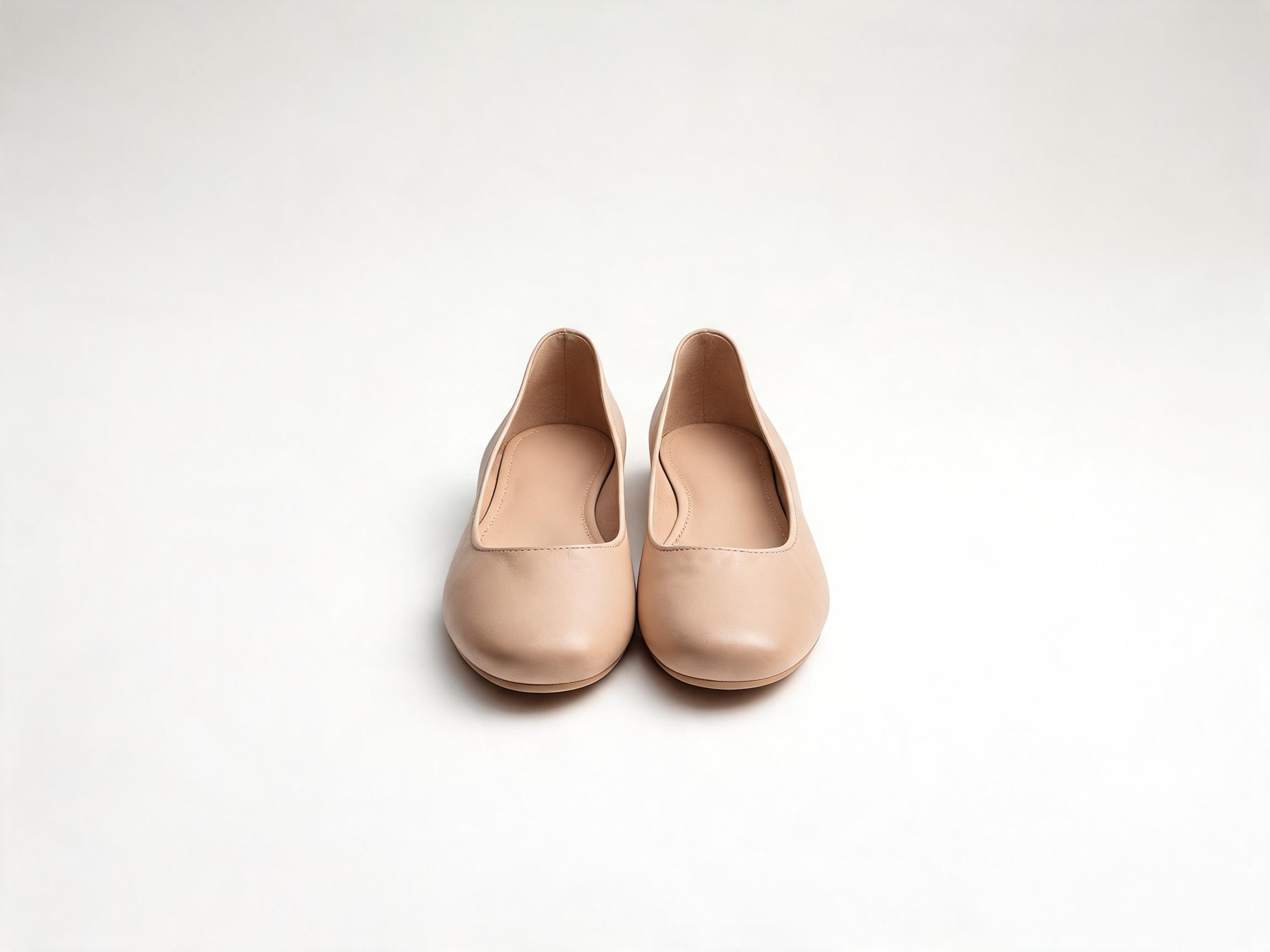
Negotiate core styles on replenishment logic: hold the spec fixed across seasons, agree color continuity for the colors that carry over, and ask for a defined reorder window. Two representative examples of this category in a women's range are a nude leather ballet flat with an elastic topline and roughly 1 cm flat heel, and a black leather loafer with a 3 cm block heel and almond toe — both in EU 35–41. Styles like these work as carryover because the shape does not carry a season label and the neutral colors repeat.
Seasonal styles
Seasonal styles carry trend risk and should be bought in shallower depth with less obligation on both sides. The useful questions here are about cancellation and late-delivery terms, not just price: what happens if a style is confirmed late, and what is the latest date at which you can still cut depth without penalty. Vendors that sample in-house can usually turn a seasonal concept faster, which shortens the window in which you have to commit.
| Dimension | Core / carryover | Seasonal |
|---|---|---|
| Depth per SKU | Deeper, repeatable | Shallower, test-first |
| Spec changes | Hold fixed across seasons | Reviewed each season |
| Reorder expectation | Agreed reorder window | Limited or none |
| Late-delivery exposure | Penalty / substitution terms | Cancellation right |
| Color continuity | Continuity required | Per-season |
Size-run structure
A vendor's default balanced run spreads units evenly across EU 35–41. That is a production convenience, not a selling pattern. Boutiques typically sell unevenly by size, and the pattern differs by style and by customer base.
Build your run in two steps. First, take your own sales history for a comparable style and convert it into a percentage split by size. Second, ask the vendor whether that split can be produced without breaking their cutting efficiency, and what the per-size minimum is. Minimums vary by style and color, so confirm them with the vendor's sales team rather than assuming a standard figure.
Practical points worth fixing in the order:
- Size scale: confirm the exact EU range per style, since not every style runs the full range.
- Broken runs: ask whether a single-size top-up is possible mid-season, and at what cost.
- Labeling: confirm size marking and any country-specific labeling requirements are agreed before production.
- Fit reference: request a fit sample per style and keep the approved pair as the reference for inspection.
Write the approved size split into the PO itself. Verbal agreement on run structure is the single most common cause of a mismatch at delivery.
Restock frequency and depth
Restock is where core and seasonal buying diverge in practice. For core styles, agree a cadence you can actually forecast — for example a monthly or bi-monthly top-up of the sizes that sold through — and put a reorder lead time next to it. A quarterly restock cycle is often too slow for a fast-moving size in a small store.
Three terms make restock workable:
- Reorder window: the period in which the vendor will accept a top-up at the original terms.
- Color and spec protection: confirmation that a reorder will match the original material and last, so the floor does not carry two versions of one style.
- Lead time on top-ups: stated separately from first-order lead time, since top-ups often queue behind full production runs.
For seasonal styles, restocking is usually not the right question. The better question is whether you can hold a small reserve with the vendor against late-season demand, and on what terms that reserve is billed or released.
Inspection and returns terms to agree in writing
Returns and inspection are the terms most often left vague, and vague terms favor whoever has the documentation. Before the first PO, agree the following in the purchase agreement rather than relying on what was discussed:
Inspection
- Method and stage: whether inspection happens at the end of production, before packing, or both, and who attends.
- Sampling basis: the sample size and the acceptance criteria — typically an AQL level both sides accept.
- Defect definitions: a written list of what counts as major versus minor, including specific call-outs relevant to footwear such as sole bonding, stitching, color variation between left and right, and size marking.
- Reference standard: the signed-off fit sample and approved material swatches, held by both parties.
- Reporting: the format and timing of the inspection report you will receive before shipment release.
Returns and claims
- Claim window: how many days after receipt you have to raise a claim, and what evidence is required.
- Responsibility split: who pays freight on a confirmed defect return.
- Remedy options: replacement, credit or repair — and which party chooses.
- Exclusions: what is explicitly not covered, such as damage after delivery or normal wear.
- Dispute route: the named contact and the escalation path if inspection and receipt do not agree.
Vendors structure these terms differently, so treat them as negotiated items rather than a standard package. A manufacturer such as Aurevia Footwear Co., Ltd., founded in 2011 in Quanzhou, China, and running a three-stage quality control process, will typically have its own inspection sequence already in place — the task for the buyer is to map it onto the terms above and confirm where responsibility sits at each stage.
Questions to ask before the first order
When you shortlist wholesale women's shoe vendors, a short set of structural questions separates those who can support a boutique program from those who can only fill a single container:
- Can you hold a size split that differs from your default run, and what is the per-size minimum?
- Which styles in your range are designed as carryover, and which colors stay in the line across seasons?
- What is your reorder lead time for a core style, stated separately from first-order lead time?
- What is your inspection sequence, and will you share the report before shipment release?
- Can you supply an approved fit sample and material swatches that both sides sign off?
Also confirm the commercial basics in the same conversation: minimum order quantities vary by style and color, so ask for the specific figure per style rather than a general range; ask who handles private label and packaging; and confirm the sampling timeline if you need a new shape developed.
Next step
Aurevia Footwear Co., Ltd. is based in Quanzhou, China, works with about 260 staff, and exports to Europe, North America and the Middle East. The company runs in-house design and sampling and offers OEM/ODM and private-label production, which means a boutique buyer can discuss run structure and carryover planning directly with the team that samples the style.
Start with the two carryover shapes that anchor most neutral programs: the nude leather ballet flats and the black leather loafers. Bring your size split and expected reorder cadence to the sales team, and confirm minimums, inspection sequence and returns terms before the first purchase order is issued.