
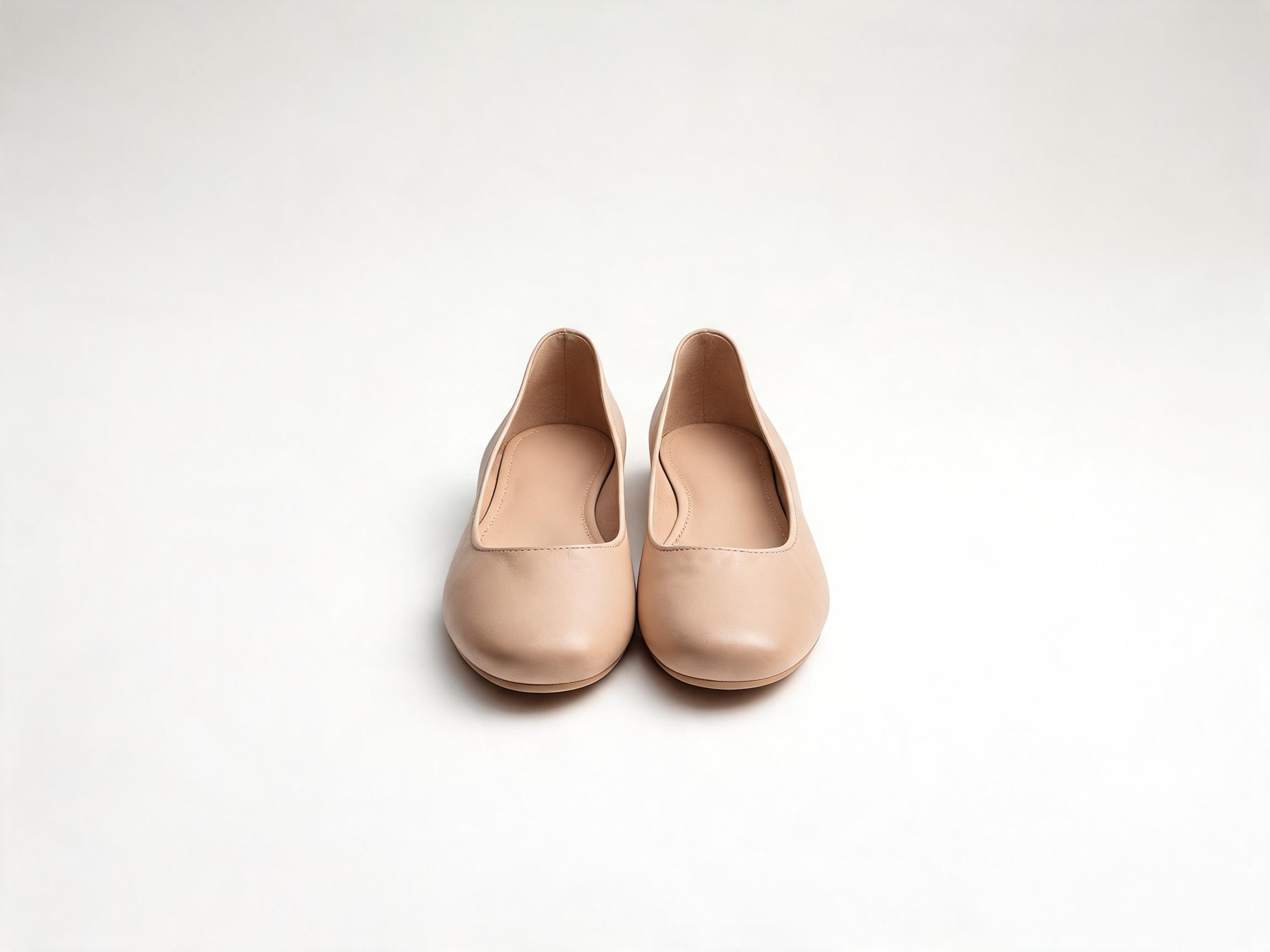
Build a mixed wholesale order of women's flats, ankle boots and knee-high boots from one factory. This guide explains how to structure the assortment, split MOQs by color, set color and sample standards, and plan container loading and replenishment.
B2B Buying Guide
Sourcing women's footwear in a single order from one factory is practical when the styles, MOQs and colorways are planned together. This guide shows how to structure a mixed order of flats, heels, ankle boots and knee-high boots so that each component supports the others rather than creating separate production runs.
- MOQs apply per style per color; plan the color count before fixing quantities.
- Lead times differ by construction: 25–35 days for flats and pumps, 30–40 days for ankle and knee-high boots.
- One confirmed sample set and one color standard per color should govern all styles in the order.
- Agree the size run in writing before the sample freeze, and plan container loading and replenishment around the longest lead time.
On this page
Designing the Assortment
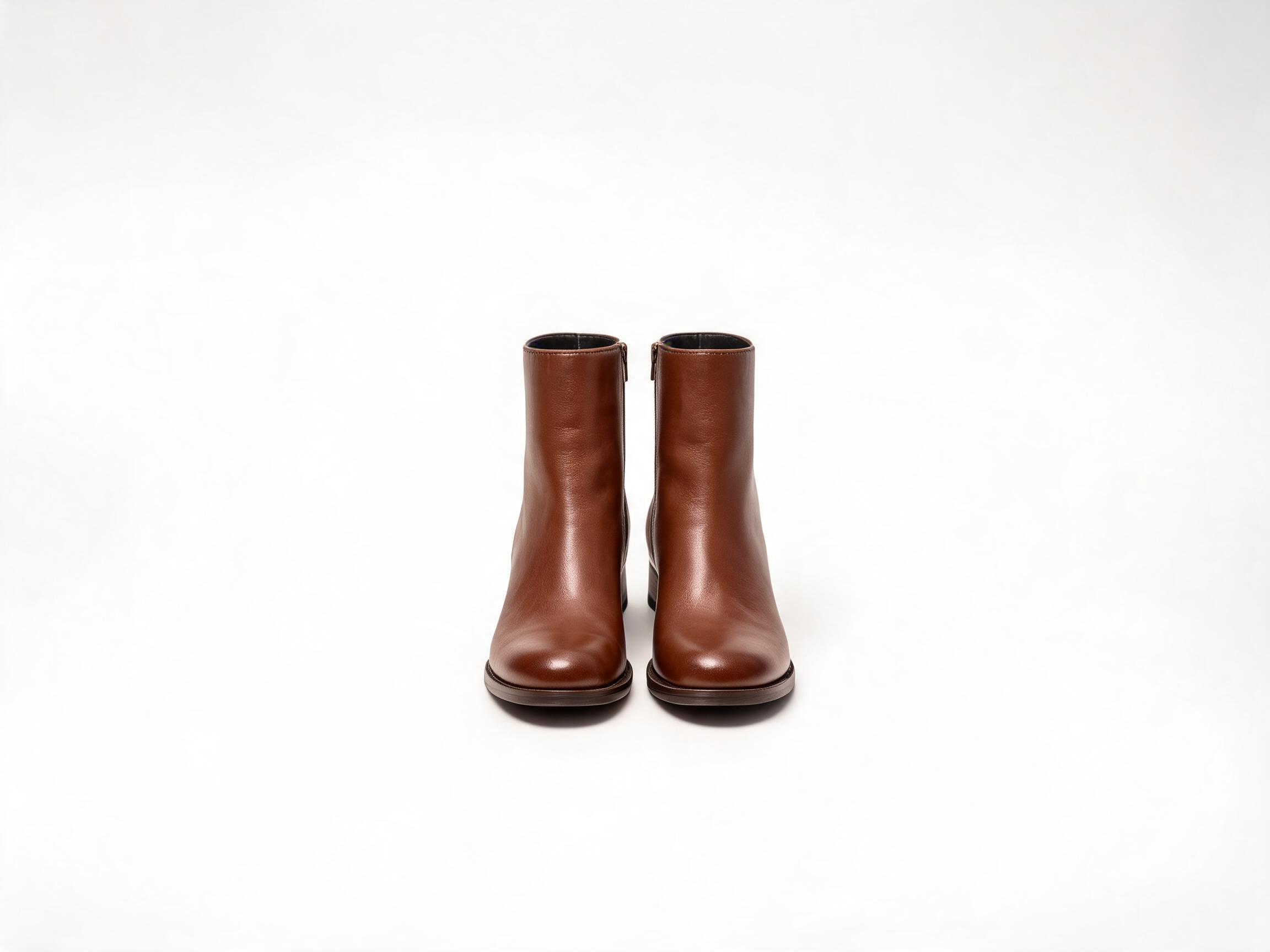
Start with the product types you intend to combine. Each has its own MOQ (100 pairs per color) and lead time, so the order structure should reflect how many colors you need across the range.
For flats, the Nude Leather Ballet Flats carry a lead time of 25–35 days and a MOQ of 100 pairs per color. Ankle boots, such as the Brown Leather Ankle Boots, require 30–40 days and a MOQ of 100 pairs per color; they feature a 6cm block heel and warm lining. Knee-high boots, represented by the Black Leather Knee-High Boots, also have a MOQ of 100 pairs per color and a 30–40 day lead time, with a 6cm block heel.
If your range also needs heels, they can join the same mixed order. The Black Leather Classic Pumps list a 7 cm heel, a MOQ of 100 pairs per color and a 25–35 day lead time — the same band as the flats, which can help balance an order built around the longer boot lead times.
A simple starting point is to choose one color per style. That gives a total MOQ of 400 pairs across four styles. If you want multiple colors in the same style, the MOQ applies to each color individually—for example, two colors of flats means 200 pairs of flats alone. Balance the assortment so that the total order remains practical for one production cycle and one shipment — in practice, this means checking that every color line meets its per-color minimum and that the combined volume still fits the production and loading plan you agree with the supplier.
MOQ and Color Allocation
Color allocation affects both MOQ and the efficiency of the production line. Here is how the four products compare on the facts provided:
| Product | MOQ (per color) | Lead time | Key specification |
|---|---|---|---|
| Nude Leather Ballet Flats | 100 pairs | 25–35 days | — |
| Black Leather Classic Pumps | 100 pairs | 25–35 days | 7 cm heel |
| Brown Leather Ankle Boots | 100 pairs | 30–40 days | 6cm block heel, warm lining |
| Black Leather Knee-High Boots | 100 pairs | 30–40 days | 6cm block heel |
Specifications as listed on product pages. Confirm current MOQ and lead time with the sales team before ordering.
If you plan to offer multiple colors in the same style, group them so that each color meets the MOQ. For example, three colors of ankle boots would require 300 pairs of that style alone. In a mixed order, it is often simpler to limit the number of colors per style and use the total quantity across styles to meet your target order volume.
Size Runs Across Styles
The size run is the other half of the order structure, and it is easy to leave undefined until it causes problems. Agree the size curve in writing before the sample freeze: list the sizes you need and the share of each color line that each size takes, with the middle sizes carrying more pairs and the extreme sizes fewer. Apply one series-level curve across the styles where your market allows it, so replenishment stays simple, and note any deliberate deviation per style.
Two points to confirm with the sales team before freezing the curve: which sizes are available for each style, and whether any per-size minimums apply inside a color line. The size curve itself is a planning template rather than a listed specification — the confirmed size table from your order, not a general guide, is the reference your shipment is checked against.
Samples and Color Standards
A single confirmed sample set covering all styles reduces the risk of color and material mismatch. Request one sample per style in the colors you plan to order. Confirm the leather finish for each: the ballet flats are nude leather; the pumps are black leather; the ankle boots are brown leather with warm lining; the knee-high boots are black leather. These are distinct colors and materials, so a separate color standard should be agreed for each rather than one standard applied across the range.
For each color, agree on a color standard—either a physical swatch or a reference sample—and keep it as the master for production. Because the ankle and knee-high boots share a 6cm block heel, you can ask whether the heel finish and sole components are consistent between those two styles; this can simplify component planning. The flats and pumps have no shared heel specification with the boots, so treat them separately.
Before bulk production, confirm the sample approval process and who signs off on the color standard. This step matters most when the order includes multiple colors or when the same color appears across different styles.
Container Loading and Replenishment
Mixed orders affect carton planning. Each style will have its own carton configuration and packing quantity per carton. Ask the supplier for the carton dimensions and packing quantities for each style so you can calculate how many cartons fit into a container and whether the mixed load can be consolidated efficiently. Loading plans should account for the fact that boots (ankle and knee-high) are bulkier than flats and pumps.
Replenishment planning should follow the longest lead time in the order. Ankle and knee-high boots require 30–40 days, while flats and pumps require 25–35 days. If you plan to reorder the fastest-selling style first, the boots may need to be ordered earlier to align with your sales cycle. Keeping the same color standard and sample set for repeat orders reduces approval time on replenishment.
For first orders, confirm the production schedule for each style and whether the styles can be produced in parallel. A single shipment is simpler, but it may require holding the flats and pumps until the boots are ready. Discuss with the sales team whether partial shipments are possible and how they affect cost and timing.
FAQ
Can I mix flats, heels and boots in one order?
Yes, provided each style and color meets its MOQ. The flats, pumps and boots in this guide all list a MOQ of 100 pairs per color. The total order will be the sum of the quantities for each style and color.
How many colors can I include?
There is no fixed limit, but each additional color adds 100 pairs to the MOQ for that style. Plan the number of colors based on your total order volume and the production capacity you need.
How should I split each color line across sizes?
Agree a size curve in percentages or pairs per size before the sample freeze, with middle sizes usually carrying the most pairs, and confirm size availability and any per-size minimums with the sales team. The confirmed size table then becomes the ordering reference.
Do the ankle and knee-high boots share components?
Both list a 6cm block heel, but other components may differ. Confirm with the supplier whether soles, heels or other parts are shared, as this may affect pricing and production scheduling.
What is the lead time for a mixed order?
Lead times are per style: 25–35 days for flats and pumps and 30–40 days for boots. For a mixed order, plan around the longest lead time among the styles you order. Confirm the exact schedule with the sales team.
Always confirm current MOQ, lead time and production schedules with the sales team before placing an order.