A practical planning guide for buyers who want to order ankle boots, Chelsea boots, taller winter boots and work boots as one coordinated bulk shipment — covering which constructions to include, how to share last development across styles, how to set size ratios per construction, and how to stage whole-shipment QC before the container leaves.
Ordering boots in bulk rarely means one style. Most stocking buyers build a season around several constructions — a low ankle boot, a Chelsea, a taller winter boot, a work boot — and want them produced and shipped as one coordinated order rather than four separate ones. That is where planning effort pays off: shared last development, a size ratio that matches how each construction actually sells, and a QC plan that inspects the whole shipment, not one style in isolation.
This guide is for buyers assembling that kind of program. It walks through how to choose which constructions to bundle, how to develop lasts once and use them across styles, how to set size ratios per construction, and how finished-goods inspection should be staged when several boot types share a container.
Key takeaways
- Bundle boot constructions that share a foot shape, not just a price band — that is what makes a shared last possible.
- Last sharing saves development time, but break it deliberately for constructions with different internal volume needs.
- Size ratios should follow each construction's end use; winter boots and work boots rarely mirror a fashion ankle boot curve.
- Whole-shipment QC is staged: incoming materials, in-line, then finished goods with forepart flexing and sole-bonding tests.
- Sampling typically runs about 7–12 days; bulk production is commonly 30–45 days depending on order content.
In this article
- Why a mixed-construction program beats four separate orders
- Choosing which constructions belong in one program
- Sharing last development across boot types
- Size-ratio planning per construction
- Staging QC across a mixed shipment
- Timeline, terms and what to confirm with your supplier
Why a mixed-construction program beats four separate orders
A buyer who orders four boot styles as four separate bulk orders pays for the same overhead four times: four sampling rounds, four lab-dip and color confirmation cycles, four sets of packaging approvals, four inspection bookings. Consolidating them into one program spreads that fixed cost across a single development and production window.
It also matters for the retail end. A stocking buyer who can offer a coordinated boot wall — ankle, Chelsea, tall winter, work — gives a shop a reason to take one delivery instead of sourcing each category from a different vendor. The trade-off is planning complexity, and almost all of that complexity sits in three places: last development, size ratios, and QC.
Choosing which constructions belong in one program
Not every combination of boots makes a sensible single program. The first filter is foot shape, the second is seasonal overlap, and the third is material and color reuse.
Filter one: shared foot shape
Constructions built on a similar internal volume can realistically share a last family. A men's or women's ankle boot and a Chelsea boot are close relatives: both are low-shaft, close-fitting styles, and a last developed for one can usually be adapted for the other with modest adjustment. Taller knee-high styles typically need their own shaft and calf geometry, and work boots need a roomier toe box and a different heel seat. If you force all four onto one last, you will get a fashion boot with a work-boot toe box or a work boot with a fashion boot's instep — a compromise nobody wants.
Filter two: seasonal overlap
A program ships as one container, so all styles in it should reach the market in the same selling window. Mixing deep-winter boots with a spring-weight ankle boot in the same bulk order leaves one style sitting in the warehouse. If your market spans Europe, North America and the Middle East, remember that selling seasons do not align across those regions — a program designed for a northern European autumn will not fit a Gulf market's calendar.
Filter three: material and color reuse
Genuine leather is ordered by the hide, and leather color is matched by Pantone reference. A program that keeps two or three leather colors across all constructions simplifies dye-lot management and keeps the range visually coherent. A program with six unrelated colors across four styles is harder to control at incoming inspection and harder to sell as a family.
Sharing last development across boot types
Last development is the longest lead item in boot production, because everything downstream — patterns, fit, sample approval — depends on it. Sharing lasts across constructions is the single biggest time saver in a mixed program, but it has to be done by construction family, not across the whole range.
Build a last family, then derive
A practical approach is to develop one base last per foot-shape family, then derive per-style variants. For example, a low-shaft last might serve both a side-zip ankle boot and an elastic-gusset Chelsea, with the Chelsea variant adjusted around the gusset opening. The result is one fit standard the buyer can approve once and expect across two styles.
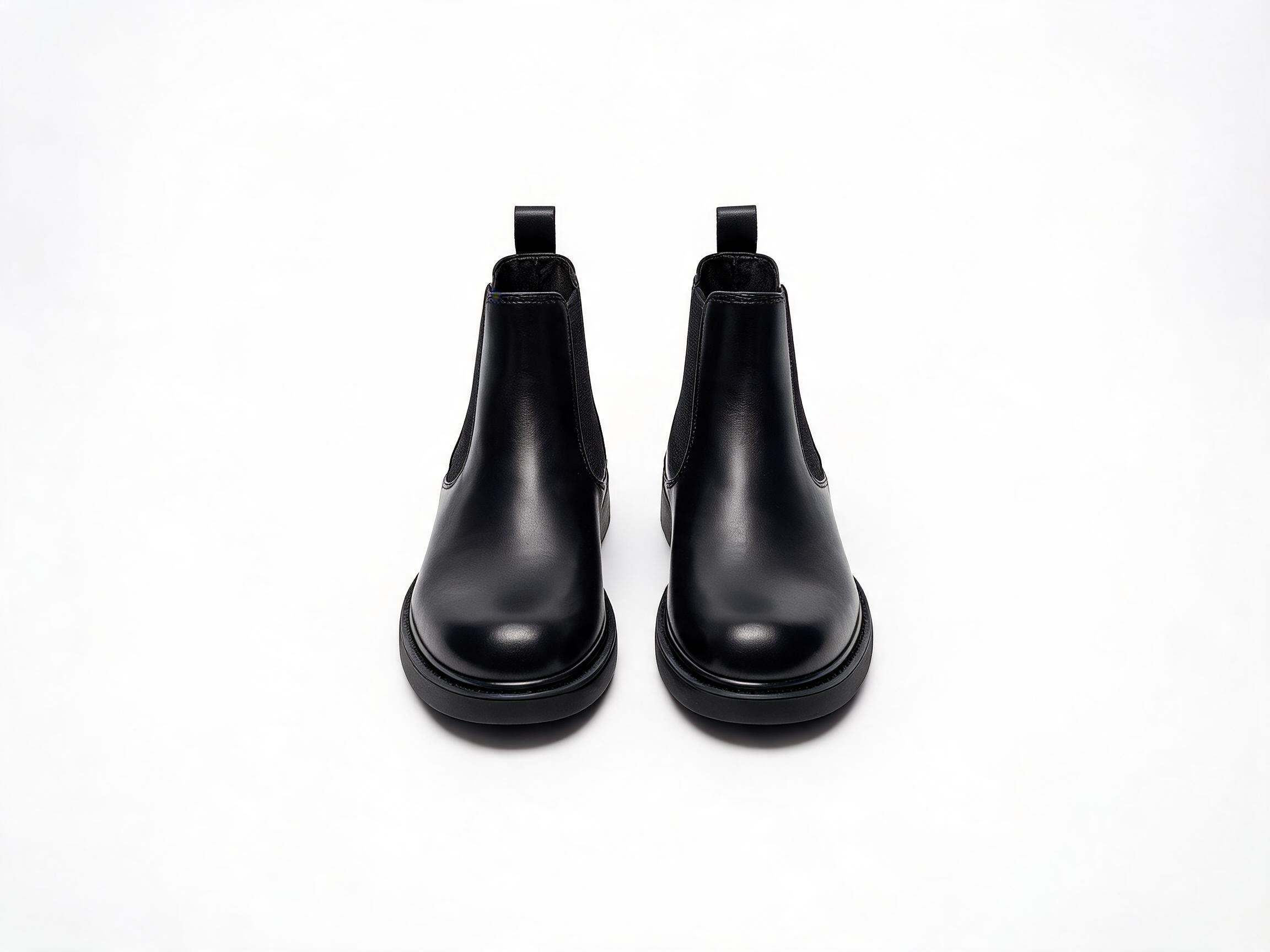
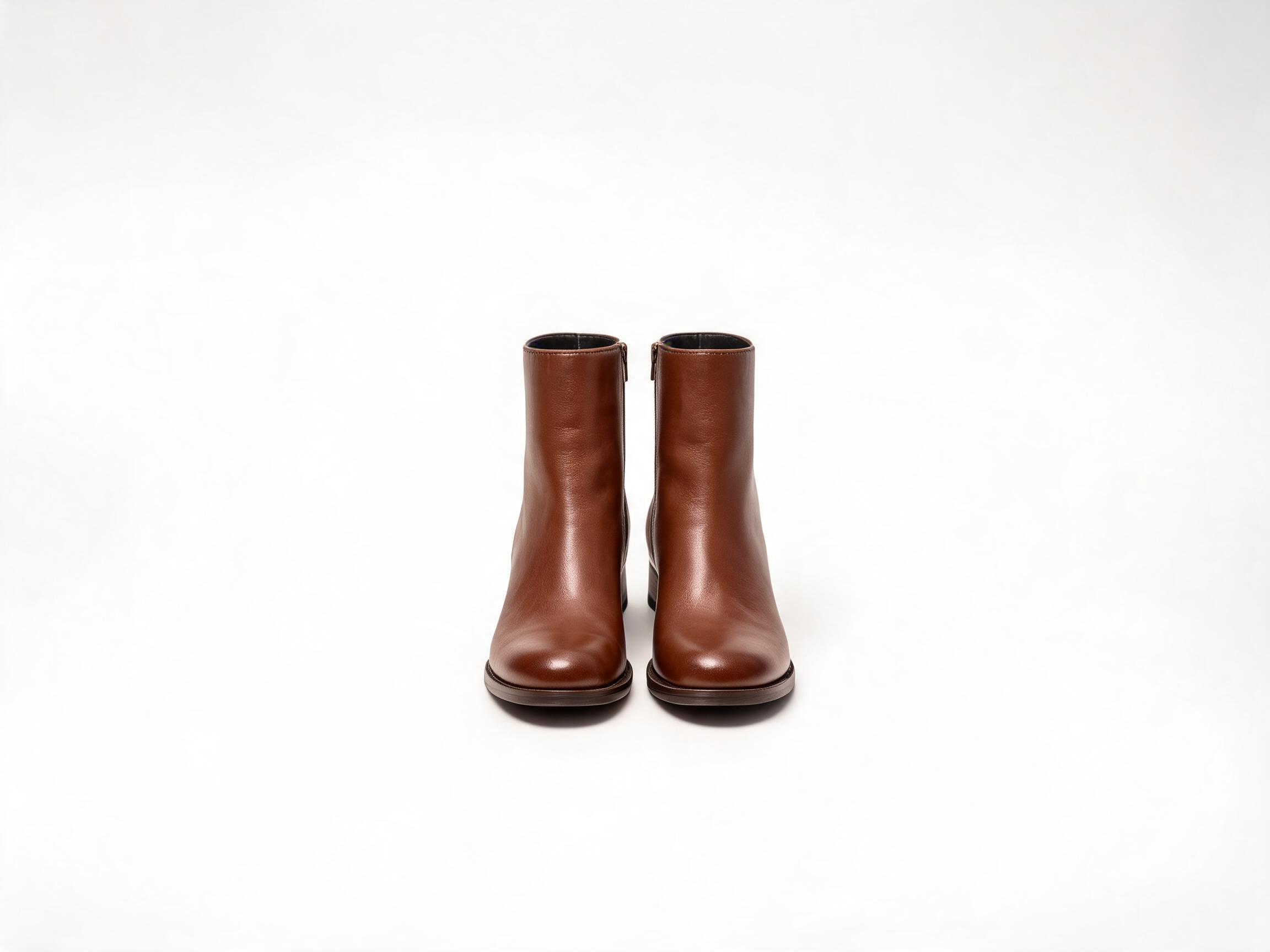
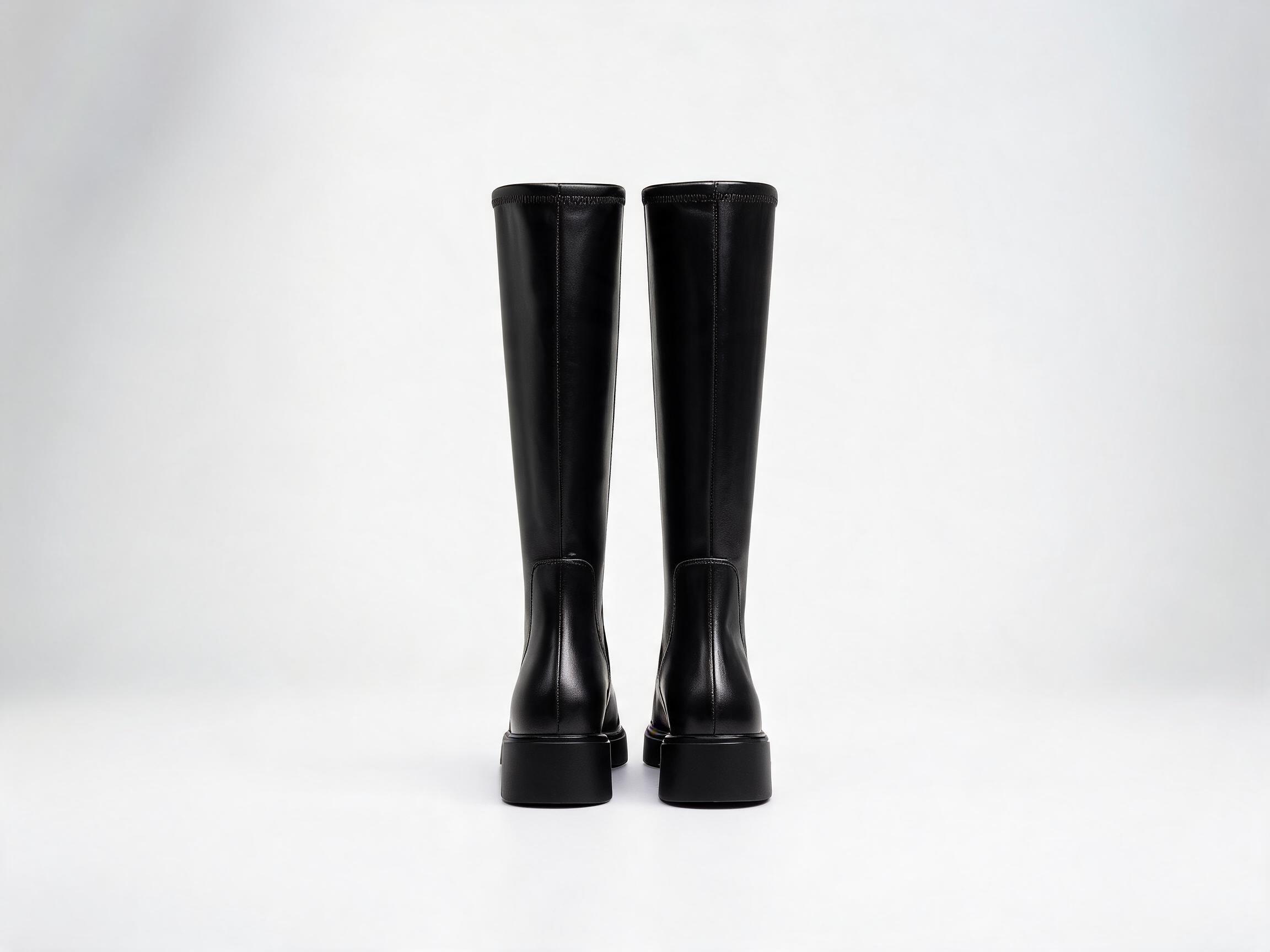
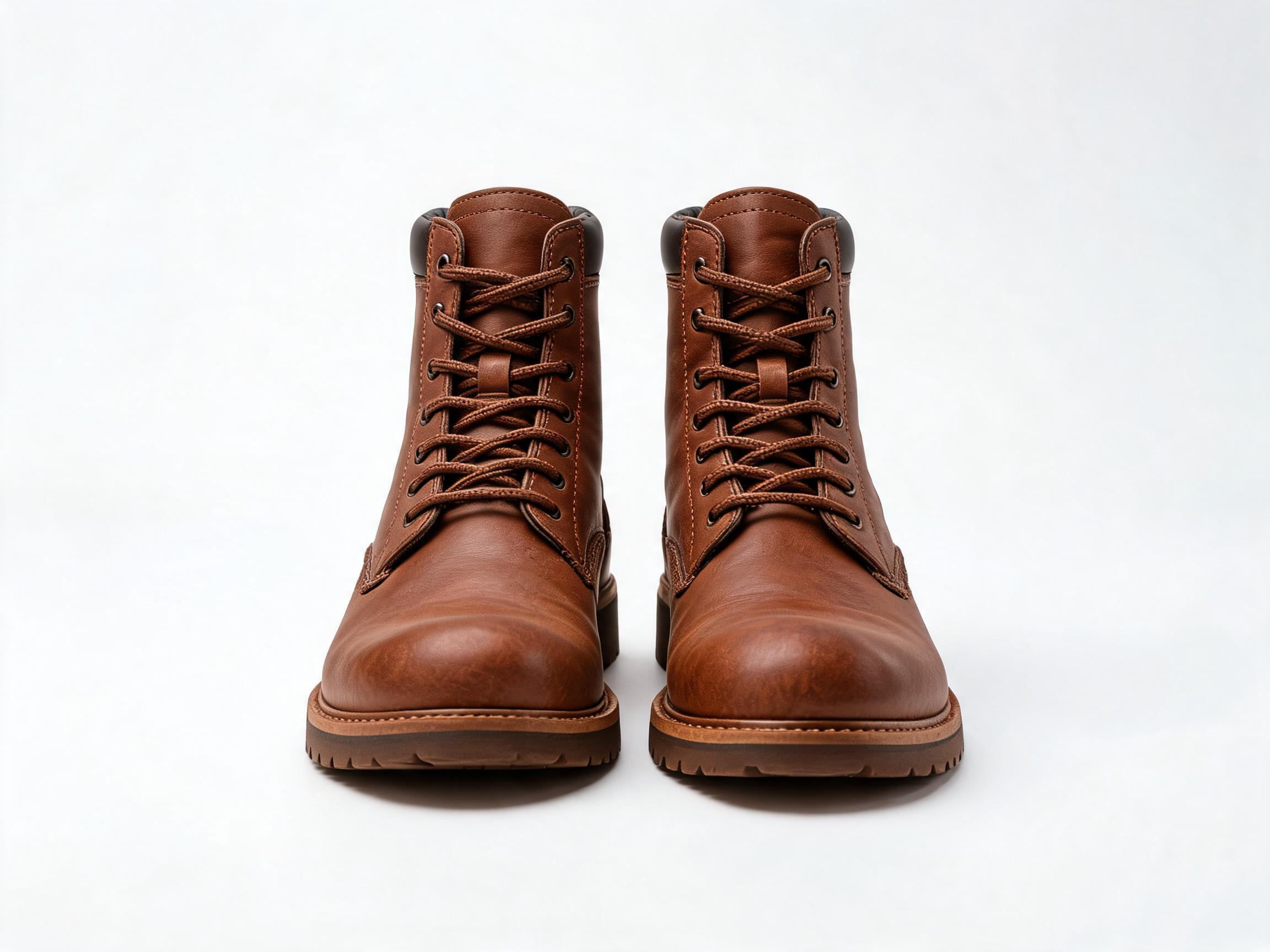
Concrete references for this family logic: the brown leather ankle boots use a side zipper and block heel, while the black Chelsea boot shoes use elastic side gussets and a pull tab with a shaft of about 15 cm. Both are low-shaft; both can live in one last family. The black leather knee-high boots sit at roughly a 38 cm shaft with an inner zipper — a different construction with its own calf geometry — and should be developed on their own last. The brown leather work boots, with an oil-resistant lug outsole and reinforced toe, belong to a third family entirely.
Decide where sharing stops
Three things usually force a separate last or a significant modification: toe-box volume (work boots need room), shaft geometry (knee-high styles), and heel-seat construction. Anything else — surface pattern, gusset, zipper placement, outsole choice — can normally be adjusted on a shared base. Ask your supplier to show you, on paper, which styles share a base and which are derived, before sampling begins; that one document prevents a lot of rework.
Sample the family, not just the style
Sampling at Aurevia typically runs about 7–12 days. In a mixed program, use that window to fit-test the shared last across every construction that will use it. If the ankle boot fits and the Chelsea derived from the same base pinches across the instep, you want to know that during sampling, not after bulk cutting.
Size-ratio planning per construction
A single size ratio applied across a mixed program is the most common planning mistake. Each construction sells to a different end user, and the size curve follows the end user.
| Construction | Typical end use | Ratio planning consideration |
|---|---|---|
| Ankle boot (side zip, block heel) | Fashion / everyday wear | Follows the core fashion size curve; narrower at the extremes |
| Chelsea boot (elastic gusset, approx. 15 cm shaft) | Everyday / smart casual | Similar core curve to ankle boots, useful to align with it for shared shelf space |
| Knee-high boot (approx. 38 cm shaft) | Seasonal fashion | Shaft fit matters as much as foot length; confirm calf sizing with the supplier |
| Work boot (lug outsole, reinforced toe) | Occupational / outdoor | Skews larger and flatter across the middle of the curve |
Two practical rules. First, set the ratio per construction against that style's own sales history or your customer's order pattern, then reconcile the totals at program level rather than forcing styles into one curve. Second, check the extremes: if your fashion styles stop at a certain size but your work boot line needs to extend into larger sizes, the last family and the pattern set must support that before bulk production starts.
Where constructions share a last family, aligning their size runs has a second benefit: packaging, carton assortments and size stickers can be standardized, which reduces picking errors at the warehouse.
Staging QC across a mixed shipment
Mixed shipments need a QC plan that treats the container as the unit of inspection, not the style. Aurevia runs a three-stage QC process, and it maps cleanly onto a mixed boot program.
Stage one: incoming materials
Before any cutting, leather is checked against the approved Pantone color and against the hide quality standard agreed at sampling. In a mixed program this stage also catches a real risk: leather from different dye lots used across different constructions. If the ankle boot and the knee-high boot are meant to read as the same color on shelf, inspect them against each other, not just against the swatch.
Stage two: in-line
In-line inspection follows each construction through its own build steps. Zipper and gusset placement on the ankle and Chelsea styles, shaft symmetry on the knee-high, outsole attachment and toe reinforcement on the work boot. Because these are different processes, in-line checks should be scheduled per construction rather than sampled once across the whole floor.
Stage three: finished goods
Finished-goods inspection includes forepart flexing and sole-bonding tests — both worth running on every construction in the program, since bonding failure looks similar across boot types. Then add program-level checks: color consistency across all styles intended to match, size-run completeness per construction against the agreed ratio, and carton markings and private-label packaging per style.
Third-party inspection is welcome, and for a mixed program it is worth arranging so the inspector sees all constructions on the same visit. A single visit across the full range gives you a container-level picture; four separate visits give you four partial ones.
Timeline, terms and what to confirm with your supplier
Aurevia is a genuine-leather footwear OEM/ODM manufacturer and exporter founded in 2011 in Quanzhou, China, with about 260 staff, exporting to Europe, North America and the Middle East. OEM/ODM work covers Pantone color matching, outsole material changes, insole branding, and private-label boxes and hangtags — all of which apply directly to a multi-construction program, since each style can carry its own branding while sharing one order.
Sampling is roughly 7–12 days. Bulk production is commonly 30–45 days depending on order content — and in a mixed program, order content is exactly the variable to watch: four constructions with four pattern sets and four packaging approvals take longer than one. Build the production window around the approval sequence, not around the last style to be sampled.
Export terms are available as EXW, FOB or CIF. Minimum order quantities are confirmed per color and style with the supplier, so raise the intended mix early — the ratio of styles to colors in your program affects how quantities are planned.
A short list of things to settle before you commit:
- Which constructions share a base last, and which are derived or separate.
- The size ratio for each construction, reconciled at program level.
- Which leather colors must match across styles, and how that is checked in incoming inspection.
- Packaging and branding per style, and how assorted cartons are marked.
- Whether third-party inspection is one combined visit or staged per construction.
- MOQ per color and style, confirmed against your intended mix.
Planning a mixed boots program?
Send us your construction list, target markets and intended size ratios, and we can map which styles share a last family, what sampling sequence makes sense, and how inspection should be staged across the shipment.