
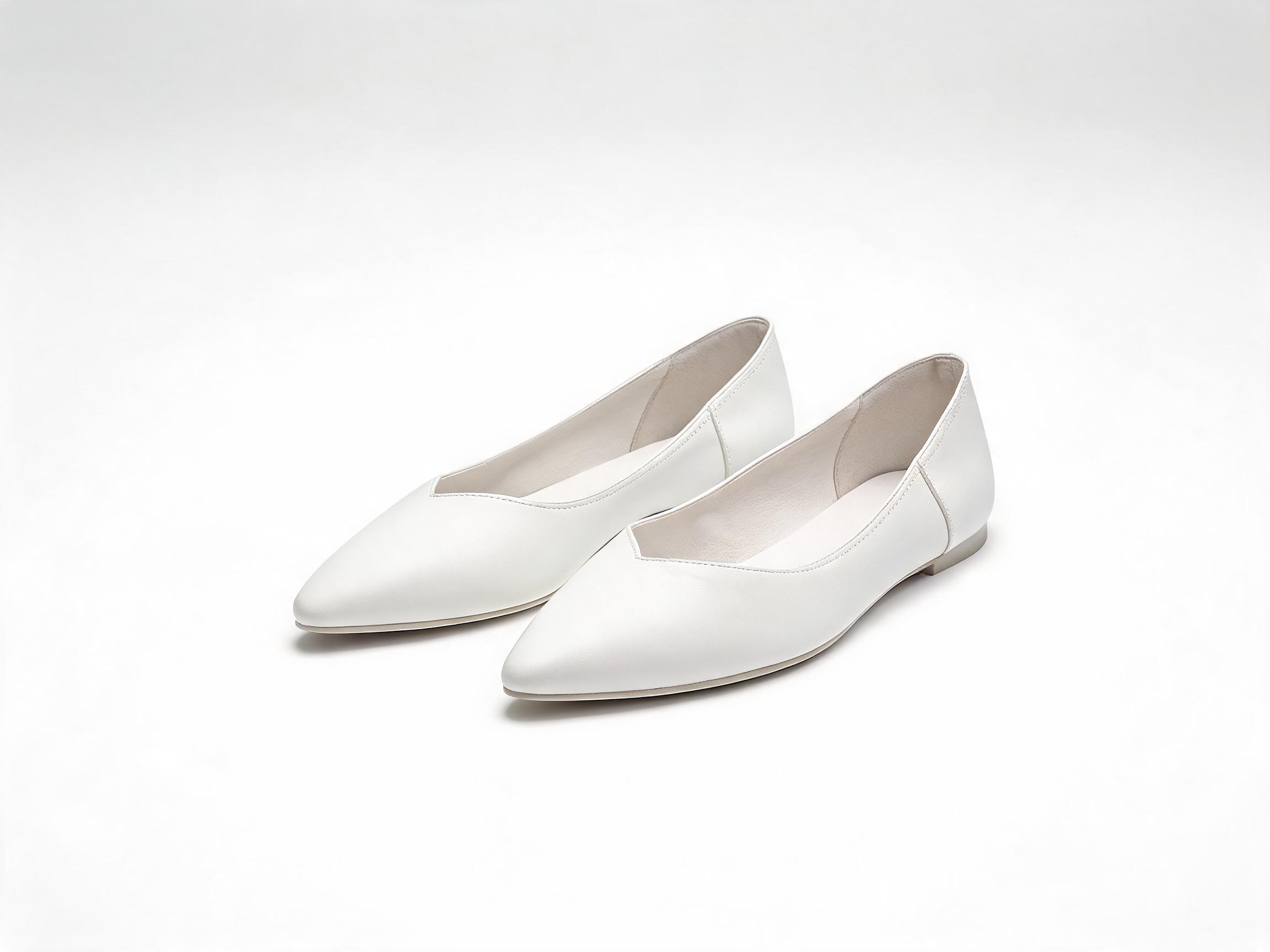
A practical guide for wedding planners, event suppliers, department stores and private-label buyers sourcing bulk ballet flats for wedding guests. Compare occasion-ready flat styles, plan colourways against wedding palettes, time sampling and order runs, and review the QC points that matter for occasion shoes.
Wedding guest flats are a small line item that carries a disproportionate amount of programme risk. They are ordered in quantity, distributed on the day, worn for hours, and judged on appearance in photographs. For wedding planners, event suppliers, department stores and private-label brands assembling guest flat programmes, the buying decision is really three decisions: which occasion-ready silhouettes to offer, which colourways will hold across a wedding palette, and how to time the order so samples, size runs and packaging arrive before the event calendar turns.
- Flat silhouettes anchor guest programmes because they work for long events and can be planned as a single size run.
- Round-toe ballet, pointed-toe and strap styles each serve different occasion and gifting logic.
- Colourway planning should start from neutrals and move to Pantone-matched custom shades only when the wedding palette demands it.
- Sample earlier than retail rhythm; skew the size run toward the middle and concentrate colour in one or two shades for gift-ready presentation.
- Colour consistency, scuff resistance and packing cleanliness are the QC points that matter most for occasion shoes.
Why flats anchor wedding-guest programmes
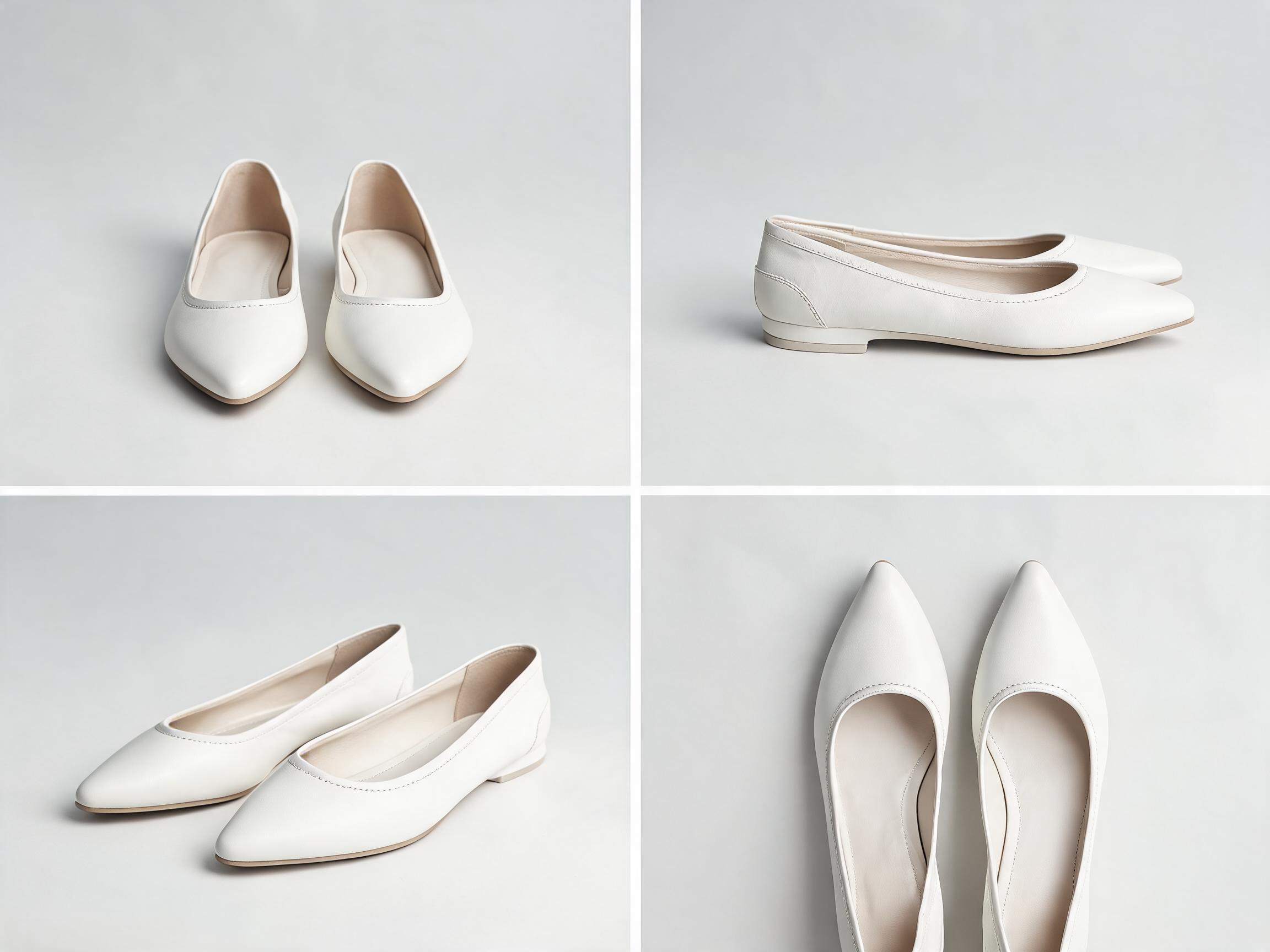
Heels get the attention in bridal lookbooks, but the guest programme is usually built around flats. The reason is comfort across a long day: ceremonies, photographs, dinner and dancing can run many hours, and a guest who changes out of heels early is better served by a shoe that was planned for that moment. Flats also remove the venue-specific problems of heels — grass, gravel, decking and uneven stone — without asking the guest to bring a second pair.
There is also a gifting logic that suits bulk buying. A flat can be planned as a single size run rather than as a style-by-style assortment, which keeps the programme simple to distribute and easy to reorder. For suppliers and stores, that means the flat becomes the volume item in the wedding offer, while the bridal heel remains a smaller, more specialised line. In our own range, the White Satin Wedding Heels are a useful contrast example: a duchess satin bridal heel at approximately 8 cm, offered in white, ivory, blush and custom shades. It belongs in a bridal programme, not in the guest flat run.
Occasion-ready style selection
Not every flat reads as wedding-appropriate. The three silhouettes below cover most guest programmes, and each has a different job.
Round-toe ballet flats
The round-toe ballet flat is the default for guest programmes. A soft nappa leather upper with an elastic topline and a cushioned insole gives the shoe a low-profile, comfortable look that works with both formal and semi-formal dress codes. The Nude Leather Ballet Flats use cemented construction, a flexible rubber outsole and a flat of approximately 1 cm, in EU 35–41 / US 5–10. That outsole flexibility matters for guests who will be standing and walking across the event. Nude, black, white and custom colour options make this the most versatile base for a guest programme.
Pointed-toe flats
A pointed toe reads slightly more dressy and photographs well when the guest wants a slipper-like look without a heel. The White Pointed-Toe Flats are built on soft white leather with a scuff-resistant finish, in the same EU 35–41 / US 5–10 range. The scuff-resistant finish is the practical detail here: a pointed toe is more exposed at the front of the shoe, and white or light shades show marks quickly. This silhouette suits daytime ceremonies, garden venues and programmes where the flat is also intended as a keepsake.
Strap styles
An adjustable strap adds security, which is useful for outdoor venues and for guests who are not used to slip-on flats. The Brown Mary Jane Flats use an adjustable buckle strap and come in brown, black, burgundy and custom colours. The strap also gives the style a more vintage, outfit-led character, so it tends to work better as a coordinated guest pair than as a neutral giveaway.
| Style | Best suited to | Key construction detail | Colourway note |
|---|---|---|---|
| Round-toe ballet flats | Formal and semi-formal guest programmes, long events | Soft nappa leather, elastic topline, cushioned insole, flexible rubber outsole, ~1 cm flat | Nude, black, white, custom |
| Pointed-toe flats | Daytime ceremonies, garden venues, keepsake gifting | Soft white leather, scuff-resistant finish | White-led, custom shades |
| Strap / Mary Jane flats | Outdoor venues, guests needing a secure fit | Adjustable buckle strap | Brown, black, burgundy, custom |
All three reference styles share the EU 35–41 / US 5–10 size range, which keeps a guest programme on a single size chart instead of splitting the order across different lasts.
Colourway planning for wedding flats
Colour is where guest flat programmes are won or lost. A palette that looks coherent in a swatch book can fall apart across a full batch if shades drift.
Start with the basics. Nude, black and white cover the majority of guest programmes because they sit under almost any wedding palette and do not compete with the bridal party. Nude in particular is the workhorse shade for a mixed-guest list: it flatters most skin tones and reads quietly in photographs.
Move to custom Pantone shades only when the wedding palette demands it. Colour matching is available for custom shades, which allows a programme to align the flat to a specific palette rather than a generic ivory. The rule of thumb is to match to the palette, not to the floral: flowers and linens vary in tone, and a flat that is matched to a single decorative element will look off next to the rest. Sample the intended shade in the actual upper material before committing the batch, because finish and texture change how a colour reads.
Seasonal considerations are mostly about finish and tone. Lighter, brighter shades suit spring and summer ceremonies and outdoor venues; deeper neutrals and dark shades suit autumn and winter events and evening receptions. If a programme runs across seasons, keep one or two core shades stable and treat the season-led shades as secondary. That keeps reorders simple and reduces the number of colour variants you have to hold.
Order planning for event programmes
Wedding programmes do not follow retail rhythm. Retail buyers can work to a calendar of seasonal drops; event suppliers are working to a date that is already fixed. Sampling therefore needs to start earlier than a comparable retail order, so that colour, packaging and size run are settled before the event calendar gets tight.
Two planning habits help. First, expect the size run to skew toward the middle. Guest lists concentrate around common sizes, and the extremes move slowly. When you plan the run, treat the middle sizes as the volume and the outer sizes as the tail, and keep the tail small enough that leftovers can be absorbed by reorders or a follow-up event rather than written off. Second, concentrate colour. A programme with one or two dominant shades is easier to pack, easier to distribute and easier to present as a gift than a programme spread across many shades. Fewer shades also means fewer colour-consistency checks and a cleaner table on the day.
Packaging and branding should be planned with the same lead time as the shoe. OEM logo and packaging are available, which lets a supplier deliver a gift-ready presentation rather than loose pairs. Decide early whether the flat is handed out boxed, bagged or as part of a welcome kit, because that decision affects the packing specification and the inspection checklist. If the programme is for a department store or a private label, match the packaging format to the retail or gifting context before sampling closes.
Sampling itself runs on a known rhythm: existing samples ship in 3–5 days, and customized samples in 7–12 days. Use the existing-sample window to confirm silhouette and fit, and the customized-sample window to confirm colour matching, logo and packaging. Because lead time for the production run is confirmed per order, the sampling and packaging decisions should be finalised before the purchase order is placed, not after.
QC points that matter for occasion shoes
Occasion shoes are inspected against appearance as much as construction. Three checks carry most of the risk.
- Colour consistency across the batch. A guest programme is a group photo waiting to happen. Shade variation between pairs is the most visible defect, which is why colour fastness checks belong in inspection and why matched left/right hides are used for paired uppers. Review the batch as a group, not pair by pair.
- Scuff resistance and surface condition. Light and white shades show handling marks, so the finish and the packing method both matter. Confirm the surface condition of the delivered pairs, not just the sample.
- Cleanliness and packing. Occasion shoes arrive in front of guests. Thread ends, adhesive marks, dust and crushed boxes read as quality problems even when the shoe itself is sound. Packing should be inspected with the same attention as the upper.
Aurevia Footwear Co., Ltd. operates a three-stage inspection process covering these points, and third-party inspection is welcome for buyers who need an independent check before shipment.
Working with a supplier on a guest flat programme
Aurevia Footwear Co., Ltd. has been based in Quanzhou, China since 2011 and exports to Europe, North America and the Middle East from a 260-person operation. The in-house design team supports OEM and ODM work, including Pantone colour matching, logo and packaging development, and matched left/right hides. If you are building a wedding guest flat programme, send the intended silhouette, colourway direction, size run and packaging format, and the design team can work from your brief to a sample for review.