
A buying guide for importers and distributors planning a mixed-style sneaker program: how to pair low-tops, high-tops and knit runners in one order, set size runs that hold up on reorder, lock consistency with a first-order confirmation sample, and plan a replenishment rhythm that matches factory MOQ and lead times.
Building a Repeatable Mixed-Style Sneaker Order
Most importers do not buy one sneaker at a time. They buy a program: a low-top sold at entry price, a high-top that carries the seasonal look, and a knit runner that fills the athletic shelf. The difference between a program that reorders cleanly and one that keeps needing renegotiation is rarely the factory. It is whether the order was structured in the first place so the next order can repeat it.
This guide is about that structure. It covers how to pair the three styles into one purchase, how to build a size run you can reorder without recutting it every season, how to use the first-order confirmation sample as the consistency reference, and how to set a replenishment rhythm that matches the MOQs and lead times bulk sneaker suppliers actually work to.
Key takeaways
- Treat a mixed-style order as one purchase with a fixed style ratio, size run and colour set — not as three separate orders that happen to ship together.
- All three styles in this set carry a stated MOQ of 200 pairs per colour, with a 30–40 day lead time. Confirm current MOQ and lead time with the sales team before ordering.
- The confirmation sample from the first order is the document that keeps a repeat order consistent. Approve it, sign it, and reference it in every reorder.
- Replenishment works when the reorder is planned before the current shipment sells through, so production time does not become a stock-out.
In this guide
- The three-style order: ratio, colours and quantities
- Size runs and size grading that survive a reorder
- Using the first-order confirmation sample to lock consistency
- Setting a replenishment rhythm around MOQ and lead time
- A reorder specification sheet to hand to the factory
1. The three-style order: ratio, colours and quantities
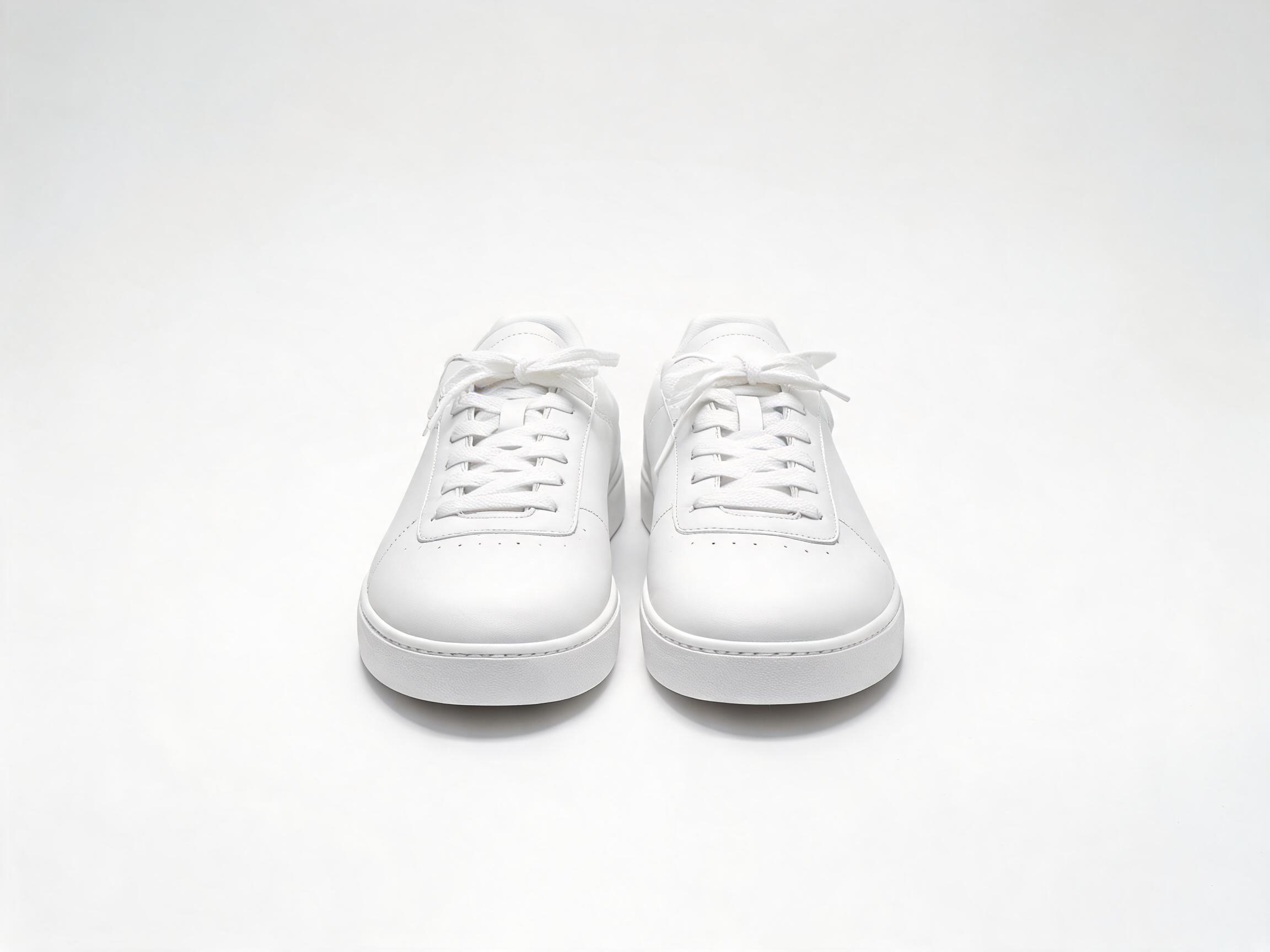
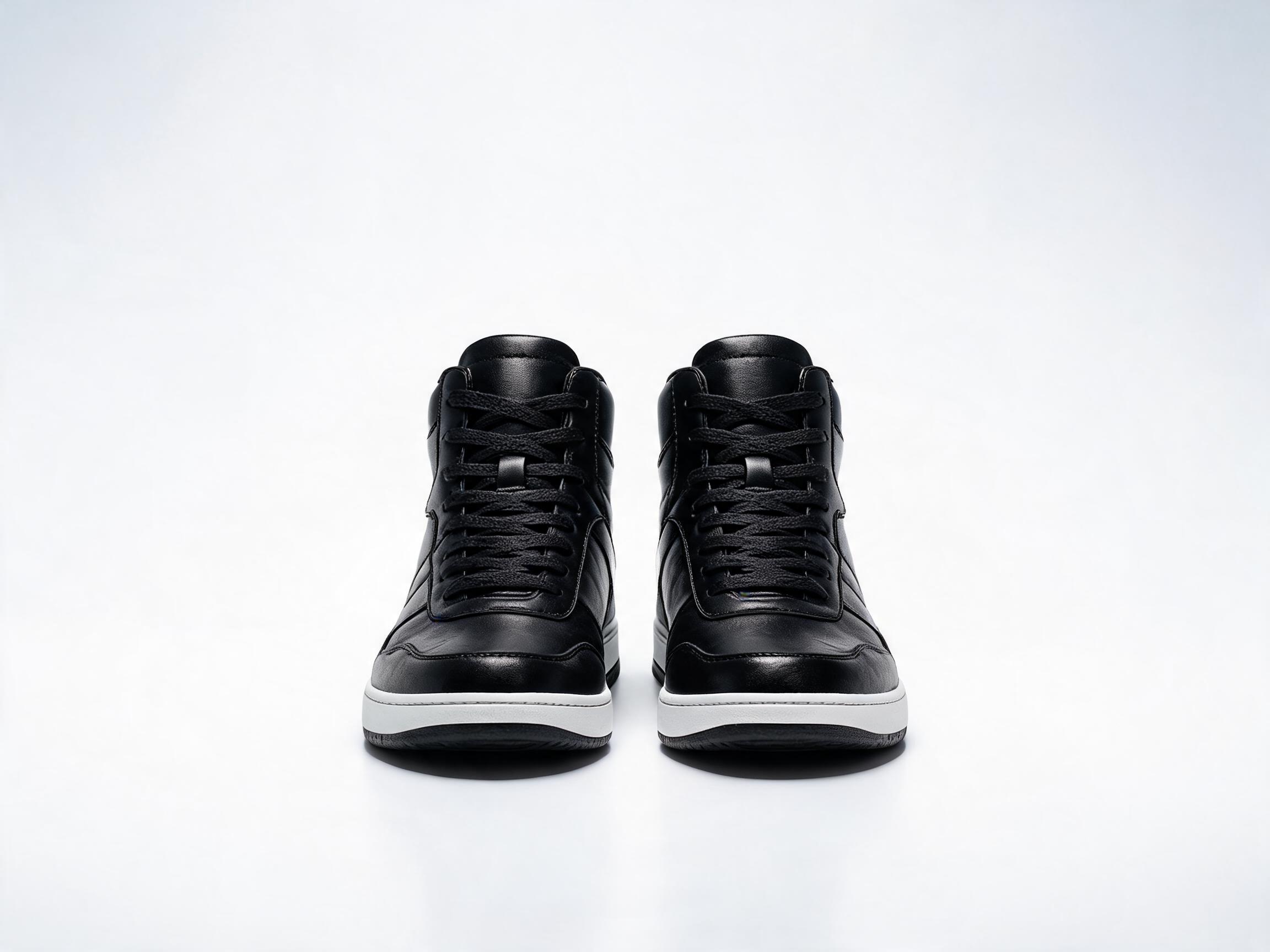
A mixed-style order starts with a decision about ratio. The three styles in this set do different jobs on a shelf, so equal quantities are usually the wrong starting point. The white leather low-top sneakers are the broad-volume entry: an easy first purchase for a buyer shifting from single-style sourcing. The black leather high-top sneakers carry a stronger style statement and usually sell in a narrower band. The grey knit running sneakers sit in a different use case again, aimed at buyers stocking athletic-leaning footwear alongside casual styles.
Because each style has its own MOQ per colour, the ratio you choose has to be built colour by colour, not style by style. A three-style order in three colours is nine colour-style lines, and each line carries the minimum. That arithmetic should be done before you approach suppliers, because it determines whether a proposed mix is feasible as a single purchase.
| Style | Stated MOQ | Stated lead time | Typical role in the order |
|---|---|---|---|
| White leather low-top sneakers | 200 pairs / colour | 30–40 days | Volume base and entry price point |
| Black leather high-top sneakers | 200 pairs / colour | 30–40 days | Style driver, narrower depth |
| Grey knit running sneakers | 200 pairs / colour | 30–40 days | Athletic-leaning shelf filler |
Figures as listed on the product specification pages. Confirm current MOQ and lead time with the sales team before ordering — specifications and terms can change between seasons.
One practical way to build the ratio is to set the low-top as your base unit and express the other two as fractions of it. If the low-top is the base, the high-top might be a smaller share and the runner smaller again, depending on what your channel actually sells. That keeps the order anchored to a number you already understand, and it makes the reorder calculation simple when sales data comes back.
For illustration only — not a recommendation tied to these products: a common starting frame is to treat the low-top as 1.0 and the high-top and runner each as 0.5 of the low-top quantity, then adjust from your channel's sales data. The stated MOQ sets only the floor for each colour line; it does not tell you the ratio.
Colour: keep the set small in the first order
Every added colour multiplies the MOQ exposure. A first mixed order is better built on a tight colour set — one colour per style is the simplest defensible starting point — with additional colours added only once a style has proven it moves. That approach also makes the confirmation sample meaningful: one approved sample per style is a cleaner consistency reference than three approved samples for the same style in different colours.
2. Size runs and size grading that survive a reorder
The second structural decision is the size breakdown inside each colour line. A size run is easy to set once and hard to repeat if it was improvised. Two rules keep it repeatable.
Set the curve once, in writing
Write the size curve as a fixed table: which sizes are included, and what proportion of the line each size takes. For example, the sizes might be listed in order with a percentage or pair count against each. That table, not a verbal instruction, is what the supplier produces against and what you check the shipment against. When it is written down, a reorder does not depend on anyone remembering what was agreed.
As an illustrative starting point only — not a factory rule and not a listed specification — a seven-size run might be weighted roughly 8%, 12%, 18%, 24%, 18%, 12%, 8% from the smallest size to the largest, so a 200-pair-per-colour line would split into about 16, 24, 36, 48, 36, 24 and 16 pairs. Replace those shares with your own market's size data, confirm per-size availability and any per-size minimums with the supplier, and restate the final curve as exact pairs per size in the purchase order.
Separate the size-run decision from the style decision
A common failure in mixed orders is renegotiating sizes at the same time as styles. Keep them apart. The style ratio is a merchandising decision; the size curve is a distribution decision. If the size curve can be held constant while the style ratio changes, you can adjust what you sell without redoing the work on how it is packed.
| Decision | Changes with | Should stay fixed across reorders? |
|---|---|---|
| Style ratio | Sales mix, channel, season | No — adjust from sales data |
| Size curve | Market sizing, return patterns | Yes, until data says otherwise |
| Colour set | Range planning | Yes for a proven style; expand gradually |
| Confirmed sample | Nothing, unless you formally revise it | Yes — this is the reference |
If you do not yet have sales data for a market, the first order is where you gather it. Keep the size curve simple and documented so that when the numbers come back, the change you make next time is a deliberate one rather than a guess.
3. Using the first-order confirmation sample to lock consistency
The confirmation sample — sometimes called a pre-production or approval sample — is the single most useful document in a repeatable sneaker program, and it is the one buyers most often skip. Its purpose is not to decide whether you like the shoe. It is to create a physical reference that both sides agree is the standard, so that order two, three and four can be checked against something specific.
What to approve, and what to record
Approve one sample per style, and record against each one the details that a repeat order must reproduce: the style, the colour, the materials as specified, the size the sample was made in, and the date and reference number. Sign or formally approve it in writing, and keep a copy with the purchase record. From that point the sample stops being a sample and becomes the specification.
How it is used on a reorder
On the next order, the instruction to the factory is not "same as last time". It is "produce to confirmation sample reference [number]". That wording does two things: it removes ambiguity about which version was approved, and it gives you a clear basis for an inspection when the shipment arrives. If a material substitution is proposed at any point, the comparison is against the sample, not against memory or a photo.
Where a mixed order includes all three styles, keep three separate samples and three separate references. Combining them into a single approval weakens the reference — a problem in one style then has no clean baseline to argue from.
Consistency checklist for the first order
- One approved sample per style, signed and dated, with a reference number.
- Size curve written as a table and attached to the order.
- Style ratio and colour set recorded in the purchase order in pairs, not percentages.
- Confirmation that current MOQ and lead time match what was quoted — check with the sales team before the order is placed.
4. Setting a replenishment rhythm around MOQ and lead time
With all three styles listed at a 200-pair-per-colour MOQ and a 30–40 day lead time, the rhythm of reordering follows almost automatically — provided you plan in production time rather than in stock levels. The safest rule is to place the reorder when remaining stock is still above what the lead time will consume, so the incoming order arrives before the shelf empties.
Work backwards from the calendar
- Estimate weekly sell-through per style from the first order.
- Multiply by the upper lead-time figure (40 days) to get the buffer you need to hold.
- Set the reorder trigger at that buffer, and add your own inspection and inland transit time on top.
- Place the reorder as a single mixed purchase on the same ratio, so it goes into production as one job.
A worked example, using round numbers for illustration only: if a style moves roughly 40 pairs a week, 40 days of cover is around 230 pairs (40 × 40 ÷ 7 ≈ 229, rounded up; the figure excludes safety stock, which you should add on top). A reorder placed when stock falls to that level — plus inspection and transit allowance — keeps the style in stock while acknowledging that the factory needs the full lead time. The numbers here are illustrative; substitute your own sell-through.
Keep the reorder boring
The point of the structure is that a reorder should be a repeat, not a new negotiation. Same ratio, same size curve, same approved sample references. The only variables you should be discussing are quantity and any confirmed colour addition. When a reorder is boring, it is also predictable — and that predictability is what makes a mixed-style program worth running through bulk sneaker suppliers at all.
5. A reorder specification sheet to hand to the factory
One page, same format every time. Whether you source wholesale sneakers in bulk from one supplier or compare several, a consistent specification sheet makes proposals comparable and reorders repeatable.
| Field | What to enter |
|---|---|
| Style references | Low-top / high-top / runner, with product reference |
| Colour set | Colours per style, in pairs |
| Quantity per colour line | Whole pairs, respecting stated MOQ per colour |
| Size curve | Size-by-size pair counts, as a table |
| Confirmation sample references | One per style, signed and dated |
| Requested shipment date | Calculated from the confirmed lead time, not assumed |
| Inspection basis | What will be checked against the approved sample |
Before any order goes out, confirm current MOQ and lead time with the sales team. The figures in this guide reflect the product specification pages at the time of writing; a mixed order with new colours or new styles may carry different terms, and the quote is where those terms become binding.
The structure described here does not guarantee a smooth program on its own. It gives you a repeatable one: a ratio you can reorder, a size curve you can hold, a sample that defines the standard, and a rhythm that fits the production calendar. Those four things are what turn a one-off mixed purchase into a program your channel can grow into.
Related product pages: white leather low-top sneakers · black leather high-top sneakers · grey knit running sneakers