
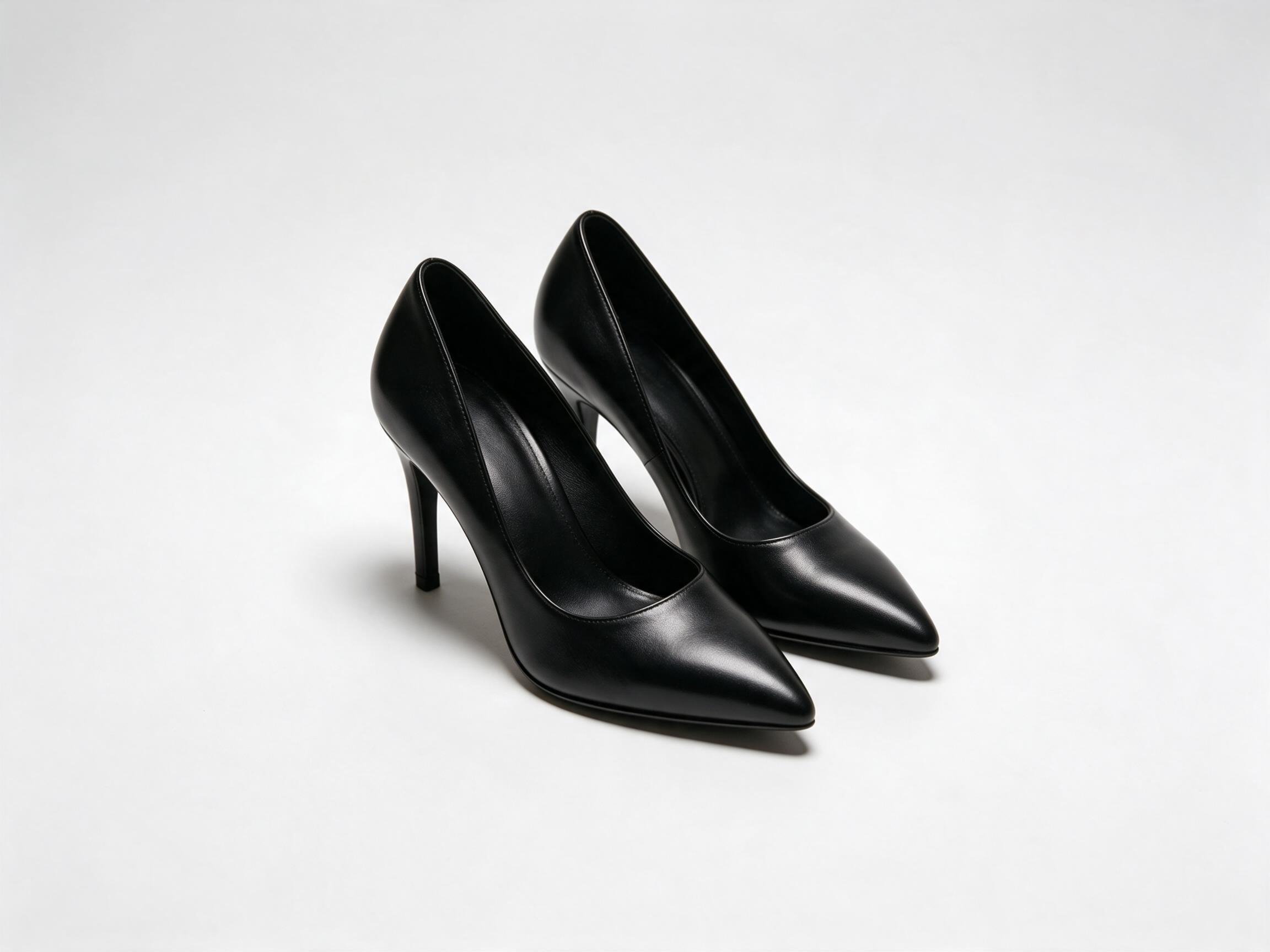
A cost-anatomy guide for wholesale buyers sourcing low-cost high heels. It breaks down the four places unit cost actually moves — upper material and finish, heel construction, insole components, and packaging — then shows the downstream costs of cutting the wrong ones and the practical buying moves that keep cheap heels from becoming expensive.
Wholesale Buyer Guide
Buyers searching for cheap wholesale high heels usually mean one thing: the lowest unit cost that will not come back to bite them. A landed pair that splits its heel in transit or bleeds onto a customer's feet is not cheap — it is a return, a refund, and a review that stays up for years. The useful question is not “how do I get the lowest quote,” but “where does unit cost actually move, and which corners are safe to cut?”
This guide anatomises a pair of wholesale heels the way a factory costing sheet does: upper material and finish, heel construction and reinforcement, insole comfort components, and packaging. For each area it shows what the cost component does, what goes wrong when it is underbuilt, and what a buyer can do to hold the price down without buying the failure.
Key takeaways
- Most of a heel's unit cost sits in the upper, the heel assembly, and the insole — not in the box.
- Heel attachment and colour fastness are the two failure points that turn cheap shoes into expensive ones.
- Core colourways and standard constructions cost less to buy and reorder than seasonal exclusives.
- Staged reorders and third-party inspection protect margin better than chasing one more cent off the quote.
In this guide
Upper material and finish: the first big lever
The upper is usually the largest single material line in a wholesale heel's cost. Three decisions drive it: what the upper is made of, how the finish is applied, and how much cutting and matching waste the material generates.
A leather upper and a suede upper behave very differently at the costing stage. Leather needs consistent hides, careful clicking and, in a finished product like black leather stiletto heels, a finish that holds up under wear. Suede is softer and more forgiving on fit but demands tighter nap matching so that left and right shoes read as a pair — as in black suede ankle-strap heels, where the soft black suede is paired with an adjustable ankle buckle strap.
The finish is where cheap and expensive quietly diverge. A sprayed coating applied thinly looks fine under factory light and dulls quickly. A properly set finish costs more in materials and curing time but keeps a colourway sellable across a season. Buyers should ask which finish process is used, not just which colour. Where the supplier supports Pantone matching, as Aurevia Footwear Co., Ltd. does for both heels, the colour reference should be recorded on the spec sheet at sampling, not agreed verbally.
What to compare before negotiating price
| Cost driver | Cheaper option | What it risks | Buyer question |
|---|---|---|---|
| Upper material | Lower-grade split or coated material | Finish wear, creasing, inconsistent colour | Which material grade, and is it consistent across the run? |
| Finish application | Thin spray, short cure | Colour rub-off and fading | How is colour fastness checked before shipment? |
| Cutting efficiency | Loose nesting on the hide | Visible shade variation between pairs | How are left and right matched? |
Heel construction and reinforcement: the failure point
Nobody notices a reinforced heel until it fails. The heel is a narrow column carrying the body's weight, and the difference between a heel that lasts and one that snaps usually sits inside it, not on the surface.
Both listed products use a reinforced core in the heel: the leather style runs a slim 10 cm stiletto, and the suede style an 8.5 cm heel. The core is what resists bending at the point where the heel meets the sole — the highest-stress joint in the whole shoe. Cheaper constructions save cost by thinning that core or shortening the anchoring into the sole, and the saving is invisible on a sample table.
Heel attachment is tested before shipment on both styles, and strap strength is also tested on the suede ankle-strap pair. That matters to a buyer because these are the checks that would otherwise show up as customer complaints: a heel that loosens after a week, or an ankle strap that pulls out of its stitching.
Insole comfort components: the low-cost, high-perception area
Padded insoles are one of the cheapest quality signals a buyer can pay for. A thin, flat insole reads as hard underfoot within minutes, and it is the first thing a consumer comments on. A padded insole — specified on the black leather stiletto heels — adds a modest material cost and a disproportionate effect on how the shoe is judged.
The related cost lever is the outsole. Both styles carry an anti-slip rubber outsole, which is a functional component rather than a decorative one. When a supplier offers to shave cost here, ask what changes: compound, thickness, or pattern. Any answer that starts with “it will be fine” is not an answer.
Packaging and presentation: real cost, small share
Packaging is the area buyers most often try to squeeze first, and usually the wrong one. Box cost matters at volume, but in most wholesale heel programs it is a small fraction of unit cost. Cut too far and you trade a few cents for crushed heels in transit, damaged boxes that cannot be sold as new, and higher claim rates.
Sensible packaging savings come from standardisation, not thinning: consistent carton dimensions, consistent inner packing, and printing only what the channel actually requires. Where the supplier offers OEM/ODM, confirm that any custom box or label is quoted separately from the shoe itself so the two cost lines stay visible.
Downstream costs of cutting the wrong corners
Every underbuilt component has a second invoice that arrives later. The two most expensive are heel attachment failures and colour fastness complaints.
- Heel attachment failures generate returns, sometimes in the same shipment batch, plus the labour of inspection and the reputation cost of a weak lot. Replacing a percentage of a container is far more expensive than the reinforcement that was skipped.
- Colour fastness complaints appear after the sale, when a buyer's customers have already worn the shoes. Rub-off and fading are hard to argue about once product is in the market, and the cost lands on the importer.
- Returns and re-shipment carry freight, handling and administration costs that never appeared on the original quotation.
This is the core logic of buying cheap wholesale high heels well: pay for the components that prevent failure, and negotiate hard only on the components that do not.
Practical buying moves
1. Build the range around core colourways
Core colours are cheaper to buy and cheaper to reorder because the supplier runs them repeatedly. Both heel styles list black, nude and red or burgundy, plus custom. A range built mostly on the listed core colours, with one or two custom accents, keeps the base cost predictable.
2. Prefer standard constructions
The two available styles — a 10 cm slim stiletto and an 8.5 cm ankle-strap heel — cover a great deal of demand between them, across EU 34–41 / US 4–10. Custom heel heights and Pantone matching are available, but each custom build adds tooling attention and sampling time. Use customisation where it creates a real selling point, not as a default.
3. Stage your reorders
Existing samples ship in 3–5 days and customised samples in 7–12 days, so a buyer can validate a colourway quickly before committing a full order. A staged approach — sample, first order, then reorder on the winners — keeps cash tied to proven styles instead of guessing across a whole range.
4. Use the supplier's inspection and add your own
The producer runs a three-stage inspection that includes colour fastness and heel attachment checks, backs the product with a 6-month quality warranty, and welcomes third-party inspection. Use both. Ask for the inspection records alongside the shipment, and commission a third-party check on the first bulk order of any new construction. Aurevia Footwear Co., Ltd., established in 2011 and based in Quanzhou, China, states third-party inspection is welcome — a buyer should exercise that right rather than assume it.
FAQ
Is a lower unit price always a better deal?
No. What matters is landed cost per sellable pair. A low quote that produces returns for heel attachment failures or colour complaints usually costs more once the returns are counted. Compare quotations against the same construction and inspection scope.
Which components should I never cut?
Heel reinforcement and attachment, the anti-slip outsole, and colour fastness. These are the elements most likely to generate returns, and they are the hardest to fix after the shipment leaves the factory.
Can I order custom colours and heel heights?
Both styles support OEM/ODM with Pantone colour matching and heel height changes. Customised samples take longer than existing samples, so plan the development window before the season, not during it.
What should I request before a first bulk order?
Samples of the exact construction, confirmation of the colour reference in writing, the inspection records, and a third-party inspection on the first bulk run. For buyers weighing the leather and suede options, the two product pages above give the starting specifications.
Next step
If you are building a low-cost heel range without buying the expensive failures, start with the two core constructions and sample them against your market. Review the black leather stiletto heels and the black suede ankle-strap heels, then confirm colour references, inspection scope, and your own reorder plan with the supplier before placing bulk orders.