
A practical six-point checklist for brand owners and buyers comparing sneaker wholesale suppliers — covering product construction, sampling rounds, MOQ and lead time, inspection routines, OEM/private label support, and export communication.
A six-check framework for brand owners, wholesalers and buyers comparing sneaker wholesale suppliers — focused on what you can verify in a sample round, a specification sheet and a production visit.
When you shortlist sneaker wholesale suppliers, the differences that matter are rarely visible in a catalogue photo. They show up in how a supplier explains construction, how many sample rounds it takes to get a fit right, and whether the MOQ and lead time on the spec sheet match what the sales team tells you. This article sets out six buyer checks you can run before placing a bulk order.
- Ask for the actual upper material and sole construction per style, not a general product category.
- Use sampling to test communication and fit, not just to approve a look.
- Confirm MOQ per colour, lead time start point and inspection stages in writing.
- Clarify what OEM/ODM covers — logo, packaging, colourways — and who owns the tooling.
- Check export experience against your destination market and incoterm.
1. Product line and construction capability
Start by testing whether the supplier can describe what a shoe is made of. A supplier that sells many categories may list “sneakers” as a single line; a supplier that actually builds sneakers can tell you the upper material, lining, sole type and construction method for each style.
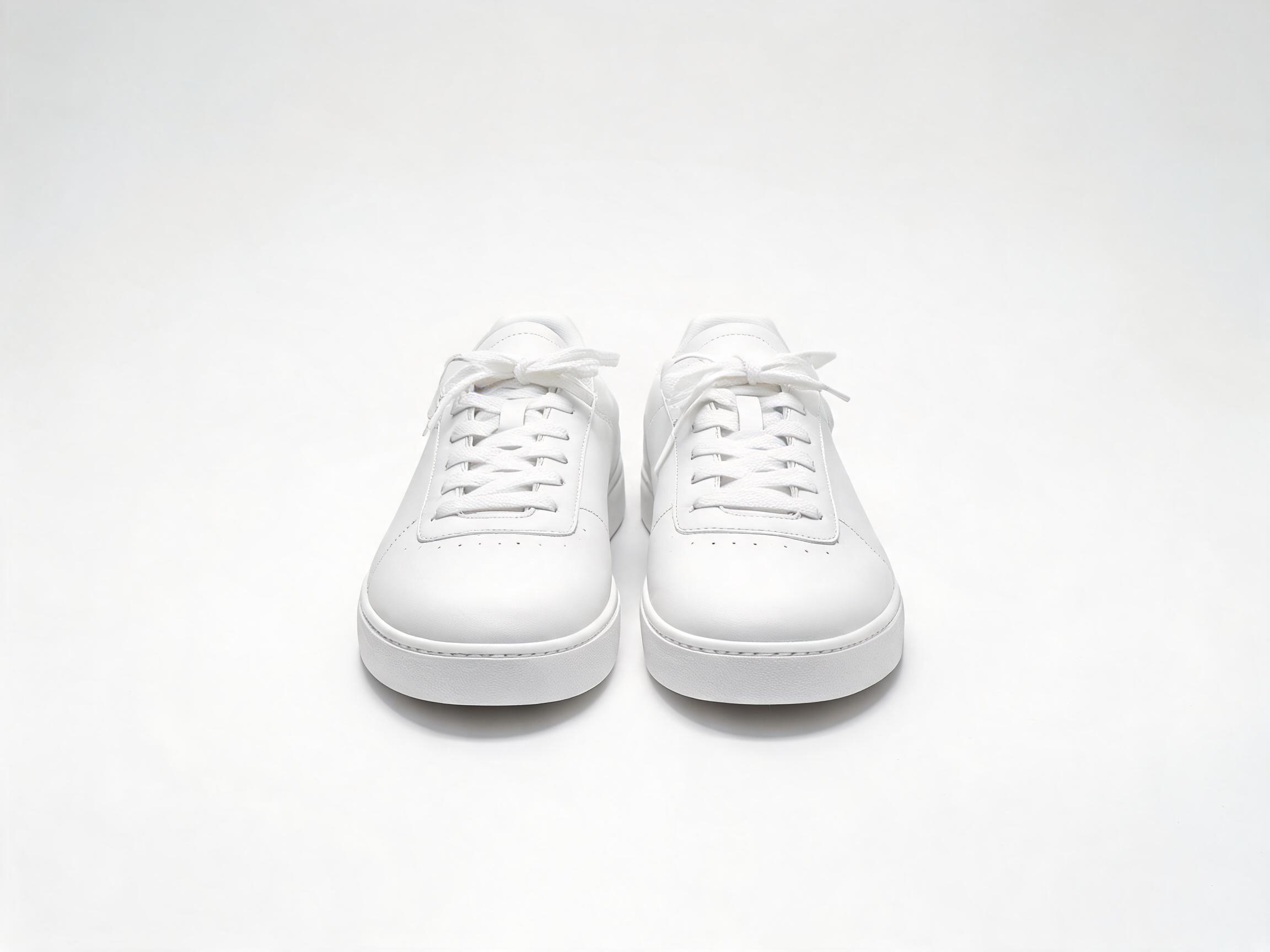
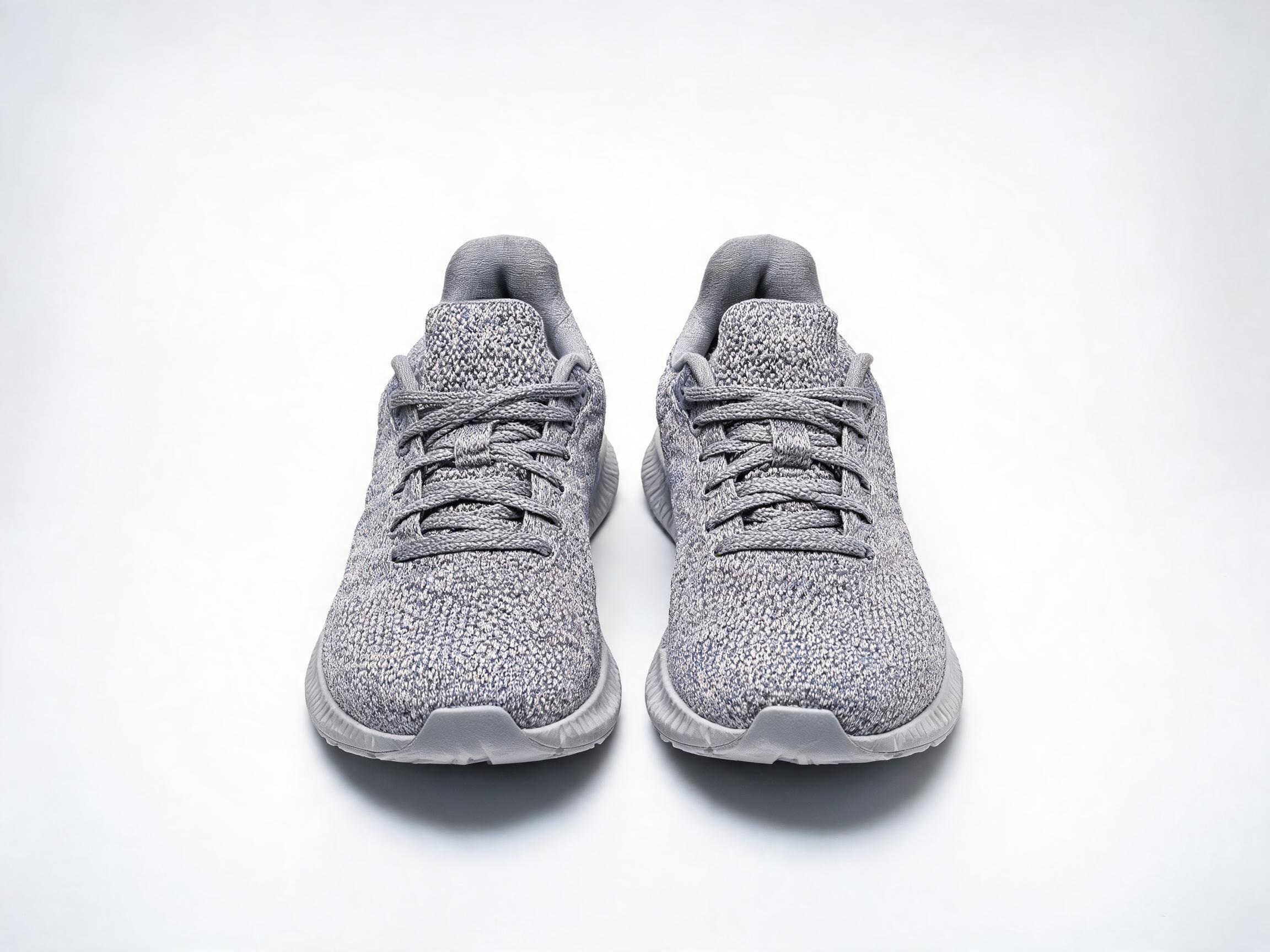
For example, a full-grain leather low-top is a different production problem from a knit running shoe. The leather style depends on cutting, skiving and lasting around a rubber cupsole; the knit style depends on engineered mesh placement and an EVA midsole. If a supplier cannot explain this difference, the sample round will be where you find out.
Ask for the construction details of two or three styles you are considering. On this site, for instance, the white leather low-top sneakers are listed with a full-grain leather upper and a rubber cupsole, while the grey knit running sneakers use an engineered knit mesh upper and an EVA midsole. The black leather high-top sneakers are also listed with a full-grain leather upper. All three are available in EU 39–45. Use this level of detail as your baseline: if a supplier cannot match it, the sourcing conversation is not ready to move to pricing.
2. Sample rounds: what to test and how long
Samples serve two purposes: they confirm the product, and they show you how the supplier handles feedback. A supplier that sends a sample and then asks for comments in a structured way is easier to work with than one that sends a sample and waits.
Ask how long each round takes. On this site, existing samples are quoted at 3–5 days, and custom samples at about 7–12 days. Those numbers are useful only if you know what “custom” includes — a colour change, a logo, a sole change or a last modification. Clarify that before you plan your launch date.
When the sample arrives, check the points that are hard to fix later: toe shape, heel counter stiffness, stitch density, sole bonding at the toe and heel, and symmetry between left and right. If you are comparing two suppliers, send both the same tech pack and compare how each interprets it.
3. MOQ and lead time: get the definitions right
MOQ and lead time are the two numbers most often misquoted in early conversations, usually because the sales team and the spec sheet are using different definitions. Ask for both in writing and check that they agree.
The specification sheet for the styles referenced here states MOQ 200 pairs per colour, with a 30–40 day lead time after confirmation. That is a workable starting point for a buyer testing a new style, but confirm current MOQ and lead time with the sales team before ordering — colour-by-colour MOQ can change with material availability, and lead time usually starts from deposit and approved sample, not from the inquiry date.
| Item | What to confirm | Why it matters |
|---|---|---|
| MOQ | Per style, per colour, per size run | Affects your cash layout and colour plan |
| Lead time start | Deposit date, sample approval date or PO date | Determines your in-store date |
| Size range | EU 39–45 as listed; confirm grading | Affects your market fit |
| Sample timing | 3–5 days existing; 7–12 days custom | Sets your development calendar |
4. Quality inspection process
Ask where inspection happens, not just whether it happens. A supplier that inspects only at final packing will catch cosmetic issues but miss construction problems that were set earlier.
On this site, inspection is described in three stages: incoming material inspection, in-line inspection, and finished-shoe inspection, with forefoot flex testing and sole adhesion checks included. That is a useful structure to compare against. When you visit or request a report, ask which stage each check belongs to, and whether the flex and adhesion checks are done on every batch or on a sample basis.
If you cannot visit, ask for the inspection record for a recent production run of a similar style. The record itself tells you more than a verbal description of the process.
5. OEM/ODM and private label support
Most buyers comparing sneaker wholesale suppliers need some level of customisation. The question is what the supplier can actually change without breaking the production flow.
OEM/ODM support here covers logo, packaging and colourway customisation. That is a practical scope for a private label programme. Ask three questions before you commit:
- Which elements are truly custom (logo placement, packaging print, colourway) and which are fixed per style?
- Does a colourway change affect MOQ per colour?
- Who owns the logo artwork and any custom packaging files?
If your plan requires a sole or last change, raise it early — that moves the project from OEM to ODM and usually changes both sampling time and MOQ.
6. Communication and export experience
Export experience is easiest to check by asking which markets the supplier ships to and what documents it routinely prepares. On this site, exports are listed for Europe, North America and the Middle East. If your destination is in one of those regions, ask for a recent shipment profile: incoterm used, port of loading, and typical documentation set.
Communication is the softer check. A supplier that answers technical questions with specifics — material names, inspection stages, lead-time definitions — is easier to manage than one that replies with general assurances. Test this during the sample round: send a written comment sheet and see whether the response addresses each point or only the easy ones.
Also confirm the working language and time zone overlap for your key contact. For a first order, a supplier that can respond within your business day reduces the risk of small issues becoming delays.
How to use these six checks
You do not need to run all six checks in the same week. A practical sequence is: construction questions first (check 1), then a sample round (check 2), then MOQ and lead time in writing (check 3), then inspection process (check 4), then customisation scope (check 5) and finally export and communication (check 6). If a supplier fails an early check, you save the cost of the later ones.
Keep a simple comparison sheet for each supplier, with the same questions in the same order. The supplier that answers consistently across all six is usually the one that will also handle a production issue consistently.
FAQ
- What MOQ should I expect for sneakers wholesale?
- The specification sheet for the styles referenced here states MOQ 200 pairs per colour, with a 30–40 day lead time after confirmation. MOQ can vary by style and colourway, so confirm current MOQ and lead time with the sales team before ordering.
- How long do samples take?
- Existing samples are quoted at 3–5 days, and custom samples at about 7–12 days. The custom timeline depends on what is being changed — logo, packaging or colourway.
- Do you support private label and OEM/ODM?
- Yes. OEM/ODM support covers logo, packaging and colourway customisation. Ask which elements are fixed per style and whether a colourway change affects MOQ per colour.
- What sizes are available?
- The styles referenced here are listed in EU 39–45. Confirm the size run and grading with the supplier for your market.
- Which markets do you export to?
- Exports are listed for Europe, North America and the Middle East. Ask for a recent shipment profile if your destination is in one of those regions.
- What inspection is done before shipment?
- Inspection is described in three stages — incoming material, in-line and finished shoe — with forefoot flex testing and sole adhesion checks. Ask which checks are done per batch and which on a sample basis.