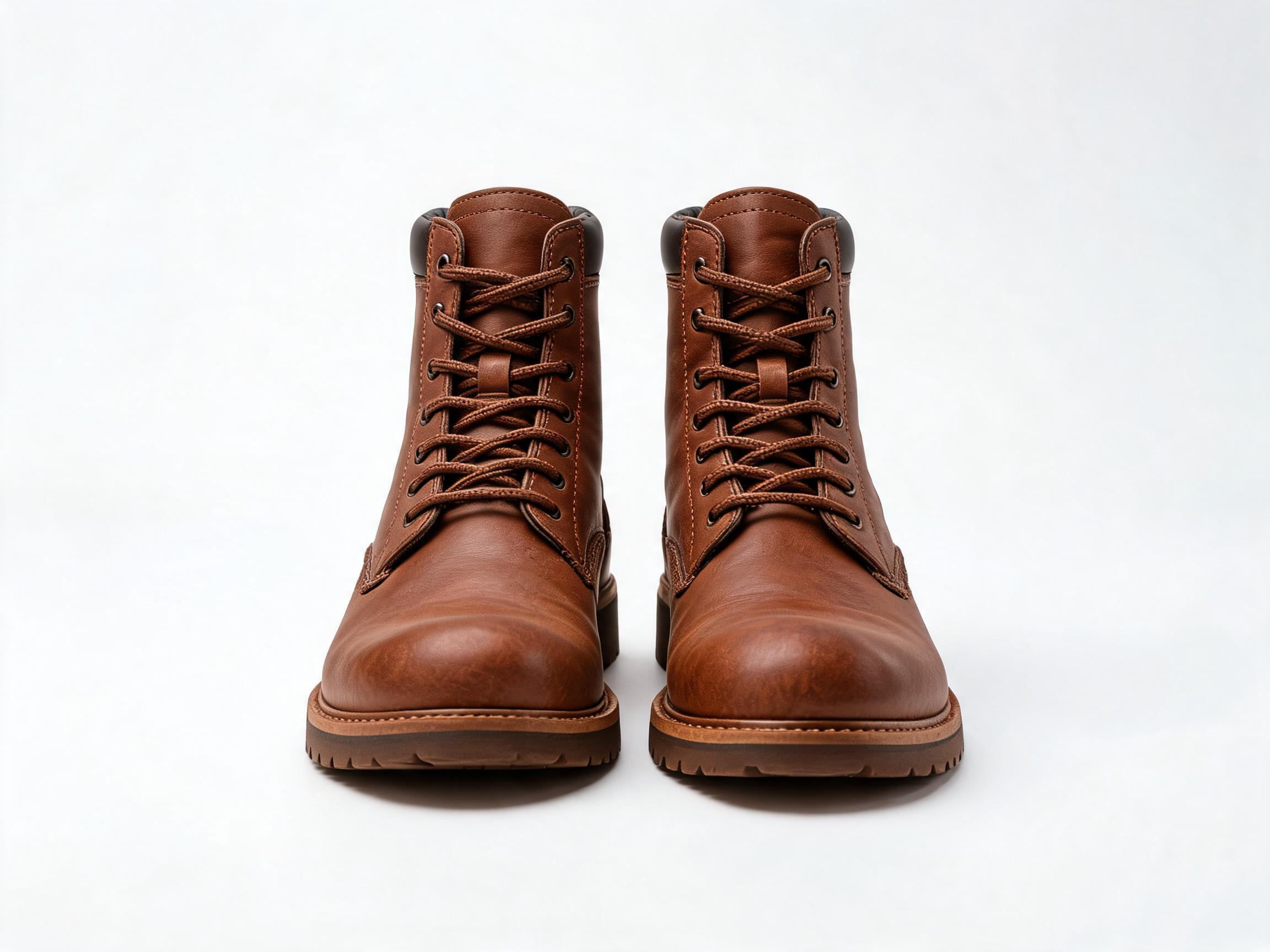
A production-oriented guide for retailers and uniform buyers sourcing combat boots in bulk: what separates a lace-up combat boot from a Chelsea or plain ankle boot at the factory level, which spec lines to lock in the tech pack (lace hardware, toe cap, lug pattern, shaft height), and the inspection points to agree at sampling and finished-shoe stage.
Wholesale Sourcing · Footwear QC
A lace-up combat boot is not an ankle boot with eyelets added. The lacing system, the reinforced toe cap and the lug outsole are three separate build decisions, each with its own sampling and inspection consequences. This guide covers what to write into the tech pack and what to check on the shoe before bulk ships.
Key takeaways
- Lace hardware changes fit, pattern and hardware spec — speed hooks are not interchangeable with plain eyelets.
- Toe cap reinforcement is a stitching and lasting decision; write it as a spec line, not a verbal note.
- The lug outsole has three checkable properties: pattern, edge finishing and adhesion.
- Sampling runs about 3–5 days for existing samples and 7–12 days for customized ones; bulk is roughly 30–45 days after sample approval.
- Confirm per-style MOQ with the factory — it varies by style and configuration.
What actually makes it a combat boot in production
Compare the lace-up boot against an elastic-gusset style such as the Black Chelsea Boot Shoes. Both may sit at a shaft of approximately 15 cm and both may use a stitched rubber sole. The difference is how the upper closes on the foot.
A Chelsea boot relies on elastic side gussets: the upper is cut to a fixed opening, and fit is delivered by the elasticity of the panel. A combat boot closes with a lacing system running up the instep and, on most work-oriented builds, up the shaft. That means the pattern must be cut with a lace opening, facings must be reinforced to take hardware, and the fit is adjustable at several points rather than one.
Three production consequences follow:
- Hardware load. Eyelets and speed hooks are set into the upper and pull against it every time the boot is laced. They need backing and a facing width that can carry them.
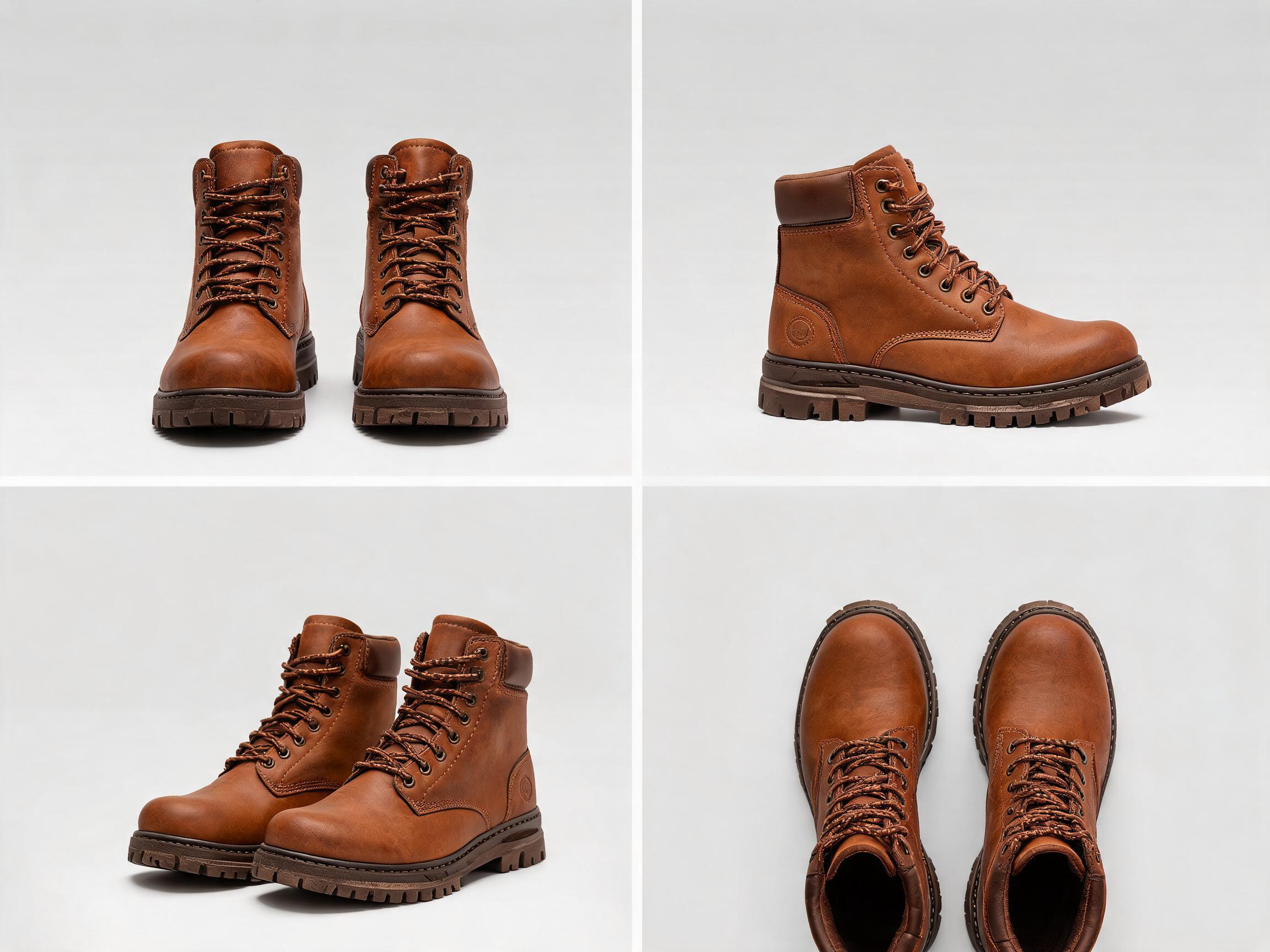
- Toe cap. A reinforced toe cap is standard on the combat pattern, achieved with extra stitching over a reinforced layer. This is a visible, inspectable build feature.
- Lug outsole. Deep lugs and a defined edge profile are typical of the category; the sole is attached in a stitched-and-cemented build, and the outsole edges are inked and burnished.
Our reference for this article is the Brown Leather Work Boots by Aurevia Footwear: oiled full-grain leather upper, speed-hook lacing, reinforced toe cap, lug rubber outsole specified as oil- and slip-resistant, breathable textile lining, cushioned anti-fatigue insole, shaft approximately 15 cm, sizes EU 39–46.
The tech pack: four spec lines that decide the bulk order
Buyers who get burned on combat boot programs usually get burned here — the sample looked right, but the tech pack left the hardware, toe cap, sole and shaft either vague or unstated, so the bulk run drifted. Put these in writing.
| Spec line | What to write | Why it matters at inspection |
|---|---|---|
| Lace hardware | Eyelet type and finish; number and position of eyelets; whether speed hooks are used, and on which rows; lace material and length | Hardware count and spacing are countable and photographable; mismatched rows show immediately |
| Toe cap | Reinforced toe cap, with extra stitching specified; stitch row count and thread type if you have a preference | Extra stitching is a visual acceptance point; it also anchors the reinforced layer |
| Lug pattern | Lug depth and pattern reference; rubber compound requirement (oil- and slip-resistant, if required); edge treatment — inked and burnished | Pattern and edge finishing are checked on the finished shoe; bonding is checked by adhesion testing |
| Shaft height | Approximately 15 cm, with the measuring point defined (from the heel counter top or the insole, per your tolerance) | An undefined measuring point turns a 15 cm target into a dispute |
Two further lines belong in the pack but are often taken for granted: the build method (stitched and cemented) and the lining and insole specification (breathable textile lining, cushioned anti-fatigue insole). If your program deviates from these, say so in the pack — do not rely on the sample as the only record.
The size range also belongs in the pack. Our reference style runs EU 39–46; if your market needs a different run, resolve that before sampling so the pattern and last are set once.
Sampling: what to lock before you approve
Sampling is the cheapest place to make changes. Existing samples take about 3–5 days; customized samples take roughly 7–12 days. Bulk lead time is approximately 30–45 days after sample approval, so a sampling round that resolves the right questions protects the whole schedule.
Use the sample round to confirm:
- Lace function under load. Lace the boot fully, tighten through every row, and check that the facings do not pull inward and that hardware does not rotate or loosen.
- Toe cap coverage and stitch uniformity. The reinforced area should sit symmetrically on both feet, with even stitch spacing.
- Sole attachment. Check the stitched-and-cemented seam line for evenness and for any gap between upper and sole.
- Outsole edge finish. Confirm the inked and burnished edge is consistent on left and right, and matches the approved color.
- Shaft height at the agreed measuring point, both feet.
- Fit across the size run you intend to order, not just the one sample size.
Keep the approved sample sealed and referenced in the purchase order. Where a bulk disagreement arises, the sealed sample is the document that settles it.
Finished-shoe inspection: the QC points to agree in advance
Our production uses three-stage inspection — incoming material, in-line construction and finished-shoe — with reports available on request and third-party inspection welcome. Buyers should specify which finished-shoe checks they want recorded rather than leaving it to the factory's default sheet.
The checks that matter most for a lace-up combat boot:
- Symmetry. Left and right matched for shaft height, lace row position, toe cap placement and lug pattern alignment.
- Bonding strength and sole adhesion. Both the stitched seam and the cemented bond are examined; forefoot flex testing is used to look for separation at the flex point.
- Lace hardware. All eyelets and hooks present, seated flush, correctly finished, with no sharp edges inside the boot.
- Toe cap stitching. Continuous, even, correctly positioned on both feet.
- Color fastness. Relevant to the oiled full-grain leather upper and to the outsole edge ink, especially where dark socks or uniforms may contact the lining.
- Cleanliness and packing accuracy. Matched pairs, correct size marks, correct carton assortment.
Agree the sample size for destructive checks such as flex testing, and agree who performs them. Third-party inspection is welcome, and buyers who use it should send their checklist at order confirmation so the factory inspects against the same points.
Terms and factory context
We are a B2B footwear manufacturer based in Quanzhou, China, working OEM/ODM with private label support. Quotations can be issued EXW, FOB or CIF, and we export to Europe, North America and the Middle East. MOQ is confirmed per style, since it depends on the configuration and the materials involved.
For a combat boot program, the useful thing to send with an inquiry is not a sentence — it is the four spec lines above filled in, your size run, and your target market. That is enough to quote and to schedule a sample.
FAQ
Can we specify speed hooks instead of eyelets throughout?
Yes, but state it as a hardware spec line with the row positions listed. Speed hooks and eyelets behave differently under lace tension and are set differently into the facing, so a mid-program switch is a pattern decision, not a component swap.
Is the lug outsole oil- and slip-resistant?
Our reference style specifies the lug rubber outsole as oil- and slip-resistant. If resistance is a compliance requirement in your market, tell us the standard you are working to at inquiry stage so the specification and documentation can be discussed before sampling. We do not claim any safety certification for this style.
How long does a customized sample take?
About 7–12 days. Existing samples take roughly 3–5 days. Bulk production runs approximately 30–45 days after sample approval.
What is the MOQ?
MOQ is set per style and depends on the configuration, so confirm it with the factory for the specific boot you are quoting.
Can we run a third-party inspection?
Yes. Third-party inspection is welcome, and inspection reports on our own three-stage checks are available on request.