
A practical guide for private-label buyers sourcing custom oxfords. Learn what a last library is, how to navigate leather and finish options, where branding goes, and how the sample-to-bulk timeline runs so you can plan seasonal orders with confidence.
If you are building an oxford program under your own label, the questions that slow you down are rarely about style. They are about whether a factory can match your last, match your leather to a Pantone reference, and hit a production rhythm that works with your selling season. This guide walks through the four decision points that matter most: the last library, the leather menu, branding touchpoints, and the sample-to-bulk cadence.
Key Takeaways
- A last library lets you start from a proven shape instead of paying for a new last from scratch.
- Leather, color, and finish options act as a decision menu — pick the combination that fits your price tier and market.
- Branding can appear on the insole, trim, box, and hangtag; each touchpoint has its own lead-time impact.
- Existing samples ship in 3–5 days; customized samples take about 7–12 days after details are confirmed.
- Bulk lead time runs 30–40 days after order confirmation, so plan your seasonal calendar around sample approval plus production.
What this guide covers
- What “custom” actually covers in an oxford program
- How a last library shortens development time
- Leather and finish options as a decision menu
- Private-label branding touchpoints
- Sample-to-bulk rhythm and seasonal calendar planning
- What to prepare before you request the first sample
What “Custom” Covers in an Oxford Program
When a private-label buyer says “custom oxfords,” they usually mean some combination of four variables: the last, the leather, the color, and the branding. These are the levers that change the shoe from a stock item into your product.
The last is the foot form the shoe is built around. Changing the last changes the toe shape, the heel width, and the overall silhouette. The leather is the upper material — full-grain, corrected grain, or another finish. Color can be matched to a Pantone reference or drawn from a standard range. Branding covers everything that carries your name: insole, trims, boxes, and hangtags.
A factory that understands this breakdown can quote and sample faster because you are specifying four things, not an open-ended wish list. Aurevia Footwear Co., Ltd., a B2B footwear OEM/ODM manufacturer based in Quanzhou and exporting to Europe, North America, and the Middle East, works from this framework: the in-house design team turns a sketch, reference photo, or tech pack into a production-ready sample, and OEM options include leather color matching to Pantone, sole material changes, insole branding, and metal or fabric trims.
Two Product Anchors to Know
Two published oxford styles show how the variables stack up in practice:
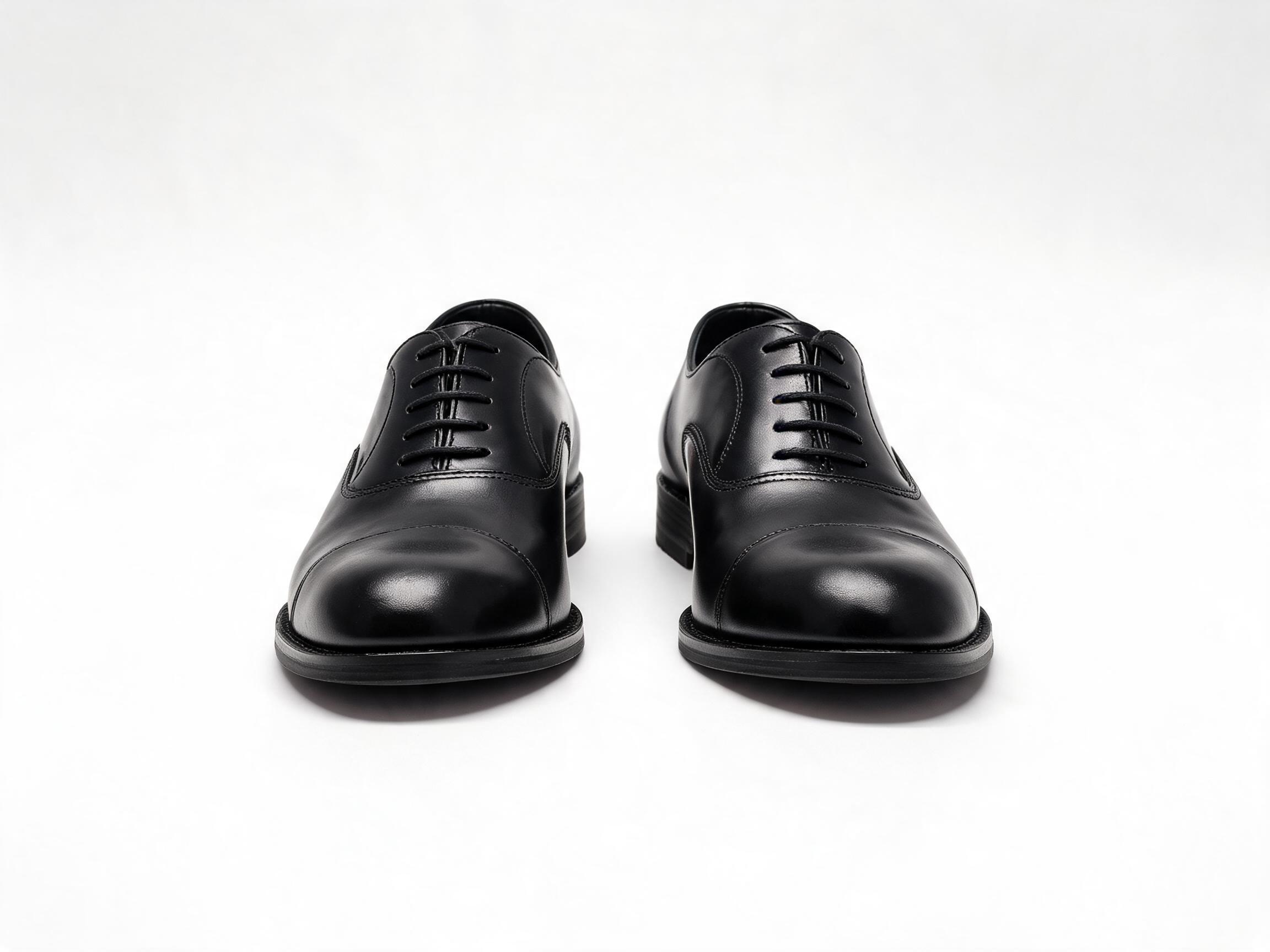
- The Black Cap-Toe Oxford Shoes are a men's style in polished full-grain leather with closed oxford lacing, a stitched-and-cemented build, and a cap-toe seam. Sizes run EU 39–45, with black, dark brown, or custom colors available.
- The Tan Leather Oxford Shoes are a women's style with closed lacing, leather lining, and a cushioned insole, in sizes EU 35–41, with custom colors available.
These two give you a men's and a women's reference point. From there, the last library is what lets you adapt the shape without starting over.
How a Last Library Shortens Development
A last library is a collection of existing foot forms that a factory keeps on hand. Instead of carving a new last for every program — which adds time and cost — you pick the closest existing last and adjust from there.
For a private-label buyer, this matters for three reasons:
- Faster sampling. Starting from a known last means the sample maker is not re-engineering the fit from zero.
- More predictable fit. An existing last has already been run through production, so its fit behavior is understood.
- Lower development risk. You spend your sample budget refining leather and branding rather than chasing a fit that was never tested.
If your design needs a shape that is not in the library, the design team can still work from your sketch or reference photo. The point of the library is not to limit you — it is to give you a faster default when your design is close to an existing form.
One practical note: before mass production, confirm the size chart for your target market. The factory can produce against your own size grid and grade the pattern accordingly, which is often necessary when your market uses a different sizing convention than the factory's default.
Leather and Finish Options as a Decision Menu
Leather selection is where price tier and market positioning meet. The factory's OEM options include leather color matching to Pantone, so you can specify a color reference rather than describing a shade in words.
Think of the leather decision as three linked choices:
| Decision | What to Specify | Why It Matters |
|---|---|---|
| Leather type | Full-grain, polished finish, or an alternative upper | Sets the visual grade and the care story you tell your customers |
| Color | Standard range or Pantone-matched to your reference | Keeps your color consistent across seasons and reorders |
| Finish | Polished, matte, or a specific surface treatment | Affects how the shoe reads in product photography and on shelf |
| Lining | Leather lining (as on the women's tan oxford) or another option | Influences comfort positioning and the internal finish |
| Sole | Sole material changes per your spec | Changes weight, flex, and the formality of the silhouette |
The men's black cap-toe style uses polished full-grain leather, which gives a formal, dress-oriented look. The women's tan style pairs its upper with a leather lining and a cushioned insole, which shifts the comfort message. Both are starting points — your program can move either toward a different leather or a different sole if the market calls for it.
When you request leather options, send a physical or digital color reference and say which decision in the table above you are locking first. Buyers who lock leather type before color usually get to a sample faster, because the color can be matched once the base material is chosen.
Private-Label Branding Touchpoints
Branding is where a private-label oxford stops being a generic shoe. The factory's OEM options cover several touchpoints, and each one has its own artwork requirement and timeline impact.
- Insole branding. Your logo or mark on the insole. This is often the first branding element buyers confirm because it sits inside the shoe and is visible at unboxing.
- Metal or fabric trims. Decorative elements that can carry your brand identity or simply reinforce the design language.
- Private-label boxes. Your box artwork and structure, which affect both the unboxing experience and shipping volume.
- Hangtags. A low-cost touchpoint that is easy to update between seasons.
The practical sequence is to decide branding after the leather and last are set. Branding artwork can be prepared in parallel with sampling, but it should not block the sample — a sample can be approved on shape and leather, with branding added for the bulk run.
If you plan to change branding between seasons, keep the insole and trim tooling consistent where possible. Changing a box or hangtag is straightforward; changing an insole mold is a longer conversation.
Sample-to-Bulk Rhythm and Seasonal Calendar Planning
The order rhythm for a private-label oxford program runs through a predictable sequence. Knowing the timing lets you work backward from your selling season.
- Brief and specification. You provide the last reference, leather and color choice, branding requirements, and size grid. The design team turns your sketch, reference photo, or tech pack into a production-ready sample spec.
- Sampling. Existing samples ship in 3–5 days. Customized samples take about 7–12 days after details are confirmed. The difference is whether the sample can be pulled from an existing build or needs to be made to your spec.
- Sample review and approval. You check fit, leather, color, and branding. Confirm the target-market size chart now, before mass production.
- Bulk production. Bulk lead time is 30–40 days after order confirmation.
To plan a seasonal calendar, add these windows together and work backward. If you need goods in hand for a spring selling season, count 30–40 days of bulk production plus shipping, then add the sample window (3–5 days for an existing sample, 7–12 days for a customized one), plus however long your internal sample review takes.
The sample review step is the one buyers most often underestimate. If your team needs two rounds of comments, that adds time. Building in a buffer between sample approval and your bulk order confirmation protects the calendar when a detail needs a second look.
A Simple Way to Think About the Timeline
| Stage | Typical Duration | Starts When |
|---|---|---|
| Existing sample | 3–5 days | Sample request received |
| Customized sample | About 7–12 days | Details confirmed |
| Bulk production | 30–40 days | Order confirmation |
These durations cover the factory-side work. Add your own internal review time and shipping to get the full calendar.
What to Prepare Before You Request the First Sample
A well-prepared brief shortens the sampling window and reduces the chance of a second round. Bring these items to the first conversation:
- Last direction. A reference photo or sketch of the shape you want, or a note that you want to start from the factory's last library.
- Leather and color. The leather type and a color reference — a Pantone number if you have one, or a physical swatch.
- Sole and construction preference. If you have a view on sole material or build, say so early.
- Branding files. Insole, trim, box, and hangtag artwork, or a note on which touchpoints you want to develop.
- Size grid. Your target-market size chart and grading expectations, so the factory can produce against your own grid.
- Target market. Which region you are selling into, since sizing conventions and color preferences vary.
If you do not have all of these yet, that is normal. The most useful starting point is a clear last direction and a leather choice, because those two decisions unlock the rest of the sampling process.
Next Step
If you are evaluating a factory for a private-label oxford program, the fastest way to get a useful answer is to send your brief with the last direction, leather and color reference, branding touchpoints, and target-market size chart. The design team can then confirm whether your design starts from the existing last library or needs a new form, and give you a sample timeline based on your actual specification.
Send your sketch, reference photo, or tech pack to start the sample conversation. If you already work from a size grid, include it — producing against your own grid is part of the standard OEM workflow.
Lead times and options described here reflect standard OEM/ODM practice for this manufacturer. Confirm current lead times, available leathers, and branding capabilities against your specific program before finalizing your seasonal calendar.