A category-level sourcing guide for importers evaluating leather clog programs. It covers the closed-back versus mule-style decision, upper craftsmanship from leather cutting to hand finishing, the sole options buyers can specify, and the sample-to-bulk order flow, based on the capabilities of Aurevia Footwear Co., Ltd., a Quanzhou-based B2B footwear manufacturer with in-house design and pattern teams. Written for EU, North American and Middle East buyers building occupational or leisure clog lines.
Category sourcing guide
"Black clogs" draws around 14,800 monthly searches, and most of that traffic splits between occupational buyers (nursing, kitchen, hospitality, workshop) and leisure buyers who want a closed-back or mule-style leather shoe. If you are building a clog program for the EU, North American or Middle East market, the two decisions that shape cost, fit and reorder performance are the upper and the sole. This guide walks through both as buyer-specifiable options, then outlines how a custom clog order moves from sketch to bulk shipment.
Key takeaways
- Clogs split into two silhouettes: closed-back and mule-style. The choice drives pattern, cost and how the shoe is worn.
- Upper craftsmanship — leather cutting, strap and buckle fitting, hand finishing — determines fit consistency across size runs.
- Sole construction is a separate specification. Wood-look platform, rubber outsole and PU-style lightweight soles behave differently and should be confirmed against your use case.
- Custom clog orders move through four checkpoints: design and pattern, sampling, bulk production with three-stage inspection, and packing and private label.
On this page
- Closed-back vs mule-style clogs
- Upper craftsmanship: cutting, stitching, strap fitting
- Sole options buyers can specify
- The B2B custom order flow
- Inspection and quality checkpoints
- FAQ for clog importers
Closed-back vs mule-style clogs
Before sole or leather selection, buyers usually settle the silhouette, because it decides how the shoe performs in its target market.
- Closed-back clog — a full heel cup holds the foot in place. This is the shape occupational buyers tend to specify, where the shoe is worn for long shifts and must stay on during movement.
- Mule-style clog — an open heel that slips on and off. It reads as leisure or transitional footwear and carries less leather and fewer construction steps than a closed back.
Both shapes can carry a strap across the instep. The strap is a decision point in its own right: whether it is fixed or adjustable, and whether it closes with a buckle, hook-and-loop tape or elastic gore. For buyers, the practical question is whether the strap has to hold the foot during a work shift or simply decorate a leisure shoe. That answer determines how the strap is anchored to the upper and how much fitting time it adds.
Upper craftsmanship: cutting, stitching, strap fitting
The upper is where a clog program either holds its fit across a size run or drifts. A manufacturer with an organized cutting, stitching and lasting line controls this stage in-house rather than outsourcing it. Aurevia Footwear Co., Ltd., a B2B footwear manufacturer and exporter founded in 2011 in Quanzhou, China, runs in-house design and pattern teams and organized cutting, stitching and lasting lines within its 260-person operation.
Leather cutting and material inspection
Genuine leather is sourced and inspected in multiple stages before it reaches the cutting table. Hide variation is normal — thickness, grain and stretch differ across the same shipment. A cutting plan that nests pattern pieces around those differences produces more consistent uppers than cutting purely for yield. For buyers, the questions worth asking are:
- How is leather checked before cutting, and how many inspection stages run on incoming material?
- Whether the upper is cut from a single hide region or pieced, since this affects how the shoe wears over time.
- Whether the supplier can work from your own sketches or reference samples to build the pattern.
Stitching and strap/buckle fitting
Clog uppers for occupational use often combine leather panels with a strap crossing the instep. Stitching consistency at that junction is what keeps the strap from twisting or pulling loose. An experienced stitching line can fit buckles, hook-and-loop closures or elastic gore during assembly, so the closure is tested as part of the upper rather than added later. When a buyer specifies an adjustable strap, the sample should confirm the range of adjustment, not just that the strap exists.
Hand finishing
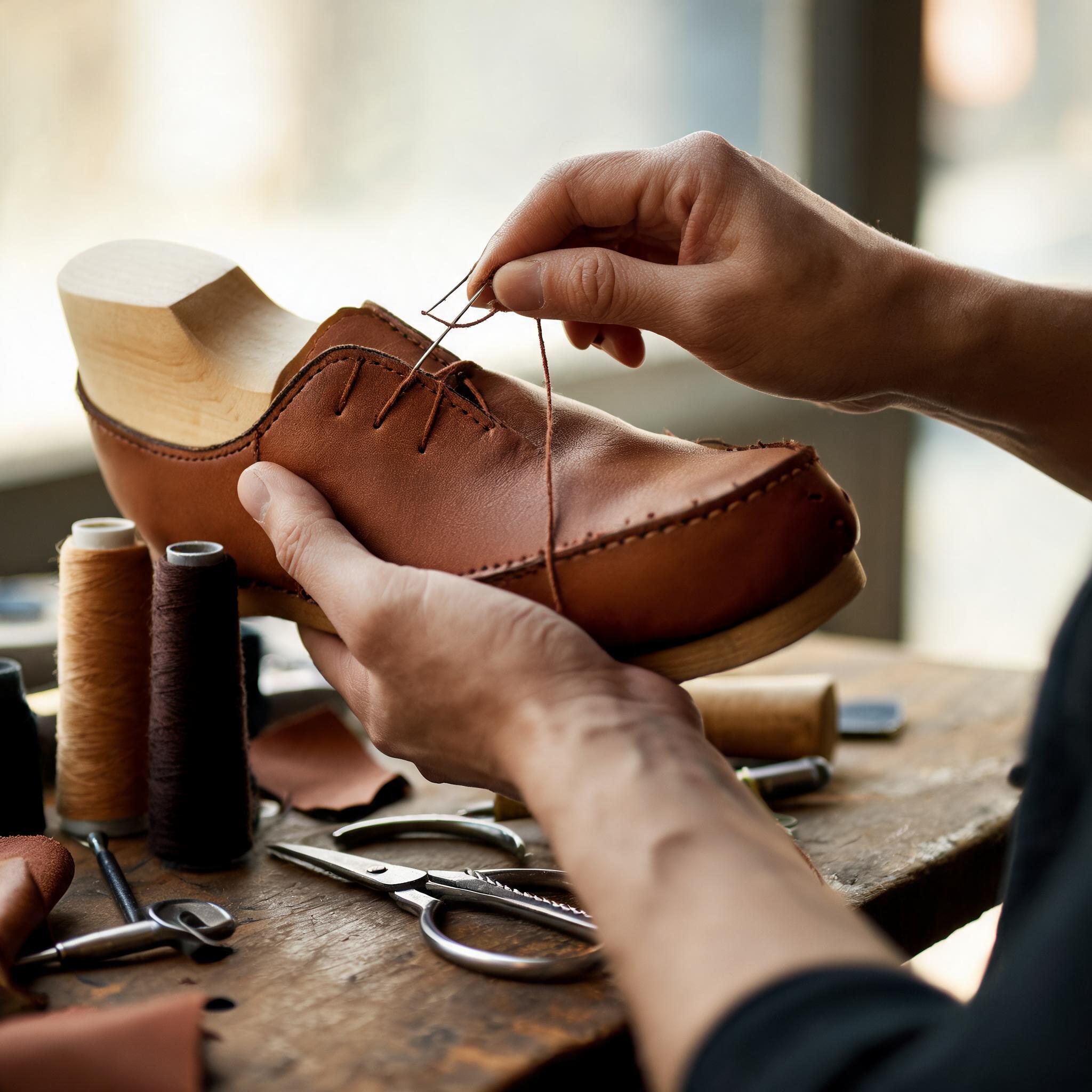
The final upper stage is hand finishing — trimming, edge treatment and cleaning at the seams. Experienced craftsmen finish uppers and soles by hand, combining traditional shoemaking skills with modern production discipline. For a clog program, this stage is where the shoe that leaves the line either matches the approved sample or does not. Buyers reviewing a sample should look at edge treatment, stitch density and symmetry between left and right, because those details repeat across the bulk order.
Sole options buyers can specify
The sole is a separate specification from the upper and should be confirmed as its own line item. Three directions appear most often in clog programs. The descriptions below are generic options a buyer can request and confirm with the supplier — they are not verified specifications of any specific finished product.
| Sole direction | What it typically suggests | What buyers should confirm |
|---|---|---|
| Wood-look platform | A raised, traditional clog profile associated with heritage and fashion positioning | Height and weight of the unit, grip on smooth floors, and whether the look is achieved with solid material or a molded imitation |
| Rubber outsole | Grip and resilience for occupational environments such as kitchens and workshops | Compound, tread pattern, slip-related test evidence if required by your market, and how the outsole bonds to the upper |
| PU-style lightweight sole | Weight reduction for long-shift wear, with a cushioned feel | Density, flex behavior over repeated wear, and whether the sole is direct-injected or assembled |
The right move is to name the sole you want, state the use case, and ask the supplier to confirm construction, bonding and available test documentation for that combination. A supplier that can run both a wood-look platform and a rubber or PU-style sole in the same factory gives you fewer coordination points when you test two versions of the same upper.
The B2B custom order flow
Clog sourcing for EU, North American and Middle East buyers usually follows the same path, whether the program is OEM (built to your design) or ODM (built from the supplier's existing development).
Step 1: Design and pattern
Buyers submit sketches, reference samples or tech packs. In-house design and pattern teams translate those inputs into production-ready patterns. The output at this stage is a pattern and a materials list for your approval, not yet a finished shoe.
Step 2: Sampling
A sample confirms silhouette, upper construction, strap closure and sole choice together. Expect at least one revision round on a new clog pattern, because fit and strap tension interact. Approve the sample against the points that matter in your market — heel hold, strap adjustment range, sole profile — rather than appearance alone.
Step 3: Bulk production and inspection
Once the sample is signed off, production runs on the cutting, stitching and lasting lines. Aurevia applies a three-stage inspection on bulk orders: material inspection, in-line inspection and finished-shoe inspection. Each stage catches a different class of problem — hide defects, assembly drift, and final cosmetic or functional faults.
Step 4: Private label and packing
OEM/ODM and private label programs cover logo application, packaging and size grading. Size grading is the detail buyers underestimate: the same pattern has to scale correctly across the full run, or the fit approved in one size will not hold in the others. Confirm the size range and grading plan before bulk, not after.
Inspection and quality checkpoints for clog programs
- Material stage — leather hides checked on arrival; confirm how many inspection stages apply to incoming material.
- In-line stage — stitching, strap fitting and lasting checked while the line runs, before the shoe is closed.
- Finished-shoe stage — final check on the assembled clog, including sole bond, strap function and finish.
Ask for your inspection criteria to be written into the order, so the finished-shoe check matches what you approved in the sample.
FAQ for clog importers
What is the difference between a clog and a mule?
In sourcing terms, the distinction is the heel. A closed-back clog holds the heel in place; a mule-style clog is open at the back. The upper, sole and strap options can be similar, but the pattern and cost differ.
Can I choose the sole independently of the upper?
Yes, sole construction is a separate specification. Specify the sole direction and use case, then ask the supplier to confirm construction, bonding method and any test documentation available for that combination before you commit to bulk.
Which markets do clog programs typically ship to?
Aurevia exports to Europe, North America and the Middle East. Requirements differ by market, so state your target market early — it affects sole specifications, packaging and labeling.
How does the custom order start?
With a sketch, reference sample or tech pack. The supplier's design and pattern team turns those inputs into a production-ready sample for your approval before bulk production begins.
Next step
If you are sourcing black clogs or building a leather clog program, bring three things to the first conversation: the silhouette (closed-back or mule), the sole direction you want to test, and your target market. Aurevia Footwear Co., Ltd. can develop samples from your sketches or reference samples and carry the order through bulk with three-stage inspection and private label support. Share your spec and market, and the team will confirm the options for your program.
Sole descriptions in this guide are generic options for buyer specification and confirmation, not verified specifications of a specific product. MOQ, lead time, testing and compliance requirements are confirmed per project.