For importers and private-label brands buying slim-heel formal footwear in bulk, most failures trace back to two things: the heel core and the last. This guide explains how heel strength is built and tested, what last stability looks like on an inspection bench, and which order-level QC steps to require before stiletto heels wholesale shipments leave the factory.
A slim heel is the part of a formal range that buyers hear about first, because it is the part that goes wrong in the market. Heel snap, worn tips, a rocking pitch and a vamp that creases unevenly are not design opinions — they are manufacturing outcomes that can be checked before a bulk order is packed.
What this guide covers
- The four failure modes that drive returns on slim-heel ranges at volume.
- How heel strength is built: reinforced core and heel-attachment testing.
- How last stability is read on the bench: pitch, instep hold and matched-hide cutting.
- The order-level QC steps worth writing into a purchase order, and how to brief sizing for stiletto ranges.
Why slim heels fail at volume
On a single pair, almost any heel survives a fitting room. At container scale, small design and construction variances compound, and the complaint rate follows. For wholesale buyers of stiletto heels, four failure modes account for most of the trouble.
1. Heel snap and heel tilt
A tall, narrow heel carries load through a very small cross-section. If the heel is simply glued to a hollow plastic shell with no internal support, repeated lateral force at the heel top — walking on uneven paving, stepping out of a car — begins to open the bond. The heel either tilts or detaches. Buyers should treat “reinforced core” as a claim that needs a test behind it, not a line in the catalogue.
2. Heel-tip wear
The tip takes the impact first. Too soft a tip scuffs through in weeks; a tip that is hard but poorly seated can come loose. Tip material and how the tip is fixed to the heel are both inspectable at source.
3. Pitch and instability
Buyers describe this as “the shoe feels unstable” or “the girl walks on her ankle.” In production terms it is pitch and balance — the relationship between heel height, toe spring and the shape of the last under the arch. If that relationship is off, no amount of upper quality compensates.
4. Last mismatch
If left and right uppers are cut from hides of different stretch, or lasting tension is applied unevenly, the pair stops behaving as a pair. One vamp smooths, one creases; one heel sits with slightly more lean. The last is the mould the shoe is built over, and its stability across a full production run is what keeps a wholesale stiletto range consistent.
How heel strength is actually built
Heel strength is a construction decision made before the heel is attached. At Aurevia, stiletto heels are set on a reinforced core and tested for stability — the core carries the load that would otherwise sit on the glued interface between heel and sole.
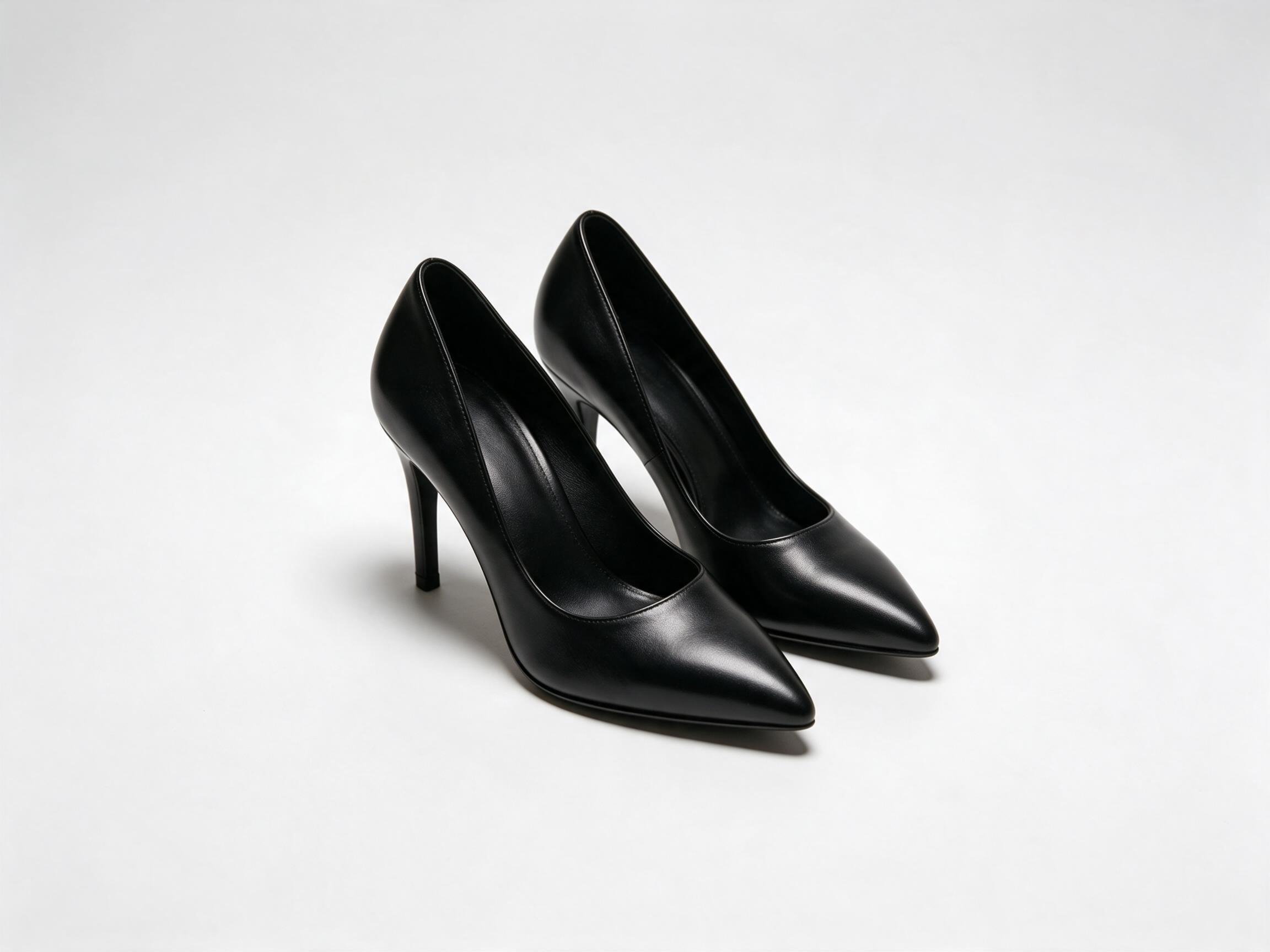
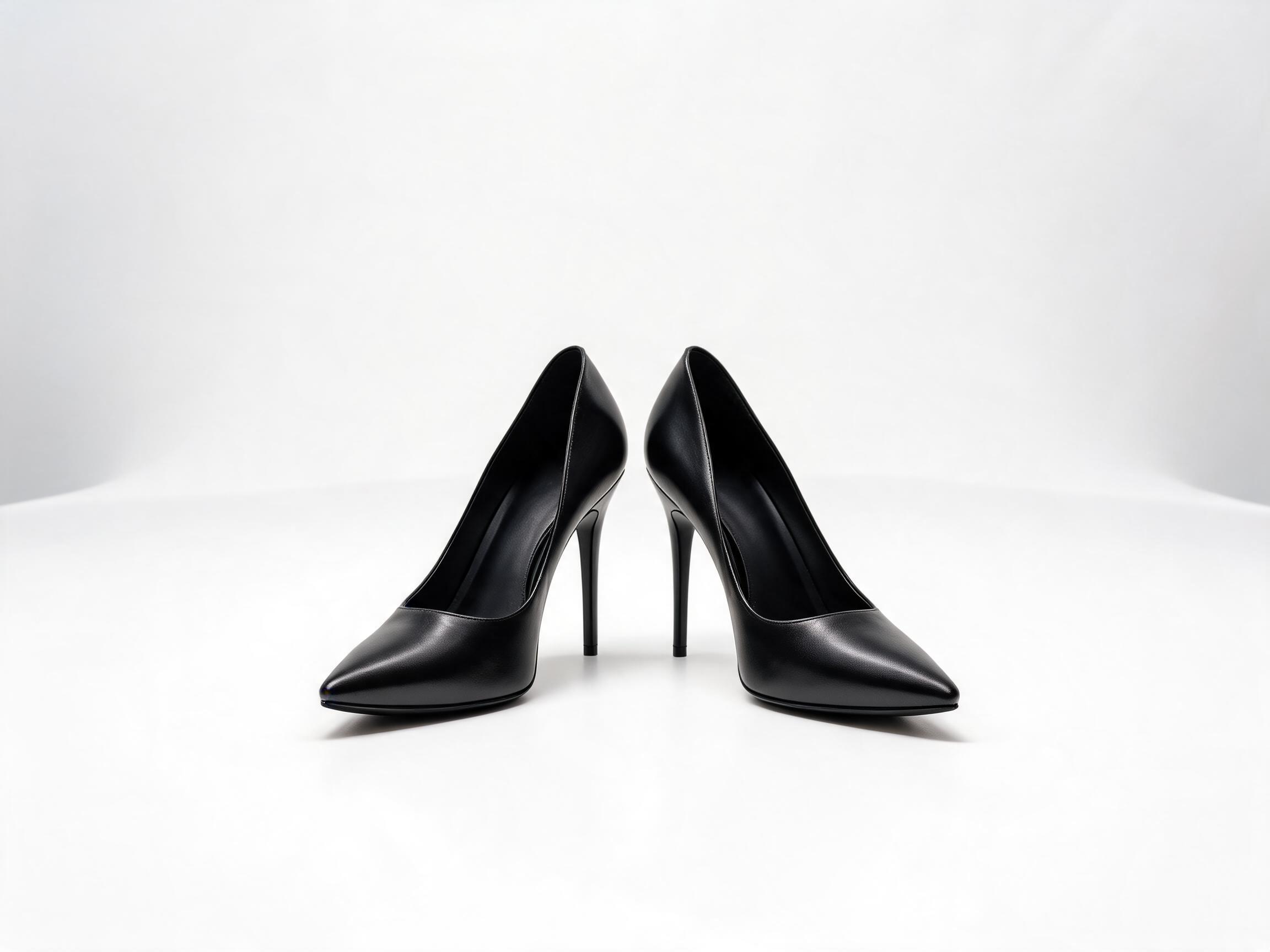
The visible upper on a reference style such as the black leather stiletto heels is polished kid leather with a soft leather lining and a pointed toe, on an approximately 10 cm stiletto heel with a reinforced core, padded insole and anti-slip rubber outsole and heel tips. The core is the part a buyer rarely sees and should still ask about.
Attachment should be verified at the finished-shoe stage. Before shipment, random pairs are flex-tested at the forefoot and checked for colour fastness and heel attachment — the three checks most directly linked to the failure modes above.
How last stability is checked
Last stability is not a single measurement; it is a set of conditions held constant across the run.
Balanced pitch and secure instep hold
A stable stiletto sits the foot with a secure hold across the instep so the foot does not slide forward into the toe. Pitch — the angle between heel and forefoot — has to match the last, the sole and the heel together. When those are approved as a set at sampling, production repeats them.
Hand-adjusted lasting tension
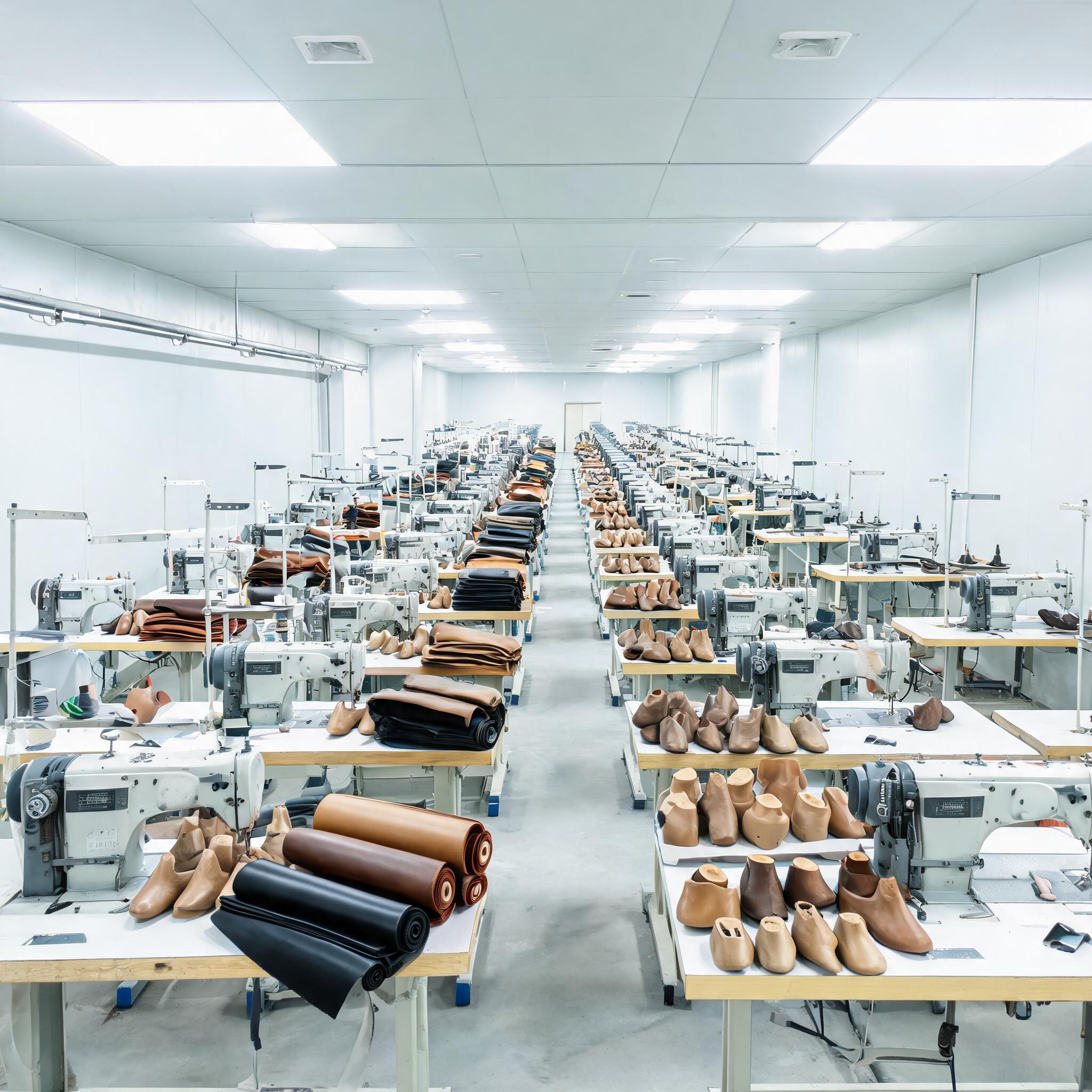
Lasting operators adjust tension by hand so the vamp stays smooth. On a slim-heel formal shoe this is the difference between a clean vamp line and a crease that opens up after a month of wear.
Matched-hide cutting
Upper panels are cut from matched hides so the left and right of a pair share grain and shade. On a formal stiletto, mismatched grain reads as a defect to the end customer even when the shoe is technically sound.
Cemented construction, used across these lines, allows the upper, sole and heel to be controlled as a sequence rather than guessing at the join later.
Order-level QC to require from a supplier
Generic “quality control” language is not much use in a purchase order. These are the steps that can be specified and evidenced.
| Check | What it addresses | What to ask for |
|---|---|---|
| Incoming material inspection | Hide consistency, heel and tip components | Stage confirmed in the production plan |
| In-line construction inspection | Lasting tension, symmetry, bonding strength, cleanliness | Stage confirmed before final assembly |
| Final finished-shoe inspection | Symmetry, bonding strength, cleanliness, packing accuracy | Three-stage inspection covering all four points |
| Random flex testing at the forefoot | Flex fatigue and sole/upper separation | Confirmation that random pairs are flex-tested before shipment |
| Colour fastness and heel attachment | Shade transfer, heel security | Both checks on random pairs before packing |
| Inspection reports | Traceability per order | Reports on request; third-party inspection welcome |
Table: inspection points for slim-heel ranges, mapped to the failure modes above.
A buyer does not need to be on site for all of this, but the requirement should be in the order, not assumed. If a supplier cannot state which stage covers heel attachment, that is the question to resolve before deposit.
Sizing and fit communication for stiletto ranges
Stiletto fit problems are often reporting problems. Confirm the market size chart the range will be built to — EU, UK, US and Middle East sizing conventions do not map cleanly onto each other — and get it agreed in writing before sampling. Half sizes and width options should be settled after sample confirmation, as part of the fit round rather than assumed from a catalogue. Aurevia's in-house design team turns sketches, references or tech packs into production-ready samples in typically 7–12 days; existing samples ship in 3–5 days, which is the fastest way to start a fit conversation.
Private-label and colour customisation
For own-brand programmes, Pantone colour matching is available for uppers and linings, and OEM branding can be applied on insole, box and hangtag. The reference style above can be specified in black, nude, red or a custom colour. Because heel core, last and sole are approved together at sampling, any change to heel height or tip should go back through a sample round rather than being edited into the bulk order.
What does “reinforced core” mean in a stiletto heel?
It means the heel is built around an internal support that carries load through the heel rather than relying on the glued joint alone. Ask the supplier how the core is specified and where heel attachment is tested.
How can a buyer check last stability without visiting the factory?
Ask for confirmation of balanced pitch and secure instep hold at sample approval, evidence that lasting tension is hand-adjusted, and confirmation that left and right uppers are cut from matched hides. Inspection reports can be requested, and third-party inspection is welcome.
What should be in a purchase order for stiletto heels wholesale?
The agreed market size chart, confirmed fit points including half sizes and width options, the three-stage inspection requirement, forefoot flex testing and heel-attachment checks on random pairs before shipment, plus the colour standard and branding placement.
How long does a private-label stiletto sample take?
Typically 7–12 days for a custom sample built from a sketch, reference or tech pack. Existing samples can be shipped in 3–5 days.
Next step
Aurevia Footwear Co., Ltd. has manufactured and exported high-end footwear from Quanzhou, China since 2011, with a 260-person team, genuine leather craftsmanship and dedicated women's heel lines for buyers in Europe, North America and the Middle East. If you are sourcing slim-heel formal ranges, send a reference or tech pack and the size chart for your market, and the heel and last specification can be worked through at sample stage.