
A construction-and-QC comparison of chunky block heels and slim stiletto heels for wholesale buyers building a heel range, covering heel attachment checks, weight distribution, and how to plan a range by heel type.
Chunky block heels and slim stiletto heels are often treated as a styling choice. For a wholesale buyer, they are two different construction programs. The heel fixing, the load path through the shoe, and the failure points the QC team must watch do not transfer cleanly from one to the other. If you are assembling a heel range for the coming season, the useful question is not which heel is more popular, but which heel type fits which end of your assortment and what your QC plan needs to look like for each.
What this article covers
- How a chunky/block heel differs from a platform and from a slim stiletto in construction terms
- Why block heels earn a permanent slot in a wholesale range
- How heel attachment and stability are checked in bulk production
- How to plan a range by heel type without duplicating products you already carry
What Counts as a Chunky or Block Heel vs Platform vs Stiletto
The three terms get used interchangeably in listing copy, and that causes real problems at the QC table. Each describes a different structure, and each has a different set of checks.
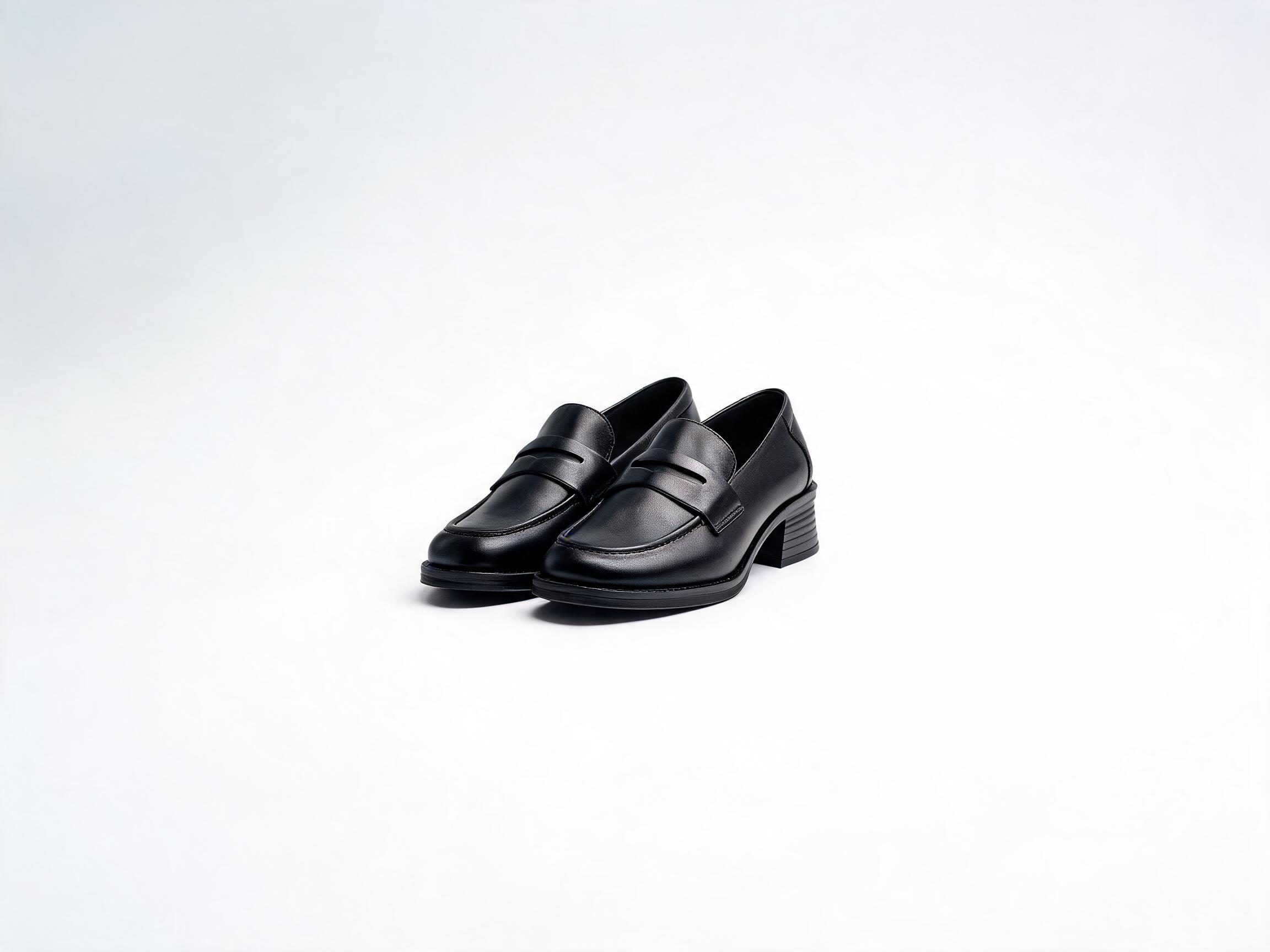
A block heel (chunky heel) is wide in footprint and carries its mass directly under the heel seat. The heel is typically a solid or hollowed unit attached to the heel seat of the outsole or midsole. The contact area under the rear of the foot is broad, so the load from the wearer's body is spread across a larger base. A loafers-style example in our own line, the Black Leather Loafers, uses a low block heel in matching leather with a rubber outsole and an almond toe, sized EU 35-41. The low block heel is a deliberate choice for stable all-day wear rather than a stylistic afterthought.
A platform is defined by sole thickness, not heel width. The platform raises the forefoot as well as the heel, so the whole foot sits higher. That is a different design problem: the forefoot flex point, the sole unit construction, and the total shoe height all change. Platform construction deserves its own discussion, and mixing platform features into a block-heel QC checklist leads you to inspect the wrong thing.
A stiletto is defined by narrow heel cross-section and, usually, height. Our Black Leather Stiletto Heels use a slim 10 cm stiletto heel with a reinforced core, a pointed toe, and a padded footbed, sized EU 34-41. The reinforced core and stability testing matter here because a narrow heel concentrates load on a small tip area. That is precisely the property a block heel does not have.
| Heel type | Defining property | Where load concentrates | Primary QC focus |
|---|---|---|---|
| Block / chunky | Wide heel footprint, mass under heel seat | Spread across broad heel base | Heel attachment integrity, heel seat alignment, base wear |
| Platform | Sole thickness under forefoot and heel | Forefoot flex and sole unit | Sole unit bonding, flex at forefoot |
| Stiletto | Narrow heel cross-section, height | Small heel tip, narrow column | Heel core integrity, tip stability |
If a buyer asks for "chunky heels" and receives a platform, the sample will be rejected for a reason that has nothing to do with quality. Confirm the structural definition before the sample stage, not after.
Why Buyers Add Block Heels to a Range
Block heels occupy a specific commercial position. They are the heel type that a broad group of end customers can wear for a full day, which is why they show up again and again in loafers, pumps, and ankle boots across price bands.
The construction supports that position. Because the load is distributed over a wider base, the heel does not place the same stability demands on a narrow column. That is a construction-level inference, not a comfort guarantee: actual fit, comfort, and return performance depend on the last, the heel height, and your market, so validate them with fit trials and sales data rather than assuming a block heel will automatically reduce complaints.
Block heels also give you range coverage that stilettos cannot. A slim 10 cm stiletto is a dress-occasion product. A low or mid block heel sits in the everyday category. Carrying both means you serve both purchase occasions instead of asking one silhouette to do both jobs.
The Women's Black Leather Loafers in our range use a block heel with a penny strap, also sized EU 35-41. A penny-strap loafer on a block heel is an everyday product; the same upper on a slim heel would be a different item with a different customer. That is the distinction worth building into your range plan.
How Heel Attachment and Stability Are Checked in Bulk QC
Heel attachment is the single most consequential check for any heeled shoe, and it is where block heel and stiletto programs diverge most in practice.
On a stiletto, the heel is a narrow column fixed to the heel seat. The reinforced core carries the load, and the QC question is whether that core and its fixing remain intact. On a block heel, the attachment area is larger and the fixing method is different, but the check is not optional. A block heel that separates at the heel seat is just as much a failure as a snapped stiletto, even if the heel itself is thick enough not to snap.
At Aurevia Footwear Co., Ltd., heel attachment is a defined checkpoint in a three-stage inspection process: incoming material inspection, in-line inspection, and final finished-shoe inspection. Random pairs are flex-tested at the forefoot and checked for color fastness and heel attachment. That combination matters because visual inspection alone cannot confirm heel attachment strength — a heel can look correctly seated and still fail under load — so alignment checks need to be paired with flex-testing and physical attachment checks.
A practical bulk-QC checklist for heeled footwear
- Incoming material: confirm heel units, heel cores, and fixing hardware against the approved sample before they reach the line.
- In-line: check heel seat alignment and fixing as shoes are assembled, before finishing hides the joint.
- Final finished-shoe: random-pair flex test at the forefoot; heel attachment check; color fastness check on leather and lining.
- Documentation: record results per lot so a later complaint can be traced to a batch.
Third-party inspection is welcome at our facility, and inspection reports can be shared with buyers. For buyers who run their own QC partners, that keeps the process verifiable rather than self-reported. OEM and ODM heel height changes are also supported, which matters when a buyer wants to adjust a block heel height for a specific market without changing the upper.
One point worth stating plainly: the checks above are process steps, not a certification. If your compliance file requires a specific test standard, name it at sampling stage so it can be addressed as a defined requirement rather than assumed.
Range Planning by Heel Type
Planning a heel range is easier when you treat each heel type as a product family with its own cost, QC, and customer logic rather than as a colorway variation.
Assign each heel type a job
Block heels are the everyday tier. They carry the volume, they suit loafers and lower-height profiles, and they tolerate the widest range of wearer needs. Stilettos are the occasion tier: a slim 10 cm heel with a reinforced core is a different purchase decision, often a second or third pair rather than a first. Platforms serve buyers who want height without a steep heel angle, and they should be specified as their own construction, not as a block heel with extra sole.
Keep sizing consistent across the family
Check the size runs before you commit. Our loafers run EU 35-41; the stiletto runs EU 34-41. A buyer assembling a coordinated heel range should confirm where the runs overlap and where one style stops, because a size gap in a core style becomes a customer-service issue at retail.
Match QC depth to heel risk
A stiletto program warrants closer attention to heel core integrity and tip stability. A block heel program warrants attention to heel seat attachment and base wear. Both belong in the same final inspection, but the emphasis differs, and your inspection report should reflect that.
Use samples to settle construction questions
Before a bulk order, confirm three things on the sample: the heel type as structurally defined (block, platform, or slim), the heel fixing method, and the finished heel attachment under a flex test. A sample that passes visually but has not been flex-tested tells you very little about the bulk program.
Aurevia Footwear Co., Ltd. has operated from Quanzhou, China since 2011 with a 260-person team, and exports to Europe, North America, and the Middle East. Finished footwear carries a 6-month warranty. If you are building a chunky heel or block heel line and want to compare construction options against your existing range, send the heel type, target size run, and any compliance requirements you work to, and the team can respond on the points that affect the sample.
Related reading: Black Leather Stiletto Heels for the slim-heel construction reference.