
A sourcing guide for importers, wholesalers and program buyers on the three decisions that shape a wholesale dress shoe order: last shape and lacing construction by market, a practical comparison of calf leather finishes and kid leather, and the three-stage bulk QC flow with batch spot tests and third-party inspection.
Wholesale dress shoes · Lasts, leather grades, bulk QC
What a wholesale dress shoe order turns on
- Last shape and lacing construction decide fit, so they should be reviewed market by market.
- The leather grade and finish decide price, hand feel and where a style sits in a dress-shoe range.
- Bulk QC decides whether the whole order matches the approved sample: three inspection stages plus batch spot tests.
- Aurevia Footwear Co., Ltd. is a men's dress-shoe factory in Quanzhou, China, established in 2011, with OEM/ODM programs and exports to Europe, North America and the Middle East.
On this page
Buyers sourcing dress shoes at wholesale usually start from a price target or a reference sample. The faster path is to fix three things first: the last, the leather grade and the construction, and the QC plan that protects the volume order. All three sit inside the same unit, so a change in any one of them moves fit, cost and quality risk together. This guide sets out a practical way to review each one before an order is confirmed.
Lasts and constructions: matching fit to market
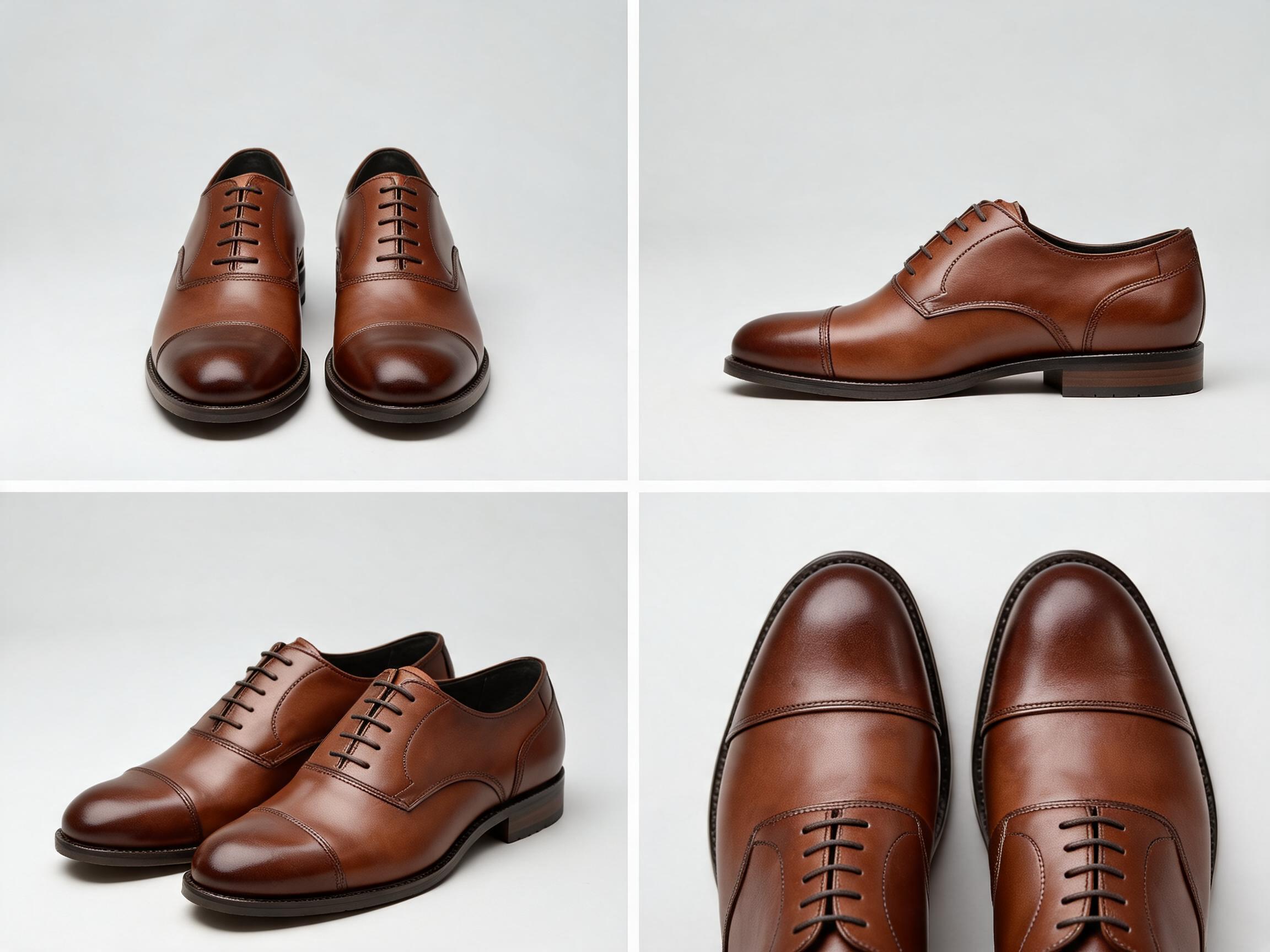
The last is the form the upper is pulled over and the shoe is built around. It sets toe shape, heel width and instep height, and it is the main reason two shoes in the same size can fit differently. For a wholesale program, the buyer should compare the last against a physical fit standard from the target market, not against a description.
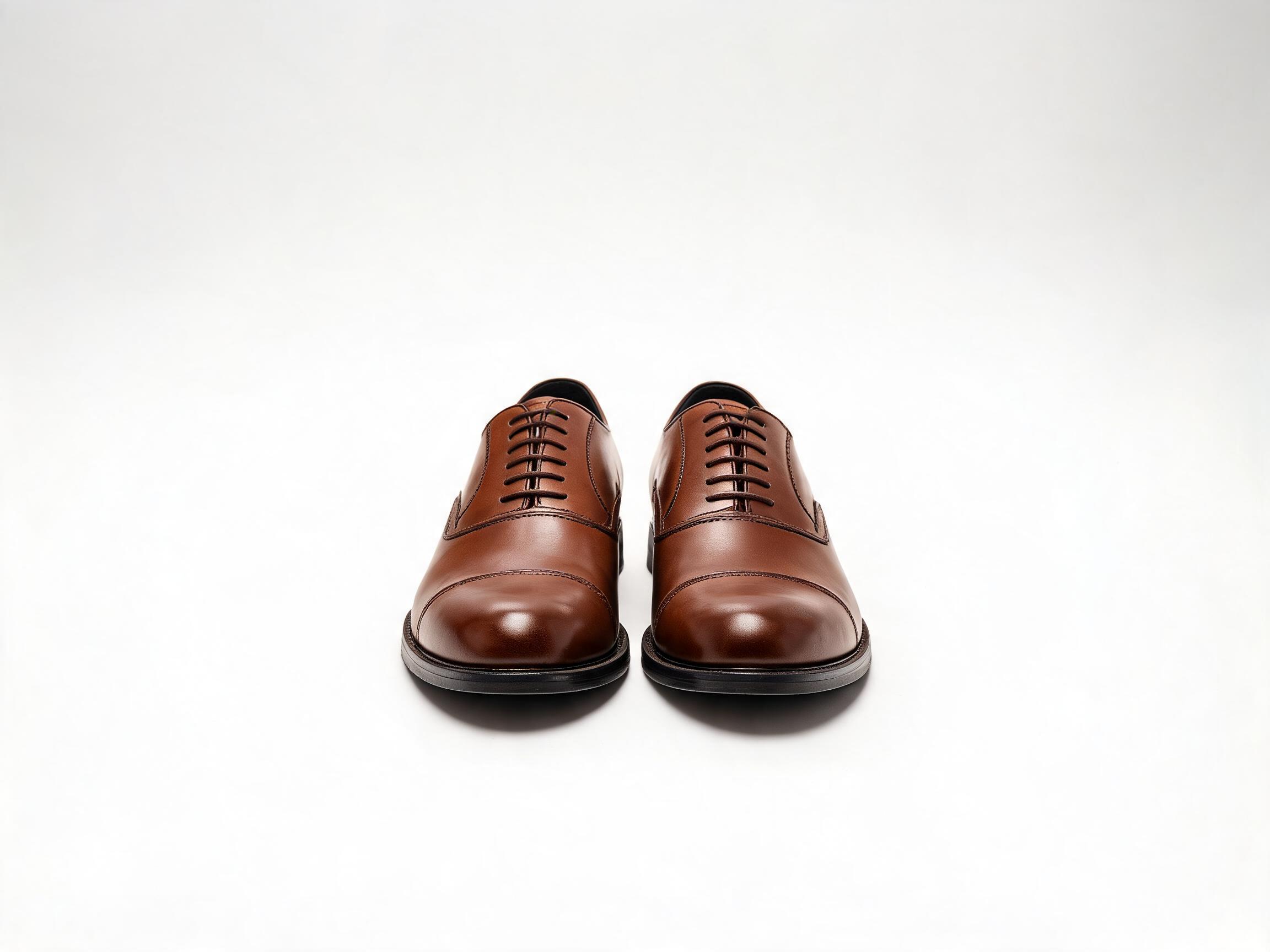
Lacing construction is the other half of fit. Open lacing, used on the derby, separates the quarters from the vamp so the throat can be drawn closer or let out. That suits wearers with a higher instep or a wider forefoot, and it is why a derby is often the easier style to fit across mixed foot shapes. The brown derby dress shoes in this range use rich brown calf leather, an open-lacing derby construction for an adjustable fit, leather lining and a cushioned footbed, with a stitched leather-look sole set with a discreet rubber insert. Sizes run EU 39–45.
Closed lacing, by contrast, is stitched under the vamp and closes over the tongue. It produces a cleaner line and a tighter throat, which reads as more formal but leaves less adjustment. Buyers building a range for a market that expects a smart, narrow silhouette usually keep more closed-lacing styles; markets that favour comfort and easy fit keep more open-lacing ones.
Two practical points on lasts for bulk orders:
- A last library, not a single last. A factory that holds several lasts can serve several markets from one order conversation. Ask which lasts are already tooled before designing a new one, because a new last is a development cost that shows up whether or not the order repeats.
- Grading runs off the last. Once the sample last is approved, the whole size run is graded from it. That is why the fit of the approved sample, worn on a real foot, matters more than how it looks on a table. Experienced lasting operators adjust tension by hand, which is how the upper is set consistently across sizes.
Where the monk strap sits
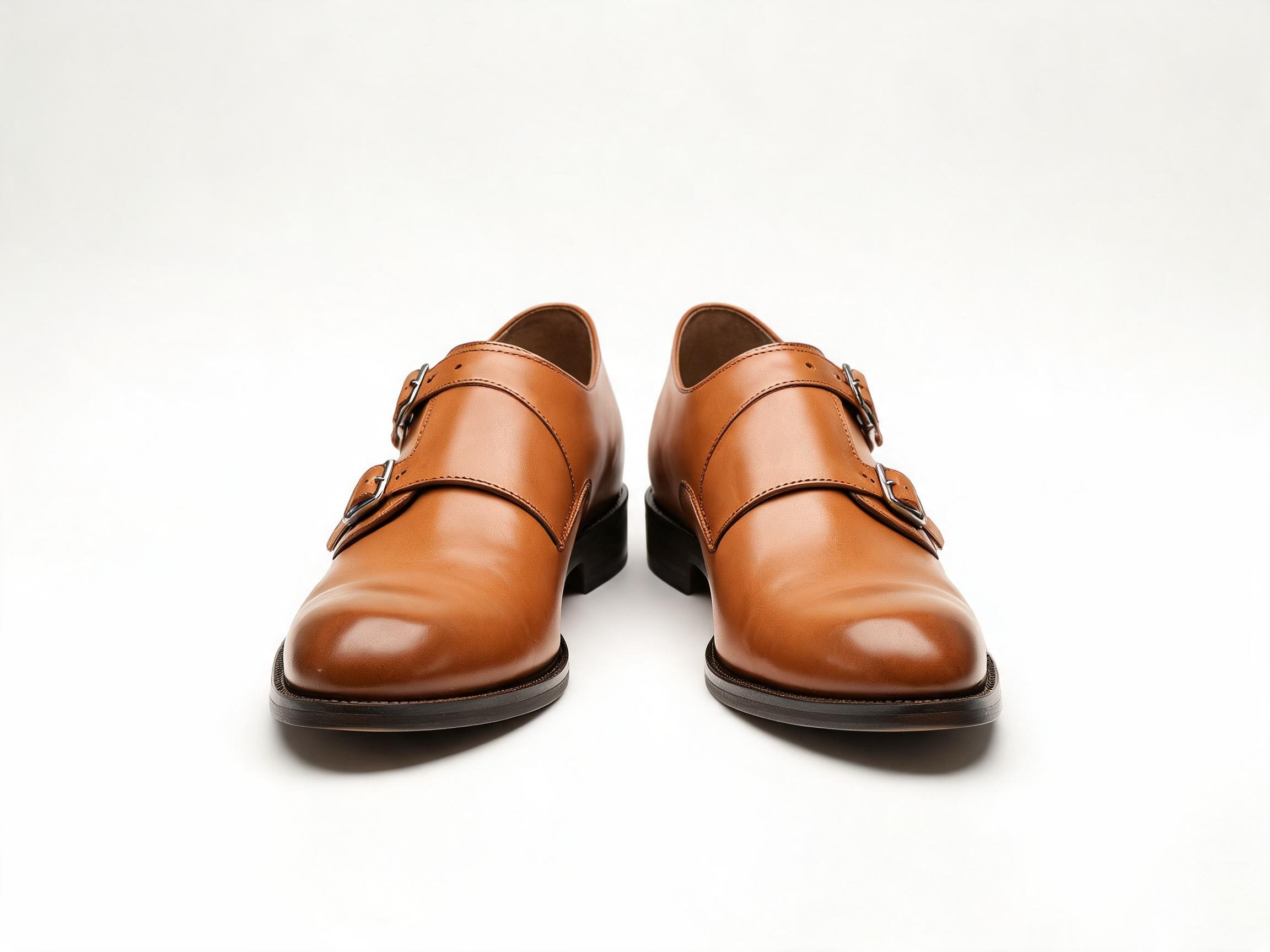
The monk strap is a third construction: no laces, closed with one or two straps and buckles. It is a useful mid-range style because it reads more formal than a derby without the fitting constraint of closed lacing. The tan double monk strap shoes here are built on burnished tan calf leather with two buckle straps, leather lining and a cushioned footbed; the buckle hardware is tested for corrosion resistance.
Leather grades compared
Leather is where most of the price difference inside a dress-shoe range lives, and where buyers most often compare descriptions that are not parallel. The comparison below is limited to the materials used in this factory's actual styles, so it can be checked against samples rather than against a generic table.
| Material | Appearance | Hand feel | Where it fits in a range |
|---|---|---|---|
| Polished full-grain leather | Even, lightly reflective surface with a consistent colour across the pair | Firm and smooth; holds a crease cleanly | Core formal styles where a uniform look across a large run matters |
| Burnished full-grain leather | Darker tone at the toe and heel with a lighter centre, so each pair has depth | Firm with a slightly softer surface than polished | Mid-range and premium styles where the finish itself is the selling point |
| Kid leather | Fine grain, low sheen, no pronounced pore pattern | Noticeably supple and light | Lightweight formal styles; better for a narrower, dressier line |
| Suede | Matte, nap surface; shade shifts with the direction of the nap | Soft and pliable | Casual and seasonal dress-shoe styles, and colour-led ranges |
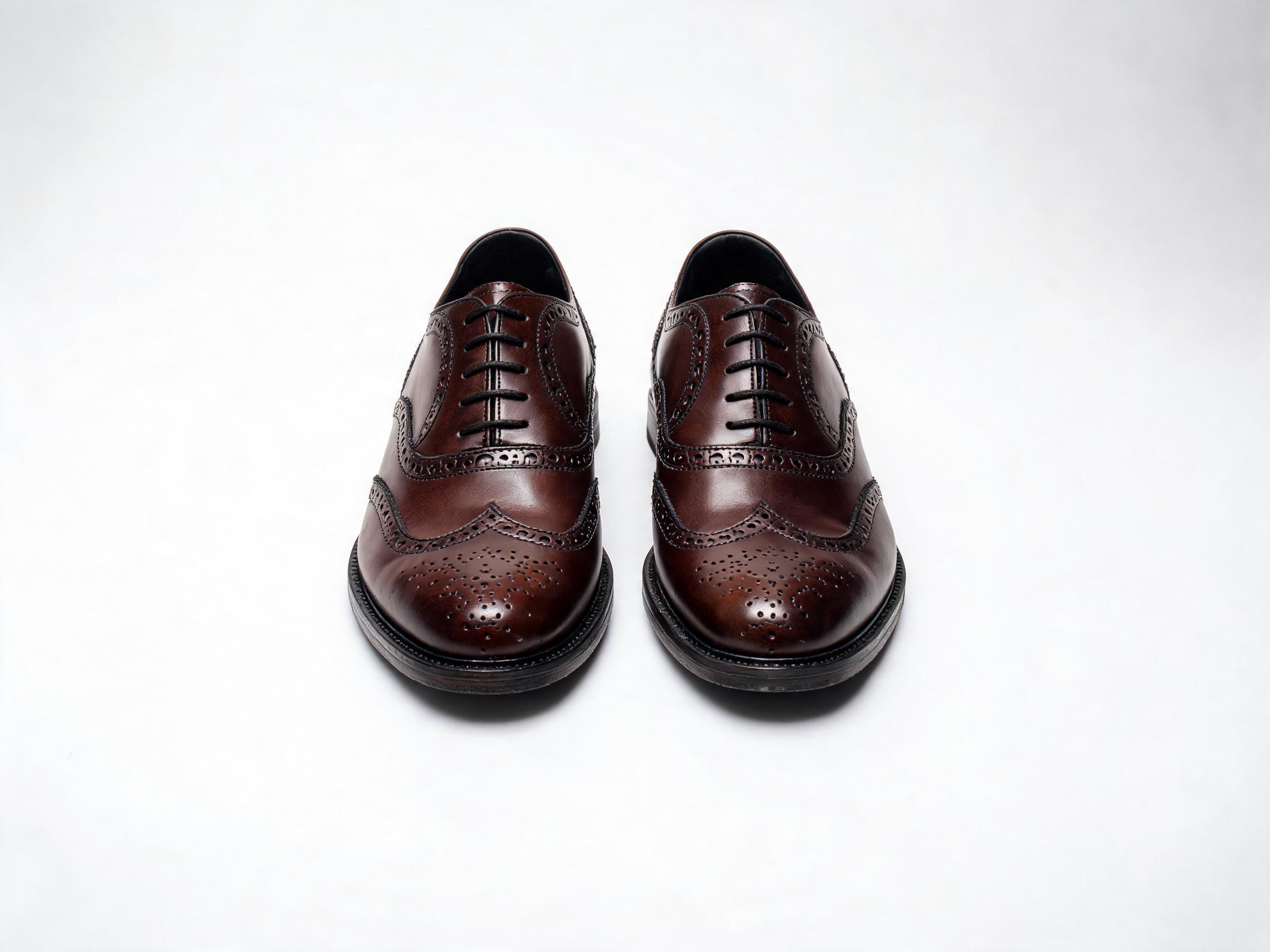
In this range, the brown derby and the dark brown full brogue shoes both use rich dark brown calf leather. The brogue carries full wingtip perforations with a decorative medallion punched by hand so the pattern stays even, plus leather lining and a cushioned footbed. Hand punching is the point to inspect on a sample: an even medallion and consistent perforation spacing are visible evidence that the pattern was set deliberately, not run through by rote.
Three things are worth checking on any leather sample, because they are the differences that show up at volume:
- Colour consistency across the run. Compare several pairs from the same dye lot, not one pair under one light.
- Grain and thickness. Measure thickness and check that grain is even across panels. Thin or unevenly split panels show first at the flex point.
- Finish depth where relevant. With burnishing, the gradient should be placed the same way on left and right shoe, or the pair will not read as a pair.
Bulk order QC: three stages and batch spot tests
Bulk QC exists to answer one question: does production match the approved sample across the whole run? A three-stage flow does that in a way the buyer can follow and audit.
| Stage | When | What is checked |
|---|---|---|
| Incoming material | Before cutting | Leather thickness, colour and grain; hardware and components against the approved spec |
| In-line | During stitching and lasting | Stitch density and alignment, panel placement, lasting tension and symmetry of the pair |
| Finished shoe | After assembly, before packing | Symmetry, bonding strength, cleanliness and packing accuracy |
Alongside the stage checks, batch spot tests are run on sampled shoes. Forefoot flex testing looks at how the sole and upper hold up at the point where a dress shoe bends. Colour fastness tests whether the finish transfers or shifts. Sole adhesion checks the bond on the stitched-and-cemented builds used across these styles. Buckle strength is relevant to any strapped style, and on the double monk strap it pairs with the corrosion-resistance testing already noted for the buckle hardware.
Inspection reports from these checks are available on request, and third-party inspection is welcome. For a first bulk order, that combination is usually the practical answer: the factory's own records, then an independent inspector of the buyer's choosing at the point the buyer considers decisive.
Buyer questions on wholesale dress shoes
What determines the fit of a wholesale dress shoe?
The last sets the shape; lacing construction sets how much adjustment is available once the shoe is on. Approve fit on a physical sample worn on a real foot before the size run is graded.
Are all calf leather dress shoes the same grade?
No. The finish differs — polished, burnished, kid, suede — and each changes appearance, hand feel and where a style fits in a range. Compare samples from the same dye lot rather than descriptions.
What should a bulk QC plan cover?
Incoming material checks, in-line checks during stitching and lasting, and finished-shoe inspection covering symmetry, bonding strength, cleanliness and packing accuracy, plus batch spot tests on flex, colour fastness, sole adhesion and buckle strength.
Can a buyer arrange independent inspection?
Yes. Third-party inspection is welcome, and inspection reports can be provided on request.
Do MOQ and lead time differ by model?
They vary by model and are confirmed per order, along with the last, leather grade and construction that apply to that specific style.
Aurevia Footwear Co., Ltd., Quanzhou, China, established 2011, runs dedicated men's dress-shoe production lines and OEM/ODM programs for buyers in Europe, North America and the Middle East. To start a wholesale dress shoe order, send the target market, the reference style or sample, and the leather grade you want to quote against; MOQ and lead time will be confirmed for the specific model, and inspection requirements can be agreed at the same time.