
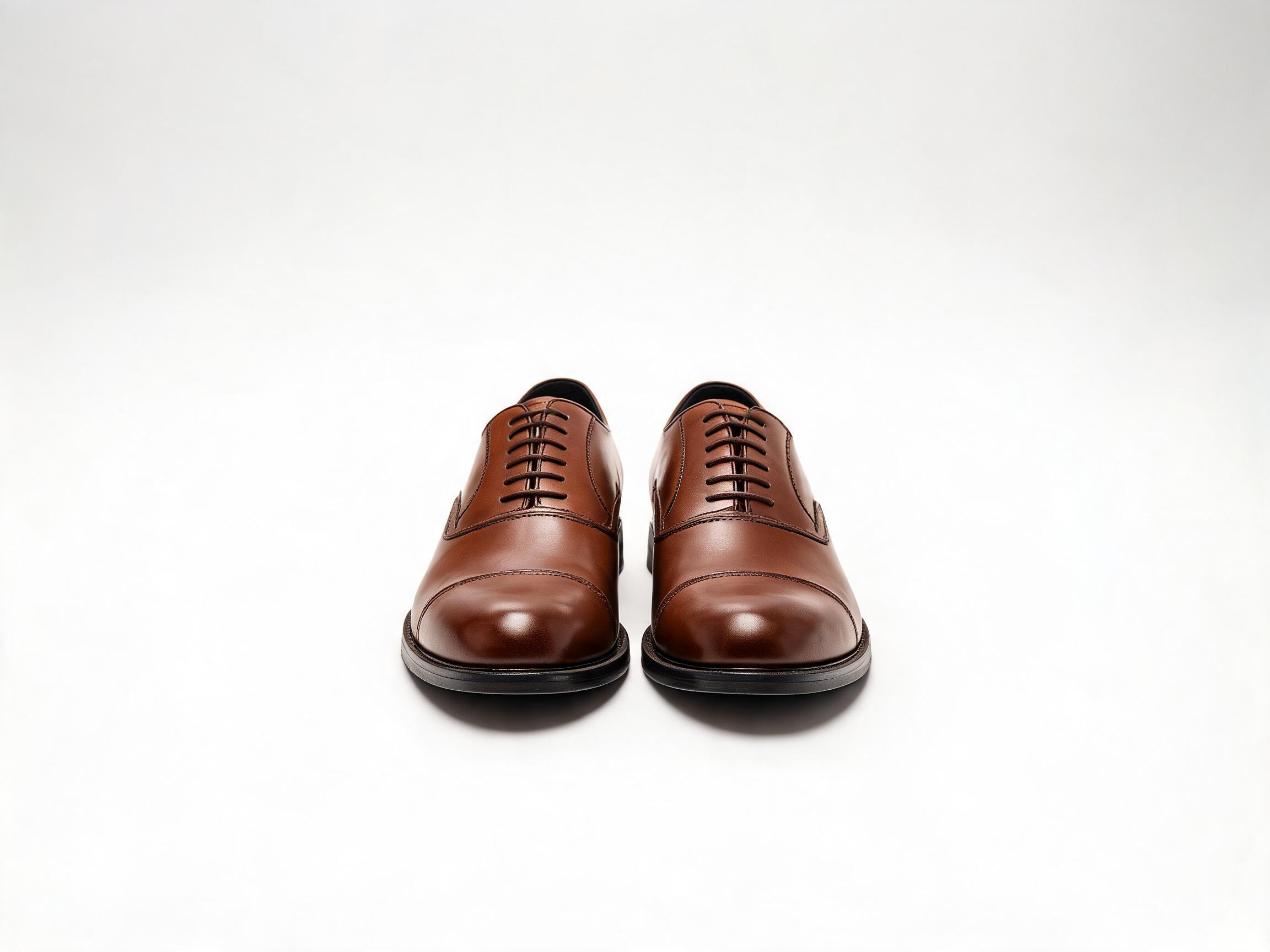
A stocking and reorder framework for B2B distributors of men's dress shoes: tier core and seasonal styles, plan size runs for resale channels, use private-label packaging, agree trade terms and QC reporting, and set a reorder cadence. Includes a concrete example using brown derby dress shoes.
Distributors of men's dress shoes know the trap: a one-off bulk purchase that sits in the warehouse because the size curve was wrong, or a hot style that runs out before the next container ships. The fix is not a bigger initial order. It is a repeatable stocking and reorder program that treats core and seasonal styles differently, plans size runs for each resale channel, and locks in trade terms and QC checkpoints with the supplier. This guide lays out that program using a concrete reference product: the brown derby dress shoes from Aurevia Footwear Co., Ltd. (Quanzhou, China; established 2011; ~260 staff).
Key takeaways
- Tier inventory into core (reorder-driven) and seasonal (sell-through-driven) styles; core styles should carry 60–70% of open-to-buy.
- Plan size runs by resale channel: specialty retail needs a fuller curve with more extremes; online direct-to-consumer can weight center sizes.
- Use private-label packaging (insoles, boxes, hangtags) to differentiate without changing the shoe last.
- Agree trade terms (EXW, FOB, CIF), QC reporting (three-stage inspection with flex and sole adhesion checks), and a 6-month warranty in the PO.
- Set a reorder cadence based on lead time (30–45 days after sample approval) and sample turnaround (3–5 days for existing, 7–12 days for customized).
Contents
1. Tier core vs. seasonal styles
A men's dress shoe program usually fails when every style is treated the same. Split your assortment into two tiers:
- Core styles — classic silhouettes and colors that sell year-round. For example, a brown derby in polished full-grain leather with open lacing, leather lining, cushioned footbed, stitched rubber sole (heel approx. 3 cm), in brown, black, and tan. These should be repeatable and always in stock.
- Seasonal styles — fashion-led colors or materials with a shorter selling window. They need tighter buy quantities and a faster exit plan.
Assign open-to-buy accordingly. A practical split is 60–70% core and 30–40% seasonal. This keeps cash flowing through the core while leaving room to chase trends. Use sales velocity from your own resale channels to adjust the split each quarter — not supplier pressure.
2. Plan size runs for resale channels
Dress shoe size runs are not uniform across channels. The same style may need a different curve for a specialty menswear store than for an online marketplace.
| Resale channel | Typical size distribution (EU 39–45 / US 6.5–12) | Notes |
|---|---|---|
| Specialty menswear retail | Full curve, with more weight on EU 41–44 | Customers try on; extremes (39, 45) still need stock for fit. |
| Online DTC | Center-weighted: EU 41–43 heavier; 39 and 45 lighter | Higher return rates on extremes; stock fewer. |
| Department stores / chains | Balanced across EU 40–44, with 39 and 45 in smaller depth | Planogram dictates presentation; keep backstock for replenishment. |
For the brown derby, the size range is EU 39–45 / US 6.5–12. Confirm with your supplier that this range is available for the colors you order (brown, black, tan, or custom). When planning, use sell-through data from each channel to adjust the next reorder — not a single blended average.
3. Private-label packaging and branding
Private label is the fastest way to turn a stock shoe into a distributor-owned brand. For dress shoes, the visible touchpoints are:
- Insole logo — OEM logo on the insole.
- Box — custom box with your logo and product details.
- Hangtag — brand hangtag attached to the shoe.
The brown derby supports OEM logo on insole, box, and hangtag. Leather color can also be matched to a Pantone reference, which is useful if your brand has a signature color. Customized samples take 7–12 days (existing samples 3–5 days), so factor that into your development timeline. Private label does not change the shoe construction; it changes the packaging and markings. That means you can keep the same core shoe and vary branding by customer or channel.
4. Trade terms and QC reporting
Trade terms and quality control should be settled before the first bulk order, not after a problem. Aurevia Footwear offers EXW, FOB, and CIF terms. Choose based on your logistics capability:
- EXW — you handle everything from the factory gate. Best if you have a strong forwarder in China.
- FOB — supplier delivers to port; you control main freight. A common choice for distributors.
- CIF — supplier arranges freight and insurance to your port. Simpler, but less control over routing.
QC is where a stocking program either holds or falls apart. Ask for the supplier's inspection protocol and require it in the PO. For the brown derby, the producer runs a three-stage inspection that includes flex testing and sole adhesion checks. Third-party inspection is welcome, which means you can appoint your own QC agent at the factory. The shoes carry a 6-month quality warranty. Make sure the warranty terms (what is covered, claim process) are written into the PO, not just mentioned in email.
Bulk lead time is approximately 30–45 days after sample approval. That window is your planning anchor for reorders — see the next section.
5. Set a reorder cadence
A reorder plan turns lead time into a rhythm. Use this sequence for each core style:
- Trigger review — at 60% of lead time (e.g., 18–27 days after order placement), check production status and confirm ship date.
- Reorder point — when warehouse stock for a core style drops to a level that covers expected sales during the lead time plus a safety buffer. For a 30–45 day lead time, many distributors set the reorder point at 45–60 days of forward cover, adjusted by sell-through volatility.
- Place reorder — issue the PO with the same size curve as the last order, adjusted by the latest sell-through data. For seasonal styles, reorder only if the season still has runway; otherwise plan a markdown exit.
- Sample approval loop — if you are adding a new color (e.g., custom Pantone match), allow 7–12 days for customized samples. For existing colors, 3–5 days. Do not place a bulk order until the sample is approved in writing.
- Post-delivery QC — conduct incoming inspection at your warehouse. Record defects by style, size, and color. Share the report with the supplier so the next production run can address patterns.
Review the cadence quarterly. As your sell-through data stabilizes, you can tighten reorder points. If you launch new resale channels, recalculate size runs before the next cycle.
6. FAQ
What is the minimum order quantity?
MOQ varies by style and customization. Confirm the current MOQ for the brown derby and any private-label packaging with the supplier before planning your first order.
Can I mix colors and sizes in one order?
The brown derby comes in brown, black, tan, and custom colors. Size range is EU 39–45 / US 6.5–12. Ask the supplier about mixed-color and mixed-size container loading rules.
How long does sampling take?
Existing samples: 3–5 days. Customized samples (e.g., Pantone color match, logo): 7–12 days.
What warranty is offered?
6-month quality warranty. Clarify coverage details and claim process in the PO.
Can I use my own QC inspector?
Yes, third-party inspection is welcome. The supplier also performs three-stage inspection including flex testing and sole adhesion checks.
To start a stocking program, begin with a core style like the brown derby dress shoes, confirm sample and terms, and set your reorder points from real sell-through data. The plan above gives you a repeatable framework — adjust the numbers to your market and channel mix.