
A buying playbook for boutique owners who want to test multiple shoe styles and colors before committing to depth. Learn how to structure a first trial order, what to confirm with a vendor, and how to replenish after sell-through—using per-color MOQs to your advantage.
Buying Playbook
Boutique owners rarely lose money because they bought too little. They lose it by committing to depth in a style that never sold. The safer approach is a small, multi-style trial order: spread a limited budget across several silhouettes and colors, measure what sells, then replenish the winners. The challenge is finding wholesale shoe vendors for boutiques who will work at that scale—where MOQ applies per color, not per order.
Key takeaways
- A trial order works when you treat each color as a separate commitment and keep total styles manageable.
- Confirm MOQ, lead time, sample timing, and replenishment terms before paying a deposit.
- Use sell-through data to decide which styles to reorder, not intuition.
- Per-color MOQs mean a multi-style order must be built color by color, not style by style.
This playbook is for owners and small-chain buyers who need to trial styles without tying up cash in inventory that may not move. It focuses on the mechanics of a first small-quantity, multi-style order, what to nail down with the vendor, and how to replenish once you have sell-through data.
Why the trial model fits boutiques
A boutique’s shelf space is limited, and so is its buying budget. Committing to 100 pairs of one style is risky if that style flops. Spreading the same budget across several styles gives you more chances to find a winner. But many vendors price and produce per style, not per color, which makes small multi-style orders difficult. The vendors that suit boutiques are those that accept per-color MOQs and let you build an order from several styles.
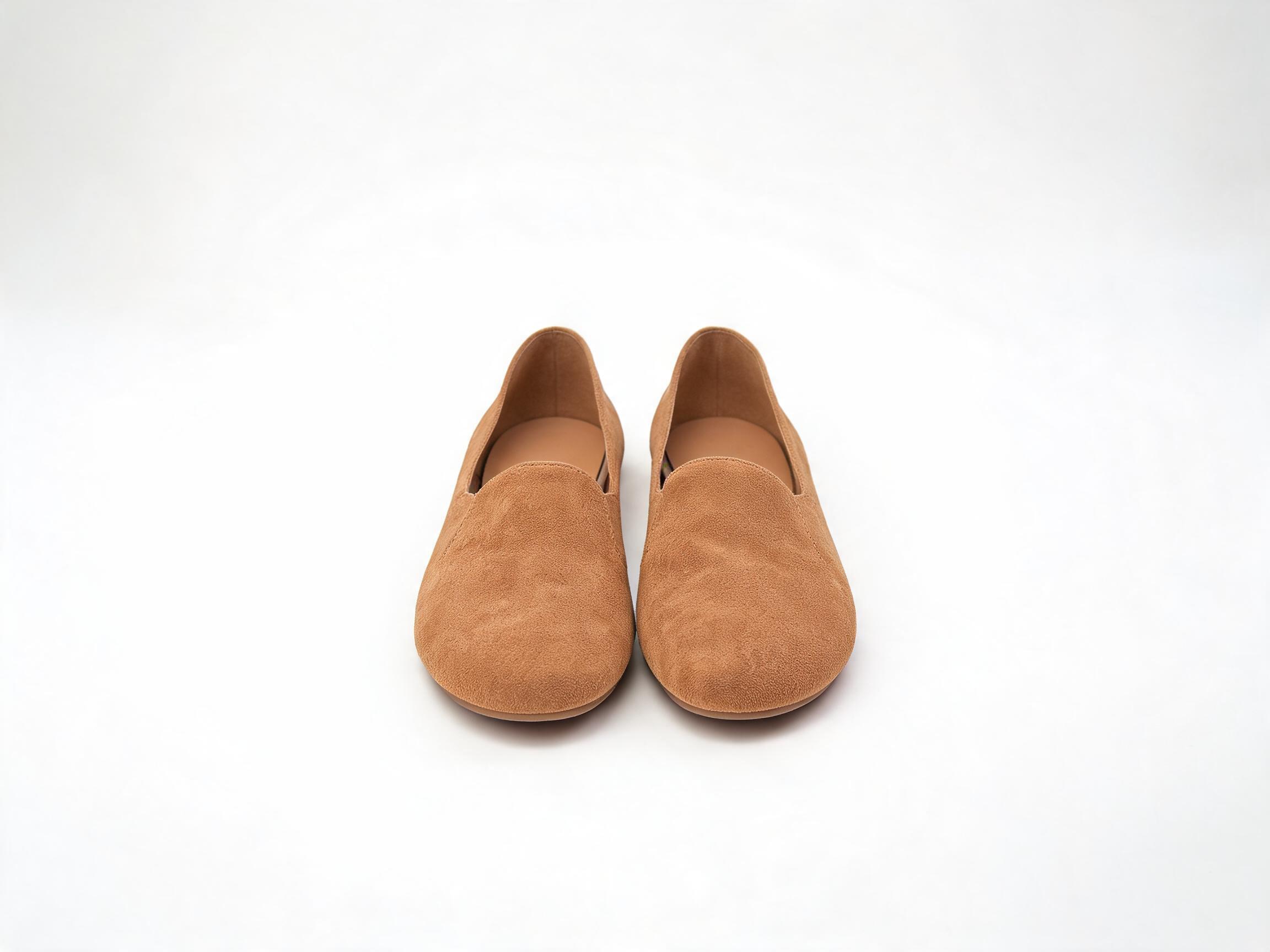
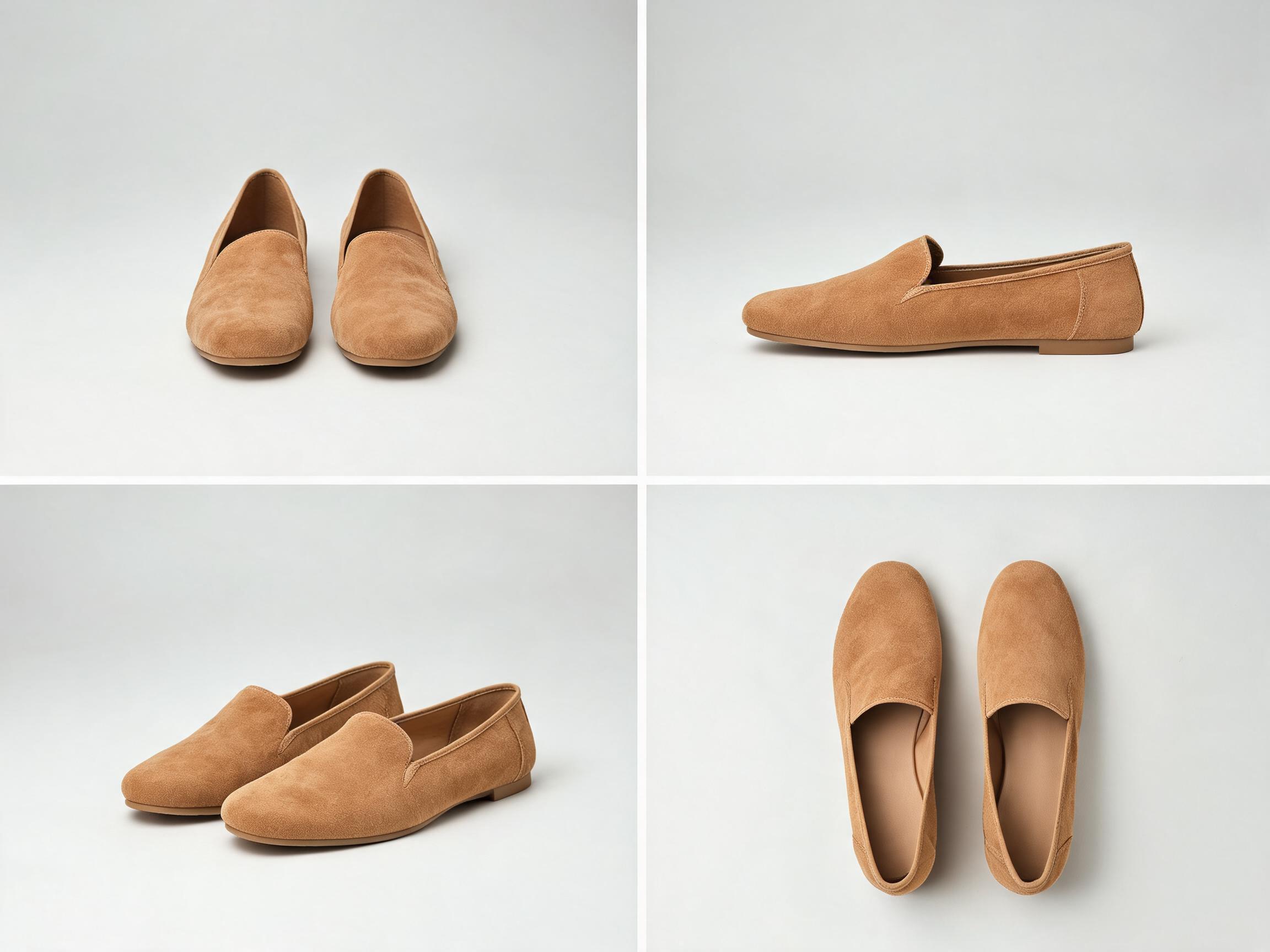
For example, the Tan Suede Slip-On Flats from a Quanzhou-based factory list an MOQ of 100 pairs per color, with a lead time of 25–35 days. That means a boutique can order 100 pairs in tan and 100 pairs in black as two separate color commitments, not a single 200-pair style order. Confirm current MOQ and lead time with the sales team before ordering.
How to structure a first trial order
The goal of the first order is information, not margin. You want to learn which styles, colors, and sizes move fastest in your store. Structure the order so that each style-color combination is small enough to limit risk but large enough to read demand.
Step 1: Choose a small set of styles that fit your existing assortment
Pick styles that complement what you already sell. If your boutique leans casual, a suede slip-on flat makes sense. If it leans dressy, choose a heel or a pointed flat. Avoid ordering several variations of the same silhouette—you want variety, not duplicates.
Step 2: Allocate colors per style based on your customer base
For each style, choose two to three colors. Neutrals (tan, black, navy) usually sell across seasons; seasonal colors (red, pastel) can be tested in smaller numbers. Because MOQ is per color, each color you add is a separate commitment. If a vendor’s per-color MOQ is 100 pairs, then three colors means 300 pairs for that style—so plan your total budget across styles and colors together.
Step 3: Size ratio
Ask the vendor what size ratio they recommend or require, and confirm what the factory can pack. If you have historical size sales data, share it. If not, start with a standard ratio and adjust after the first reorder.
Step 4: Total units
Keep the first order small enough that you can reorder within the same season. If lead time is 25–35 days, you want to place the reorder as soon as you see sell-through, not after the season ends. Confirm current MOQ and lead time with the sales team before ordering.
What to confirm with the vendor before committing
Before you pay a deposit, get clear answers on the following points. These are the details that determine whether a small multi-style order is practical.
| Item | What to ask | Why it matters |
|---|---|---|
| MOQ per color | Is MOQ calculated per style or per color? Can different colors be combined to meet a style minimum? | Determines how many total pairs you must commit to for a multi-color order. |
| Sample timing | How many days for stock samples? How many for customized samples? | Affects your trial timeline. Stock samples take 3–5 days; customized samples 7–12 days. |
| Lead time | What is the production lead time after deposit and sample approval? | 25–35 days is typical for the Tan Suede Slip-On Flats; confirm current lead time with the sales team before ordering. |
| Replenishment terms | Can you reorder the same style-color later? What is the reorder MOQ and lead time? | You need a fast reorder path after sell-through. |
| Quality control | What QC steps are performed? Can you share inspection reports? | Ensures consistency across the trial order and reorders. |
| Warranty & after-sales | What is the warranty period? How quickly do they respond to issues? | A 6-month warranty and 48-hour after-sales response is a baseline to confirm. |
Quanzhou factory details: founded 2011, 260-person team, exports to Europe, North America, and the Middle East. OEM/ODM available. Three-stage QC. Sample shoes 3–5 days; customized samples 7–12 days.
Replenishment after sell-through
Once the trial order sells through, you will have data on which styles and colors performed. Replenish the winners quickly. The reorder should be larger than the trial quantity but still balanced—avoid overcommitting to a single style just because it sold well in one color.
A practical rule: reorder the top styles in their best-selling colors, and increase depth over the trial quantity to the level your sell-through data supports. If the trial was at the minimum of 100 pairs per color, confirm the reorder MOQ and lead time with the sales team before ordering.
If a style did not sell, do not reorder it. Mark it down and move on. The trial model only works if you are willing to cut losses and double down on what works.
FAQ
Can I mix styles in one order to reach a volume discount?
Some vendors offer discounts based on total order value or total pairs, but MOQ is still applied per color. Ask the vendor whether they can combine styles for pricing purposes while keeping per-color MOQs separate.
How do I handle size ratios for a new style?
Ask the vendor for their standard ratio and whether they can customize it. If you have sales history from similar styles, use that to guide the ratio. For a first order, a standard ratio is usually acceptable.
What if I need a custom color or material?
Customized samples take longer (7–12 days) and may have different MOQs. Confirm the custom MOQ and lead time before proceeding.
How do I verify quality before the full order ships?
Ask for the QC process. A three-stage QC and a 6-month warranty are indicators of a structured quality system. Request inspection reports or arrange a third-party inspection if needed.
For boutique owners, the right wholesale shoe vendor is one that treats a small, multi-style order as a viable way to start a relationship—not as an exception. Use the trial model to learn your market, then scale what works.