
A technical procurement guide for buyers sourcing wide fit loafers. Learn how width grading changes the last, vamp opening, tooling, and size runs, and what to verify before committing to a bulk program.
Bulk Sourcing Guide
When a retailer or brand decides to add wide fit loafers to its range, the sourcing question is not simply whether a factory can make a loafer. It is whether that factory can grade width correctly across a full size run. Length grading is routine for most footwear suppliers; width grading touches the last, the pattern, the vamp opening, the lining, and the tooling behind them. A supplier that treats width as a simple size extension will produce a shoe that looks right on the shelf and fails at the fitting.
This guide explains what width grading actually changes at the factory, where comfort is won or lost, how to plan a size run that reflects real demand, and what to ask for before you commit to a bulk program.
In this article
Why width demand exists
Standard footwear lasts are built around a nominal width — often a B for women's styles and a D for men's in the European and US sizing conventions common in export programs. That width suits a portion of the market, but it leaves out buyers whose feet need more room across the forefoot or through the instep. For retailers, the result is a familiar pattern: customers size up to gain width, then live with a shoe that is too long. They return it, or they do not buy at all.
Brands that address this see it as a range-building opportunity. A wide fit program lets you keep the same style, upper, and outsole while offering a fit that standard lasts cannot deliver. The sourcing challenge is that a width option is not a separate model — it is a parallel set of patterns and lasts that must be managed alongside the standard run.
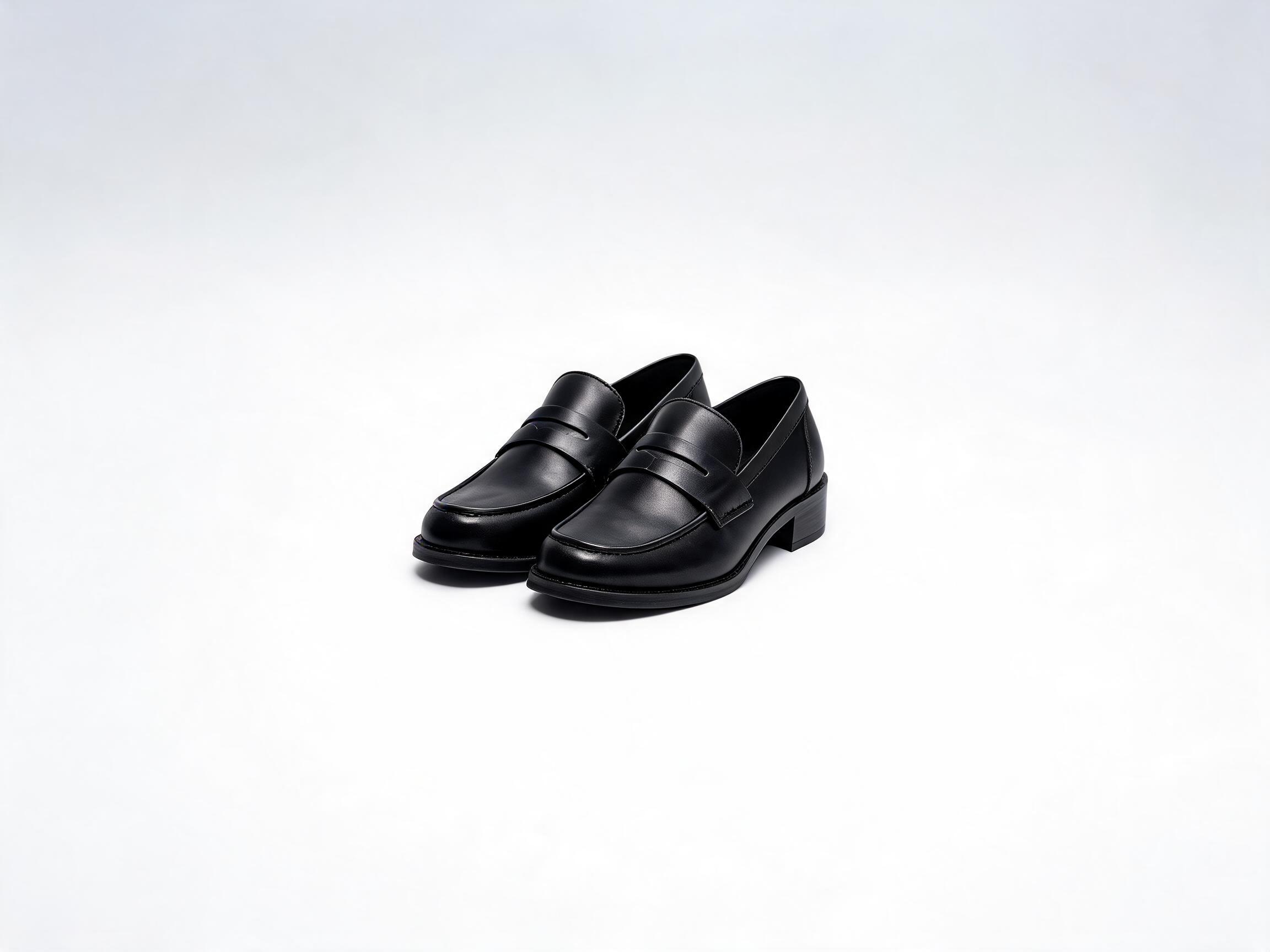
For example, the women's black leather loafers in our range are built true to standard B width in EU 35-41, with half sizes and width options arranged for bulk orders after sample confirmation. The same principle applies to the cognac penny loafer shoes for men, which run standard D width in EU 39-45 with width options arrangeable after sample confirmation. In both cases, the width program is a factory planning decision as much as a design one.
What changes on the last
The last is the shaped form the shoe is built around. Its length is one dimension; its width across the ball, the waist, and the heel are others. Width grading means adjusting the last's girth and tread width while keeping the heel seat and the overall length appropriate for the size. This is not a matter of scaling the whole last up. A wider last changes the volume of the shoe, and that change has to be matched by changes in the pattern.
At the factory, a width program typically involves:
- A separate last family or a graded set of lasts for each width, checked against the standard last at the same size.
- Pattern re-grading so the upper panels, linings, and reinforcements fit the wider last without distortion or excess fullness.
- Tooling adjustments — cutting dies, folding templates, and assembly jigs may need to be duplicated or modified for the wide grade.
- Bottom-stock checking to confirm the outsole and insole widths match the wider last and that the cemented construction closes cleanly.
Some factories offer width as a nominal label only — the same last, with a wider pattern cut and no change to the form. That produces a loose-fitting shoe with excess material, not a true wide fit. The difference is visible in the sample: a properly graded wide last holds the foot across the ball, while a pattern-only wide shoe wrinkles and gaps.
Buyer check: Ask the supplier to confirm the last width in millimetres at the ball for both standard and wide grades at the same size. If they cannot provide this, the width program is not yet under control.
Vamp and lining comfort implications
The vamp opening — the throat of the shoe where the foot enters — is one of the most sensitive parts of a loafer. On a slip-on style, the opening must hold the foot securely without pressing across the instep. When width is graded, the vamp opening has to be adjusted so that the wider foot enters without strain and the shoe still holds at the heel and waist.
This is where lining choices matter. A soft leather lining can accommodate a wider foot with less break-in discomfort, but it also has less structural resistance. The lining pattern must be re-graded with the upper, not simply cut larger. If the lining is not adjusted, it will pull, crease, or wear through at the forefoot.
Consider the black leather loafers with almond toe and penny strap: the slip-on opening is cut for a secure hold without pressure at the instep. In a wide fit program, that opening must be re-cut for each width grade. The footbed and insole also need to match the wider last; a standard insole under a wide upper creates a shelf that presses into the foot.
Comfort in a wide loafer comes from the relationship between last width, vamp opening, and lining. A factory that grades width properly will show you the sample on the last, not just the finished shoe, so you can see how the upper sits before closing.
Size-run planning for width programs
Width grading changes how you plan a bulk order. Instead of a single size curve, you are managing a matrix of lengths and widths. Most buyers do not need every combination; they need the combinations that reflect their market. The factory should be able to produce against your own size grid and grade the pattern accordingly.
A practical approach is to start with the width that carries the most demand in your market, then add the adjacent width once the first is proven. For example, if your range is built around standard width, you might introduce a wide grade in the core sizes first, then extend to the full run. The women's black leather loafers are available in EU 35-41 with half sizes and width options arranged after sample confirmation, which allows a phased approach.
| Planning factor | What to confirm with the supplier |
|---|---|
| Size grid | Can the factory produce against your own size grid, including half sizes and width grades? |
| Width range | Which widths are available for each size, and are they graded from the same last family? |
| Pattern grading | How is the pattern re-graded for each width, and are linings and reinforcements included? |
| Tooling | Are cutting dies and assembly jigs duplicated for the wide grade, or modified from standard? |
| Sample confirmation | Is a sample required before bulk, and does it include fit trials on the last? |
For men's styles such as the cognac penny loafer shoes, the same logic applies: standard D width in EU 39-45, with width options arrangeable after sample confirmation. A buyer targeting a wide fit program should confirm how the factory handles the transition between widths in the same size run, because the assembly line may need to switch lasts and patterns between batches.
What to verify before bulk
Before placing a bulk order for wide fit loafers, verify the factory's width capability in concrete terms. The checks below are not exhaustive, but they separate a supplier that can grade width from one that cannot.
- Ask for last width measurements at the ball for standard and wide grades in the same size. A supplier with a real width program will have these on file.
- Request a sample in the wide grade and compare it to the standard width. Look at the vamp opening, the heel hold, and the forefoot volume.
- Confirm pattern and lining grading — ask whether the lining is re-graded or simply cut larger.
- Review the size grid and width matrix against your market demand. Confirm the factory can produce your grid, not just its own.
- Check tooling availability for the wide grade. If new dies are needed, confirm who bears the cost and how long they take to make.
- Ask about inspection — a factory with a three-stage inspection process, including a forefoot flex test, is more likely to catch width-related assembly issues before shipment.
Aurevia Footwear Co., Ltd., established in 2011 in Quanzhou, China, is a 260-person OEM/ODM manufacturer with an in-house design team that turns sketches, reference samples, or tech packs into production-ready samples typically in 7-12 days. Existing samples ship in 3-5 days. The factory offers Pantone color matching and logo branding, and exports to Europe, North America, and the Middle East. For buyers developing a wide fit loafer program, the sample stage is where width grading is confirmed — and where the factory's ability to produce against your size grid is proven.
If you are planning a wide fit loafers range, the next step is to define your size and width matrix and request a sample in the wide grade. The sample will tell you more about the factory's width capability than any catalogue.