A procurement-focused guide for overseas buyers sourcing wide-fit trainers from China. Learn how wide-fit lasts differ from standard lasts, how size grading and width fitting work in bulk production, what to specify in a tech pack, how to maintain fit consistency across repeat orders, and what to verify in samples before committing to volume.
Procurement Guide for Footwear Buyers
Wide-fit trainers are not simply standard trainers made on a wider last. For buyers sourcing from China, the difference between a sellable wide-fit program and a costly return problem usually comes down to last development, size grading, and how tightly fit is controlled across repeat orders. This article covers what overseas importers and wholesalers need to specify, verify, and monitor when developing wide-fit trainers for bulk production.
Key takeaways:
- A wide-fit last changes more than width — it affects toe box volume, instep height, heel grip, and overall balance.
- Size grading for wide fits cannot simply scale a standard last; width increments must be planned per size.
- Fit consistency across repeat orders depends on last retention, material consistency, and in-process checks.
- Your tech pack should define last dimensions, width grading, and fit-critical measurements — not just shoe length.
- Sample approval should include wear testing and measurement verification before volume commitment.
What Makes a Wide-Fit Last Different
A last is the foot form the shoe is built around. A wide-fit last is not a standard last stretched sideways. When you widen a last incorrectly, the shoe may fit the forefoot but slip at the heel, or the instep may become too tight because the added volume was placed in the wrong area.
In a properly developed wide-fit last, several dimensions change together:
- Ball width and girth: The forefoot must accommodate a wider foot without forcing the toes into a compressed position.
- Toe box volume: Height and shape matter as much as width, especially for buyers targeting comfort or orthopedic-adjacent segments.
- Instep height: A higher instep is often needed so the shoe does not press down on the top of the foot.
- Heel width and grip: The heel should remain secure; widening the forefoot without adjusting heel fit causes slippage.
- Overall balance: The last bottom, toe spring, and heel height must remain stable so the shoe does not roll or feel unstable.
For buyers, the practical implication is that a wide-fit program requires its own last development, not a modification of an existing standard last. Aurevia Footwear Co., Ltd., based in Quanzhou, China, maintains in-house design and pattern teams that turn buyer sketches, references, or trend boards into production-ready samples, including dedicated last development for wide-fit programs.
Size Grading and Width Fitting in Bulk Production
Size grading is where many wide-fit programs fail. A standard grade increases length and girth by fixed increments across the size run. For wide fits, those increments often need to be adjusted because foot volume does not scale linearly with length.
Two approaches are common in bulk production:
Single-width wide fit
The entire size run uses one wide-fit last family, with width increasing proportionally as sizes increase. This is simpler to produce and manage, and works well when your market expects a consistent "wide" option across sizes.
Multi-width grading
The program offers two or more width options (for example, wide and extra-wide) within the same size run. This requires separate last families and more complex size grading, but it serves markets where foot width varies significantly across the customer base.
Whichever approach you choose, the grading plan should be documented and agreed before sampling. Ask your supplier to confirm how width increments are applied per size and how the last dimensions are recorded.
| Decision point | What to specify | Why it matters in bulk |
|---|---|---|
| Last family | Standard vs. wide-fit last; single or multi-width | Determines tooling, sampling, and production setup |
| Width grading | How width increments per size | Prevents fit drift across the size run |
| Fit-critical measurements | Ball girth, instep girth, heel width, toe box height | These define fit more than overall length |
| Material impact | Leather thickness and stretch direction | Affects how the upper conforms to the last |
| Construction | Lasting method and lining | Influences internal volume and comfort |
What to Put in Your Tech Pack
A tech pack for wide-fit trainers should go beyond the standard style sheet. Include the following:
- Last specification: Reference the approved last, including width designation and key girth measurements.
- Size grading table: List the sizes in your run and the corresponding width increments.
- Fit-critical measurements: Ball girth, instep girth, heel width, and toe box height per size.
- Material specification: Leather type, thickness range, and stretch direction where relevant.
- Construction details: Lasting method, lining material, insole, and any comfort features.
- Fit notes: Any known fit preferences from your market (for example, extra room in the toe box).
If you are working with a manufacturer that offers OEM/ODM and private label support, your tech pack can also cover logo placement, packaging, and size grading for a full seasonal collection. Aurevia Footwear Co., Ltd. supports OEM/ODM and private label programs, including logo, packaging, and size grading.
Keeping Fit Consistent Across Repeat Orders
Fit consistency is the hardest part of a wide-fit program. A sample can fit perfectly, but if the last is not retained or materials change, the next order can feel different.
Key controls to discuss with your supplier:
- Last retention: Confirm that the approved last is stored and used for repeat orders, and that any replacement last is measured against the original.
- Material consistency: Leather thickness and stretch can vary between batches. Ask how incoming material is checked against the approved specification.
- In-process measurement: Fit-critical measurements should be checked during production, not only on finished shoes.
- Finished-shoe inspection: Final inspection should include fit-related checks against the approved sample.
- Documentation: Records of last dimensions and material specifications should be kept for each order.
Aurevia Footwear Co., Ltd. sources genuine leather and premium materials through stable supply channels and applies multi-stage inspection to keep colour, texture, and durability consistent across repeat orders. Every bulk order passes material, construction, and finished-shoe inspections against international quality standards before shipment.
What to Check in Samples Before Committing to Volume
Before you place a bulk order, sample evaluation should cover both measurement and wear.
Measurement verification
- Measure ball girth, instep girth, heel width, and toe box height on the sample.
- Compare measurements against your tech pack and the approved last specification.
- Check the full size run if possible, not just one size.
Wear testing
- Test with wearers who represent your target market's foot shape.
- Check for heel slippage, toe compression, and instep pressure.
- Assess comfort over time, not just at first fit.
Construction and material
- Confirm leather quality, thickness, and colour consistency.
- Check stitching, lasting, and lining for any irregularities.
- Verify that the construction matches the approved specification.
If any fit issue appears, resolve it at the last stage before moving to bulk. Adjusting a last after production has started is costly and can delay your launch.
Supplier Evaluation Checklist
When comparing wide-fit trainers manufacturers, use a structured checklist:
- Does the supplier have in-house last development and pattern teams?
- Can they show how width grading is handled across sizes?
- Do they retain approved lasts for repeat orders?
- How do they check incoming leather for thickness and stretch consistency?
- What in-process and finished-shoe inspections are performed?
- Can they support OEM/ODM and private label requirements, including logo and packaging?
- Do they have experience exporting to your target market?
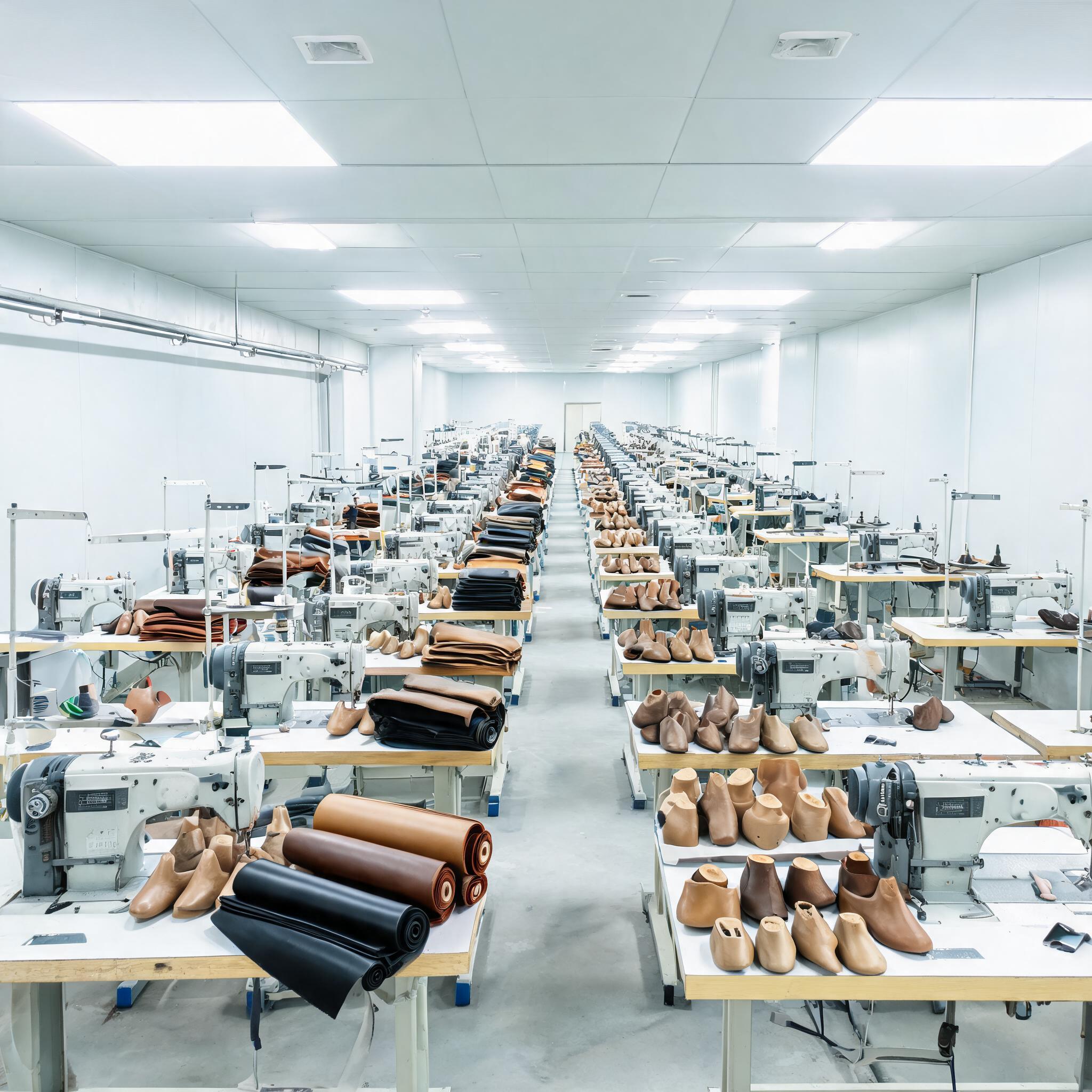
Aurevia Footwear Co., Ltd. was established in 2011 and operates a 260-person team from its Quanzhou production base, with cutting, stitching, and lasting lines for leather footwear. The company exports to Europe, North America, and the Middle East, and its product range covers women's, men's, and kids' shoes, including leather boots, sneakers, sandals, loafers, and heels.
FAQ
How do I know if my market needs a wide-fit last?
Review your returns data, customer feedback, and fit complaints. If a significant share of returns cite tightness or discomfort in the forefoot, a wide-fit program may be justified. Confirm the specific width requirements with your supplier before committing to tooling.
Can a standard last be modified into a wide-fit last?
In some cases a last can be adjusted, but the result depends on how the modification is made. Widening the forefoot without adjusting instep and heel dimensions often creates fit problems. A dedicated wide-fit last is usually the more reliable approach for a bulk program.
What is the most important measurement for wide-fit trainers?
Ball girth is often the most critical, because it determines whether the forefoot has enough room. Instep girth and heel width are also important for overall fit and security.
How can I keep fit consistent across repeat orders?
Agree on last retention, material specifications, and in-process measurement checks with your supplier. Ask for documentation of last dimensions and material specifications for each order.
Does Aurevia Footwear Co., Ltd. support private label wide-fit programs?
Yes. Aurevia supports OEM/ODM and private label programs, including logo, packaging, and size grading. The in-house design and pattern teams can develop wide-fit lasts from your sketches, references, or trend boards.
Next step: If you are developing a wide-fit trainers program for your market, share your target size run, width requirements, and any reference samples with Aurevia Footwear Co., Ltd. The team can review your tech pack and advise on last development, size grading, and sampling before you commit to volume.