A buyer's guide to scheduling a women's winter boots wholesale order: when to freeze confirmation samples, how to plan warm lining and heel-height combinations, how to back-calculate the latest order window from a 30–40 day lead time, and how to set reorder intervals.
B2B Sourcing Guide
A women's winter boots wholesale order lives or dies on its calendar. The boots are the same either way; what changes is whether your confirmation sample is frozen before the season turns, whether your size and color mix matches what your buyers actually reorder, and whether the production window still fits between your deposit and your shelf date. This guide works through the scheduling side of winter boots wholesale — sample freezing, lining and heel planning, the latest order window implied by a 30–40 day lead time, and how to set reorder intervals you can hold.
Key takeaways
- Freeze confirmation samples before the buying window closes — late changes push everything behind them.
- Plan warm lining and 6 cm block heel combinations as a set, not as separate add-ons.
- A 30–40 day lead time sets the latest order window; work backwards from your shelf date, not forwards from today.
- Set reorder intervals from how fast your first mix sells, not from a fixed calendar habit.
- MOQ, lead time and component details should be confirmed with the sales team before you commit to a schedule.
Why the schedule decides the order, not the other way round
Autumn-winter footwear has a fixed shelf date. Retailers clear space for cold-weather stock on a rhythm they set themselves, and a wholesale order that lands late misses that rhythm entirely. Buyers who treat winter boots wholesale as a purchasing decision alone tend to discover the timing problem at the worst moment: the sample is approved, the deposit is sent, and the calendar no longer leaves room for production plus freight plus receiving.
The fix is to treat the order as a sequence with dependencies. Sampling depends on your specification; production depends on frozen samples; reorders depend on first-shipment sell-through. Each link needs its own buffer, and the buffers are not interchangeable. This article walks that sequence in order, using the two autumn-winter styles currently listed in the catalog as working examples, and it flags where only your own supplier confirmation can close the loop.
Step 1: freeze the confirmation sample before the buying window closes
A confirmation sample is the document that production works from. Once it is signed off, the lining, the heel, the shaft height and the color are fixed. Until it is signed off, every one of those can still move — and every move resets the production calendar.
That is why the sample should be frozen before the buying window closes, not during it. If you approve a sample while your own buyers are still making commitments, any revision they request afterwards forces a second sample round, and production cannot start on an unapproved reference. The sample freeze is therefore the true start of your lead time, not the PO date.
What to lock in the sample review
- Lining: confirm the warm lining is the one you will reorder — a lining swap later is not a cosmetic change.
- Heel: confirm the 6 cm block heel profile and any finish details.
- Shaft height: for knee-high styles, confirm the listed ~38 cm shaft height against your target market's fit expectations.
- Color and material: confirm black leather or brown leather as specified, with the exact color reference.
- Size run: agree the size breakdown that will accompany each color.
Freezing is a commitment on both sides. Once you sign off, treat later changes as a new order round with its own timeline rather than as a tweak to the current one. That single discipline protects your shelf date more than any other scheduling decision.
Step 2: plan warm lining and heel height as a combination
Lining and heel are usually discussed separately, but buyers experience them together. A warm-lined boot with a 6 cm block heel is a different product from a warm-lined flat, and a market that wants one may not want the other. Planning them as a combination keeps your line coherent and your reorder simple.
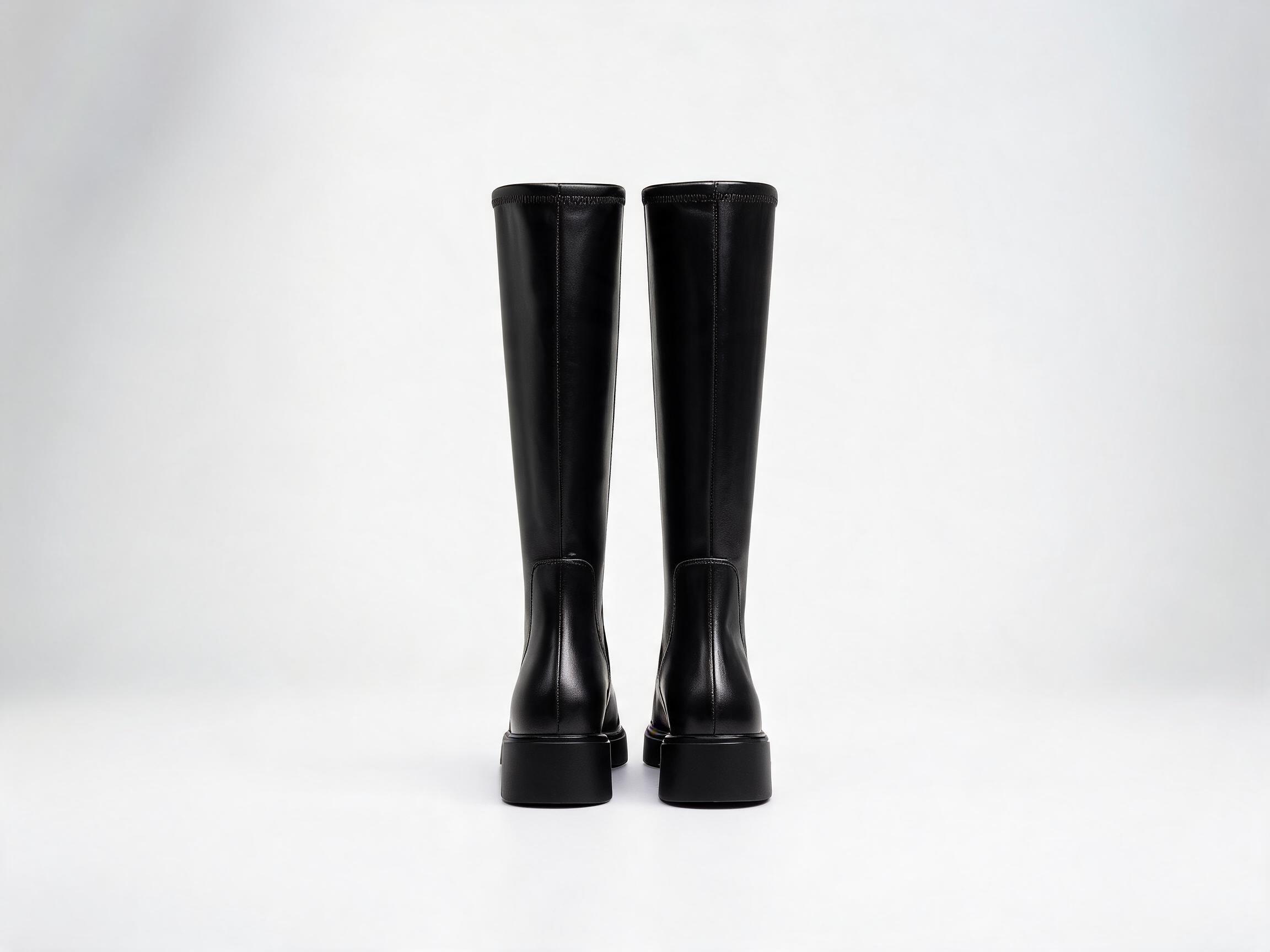
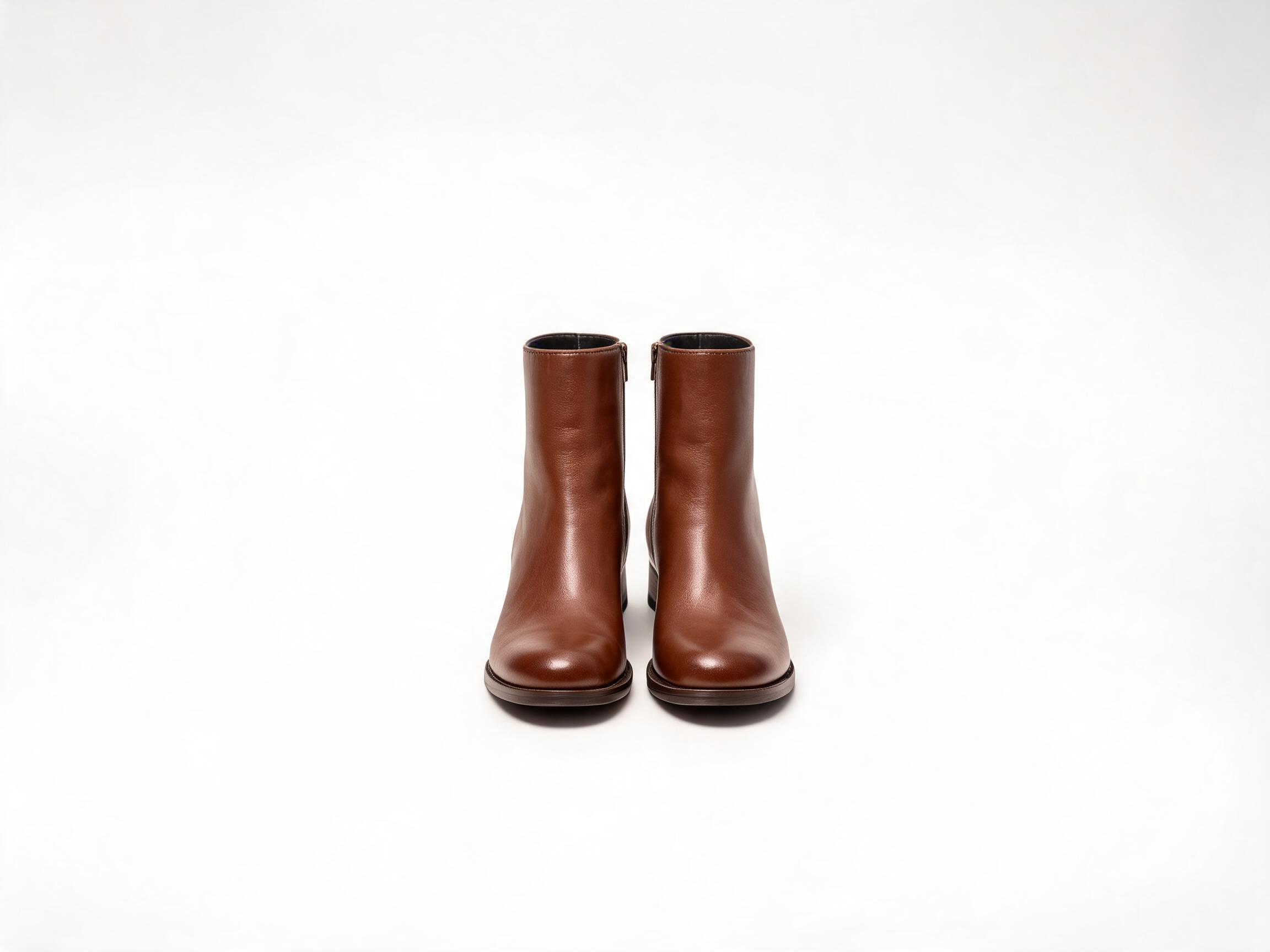
The two autumn-winter styles in the catalog illustrate how the combination works in practice:
| Specification | Black Leather Knee-High Boots | Brown Leather Ankle Boots |
|---|---|---|
| MOQ | 100 pairs per color | 100 pairs per color |
| Lead time | 30–40 days | 30–40 days |
| Heel | 6 cm block heel | 6 cm block heel |
| Shaft height | Approx. 38 cm | — |
| Lining | Warm lining | Warm lining |
| Season line | Autumn-winter | Autumn-winter |
Both styles share the same 6 cm block heel, the same warm lining and the same 30–40 day lead time, which is convenient for scheduling: a single order window can cover both. They differ in silhouette and shaft height. The knee-high style adds a ~38 cm shaft, which affects how the boot reads on the shelf and how it sizes across a run; the ankle style is shorter and typically carries a broader size appeal within the same color.
Using the combination to shape your mix
Because the two share a heel and lining, the mix decision becomes about silhouette and volume rather than about specifications. A practical way to plan it:
- Choose the split between knee-high and ankle before the sample freeze, so both can be confirmed in the same round.
- Keep the warm lining consistent across both styles — it is the shared selling point of the line.
- Treat the 6 cm block heel as the line's default; if a market needs a different heel, that is a separate development question, not an order-time switch.
- Match color to silhouette: black leather for the knee-high, brown leather for the ankle, or the reverse, according to what your buyers have carried before.
You can view the listed specifications on the product pages for the black leather knee-high boots and the brown leather ankle boots before you build the mix into your sample request.
Step 3: back-calculate the latest order window from the lead time
This is where most scheduling errors happen. Buyers tend to count forward from the day they decide to order; the correct method is to count backwards from the day the stock must be on shelf.
The listed 30–40 day lead time gives you the production segment. Around it sit the other segments: sample approval, deposit and payment processing, freight booking and transit, customs clearance, and inland delivery to your warehouse or your customers. The lead time does not include those, and none of them can be assumed to be zero.
The back-calculation method
- Fix the shelf date. Write down the date the boots must be available for sale.
- Subtract your receiving time. Allow for inbound handling and distribution to stores or fulfillment.
- Subtract freight and clearance. Use your own realistic transit and clearance estimates for the route.
- Subtract the production lead time. Use the upper end of the quoted range (40 days) as your planning figure and the lower end (30 days) as your best case.
- Subtract the sample and approval period. Include the time to produce, ship and sign off the confirmation sample.
- What remains is your latest order date. If that date is already close, the order is late — reduce scope, accept a later shelf date, or discuss priority with the supplier.
The planning rule is simple: use the 40-day figure for decisions. Planning on 30 days leaves you no margin, and the 10-day spread between the two ends of the range is exactly the margin you would be giving up.
One caution on scope: the 30–40 day lead time is a listed production figure, not a promise about your specific order, quantity or season load. Confirm current MOQ and lead time with the sales team before ordering, and re-run the back-calculation with the confirmed number.
Step 4: set reorder intervals you can actually hold
Reorder intervals are usually set by habit — monthly, quarterly, or whenever stock looks low. For a seasonal boot line, habit misallocates stock. The interval should be driven by how quickly the first shipment's mix sells through, by size and by color.
Because both styles carry a 100-pair-per-color MOQ and a 30–40 day lead time, a reorder is not a small, quick action. It is a second production cycle with its own window. That has two consequences:
- Reorder early on the winning mix. If one color or silhouette is moving faster, the reorder needs to be placed while the original season window is still open — otherwise the replenishment arrives after the season it was meant for.
- Keep the sample frozen between orders. A reorder against an unchanged, frozen sample is straightforward. A reorder that reopens lining, heel or color decisions is effectively a new development cycle and needs the full sample timeline again.
A practical reorder rhythm
Rather than a fixed calendar interval, tie the reorder trigger to sell-through velocity. Track units sold per week by style and color. When a style is clearly outpacing the others, the reorder decision should be made while there is still enough season left to absorb a 30–40 day production run plus freight. The interval between your first order and your reorder should be short enough that the replenishment lands inside the selling window, not after it.
For a line with two silhouettes and multiple colors, it also helps to set a reorder threshold per SKU rather than per order. That way the ankle style and the knee-high style each get replenished on their own velocity, and you avoid committing a full 100-pair-per-color run to a slow-moving variation.
Putting the calendar together
The complete autumn-winter sequencing, with the dependencies in order:
| Stage | What happens | What it controls |
|---|---|---|
| Specification and mix | Decide silhouettes, colors, lining, heel, size run | What the sample will show |
| Sample and freeze | Confirm and sign off the reference sample | Start of the production clock |
| Order window | Back-calculate from shelf date using 30–40 days plus freight and clearance | Latest PO date |
| Production | 30–40 day listed lead time | Ship-ready date |
| Freight and clearance | Transit, customs, inland delivery | Warehouse receipt |
| Reorder | Triggered by sell-through, against the frozen sample | In-season replenishment |
The order of these stages is fixed. What you control is how much slack you leave between them. A frozen sample early in the buying window gives you the most room; a sample approved late compresses every stage behind it, and the 30–40 day lead time then leaves no cushion for freight delays or a slow customs release.
What to confirm before you commit
The listed specifications — 100 pairs per color MOQ, 30–40 day lead time, 6 cm block heel, warm lining, and the ~38 cm shaft height on the knee-high style — give you a schedule to work from. They do not replace a written confirmation for your specific order, because MOQ and lead time can be affected by color count, quantity and season load.
Before you place the order, confirm with the sales team:
- The current MOQ per color, for both styles combined and for each style separately.
- The current lead time for your specific quantity and color mix.
- Whether the warm lining and 6 cm block heel are available together across all colors you plan to order.
- The size run breakdown that accompanies each 100-pair color minimum.
- Any variation in lead time across the autumn-winter window.
With those numbers confirmed, re-run the back-calculation once more. The schedule is only as reliable as the lead time you put into it.
Frequently asked questions
Should I order both styles in one window?
Because the black leather knee-high and brown leather ankle styles share the same MOQ structure, lead time, heel and lining, a single window works well. The mix decision — how many of each — should be fixed before the sample freeze so both references are approved together.
Is 30 days enough for planning?
Use 40 days. The listed range is 30–40 days, and planning at the short end removes your margin for freight, clearance and any production variation.
What happens if the sample is approved late?
Production cannot start from an unapproved reference, so a late sample pushes the entire schedule. It either compresses your freight and receiving buffer or moves your shelf date. Freezing the sample early in the buying window is the single most effective scheduling decision.
How often should I reorder?
Set the interval from sell-through velocity, not from a fixed calendar. A style that is outpacing the others should be reordered while enough season remains to cover a 30–40 day production run plus freight. Keep the sample frozen so the reorder is a production action, not a new development cycle.
Specifications in this article are as listed on the product pages and apply to the autumn-winter line. Confirm current MOQ and lead time with the sales team before ordering.