Практическая система оценки для B2B-покупателей, выбирающих производителя кожаной обуви, охватывающая спецификацию, соответствие категории, коммерческие условия, контроль качества и пилотные заказы.
Start With Your Own Specification, Not the Supplier's Catalogue
Most sourcing problems begin before the first email. A leather shoes manufacturer can only quote accurately against a defined brief, so write yours down first: target retail price, expected order volume, leather type, construction method, size range and your quality benchmark. Buyers who arrive with a written spec get comparable quotes; buyers who ask "what can you do?" get a catalogue and a guess.
Be specific about the leather. Full-grain calf leather gives a durable surface that ages with character, which suits premium dress and boot lines. Suede and nubuck suit softer, more casual silhouettes. The choice drives both cost and the factory's cutting yield, so decide it early rather than after sampling.
Check Whether the Factory Actually Makes Your Category
Footwear factories specialise. A plant that runs efficient cemented casual lines may not be set up for structured dress boots, and vice versa. Ask which operations are performed in-house — cutting, skirting, stitching, lasting, sole attachment, finishing and packing — and which are subcontracted. Outsourced steps are not automatically a problem, but you need to know where your quality risk sits.
Ask for the size range the factory can grade. A manufacturer that already produces EU 39–45 men's boots and EU 35–41 women's styles has the lasts and grading experience your order needs. If your target market sits outside those ranges, confirm the factory can build new lasts before you commit.
Ask for Concrete Commercial Terms
Vague answers on MOQ, lead time and warranty are a warning sign. A professional manufacturer states them plainly. For reference, Aurevia's leather footwear programs run on a minimum order quantity of 300 pairs per model, with bulk production lead time of approximately 30–45 days after sample approval, and a 6-month quality warranty covering manufacturing defects.
Ask how the factory handles the sample cycle. A structured process usually includes a development sample for fit and design, a revision round after your feedback, and a pre-production sample built from the approved materials. Confirm how many revision rounds are included and what additional samples cost, in writing, before development starts.
Verify Quality Control as a Process, Not a Promise
"We check every pair" is not a quality system. Ask where the inspection points sit in the line — after cutting, after stitching, after lasting, after sole attachment — and what the pass/fail criteria are for stitching alignment, sole adhesion and leather surface defects. A factory that can describe its defect classification and rework loop is managing quality; one that only describes a final check is hoping.
Every bulk order should pass material, construction and finished-shoe inspections before shipment. Ask to see a recent inspection report and confirm whether third-party inspection is welcome. A manufacturer that opens its floor to external QC is usually the one with nothing to hide.
Match the Product to Your Market
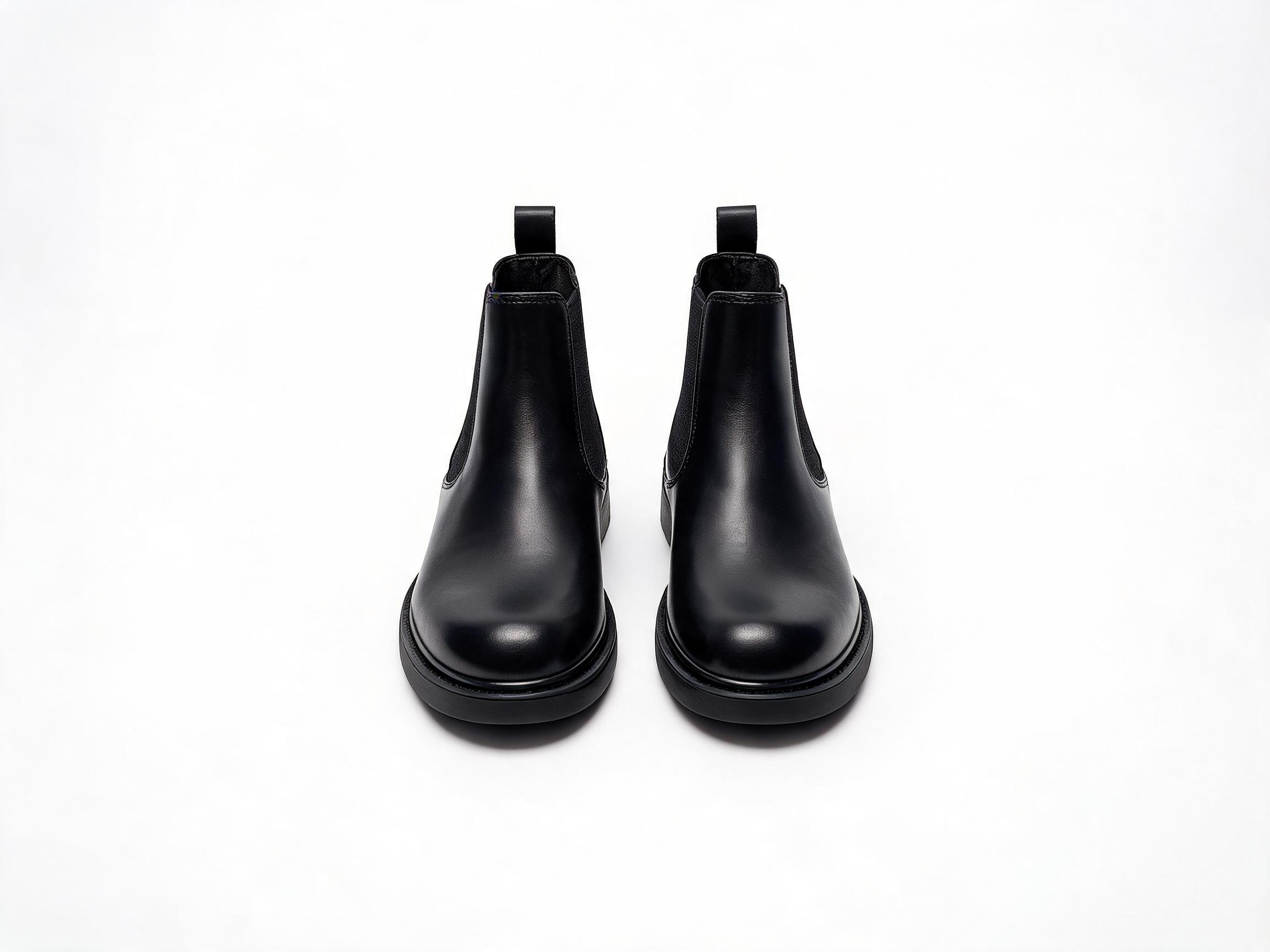
Your supplier's existing models tell you what they can execute. A men's dress program might start from a black Chelsea boot in polished leather with twin elastic gores and a 3 cm block heel, graded EU 39–45. A women's line might build on black leather loafers with a cushioned footbed and a 3 cm stacked heel, graded EU 35–41, or a taller silhouette such as black leather knee-high boots with a 6 cm block heel and an inside zipper.
Reviewing real models against your own range is faster than reading capability statements. It shows you the factory's finishing standard, its last shapes and how it handles hardware and linings.
Plan the Pilot Before the Contract
Shortlist two or three manufacturers, then run a pilot order in one style and one colourway before committing to a seasonal program. The pilot tests three things at once: whether the factory can hit your spec, whether it delivers on schedule, and whether communication holds up when a problem appears. Judge the finished pairs against your approved sample, not against the sales photos.
Agree on the commercial framework before production: who owns the patterns and lasts developed for your program, whether the design can be sold to other buyers, and how defect claims are handled. Put it in the contract, not in an email thread.
Frequently Asked Questions
What information should I send a leather shoes manufacturer for a quote?
Send your target price, order volume, leather type, construction method, size range, colour references and packaging requirements. The more precise the brief, the more comparable the quotes you receive.
What is a typical minimum order quantity for leather footwear?
It varies by factory and model. Aurevia's leather footwear programs use a minimum order quantity of 300 pairs per model, with half sizes and width options arranged on request for bulk orders.
How long does bulk production take after sampling?
At Aurevia, bulk production runs approximately 30–45 days after sample approval, with EXW, FOB and CIF terms available for shipments to Europe, North America and the Middle East.
What warranty applies to bulk leather footwear orders?
Aurevia provides a 6-month quality warranty covering manufacturing defects, with free replacement or repair for confirmed issues and an after-sales response within 48 hours.
Request a Quotation for Your Footwear Program
Share your target market, required sizes and quantities, leather preference and packaging terms. Our team will confirm the specifications that apply to your order and outline a sampling plan.
Request product details