Практический чек-лист аудита для B2B-покупателей, оценивающих фабрику кожаной обуви, охватывающий производственные возможности, обращение с кожей, контроль качества и пробные заказы.
Define the Order Before You Walk the Floor
A factory audit is only meaningful against a brief. Before you visit or request a video walkthrough, write down what you are buying: construction method, leather type, sole attachment, lining, hardware, size range and order volume. A plant that runs efficient cemented casual lines may be the wrong partner for structured dress boots, and you cannot judge capability without knowing what you need.
Set your quality benchmark in the same document — for example the acceptable defect rate per hundred pairs and the tolerances for stitching alignment and sole adhesion. This becomes the yardstick for every factory you assess.
Confirm Which Operations Happen In-House
Ask for a process list: cutting, skiving, stitching, lasting, sole attachment, finishing and packing. Then ask which of those steps are subcontracted. Outsourcing is common and not automatically a problem, but you need to know where your quality risk sits. If sole attachment is handled by a third party, that is a critical control point you no longer see directly.
Confirm the factory can work with your leather. Some plants are set up for cowhide, others for softer skins. Request a trial run with your actual leather before committing to a bulk order, and ask how hides are graded and matched within a pair.
Read the Production Floor
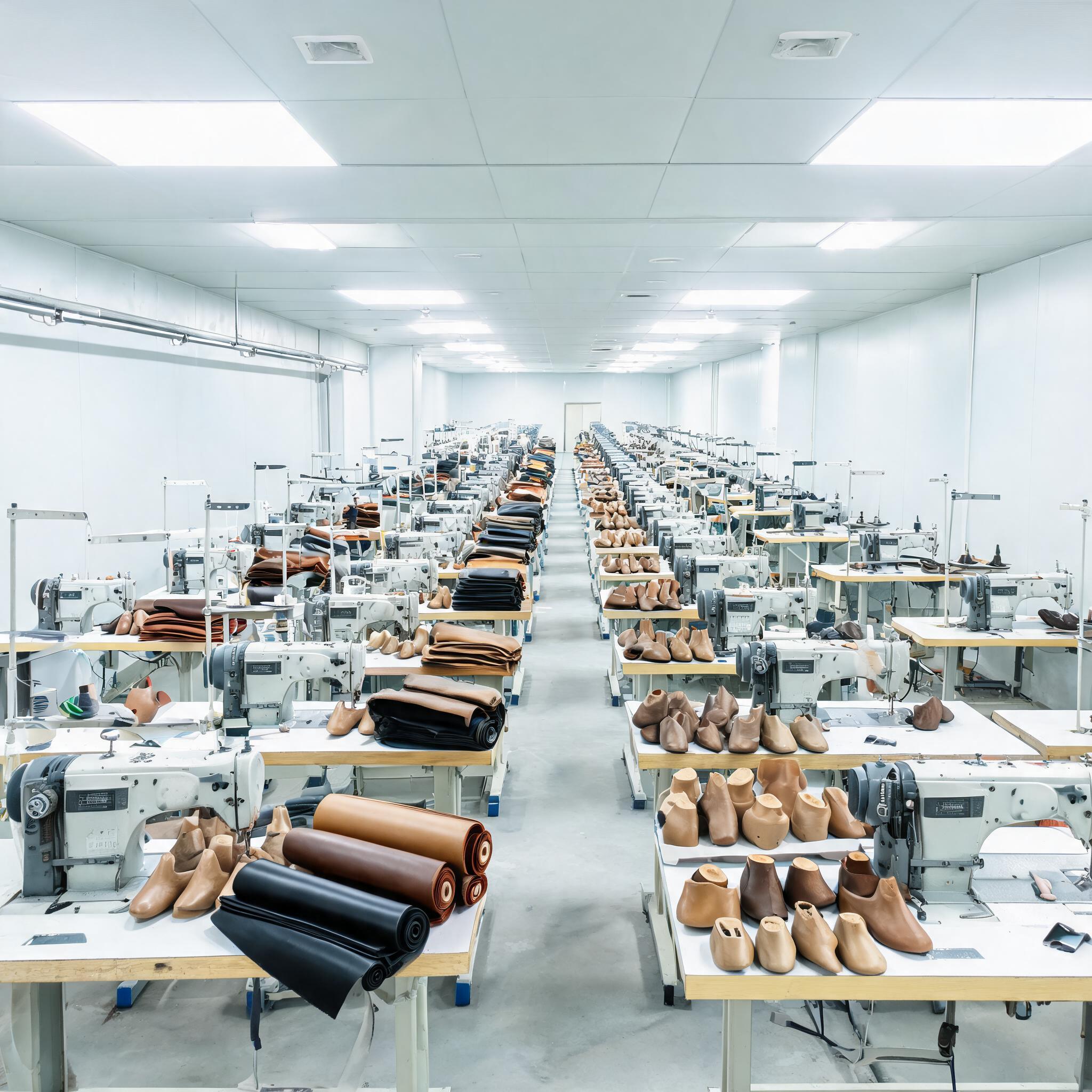
A well-run leather shoe factory has a logical flow: leather storage, cutting, stitching, lasting, soling, finishing, inspection, packing. Look for separation between wet and dry processes and between rough and finished goods. Piles of half-finished shoes and workers crossing back and forth across the floor usually signal a scheduling problem that will show up in your delivery date.
Check lighting and ventilation. Poor lighting hides stitching and grain defects; poor ventilation affects adhesive curing and worker comfort, which affects consistency. Look at the equipment: sharp cutting dies and maintained sewing machines are a proxy for how the factory will treat your order.
Inspect Leather Storage and Handling
Leather is the largest single driver of your product's quality. Ask to see the leather store. Hides should be kept flat, cool, dry and protected from scratching, with a lot-tracking system so a batch can be traced. Inconsistent thickness or grain can ruin a run of shoes, so ask how the factory sorts hides by grade before cutting and how it matches panels within a pair.
If the factory cannot explain how it handles natural defects in the hide, treat that as a warning. Leather is a natural material; the question is not whether variation exists but whether the factory controls it.
Audit Quality Control as a System
Quality control is not a final inspection. Ask where the checkpoints sit — after cutting, after stitching, after lasting, after sole attachment — and what the pass/fail criteria are at each one. Ask to see the defect classification: which faults are critical, which are major, which are minor, and what happens to each. A factory that claims zero defects is not being straight with you; the useful question is how defects are caught and reworked.
Every bulk order should pass material, construction and finished-shoe inspections before shipment. Ask to see a recent inspection report and confirm whether third-party inspection is welcome. A factory that opens its floor to external QC is usually the one with nothing to hide.
Check Capacity, Lead Time and Commercial Terms
Ask for monthly capacity in pairs — and specifically for your type of shoe, since capacity for simple sandals is not capacity for structured boots. Ask about current order load, because a factory running at full capacity may push your delivery or rush it. Then confirm the numbers you will be held to: minimum order quantity, sample lead time, bulk lead time and warranty terms.
For reference, Aurevia's leather footwear programs run on a minimum order quantity of 300 pairs per model, with bulk production of approximately 30–45 days after sample approval and a 6-month quality warranty covering manufacturing defects. EXW, FOB and CIF terms are available for shipments to Europe, North America and the Middle East.
Judge the Output, Not the Brochure
The fastest way to assess a factory is to examine what it already produces. A men's dress program might be built on a black Chelsea boot in polished leather with twin elastic gores, a leather lining and a 3 cm block heel, graded EU 39–45. A women's line might start from black leather loafers with a cushioned footbed and a 3 cm stacked heel, graded EU 35–41, or a taller style such as black leather knee-high boots with a 6 cm block heel and an inside zipper.
Handle the finished pairs. Check stitching evenness, edge finishing, sole adhesion and how the lining is set. Then request a small trial order — a limited run in one style and colourway — and test it against your specification before you place a seasonal program.
Frequently Asked Questions
What should a leather shoe factory audit cover?
Cover in-house process capability, leather storage and grading, quality control checkpoints and defect handling, production capacity, lead times and commercial terms. Judge each against your own written specification.
Should I allow a factory to subcontract some operations?
Subcontracting is common, but you should know which steps are outsourced and who performs them, particularly for critical operations such as sole attachment.
What is a reasonable minimum order quantity for leather footwear?
It varies by factory and model. Aurevia's leather footwear programs use a minimum order quantity of 300 pairs per model, with half sizes and width options arranged on request for bulk orders.
How long does bulk production take after sample approval?
At Aurevia, bulk production runs approximately 30–45 days after sample approval, with EXW, FOB and CIF terms available for Europe, North America and the Middle East.
Request a Factory Assessment or Trial Order
Share your target market, required sizes and quantities, leather preference and packaging terms. Our team will confirm the specifications that apply to your order and outline a sampling plan.
Request product details