
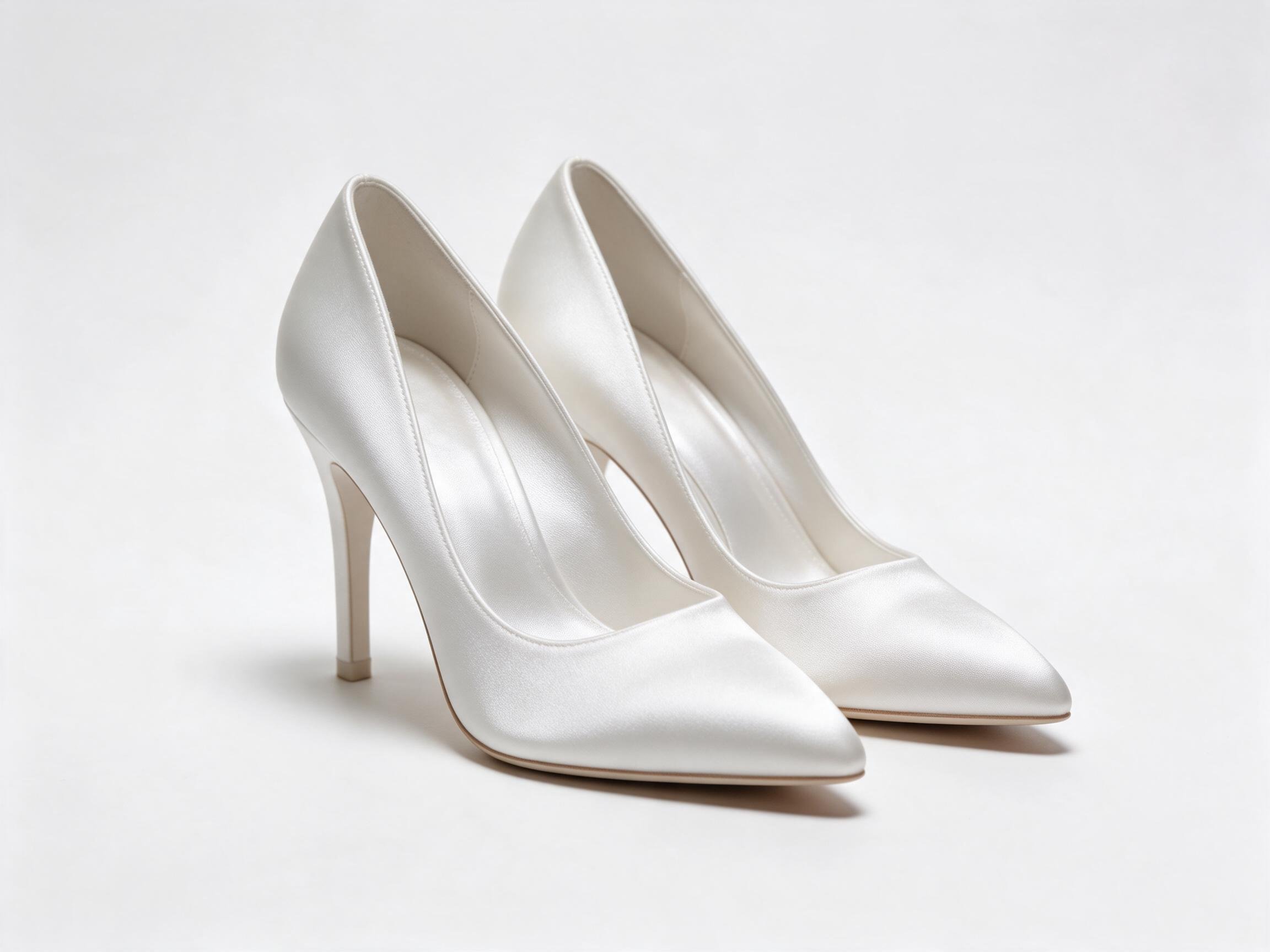
A buyer-focused guide to the OEM/ODM process for bridal shoes: what to check in a bridal shoes manufacturer regarding duchess satin uppers, reinforced heel core, Pantone color matching, and sample-first collaboration. Use the specification and MOQ data from a real White Satin Wedding Heels program as a reference for your sourcing checklist.
OEM/ODM Guide for Wedding-Shoe Buyers
When you source bridal shoes from an OEM/ODM factory, the difference between a smooth program and a costly rework cycle usually comes down to four checks: the satin upper, the heel core and stability, the custom color process, and whether the supplier is willing to work sample-first. This article explains what to ask for and what to look at in each of those areas, using the specification of the White Satin Wedding Heels (published at https://www.auravia.com.cn/product-white-satin-wedding-heels) as a concrete reference so you can compare quotes on the same basis.
In this guide
1. Satin upper quality: what the specification tells you
Bridal shoes live or die on the upper. The White Satin Wedding Heels use a duchess satin upper — a dense, structured satin that holds its shape around the pointed toe and gives the clean, formal surface bridal buyers expect. When you evaluate a bridal shoes manufacturer, ask for the satin weight or grade in writing. The fabric grade and dye-lot consistency for wholesale buying is a separate topic; here the focus is what the factory can confirm about the upper it will actually cut for your order.
Also request the lining and insole specification. In this program the lining is a soft synthetic, the insole is padded, and the outsole is slip-resistant rubber. Those three components affect the buyer’s comfort claim and return rate, so they should appear on the specification sheet, not just in conversation. If a quote lists “satin upper” with no grade, lining or insole detail, you cannot compare it with another quote on a like-for-like basis.
2. Heel stability and reinforcement
The stiletto heel on this model is approximately 8 cm and includes a reinforced heel core. For a bridal shoe, the heel core is the part that determines whether the shoe feels stable under a walking bride. Ask the factory to describe the reinforcement: what the core is made of, how it is anchored into the heel seat, and what heel-attachment test they run. A factory that performs heel-attachment testing as part of its inspection routine can show you the record for your order.
The company behind this product runs three-stage inspection and performs flex, color fastness and heel-attachment testing. Those are the relevant checks for a bridal program. Flex testing addresses the forepart where the shoe bends; color fastness matters when the satin is dyed to a custom shade; heel-attachment testing addresses the join between heel and upper. Ask for the inspection stage at which each test is performed, so you know whether it happens on components, in-process or on finished pairs.
3. Dyeing to custom color cards
The White Satin Wedding Heels are offered in white, ivory and pink, with custom colors available and Pantone color matching supported. If your bridal collection needs a specific shade — a champagne, a blush, a dusty blue — the factory-side question is how the color is matched and how you approve it. A practical workflow is:
- Send the Pantone reference (or a physical color card) with the request.
- Ask for a dyed satin swatch or a sample shoe in the target shade before bulk cutting.
- Approve the sample against your color card under the lighting you use for retail.
- Keep the approved sample as the reference for the production run.
Color fastness testing is part of the inspection routine for this program, which is the check that matters when a custom dye is involved. Confirm with the sales team how a custom shade is recorded on the order and what happens if the approved sample and the bulk shade differ.
4. Sample-first collaboration
A bridal shoes manufacturer that supports OEM/ODM and private label should be able to move from your brief to a sample before you commit to bulk. For this program, standard samples take 3–5 days and custom samples take 7–12 days. Use the sample stage to check the things a specification sheet cannot show: how the duchess satin catches light, whether the padded insole feels right underfoot, and whether the 8 cm heel sits where your customer expects.
Sample-first collaboration also protects the color decision. If you are matching a custom Pantone shade, the custom sample is the vehicle for that approval. Treat the approved sample as the controlling reference and ask that it be retained by the factory for the production run.
5. MOQ, lead time and terms to confirm
The specification sheet for the White Satin Wedding Heels lists the following. These are the figures to use as a starting point for your enquiry; confirm current MOQ and lead time with the sales team before ordering, because they can change by color and by season.
| Item | Specification (as listed) |
|---|---|
| Upper | Duchess satin |
| Lining | Soft synthetic |
| Insole | Padded |
| Outsole | Slip-resistant rubber |
| Heel | Stiletto, approx. 8 cm, reinforced heel core |
| Toe | Pointed |
| Construction | Cemented |
| Sizes | EU 34–41 / US 4–10 |
| Colors | White, ivory, pink; custom colors with Pantone matching |
| MOQ | 100 pairs per color (confirm current MOQ and lead time with the sales team before ordering) |
| Lead time | 25–35 days (confirm current MOQ and lead time with the sales team before ordering) |
| Trade terms | EXW / FOB / CIF |
| Warranty | 6 months |
The supplier behind this product was founded in 2011 in Quanzhou, has around 260 staff, and exports to Europe, North America and the Middle East. Response time is 48 hours. Those facts help you judge whether the factory’s scale and market experience fit your program, but they do not replace checking the sample and the inspection records for your own order.
6. A buyer’s checklist
Use these questions when you shortlist a bridal shoes manufacturer. Each one maps to a decision you will have to make before bulk production.
- Satin: What grade or weight of satin is quoted, and is the lining and insole specification in writing?
- Heel: What is the heel core material, and at which inspection stage is heel-attachment tested?
- Color: How is a custom Pantone shade approved, and is color fastness tested on the dyed satin?
- Sample: What is the sample lead time, and will the approved sample be retained as the production reference?
- Terms: What is the current MOQ per color, the lead time, and the trade term (EXW, FOB or CIF)?
The White Satin Wedding Heels program shows what a complete answer looks like: a named satin, a reinforced heel core with heel-attachment testing, Pantone matching with color fastness testing, and a sample stage before bulk. Compare your other quotes against those same points. Where a quote is silent, that is the question to ask before you place the order.