
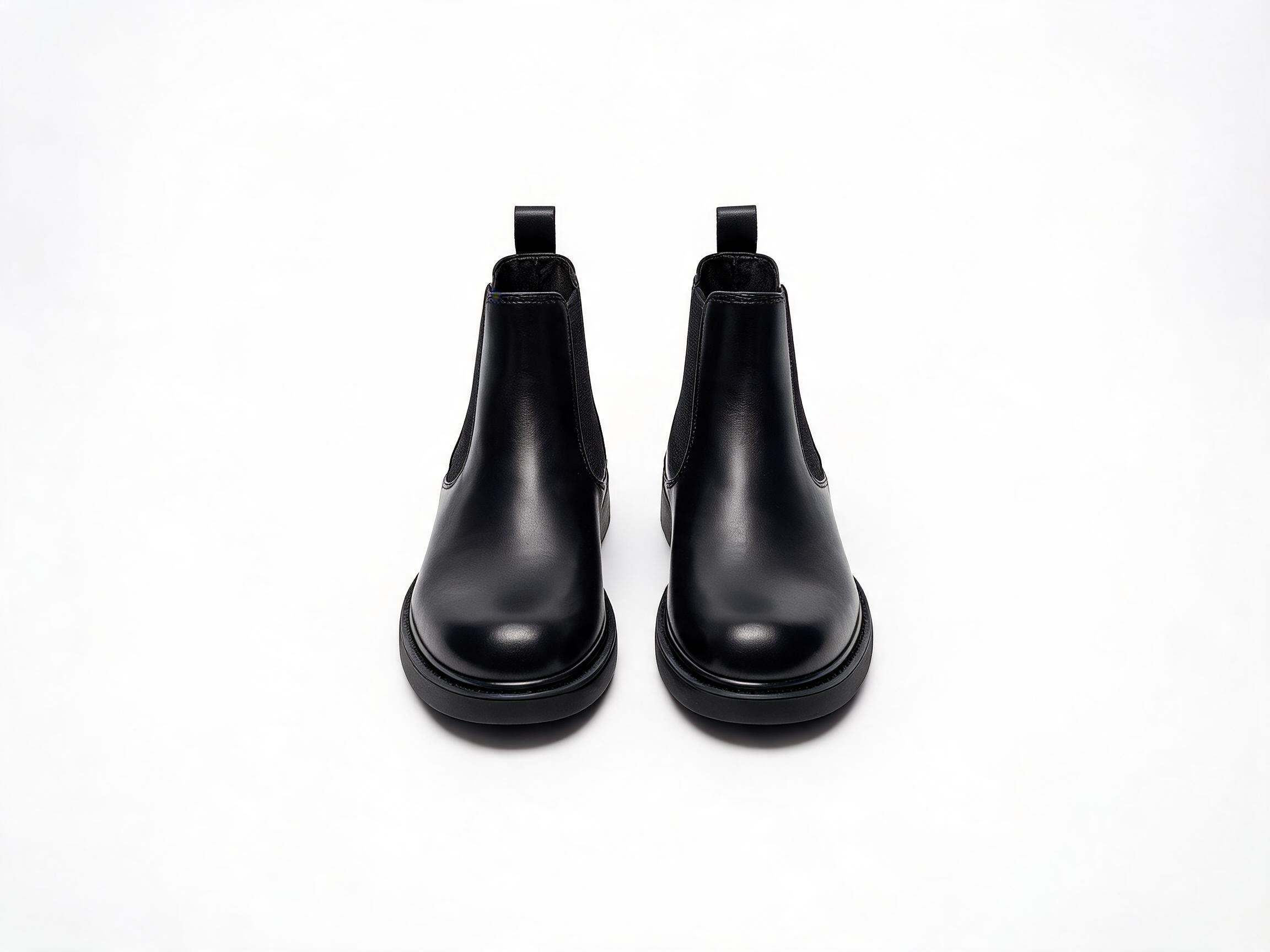
A practical aftercare guide for leather Chelsea boots, written for retailers and brands to hand to end customers. It covers elastic side panel care, leather conditioning, drying routines, storage and packaging choices that reduce returns, with notes from Aurevia Footwear's OEM/ODM experience.
A customer who knows how to look after a leather Chelsea boot keeps it longer, complains less and buys again. This guide gives retail and brand teams the aftercare points worth passing on, plus the packaging and handover details that quietly reduce returns.
Most aftercare complaints about Chelsea boots trace back to three places: the elastic side panel, water and heat during drying, and the way the boots sit in the box before they ever reach a shelf. None of these require a new product line to fix. They require clear instructions, a sensible storage routine and packaging that does not press creases into the leather during transit. For suppliers, this is a topic where an honest note in the box carries more weight than a longer marketing insert.
Key takeaways
- The elastic side panels are usually the first part to lose shape or attract dirt; clean them gently and never stretch them onto a shoe tree.
- Clean and condition sparingly. Over-conditioning softens the leather and can loosen the fit around the shaft.
- Dry leather boots at room temperature, away from radiators and direct sun. Heat is more damaging than a little damp.
- Stuff the shaft, keep the boots upright in the box, and store them where air can move.
- Packaging should hold the boot's shape without pressing the elastic or the toe. That protects the fit customers judge on arrival.
In this guide
- Why Chelsea boots need a specific routine
- How to care for Chelsea boots: the daily and weekly routine
- Looking after the elastic side panels
- Drying wet leather correctly
- Storage that keeps the shape
- Packaging tips that reduce returns
- What to tell customers at the point of sale
- FAQ
Aurevia Footwear Co., Ltd. has supplied genuine-leather footwear to buyers in Europe, North America and the Middle East since 2011. The aftercare guidance below is written for the retail side of that relationship: what to print, what to say at handover, and what to check on the packaging line. The specific boot referenced throughout is the Black Chelsea Boot Shoes, a full-grain leather style with elastic side panels, a shaft of approximately 15 cm and a heel of approximately 3 cm, available in EU 39–45.
Why Chelsea boots need a specific routine
A Chelsea boot has no laces, so it holds the foot through the fit of the upper and the tension of the elastic inserts. That is the design's strength and its maintenance weak point. Customers cannot loosen the boot when it feels tight, and they cannot tighten it when the leather softens. Everything that changes the shape of the upper, the firmness of the leather or the stretch of the elastic affects how the boot fits.
Full-grain leather responds to care slowly, which is good news. A light routine protects it. Heavy-handed treatment, hot drying and careless storage do the damage. Retailers can set expectations early by giving customers a short card with the boots rather than leaving them to search online.
How to care for Chelsea boots: the routine worth printing
The routine itself is unremarkable, which is why it works. The detail that matters is frequency and product type, not the number of products a shop sells.
- After each wear: brush off dust and grit with a soft brush, paying attention to the welt and the seam where the upper meets the sole. Grit left in seams works into the leather over time.
- Every few wears: wipe the upper with a barely damp cloth and let it air-dry before storing.
- Conditioning: apply a leather conditioner a few times a season under normal wear, and only when the leather looks dry or feels stiff. Use a product intended for smooth full-grain leather, apply a thin layer with a soft cloth, and buff off the excess. Avoid silicone-heavy polishes on full-grain uppers if you want the leather to stay breathable.
- Polish or cream: optional. A neutral cream maintains colour without building a heavy film. Avoid coloured polish near the elastic panels.
- Water repellent: a suitable protector can be applied to clean, dry leather. Reapply according to the product label, not on a fixed schedule. Test on a small hidden area first.
The message to customers is simple: less is more, and condition when the leather asks for it rather than on a calendar.
Looking after the elastic side panels
Elastic panels are often treated as a permanent feature, but they age like any elastic. Heat, dirt, repeated over-stretching and contact with oils all shorten their useful life. Advice for customers:
- Clean the elastic with a damp cloth and a little mild soap if needed. Brush along the ribs rather than pulling them apart.
- Do not apply leather conditioner, wax or polish to the elastic. It does not need it and the residue attracts dirt.
- When putting the boots on, use a shoe horn at the heel and pull the tab gently. Avoid wrenching the elastic panel wide to force the foot in.
- Do not store boots with shoe trees spreading the shaft. Trees are useful in the vamp area, but stretching the elastic while the boot is at rest accelerates slackness.
For retailers, this is worth a line on the care card. Elastic slackness is one of the reasons a boot feels loose after a few months, and customers rarely connect it to how they put the boot on.
Drying wet leather correctly
Wet boots cause more returns than any other aftercare issue. The instructions are straightforward: remove surface moisture with a dry cloth, stuff the boot with newspaper or a plain cloth to hold the shape and absorb moisture, and leave it at room temperature. Replace the stuffing when it becomes damp.
Heat is the enemy. Radiators, hairdryers, ovens and direct sun all speed up drying but can harden the leather, shrink the upper and weaken the adhesive and stitching around the sole. The safe default is patience.
Storage that keeps the shape
Between seasons, and even between wears, storage matters more than most customers expect. A boot left on its side or crushed in a wardrobe takes a set in the upper, and a crease across the vamp does not come out easily. Recommend the following:
- Store boots upright, side by side, without pressing the elastic panels against anything.
- Use light stuffing inside the shaft so it does not collapse, but do not over-stuff.
- Keep them out of damp cellars and away from direct heat.
- Air them after wearing. A closed plastic bag traps moisture; a breathable dust bag is a better choice.
Packaging tips that reduce returns
Aftercare advice starts on the packaging line. A boot that arrives with a crease across the toe, a flattened shaft or a stretched elastic panel has already failed a customer's first test. These are practical points for retail and brand buyers to raise with their supplier:
| Check | Why it matters | What to ask for |
|---|---|---|
| Box and insert support | Keeps the boot upright and the shaft from collapsing in transit | Specify the insert type and whether boots ship individually or as pairs in a box |
| Elastic panel clearance | Pressure on the elastic during long transit can leave it stretched | Ask how the boot is positioned in the box relative to the elastic panels |
| Toe protection | Prevents a crease that a customer will see as a defect | Ask for a toe shape holder or wrapping that holds the form |
| Moisture control | Damp packaging flakes leather and can dull the finish | Ask about desiccant use and whether the inner packaging is breathable |
| Care card | Gives the customer the routine without needing to search | Include a short care card in the language of your market |
None of these are exotic requests. They are simply worth agreeing at the sampling stage, because packaging changes are easier to make before a bulk order than after. Aurevia's Chelsea boot line is available at an MOQ of 100 pairs with a lead time of 30–40 days; confirm current MOQ and lead time with the sales team before ordering, as both can shift with order size and market requirements.
What to tell customers at the point of sale
A single sentence at handover covers most of the value: “Brush them after wearing, use a shoe horn at the heel, let them dry at room temperature if they get wet, and condition the leather lightly a few times a season.” Retailers who can point to a written card with this routine are delivering a service, not a sales line.
It also helps to tell customers what to expect. Full-grain leather develops a patina and softens with wear, and the shaft will hold its shape if stored properly. That is normal, not a fault. Setting this expectation on the shelf reduces the number of customers who treat normal ageing as a reason to return.
FAQ
How often should leather Chelsea boots be conditioned?
A few times a season under normal wear is generally enough. Condition when the leather looks dry or feels stiff, and use a product intended for smooth full-grain leather. Over-conditioning softens the upper and can change the fit.
Can customers put leather boots in a tumble dryer or on a radiator?
No. Heat hardens leather, can shrink the upper and stresses the sole construction. Dry at room temperature with stuffing to hold the shape.
How should the elastic side panels be cleaned?
With a damp cloth and a little mild soap if needed. Do not apply leather conditioner or polish to the elastic, and do not pull the panel wide when putting the boots on. Use a shoe horn at the heel.
What packaging detail most affects first impressions?
The way the boot is held in the box. If the shaft collapses or the elastic is pressed against the box wall, the boot can arrive looking worn. Agree the insert and positioning at sampling.
How do retailers bulk-order the black Chelsea boot described here?
The Black Chelsea Boot Shoes page lists the full-grain leather upper, elastic side panels, a shaft of approximately 15 cm, a heel of approximately 3 cm and sizes EU 39–45. MOQ is 100 pairs with a lead time of 30–40 days; confirm current MOQ and lead time with the sales team before ordering.