
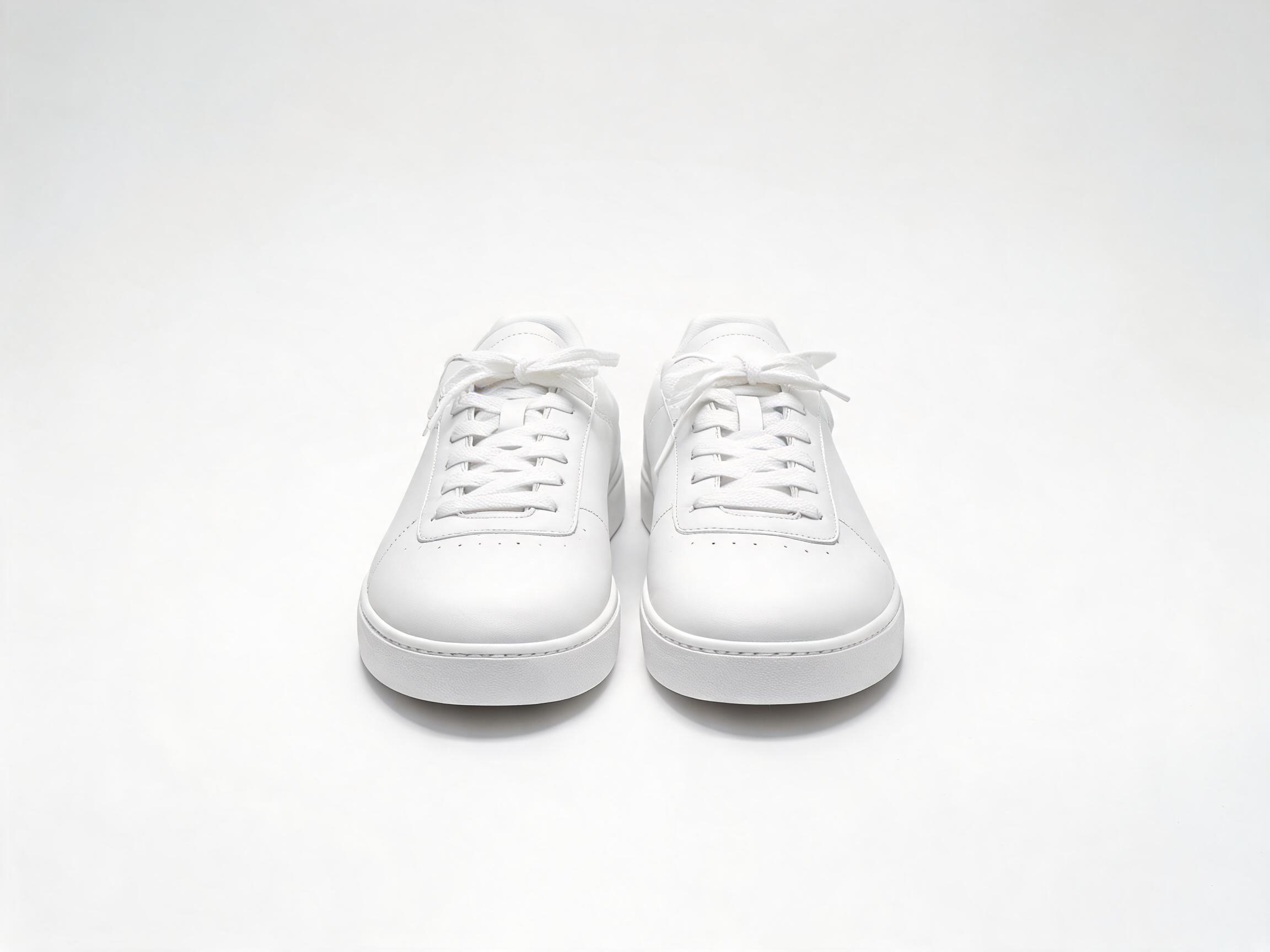
White leather is the least forgiving colourway in footwear. This explainer walks through where variation enters a bulk run — hide selection, panel placement, thread and edge treatment, cup-sole bonding, packing — and separates what belongs in the tech pack from what belongs in the inspection checklist, so a reorder reads as the same shoe.
The sample pair sat on your desk and matched the brief. The bulk run arrives and the same white leather reads a shade warmer, the left and right shoes show grain that does not belong to the same animal, the cup sole line sits at a slightly different height on one foot. Nothing is broken. The shoes still sell. But a reorder built against that first run no longer looks like a reorder.
White leather magnifies all of this because it has almost no tonal cover. A dark leather upper takes a mismatched panel and hides it inside the shadow of the finish. On white, a half-shade difference between the quarter and the vamp is visible across a shop floor. On the same white, a faint glue creep at the sole edge reads as a yellow line. On the same white, a scuff picked up in transit reads as a dirty mark, not a worn-in patina.
The reader question is a spec question, not a quality question. What follows is where variation enters a bulk white leather run, function by function, and which of those points belong in the tech pack before the order starts versus the inspection checklist once it is running.
Why white leather is the least forgiving colourway
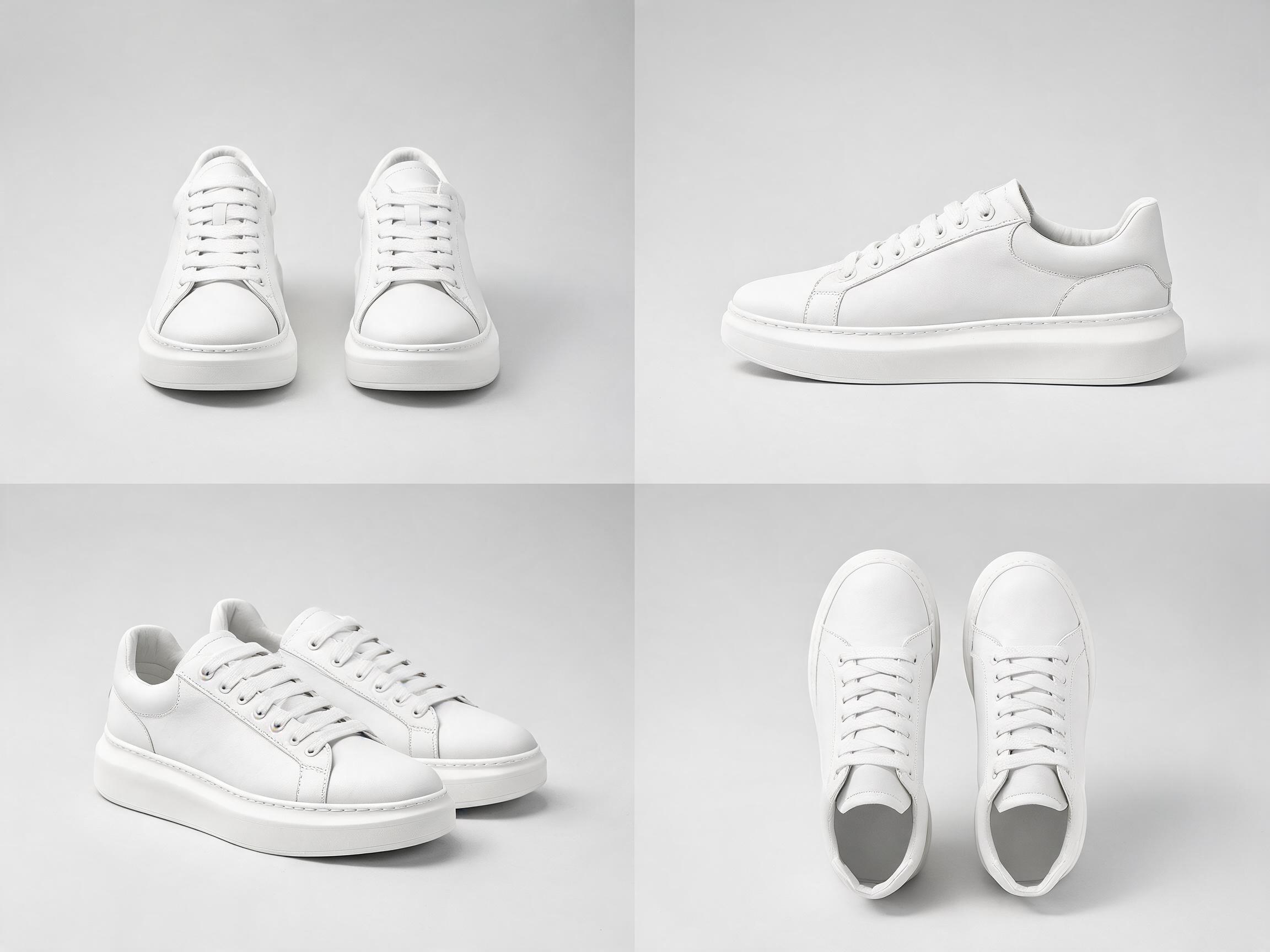
Three properties of white drive the difficulty. First, leather is a natural material. Hide to hide, and within one hide, grain, pore size and dye uptake vary. On white, the tanner relays this variation but cannot erase it. Second, light bounces across a white upper rather than absorbing, so surface irregularities show up in oblique light that would flatten on a black upper. Third, a white shoe has to be clean at the edge — the cup sole bond, the stitch line, the cut edge of the leather. Any residue is on display.
The practical conclusion is that you cannot treat white like a colour. You treat it like a material with tight selection and tight process control. What you control is not the leather (no leather is identical hide to hide) but the selection window and the matched-pair logic around it.
Function by function: where variation enters
1. Hide selection and grain
A frequent bulk-run complaint is shade drift: the first run reads cool white, the reorder reads cream. Drift does not usually come from a single bad batch of leather. It comes from the tanner approaching different hides, and from the factory not locking which hides are allowed into a white programme. White leather is graded on grain quality and dye consistency; a factory that commissions white specifically for a programme has already crossed the first hurdle. A factory that grabs generic white from open stock at order time will repeat the first good run only by luck.
What you specify in the tech pack is the acceptance window: a physical reference (a retained swatch set from the approved run) that bulk leather is compared against under a stated light source, and a rule for how a new hide lot is admitted. Ask how often the factory re-confirms the hide reference with the tanner between reorders — this should be part of a working programme.
2. Panel placement so left and right shoes match
Cup-sole white sneakers use cut panels from different areas of a hide. A vamp and a quarter cut from different hides will read as a small colour difference, which is acceptable, or a small grain difference, which is not. The working rule in a white programme is to cut the left and right shoe of a pair from the same hide region, ideally the same side of the hide, so grain and stretch behave the same on both shoes.
Panel symmetry is the second issue. A white low-top looks symmetric. On inspection, a vamp that is set slightly high on the left shoe versus the right will read as an asymmetric toe box. Panel placement is a pattern and a cutting-room discipline, not something you can fix at finished-shoe inspection. If a reorder changes the pattern — a supplier's pattern team redraws it to save material — you will see a different toe shape. Specify the pattern version in the tech pack.
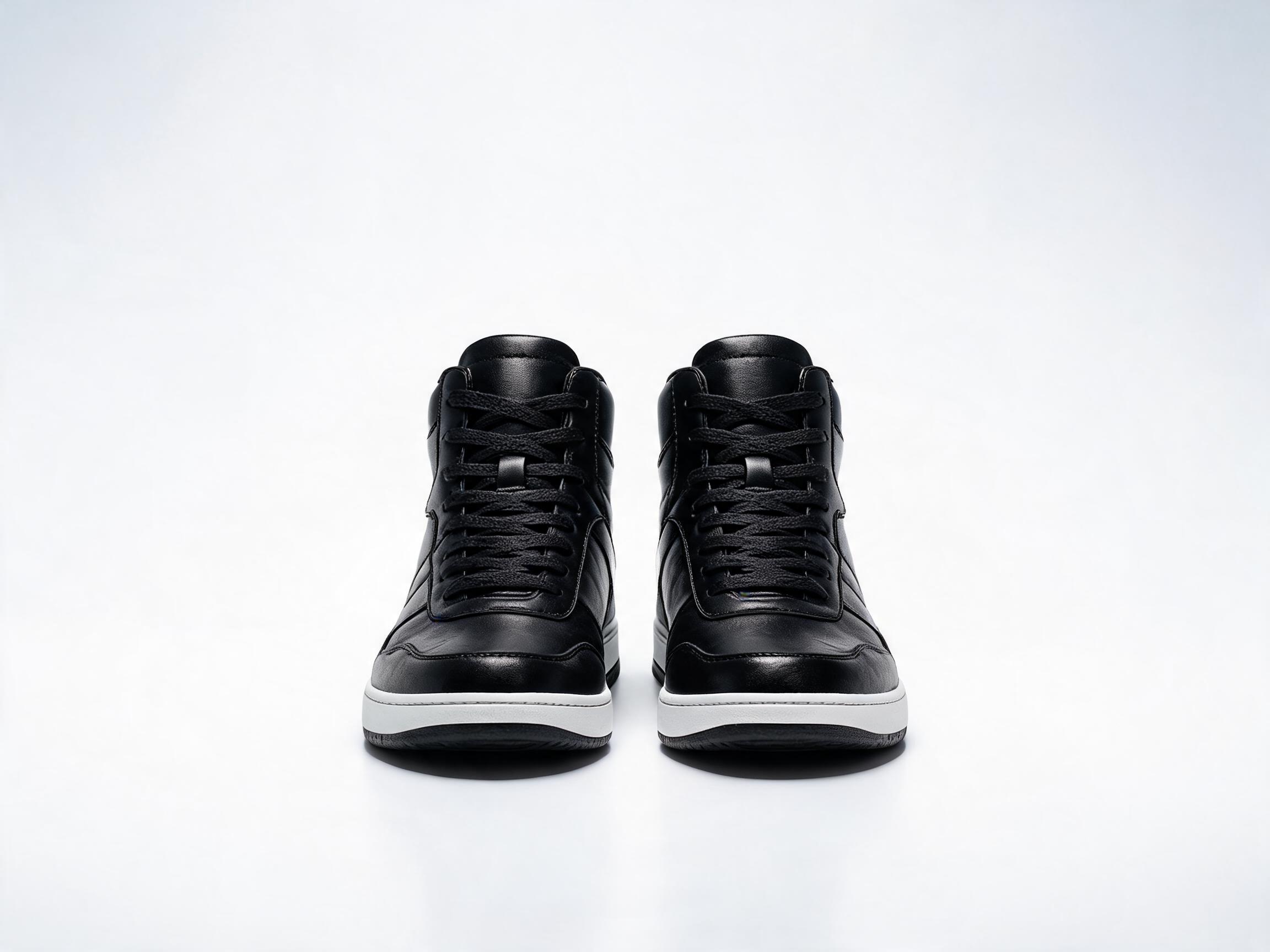
Compare this with high-top construction. The Black Leather High-Top Sneakers carry a padded collar and additional upper panels, so panel placement is more complex but far more forgiving — a black upper hides shade variation between panels that a white upper cannot. This is a useful reference point when you brief a factory: on white, the tolerance the same factory applies to a black programme does not transfer.
3. Thread and edge treatment decisions
Stitch colour on white is a decision, not a default. Matching white thread reads as a soft, seamless upper; a contrast thread reads as a more constructed shoe. Both are valid, but the choice has to be locked. More important is what else the thread carries: thread wax, edge paint, and the burnishing treatment of the raw leather edge. On white leather, a black edge paint gives a crisp line; a natural or toned edge paint has to be matched to the upper and, if the edge paint is slightly warmer than the leather, it reads as dirt on a white shoe.
What you control: thread spec (colour reference number, not just "white"), edge treatment (painted or burnished, and the colour reference), and whether the lining and sock use the same white reference. A lining that shifted cream against a white upper is a common bulk surprise and visible immediately when the shoe is unboxed.
4. Cup-sole bonding and the visible seam line
The cup sole is the second white surface on the shoe, and it has to match the leather in tone or diverge deliberately. A white sole that reads slightly grey against a warm white upper is normal and often deliberate; what is not normal is a sole that drifts between runs or a glue line that creeps above the seam. Bonding is where white exposes process: excess adhesive on white shows as a yellow edge. The factory has to control adhesive layup, pressing and the trim line, and the inspection has to check the seam height, the sole-to-upper alignment and the absence of adhesive creep.
Ask what changes on a reorder. A new sole mould — even one with the same design — can shift the seam height by a fraction, and on white this reads as a different shoe. The tech pack should carry the sole spec and the approved seam height; the inspection checklist should measure it.
5. Packing that avoids transit scuffing
A white shoe travels badly. Tissue and shoe bags protect against direct abrasion, but the bigger risk is contact between the two shoes in a pair and contact between pairs in a carton. White also picks up dye transfer from cheap packing material or from the black of a different colourway packed nearby. Specify the packing method in the tech pack: how each shoe is wrapped, whether the pair is separated, and whether the inner box or the bag is a material certified against transfer. Packing method is a comparatively low-cost control point, and it is where the look can be lost before the shoe reaches the retailer's shelf.
Quick reference: variable, symptom, control
| Variable | What it looks like on a white shoe | Specify or check |
|---|---|---|
| Hide selection | Warm or cool drift across the run; the reorder does not match the first run | Tech pack: retained approved swatch, light source for comparison, admission rule for new hide lots |
| Panel placement, left versus right | Grain or shade difference between left and right shoe; asymmetric toe box | Tech pack: cut-together rule by pair; pattern version. Inspection: pair match |
| Thread | Thread reads colder or warmer than the leather; stitch line drifts | Tech pack: thread reference number |
| Edge treatment | Edge paint or burnish reads darker or warmer than the upper; edge looks dirty | Tech pack: edge colour reference and finish method |
| Cup-sole bond and seam | Glue creep shows yellow along the seam; seam height varies | Inspection: seam height, sole-to-upper alignment, adhesive residue |
| Packing | Scuffs and transfer marks at the receiving dock | Tech pack: wrap and separation method, material check on the bag |
Tech pack versus inspection checklist: they are not the same document
The mistake buyers make most often is treating the tech pack as a fixed document and the inspection checklist as whatever the factory does by default. In fact they answer two different questions. The tech pack answers what the shoe is. The inspection checklist answers whether this batch is that shoe. Blurring them leaves the factory guessing on one end and leaves you with a report on the other end that inspects things nobody specified.
What belongs in the tech pack
- Leather: reference swatch retained from the approved run, the light conditions used for comparison, and the rule for admitting a new hide lot.
- Pattern: version number and the cut-together rule for left/right pairs.
- Thread: reference number and stitch type for each seam.
- Edge treatment: method and colour reference, including the lining and sock.
- Cup sole: specification, seam height target and the reason a new mould needs re-approval.
- Packing: wrap method, pair separation, and material requirements for bag and inner box.
- Logo, packaging and size grading, if this is a private-label programme.
What belongs in the inspection checklist
- Pair match: shade, grain and panel placement between left and right.
- Batch consistency against the retained swatch, under a stated light source.
- Seam line: height and alignment of the cup-sole bond on both shoes.
- Adhesive residue: none visible on the white surface.
- Surface check: dye transfer, scuffing, needle marks.
- Packing confirmation: wrap, separation and carton material.
The checklist is not longer than the tech pack. It is narrower, and it exists to catch the points where white has the least tolerance. A factory running multi-stage inspection during upper stitching, lasting and finished-shoe checks is applying the checklist at three points; the tech pack makes those checks meaningful rather than generic.
For a smoother leather programme where colour variation is a smaller risk, the same discipline applies with less pressure — the Black Leather Loafers are a leather-casual comparison where the tolerance window can be wider and the inspection effort can fall accordingly. The white programme does not have that room.
FAQ
Leather is a natural material, so the tanner cannot produce an identical hide. What you can get is a matched acceptance window: a retained approved swatch, a stated light source, and a factory rule for admitting new hide lots. The width of that window depends on the tanner and the grade, and it should be confirmed with the factory for your programme rather than assumed.
Only if the change is deliberate and documented. A pattern team redraws a style for material efficiency or fit; the result is a slightly different shoe. Ask the factory whether the pattern version is unchanged on your reorder, and treat any change as a new approval cycle.
On white, yes. Adhesive creep reads as a yellow edge. The check belongs at finished-shoe inspection and is specific to the bond line, not a general aesthetic pass.
Transit damage on a white upper is one common source of "it came back different" complaints, as opposed to a production change. Packing method is cheaper to control than production process, and it should be specified in the tech pack rather than left to the factory default.
Aurevia's white leather sneaker programmes
Aurevia Footwear Co., Ltd. is a B2B footwear manufacturer and exporter based in Quanzhou, China, established in 2011. The company runs a 260-person team with in-house design and pattern teams and exports to Europe, North America and the Middle East. Leather sourcing runs through stable channels, with multi-stage inspection during upper stitching, lasting and finished-shoe checks.
For buyers running repeat programmes, the White Leather Low-Top Sneakers — men's, smooth white leather upper, clean minimal silhouette, low-profile rubber cup sole — are available under OEM, ODM and private-label programmes including logo, packaging and size grading. The conversation that keeps a reorder clean is the one that starts before the first run: locking the swatch reference, the pattern version, the edge and thread references and the packing method, then building the inspection checklist around those decisions. The factory can confirm the acceptance windows and inspection protocol that apply to your order when you brief the programme.
If you are planning a repeat white leather programme and want to align the tech pack with the inspection checklist before the first run, open the White Leather Low-Top Sneakers product page and send the programme brief — leather reference, expected market, and the tolerances you need held on reorder.