
A practical guide to assessing mens footwear manufacturers for long-term cooperation, using product-line range as the entry point to gauge in-house craft coverage, structure-switching ability, and production consistency from sampling to bulk.
When sourcing men's footwear for a retail or wholesale program, the first question is not "who makes the cheapest pair" but "who can produce the range I need, consistently, and scale it." The breadth and depth of a manufacturer's product line tell you a lot about its in-house capabilities: a factory that can run both dress oxfords and casual sneakers likely has the machinery, skilled labor, and production planning to handle structural switches without dropping quality. This guide uses product-line width as the entry point to evaluate mens footwear manufacturers for long-term partnership, then layers in craft consistency, sampling-to-production flow, and size/restock considerations.
Key Takeaways
- Range signals capability: A manufacturer producing both structured dress shoes and softer casual styles demonstrates broader construction skills and better production flexibility.
- Consistency beats one-off quality: Look for standard operating procedures across materials, stitching, and lasting that hold from sample to bulk.
- Sampling is a test of communication: How a factory handles sample revisions and feedback reveals its production discipline.
- Size runs and restock cycles matter: Confirm the size breakdown, minimum order quantities (MOQ) per color, and lead times before committing.
What This Guide Covers
- Why product-line range is the first filter
- Assessing craft consistency across styles
- Evaluating the sampling-to-production flow
- Size runs, MOQ, and restock planning
- Putting it together: a practical evaluation matrix
1. Why Product-Line Range Is the First Filter
A manufacturer's catalog is a window into its production floor. Consider two broad categories of men's footwear:
- Dress shoes: Oxfords, derbies, brogues, monk straps. These typically require structured construction—rigid counters, precise lasting, and clean finishing.
- Business casual / casual: Loafers, slip-ons, sneakers. These often use softer constructions, different sole attachments, and more flexible upper materials.
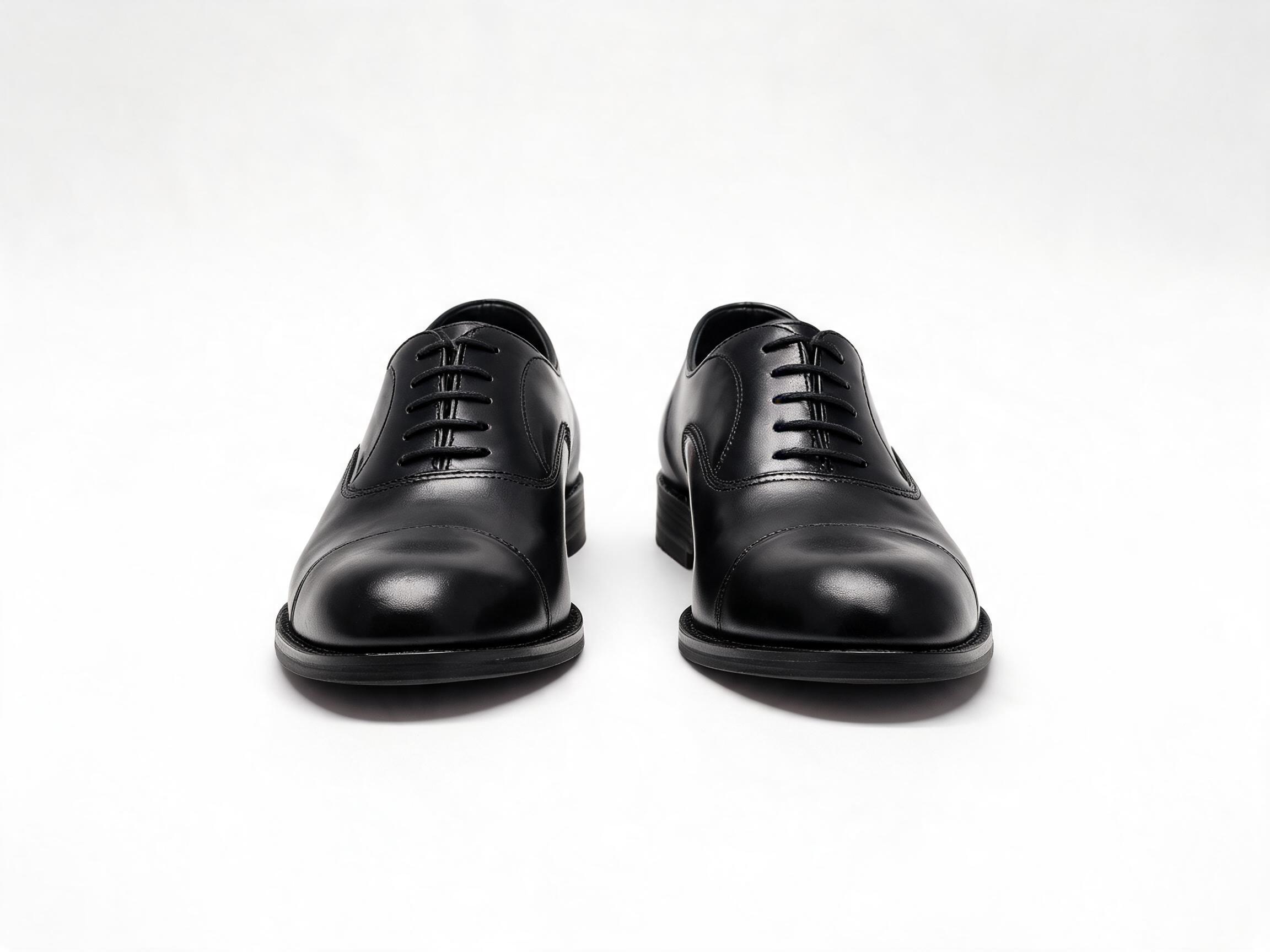
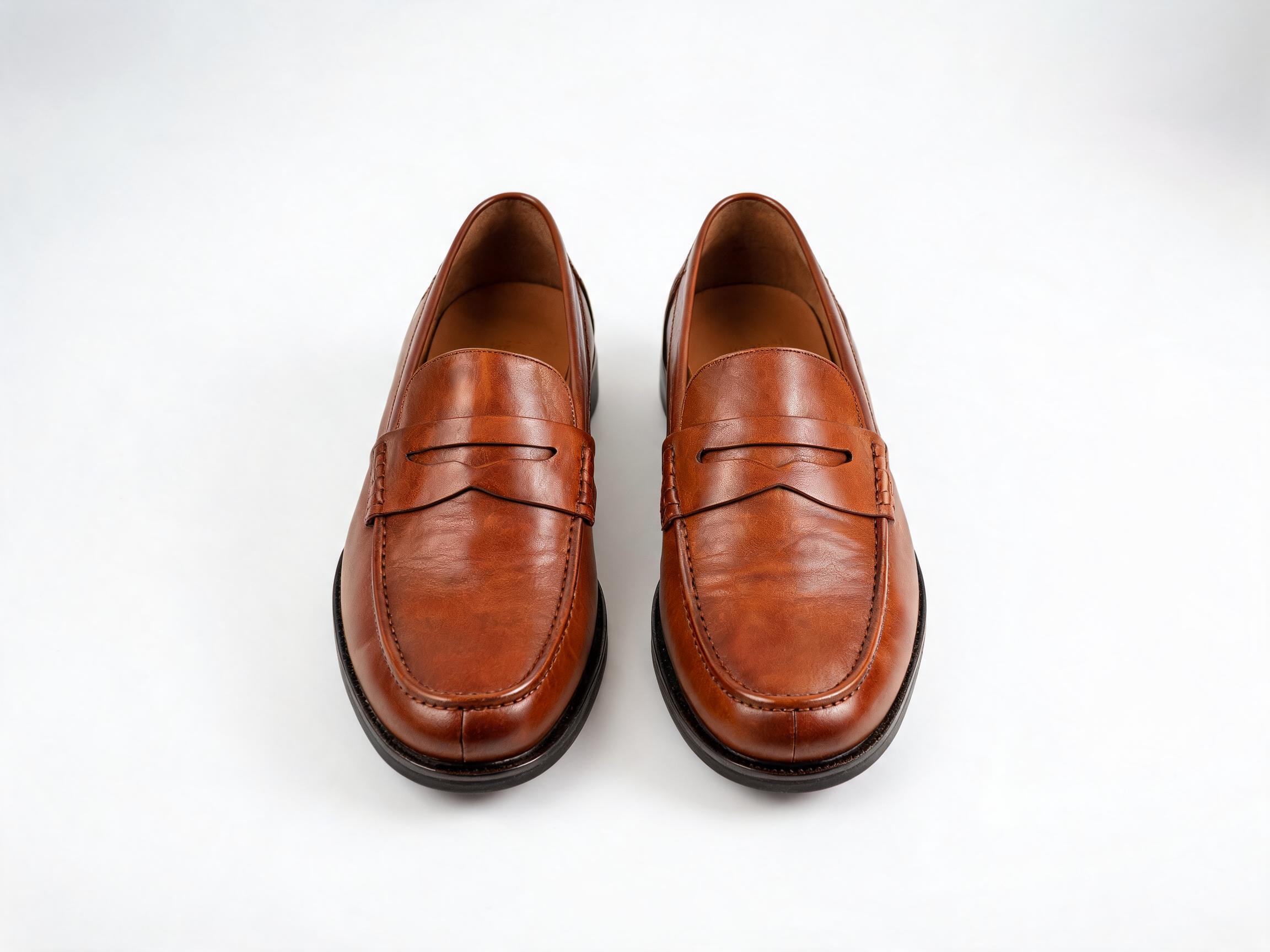
A factory that lists both categories—say, a Black Cap-Toe Oxford alongside a Cognac Penny Loafer—suggests it may have the tooling, skilled operators, and production planning to switch between structures. Treat that as a signal to verify, not as proof: ask which processes are done in-house and which, if any, are outsourced. That matters for long-term cooperation because your own product mix may evolve: if you start with dress shoes and later add casual styles, you want a supplier that can grow with you without a steep learning curve.
Range breadth often correlates with in-house capability, but the correlation is not automatic. A manufacturer that only makes one type of shoe may outsource certain processes (e.g., sole attachment or stitching) or lack experience with different last shapes. When evaluating mens footwear manufacturers, ask for a full product list and check whether the styles share common construction methods or represent genuinely different builds. A range that includes Brown Derby Dress Shoes, Dark Brown Full Brogue Shoes, Tan Double Monk Strap Shoes, and White Leather Low-Top Sneakers suggests a factory comfortable with multiple upper patterns and sole types — and it is worth confirming which constructions are run in-house before relying on that signal.
2. Assessing Craft Consistency Across Styles
Range alone is not enough—consistency is what you need for repeat orders. Craft consistency means the same standards apply whether the factory is running a formal oxford or a casual slip-on. To evaluate this, look at:
- Material selection: Are leathers, linings, and soles specified consistently across styles? Inconsistent material grades between product lines can signal ad-hoc sourcing.
- Stitching and finishing: Check sample stitching density, edge treatment, and sole attachment across different models. A factory that maintains clean stitching on both a brogue and a sneaker likely has robust quality control.
- Construction methods: Ask which constructions are used (e.g., Goodyear welt, cemented, Blake stitch) and whether the factory performs them in-house. A factory that handles multiple constructions in-house has deeper technical control.
- Pattern making and clicking: Consistent pattern quality across styles indicates skilled pattern makers and cutters—key for fit consistency.
During factory visits or sample reviews, compare a dress shoe and a casual shoe side by side. Look for uniform edge finishing, consistent stitch length, and clean lasting. These details reflect the factory's standard operating procedures. If you notice a drop in quality on one style, it may indicate that style is outsourced or produced on a different line with lower oversight.
3. Evaluating the Sampling-to-Production Flow
The path from sample approval to bulk production is where many supplier relationships fail. A manufacturer that manages this flow well will have clear steps, timelines, and communication points. Here's what to examine:
- Sampling process: How many sample rounds are typical? Does the factory provide detailed feedback on material availability and construction feasibility? A structured sampling process with clear revision cycles reduces surprises later.
- Tech pack review: Does the factory ask clarifying questions about specifications (e.g., leather type, sole hardness, stitching color)? A thorough review indicates attention to detail.
- Pre-production meetings: Is there a formal handoff from sampling to production? Ask for a pre-production schedule that outlines key milestones: material procurement, cutting, stitching, lasting, sole attachment, finishing, and packing.
- Quality control gates: Are there in-line and final inspections? How are defects handled? A factory with documented QC checkpoints is more likely to catch issues before shipment.
For long-term cooperation, you want a manufacturer that treats sampling as a collaborative engineering exercise, not a box-ticking formality. When you request a sample of, say, the Navy Leather Slip-On Shoes, pay attention to how quickly and accurately the factory incorporates your feedback. That responsiveness often carries over to bulk production.
4. Size Runs, MOQ, and Restock Planning
Even a factory with excellent range and craft can stumble on size runs and restock logistics. Before committing, clarify these points:
- Size breakdown: What size range is available per style? Can the factory accommodate your market's size curve? Ask for a size chart and confirm whether sizes can be mixed within a color.
- MOQ per color: Minimum order quantities are often set per color, per style. For example, the dress shoes mentioned above (Black Cap-Toe Oxford, Brown Derby, Dark Brown Full Brogue, Tan Double Monk Strap) have an MOQ of 100 pairs per color, with a lead time of 30–40 days. The loafers and slip-ons (Cognac Penny Loafer, Navy Leather Slip-On) also have an MOQ of 100 pairs per color, but a shorter lead time of 25–35 days. The White Leather Low-Top Sneakers have an MOQ of 200 pairs per color and a 30–40 day lead time. Always confirm current MOQ and lead time with the sales team before ordering, as these can vary by material and season.
- Restock cycles: How quickly can the factory replenish popular sizes? Ask about their production scheduling and whether they hold inventory of core materials. A factory that plans material purchases in advance can shorten restock lead times.
- Flexibility on mixed orders: Can you combine multiple styles or colors in one order to meet MOQ? Some factories allow this; others don't. Clarify upfront to avoid surprises.
These details directly affect your cash flow and shelf availability. A manufacturer that is transparent about MOQ and lead times—and can provide realistic schedules—is better positioned for a long-term partnership than one that quotes optimistic numbers.
5. Putting It Together: A Practical Evaluation Matrix
Use this matrix to score potential suppliers against the criteria discussed. Assign weights based on your priorities. A simple scoring method: rate each supplier 1–5 on every criterion, weight the criteria to match your program (range and craft consistency usually deserve heavier weights for a long-term partnership), and set a threshold below which a supplier is not shortlisted for sampling.
| Criteria | What to Look For | Why It Matters |
|---|---|---|
| Product range | Both dress and casual styles; multiple constructions in-house | Indicates broad capability and flexibility for future growth |
| Craft consistency | Uniform stitching, finishing, and material quality across styles | Ensures repeat orders meet the same standard |
| Sampling process | Structured revisions, clear communication, technical feedback | Reduces risk of bulk production errors |
| Production flow | Documented QC gates, pre-production planning | Minimizes defects and delays |
| MOQ and lead time | Transparent, realistic figures; flexibility on mixed orders | Aligns with your inventory and cash flow needs |
| Size runs | Full size range, clear breakdown | Meets market demand and reduces stockouts |
When you evaluate mens shoe manufacturers, start with the product line—it's the quickest signal of whether a factory can handle your current and future needs. Then dig into craft consistency and production flow to confirm that the range is backed by real capability, not just a catalog. Finally, nail down the commercial terms: MOQ, lead times, and size runs. A supplier that scores well across all these areas is a strong candidate for a long-term partnership.
Note: The MOQ and lead time figures cited are from product specifications and should be confirmed with the sales team before placing an order, as they may vary based on material availability and order specifics.