
A buyer's inspection framework for handmade oxford shoes: which hand-executed details actually matter (closed lacing, hand-stitched panels, matched hides, burnished edges), how leather selection affects a collection's price architecture, and how an approved sample becomes repeatable OEM bulk production in Quanzhou.
When an importer searches for handmade oxford shoes, the question behind the search is rarely aesthetic. It is: what exactly is done by hand at this factory, which of those hand operations survive from sample to bulk, and what should I look at on a first sample before I commit to a season? This guide sets out a practical inspection framework for hand-executed details, explains the difference between the leather options a factory can actually offer, and describes how OEM production turns an approved oxford sample into repeat orders with consistent hand-finishing.
What “Goodyear-style craft” means in practice
Buyers often use “Goodyear” as shorthand for a look and a set of finishing habits: a closed-lacing oxford upper, a visible stitch line at the sole edge, an inked and burnished edge, even stitching across the cap, and a pair whose left and right shoes match in grain direction and shade. Those are the signals a buyer associates with bench-made work, and they are the signals a factory has to be able to reproduce order after order.
They should be separated from the construction claim itself. A traditional Goodyear welt is a specific welted construction built on dedicated welt-sewing equipment, and it is not what every factory described as “bench-made” actually runs. The honest position is this: hand-finished detailing and sole construction are two different decisions, and both are worth putting in writing with your supplier. Aurevia Footwear Co., Ltd. produces oxfords in stitched-and-cemented and cemented builds, with the hand-executed finishing described below. If welted or resoleable sole construction is a requirement in your market, raise it as a specific sole construction option during sampling, because the construction choice affects tooling, sole supply and the price you will be quoted.
That distinction protects you commercially. A buyer who assumes a welt, orders on that assumption, and receives a cemented build has a labelling and returns problem in most Western retail channels. A buyer who specifies finishing details — stitch evenness, edge treatment, hide matching — and separately confirms sole construction gets exactly what was agreed.
The hand-executed details worth inspecting
Hand work in footwear is rarely one dramatic operation. It is a series of small judgements made by operators: where to cut a panel so the grain runs the same way on both shoes, how much tension to hold while pulling a last, how much wax and friction to apply to an edge.
Closed lacing and the vamp
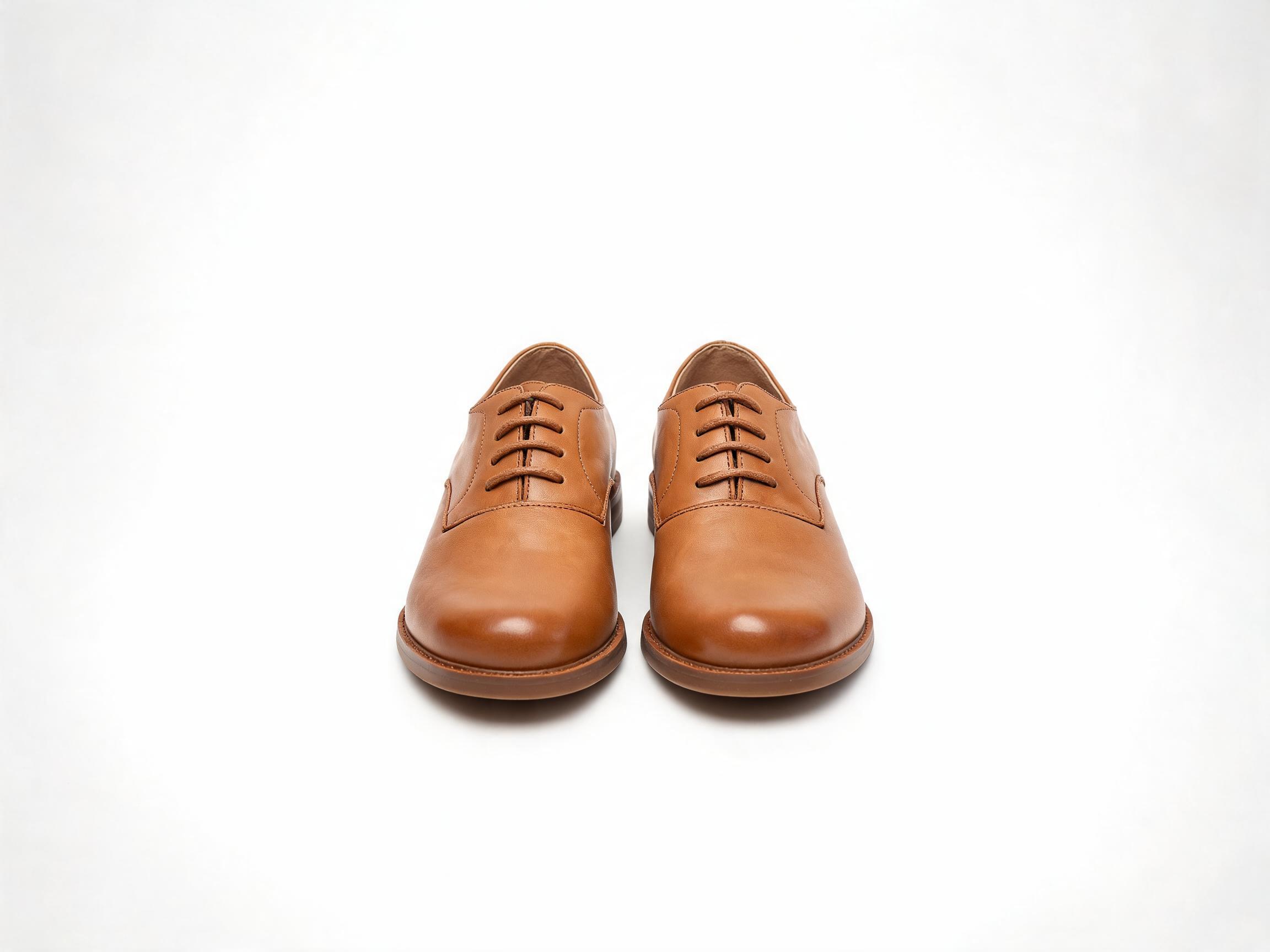
Oxford construction closes the lacing over the vamp, which is why oxfords read as formal. The visible quality issue is the vamp surface. On the tan leather oxford shoes for women, the vamp is smoothed by experienced lasting operators who adjust tension by hand, so the leather drapes without loose wrinkles or a twisted line along the throat. On a sample, run your thumb across the vamp: a smooth, evenly tensioned surface with no ripples on either shoe is the target. Wrinkles that fall differently on left and right will not improve in bulk.
Seams and stitch density
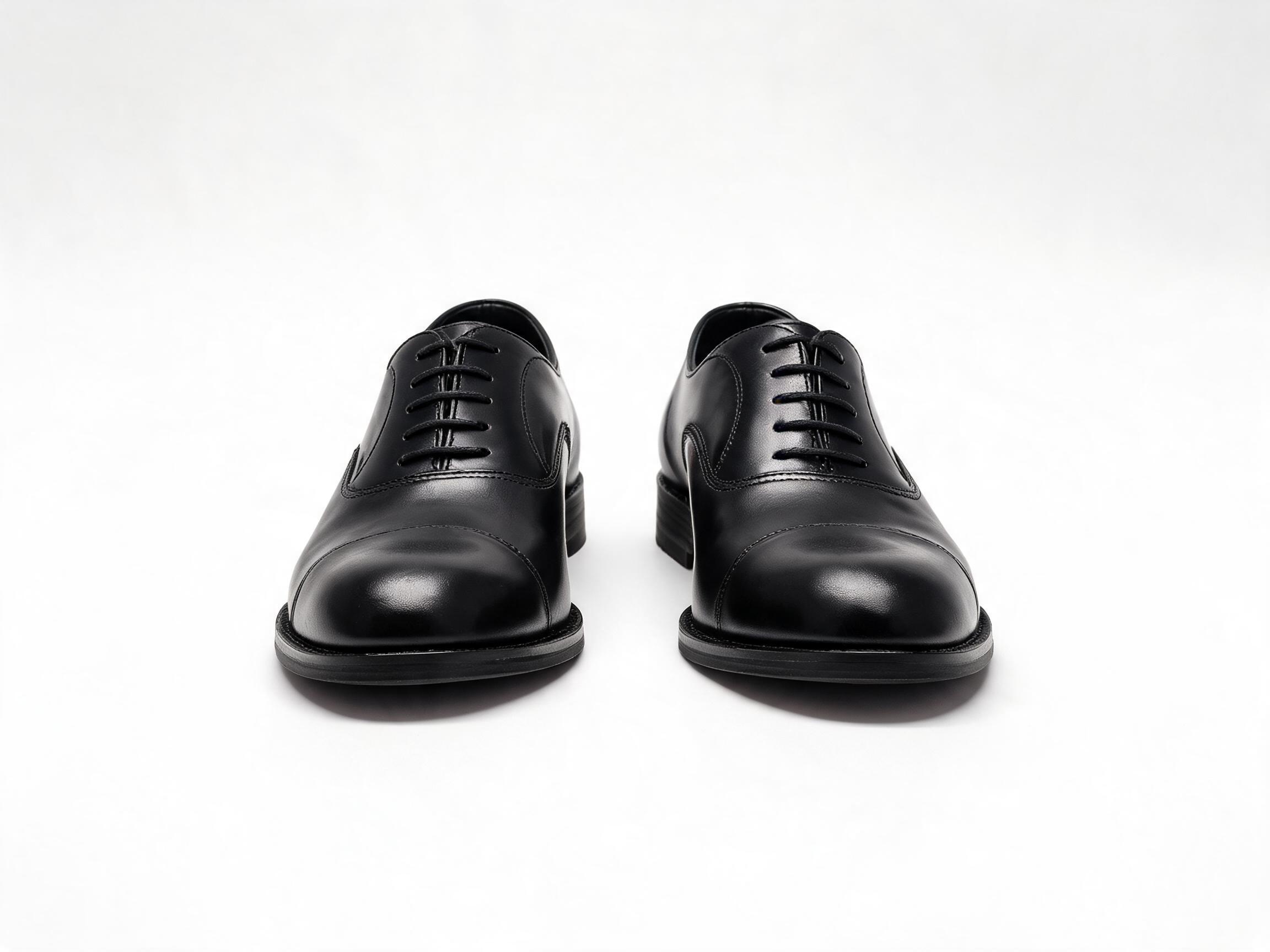
Where a cap-toe panel is attached by hand, the point to inspect is evenness rather than tightness. The black cap-toe oxford shoes use a cap-toe panel stitched by hand for an even finish: stitches should sit at a consistent distance from the panel edge, with no drift at the curve and no double-punched holes. Compare the left and right shoes side by side at the cap line; that is where an uneven hand becomes visible fastest.
Edge finishing
Inked and burnished outsole edges are one of the clearest markers of hand-finishing. On the women's tan oxford the outsole edges are inked and burnished, which produces a sealed, uniform edge colour instead of a raw, chalky cut. Check the edge at the waist as well as the toe: the waist is where a rushed finishing pass shows as patchy colour or visible trimming marks.
Hide matching
On the women's tan oxford, upper panels are cut from matched hides so that the left and right shoe share grain direction and shade. This is a cutting-room decision made before any stitching, and it is the single most common reason a cheap pair looks mismatched under retail lighting. On the sample, hold both shoes under a strong light and rotate them slowly; grain direction and shade should read as a pair, not as two individual shoes.
Brogue perforations
Where a style carries brogueing, the perforations should be hand-punched or hand-guided to a consistent pattern with clean, fully cut holes. Look for a hole that has been punched with insufficient force and left ragged, or a pattern that shifts slightly across the cap line. On a paired sample, the perforation rows should mirror each other.
Leather selection: full-grain, burnished and suede
Upper leather is usually the largest single line in the bill of materials, and it also drives how the finished shoe behaves in transit and at retail. Three directions cover most oxford programmes, and they are not interchangeable in either appearance or care requirements.
| Option | What it looks like | Where it fits | What to verify on the sample |
|---|---|---|---|
| Full-grain polished calf | Even, smooth grain with a light polish; takes a cap-toe or plain-toe treatment cleanly | Core formal and business lines where consistency across sizes matters most | Grain evenness across the vamp; whether a pair shades together under retail light |
| Burnished calf | Graduated darker tone towards the toe and heel, created by hand | Premium tiers and seasonal colour drops | Whether the hand-burnishing gradient is repeatable pair to pair and size to size |
| Suede | Matte nap, softer hand, reads more casual | Spring/summer and smart-casual extensions of an oxford range | Nap direction and colour consistency between left and right; brushing along edges |
Two further components deserve a line in your spec sheet. First, the lining: both oxford models described here use leather lining rather than a synthetic lining, which affects how the shoe feels on break-in and how it presents in unboxing photography. Second, the footbed: both use a cushioned footbed, and the women's model adds an arch-support contour. The men's black cap-toe model carries a plain cushioned footbed. Footbed specification is worth confirming in writing because it is easy to change quietly between orders without affecting the outward look of the shoe.
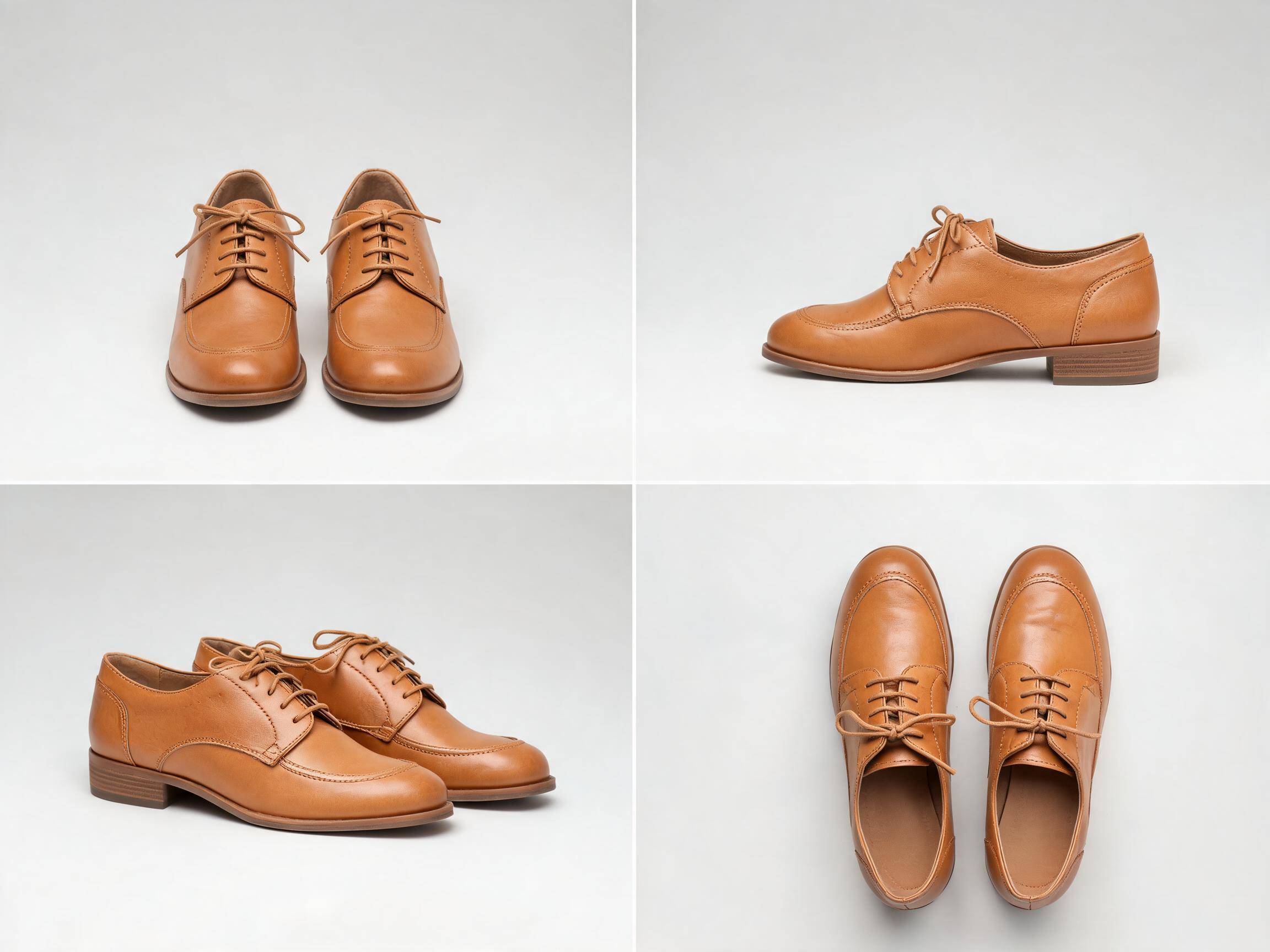
Range planning usually pairs the two constructions of a line with a size split. The women's tan oxford runs EU sizes 35–41 with a heel of approximately 3 cm and is produced on dedicated women's leather lines; the men's black cap-toe oxford runs EU sizes 39–45 on dedicated men's dress-shoe lines. Its sole is a stitched leather-look sole with a discreet rubber insert, and the shoe is built stitched-and-cemented for durability at the sole edge.
Sample inspection checklist
This is the list worth working through on a physical sample pair before you place a bulk order. It is written to be done in twenty minutes with a good light and no special equipment.
- Stitch density and evenness. Check the cap-toe line or the seam nearest the toe on both shoes. Stitch length and distance from the edge should match along the whole seam, including through curves. Look for skipped, doubled or ragged holes.
- Edge finishing. Inspect the inked and burnished outsole edge at the toe, the waist and the heel breast. Colour should be continuous with no raw patches, no trimming marks and no colour bleeding onto the upper.
- Hide matching. Hold both shoes under direct light and rotate slowly. Grain direction and shade must read as a matched pair, not two separately cut shoes.
- Lasting tension and vamp. Press the vamp with your thumb. The surface should be smooth and wrinkle-free with no loose folds, and the throat line should be symmetrical left to right.
- Sole bonding. Run a fingernail along the sole edge where it meets the upper. Look for a continuous bond with no gaps, no proud adhesive and no lifted edge. Confirm in writing which sole construction you are buying so this check matches the specification.
Two items on this list cannot be judged from a photograph: lasting tension and edge burnishing are best checked on a physical pair. If your schedule does not allow a courier sample, ask for close-up photographs of both shoes from matched angles and state that the physical pair will be checked against them on first bulk delivery.
From approved sample to repeat OEM production
An approved sample proves that a pair can be made. It does not yet prove that the fifth bulk order will look like the first. That gap is where OEM programmes succeed or fail, and it is closed by documentation rather than by goodwill.
Specifying the sample precisely
Aurevia's in-house design and pattern teams work from buyer sketches or tech packs to build production-ready samples. The more of the following you put in the tech pack, the fewer assumptions sit between your brief and the first sample: upper material and colour reference, lining type, footbed specification, sole construction and sole type, last shape, size run and heel height, plus the finishing standard you expect at the cap line and the sole edge. Where a colour must match an existing collection, send a physical swatch rather than a screen colour.
Locking the approved pair
When the sample is signed off, the pair itself becomes the reference. Keep the approved pair, keep the signed tech pack, and note any deviation that was accepted at approval — for example, a slightly wider colour tolerance on a burnished finish, which is a hand operation and therefore varies more than a flat polished leather.
Repeatability of hand operations
Hand-finished details need a written standard so a new operator on the line produces the same result as the one who made the sample. In practice this means agreeing, in the tech pack, on things like stitch spacing at the cap line, the target tone at the burnished edge, and the acceptance criteria for hide matching. Where a detail is genuinely variable, agree a tolerance band instead of a single ideal value, then inspect against the band.
Bulk inspection
Aurevia applies multi-stage inspection across bulk orders, which is the point at which the sample standard is enforced rather than assumed. Ask what happens when a check fails — rework, replacement or a documented concession — and ask for the inspection record to travel with the shipment. MOQ and lead time vary by model, construction and finishing requirements and are confirmed per order; there is no universal figure to quote you here, so treat any programme-level number as something to agree on the specific model you are buying.
Buyer FAQ
Are these oxfords a traditional Goodyear welt construction?
No. The oxford constructions produced here are stitched-and-cemented and cemented builds with hand-executed finishing: hand-stitched panels, inked and burnished edges, matched hides. The “Goodyear-style” shorthand refers to those bench-made finishing characteristics. If welted or resoleable construction is a requirement for your market, discuss it as a specific sole construction option before sampling.
Can I mix men's and women's oxfords in one OEM programme?
The two lines are produced on separate dedicated tooling — a women's leather line in EU 35–41 and a men's dress-shoe line in EU 39–45. They can sit in one purchase order as separate models, but the tooling and size grading are not shared, so treat them as two programmes commercially.
How do I keep burnished and hand-finished details consistent across repeat orders?
Agree a tolerance band for the burnished gradient and for hide matching in the tech pack, keep the approved sample pair as the physical reference, and inspect incoming bulk against that pair. Hand operations vary more than machine-applied finishes, so a band is more workable than a single target value.
What drives the leather cost in an oxford programme?
Chiefly the hide grade and the cutting efficiency of the pattern, since panels must be cut from matched hides to keep left and right consistent. A pattern that uses more of each hide raises the material cost per pair. Suede and burnished calf sit at different price points from flat polished calf, and the finishing time differs as well.
Next step
If you are evaluating a supplier for handmade oxford shoes, the fastest way to a usable answer is to send your tech pack or a reference pair and ask for a sample in your target leather, with your required sole construction stated explicitly. Aurevia Footwear Co., Ltd. is a B2B OEM/ODM manufacturer and exporter based in Quanzhou, China, established in 2011, producing high-end footwear for buyers in Europe, North America and the Middle East. Share your design brief, target market, size run and leather direction, and our design and pattern teams will come back with a production-ready sample specification for the model you have in mind.