A practical guide for B2B buyers sourcing genuine leather footwear. Learn how to evaluate a shoes manufacturer on leather craftsmanship, quality control, sampling, communication, and certifications before placing your OEM or ODM order.
Procurement Decision Guide
Finding a shoes manufacturer you can build a program on
When you search for a "shoes manufacturer," you are not looking for a single order. You are looking for a production partner who can turn your designs into genuine leather footwear that meets your market's expectations, order after order. The challenge is that factories look similar on paper. Most claim experience, quality, and flexibility. The difference shows up in how they handle leather sourcing, sampling, quality control, and communication.
This guide gives you concrete evaluation criteria to use before you commit to an OEM or ODM shoe factory. It is written for buyers in Europe, North America, and the Middle East who need reliable production for women's, men's, and kids' leather shoes.
Key takeaways
- Assess the factory's genuine leather sourcing and inspection process, not just its finished samples.
- Confirm sampling speed and the design team's ability to work from your sketches, references, or trend boards.
- Check how the factory handles multi-stage inspection and whether it can keep color and texture consistent across repeat orders.
- Clarify MOQ, lead times, and communication expectations before signing anything.
- Ask for certifications and quality standards, but verify they apply to your product category.
Why the right footwear manufacturer matters for your OEM and ODM program
Your brand is judged on every pair that reaches the customer. A factory that cannot control leather quality or misses a shipment date puts your reputation at risk. For B2B buyers, the cost of a bad supplier is not just a lost order; it is lost time, lost customers, and a damaged relationship with your own retailers.
A reliable footwear manufacturer does more than stitch shoes. It manages the entire production chain: material sourcing, pattern making, sampling, bulk production, inspection, and export logistics. When you find a partner who handles these well, you can focus on design, marketing, and sales.
What to look for in a genuine leather shoe factory
Leather craftsmanship and material sourcing
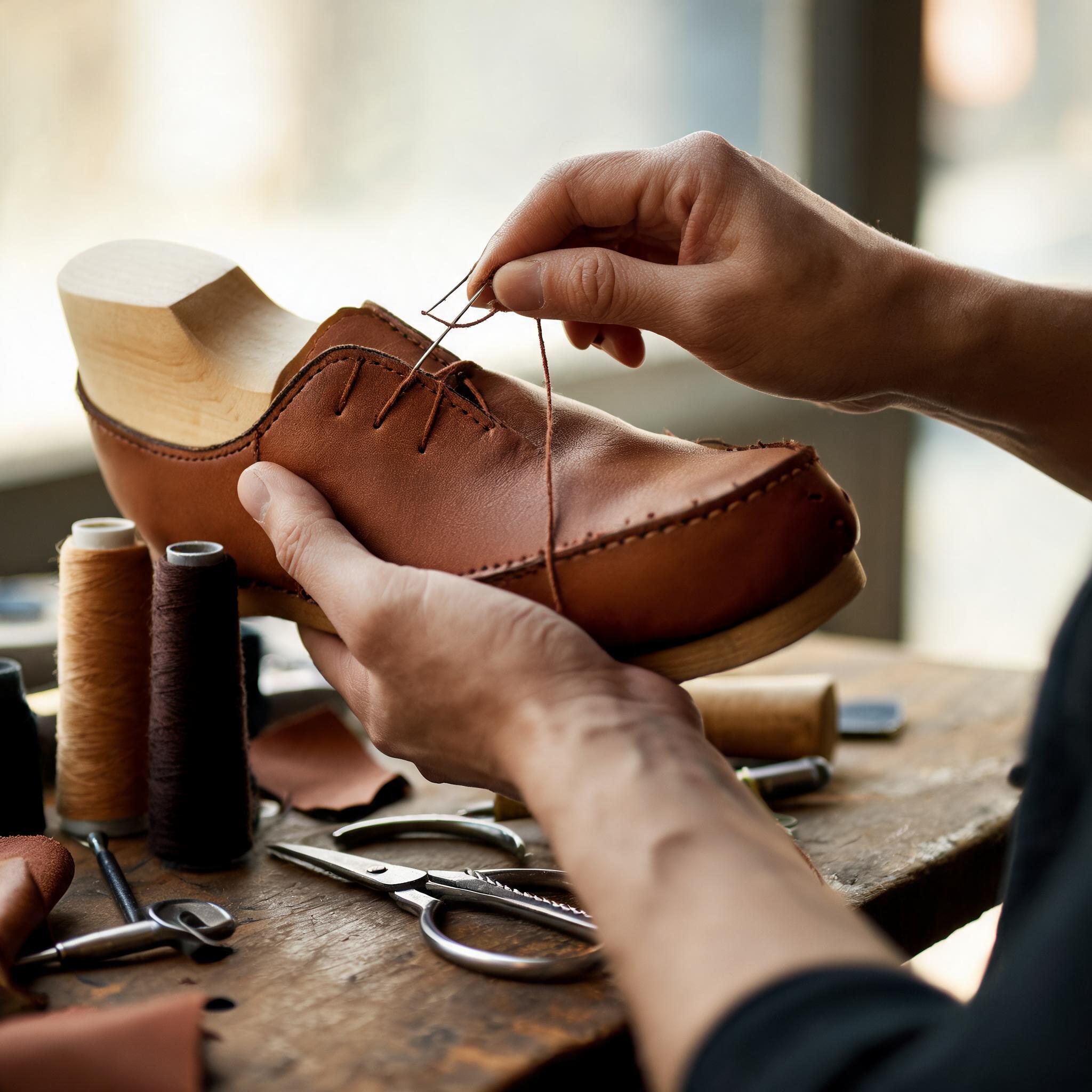
Genuine leather is a natural material. Color, texture, and durability can vary between batches. A factory with stable supply channels and multi-stage inspection can keep these qualities consistent across repeat orders. Ask how they source leather and what checks they perform before production.
At Aurevia Footwear Co., Ltd., a B2B manufacturer and exporter established in 2011 and based in Quanzhou, China, genuine leather is sourced through stable supply channels. Their 260-person team works with modern production lines and applies multi-stage inspection to maintain color, texture, and durability. This matters when you order the same style in multiple seasons and need every batch to match.
OEM and ODM capabilities
OEM means you provide the design and the factory produces it. ODM means the factory designs and produces based on your general requirements or references. Many buyers use both. You may have a full spec for one style and only a trend board for another.
A strong ODM shoe factory has an in-house design team that can interpret your sketches, references, or trend boards. This is different from a factory that only copies existing samples. Look for a partner who can turn your ideas into production-ready samples with fast sampling cycles and full private label support.
Aurevia's in-house design and pattern teams work this way. They can take a buyer's concept and develop it into a sample, then support logo application, packaging, and size grading.
Quality control and inspection process
Quality control should not be a final check. It should happen at multiple stages: incoming materials, cutting, stitching, and finished shoes. Ask the factory to explain its inspection points and what standards it uses.
Every bulk order at Aurevia passes material, construction, and finished-shoe inspections against international quality standards before shipment. This multi-stage approach reduces surprises and helps ensure that what you approve in the sample is what you receive in the container.
Sampling speed and communication
Sampling is where a partnership succeeds or fails. A factory that takes weeks to respond to a simple question will be worse during production. Evaluate how quickly they send samples and how clearly they communicate technical details like materials, measurements, and costs.
Fast sampling cycles are a sign of an organized factory. It shows they have the pattern-making and sewing capacity to dedicate to new projects. It also reduces your time to market, which is critical in fashion.
MOQ, lead times, and flexibility
MOQ (minimum order quantity) is often a deciding factor. Some factories require large quantities that are impossible for a new brand. Others offer flexibility, but you need to understand the trade-offs. A lower MOQ may mean higher per-unit cost or longer lead times.
Ask for the factory's MOQ for OEM and ODM separately. Also ask about lead times for sampling and bulk production. Reliable factories provide realistic timelines and stick to them. Aurevia's stable production planning and mature export logistics are designed to keep lead times reliable, which is essential for seasonal collections.
Certifications and compliance
Depending on your market, you may need certifications for materials, labor, or environmental standards. Do not assume a factory has them. Ask for copies and verify they apply to your product type.
If a factory cannot provide clear documentation, that is a red flag. However, be aware that certifications can be factory-wide or product-specific. A general business license is not the same as a material safety test report.
Questions to ask every footwear manufacturer before partnering
- What types of genuine leather do you work with, and how do you ensure consistent quality across batches?
- Can you show me examples of OEM and ODM projects you have completed?
- What is your sampling process, and how long does a typical sample take?
- What are your MOQ requirements for OEM and ODM orders?
- How do you handle quality control during bulk production?
- What export documentation and certifications can you provide?
- How do you communicate during production, and who is my main contact?
- Can you produce private label packaging and size grading?
Comparing OEM and ODM: which is right for you?
| Factor | OEM (Your design, their production) | ODM (Their design, your brand) |
|---|---|---|
| Design control | You provide full specs and patterns | Factory designs based on your brief |
| Time to market | Longer, as your specs must be finalized | Faster, factory uses existing patterns or develops quickly |
| Cost | Usually lower per unit if volume is high | May include design fees or higher per-unit cost |
| Ideal for | Brands with established designs and technical specs | Brands that need design support or want to test trends |
Many buyers use both. For example, you might use ODM for a new seasonal style and OEM for your core bestseller. A factory that supports both gives you flexibility.
Why Aurevia Footwear is worth evaluating
Aurevia Footwear Co., Ltd. is a B2B manufacturer and exporter of high-end footwear and fashion accessories. Founded in 2011 and based in Quanzhou, China, the company has a 260-person team and modern production lines. They specialize in genuine leather craftsmanship, producing women's, men's, and kids' shoes including leather boots, sneakers, sandals, loafers, and heels.
Their OEM and ODM services are supported by an in-house design team. The team can turn buyer sketches, references, or trend boards into production-ready samples, with fast sampling cycles and full private label support. This includes logo application, packaging, and size grading, up to complete seasonal collections.
With exports to Europe, North America, and the Middle East, Aurevia understands the requirements of international buyers. Their genuine leather sourcing through stable supply channels and multi-stage inspection helps keep color, texture, and durability consistent across repeat orders. Every bulk order passes material, construction, and finished-shoe inspections before shipment. Their stable production planning and mature export logistics are designed to keep lead times reliable.
You can see examples of their work in products like black leather classic pumps, black leather loafers, tan leather oxford shoes for women, and black Chelsea boots. These pieces show the level of finish and material quality you can expect.
Red flags to avoid when choosing a footwear manufacturer
- Vague answers about material sourcing or inspection processes.
- Samples that look good but are made with different materials than bulk production.
- Refusal to provide certifications or documentation.
- Unrealistic lead times that seem too good to be true.
- Poor communication during the sampling phase.
- Hidden costs that appear only after you place the order.
Next steps: from shortlist to partnership
Once you have a shortlist of factories, request samples and ask for a video call to see their production line. A factory that is confident in its operations will be happy to show you around. Ask for references from other buyers in your market.
When you are ready, start with a small order or a paid sample to test the process. This gives you real data on communication, quality, and lead times without a large commitment.
Choosing the right shoes manufacturer is a strategic decision. Take the time to evaluate candidates thoroughly. A factory with strong leather sourcing, in-house design, multi-stage inspection, and reliable logistics will help your brand grow.
If you are evaluating partners for genuine leather footwear, consider adding Aurevia to your list. Their experience in OEM and ODM, combined with a 260-person team and exports to your region, makes them a credible candidate.
Frequently asked questions
What is the difference between an OEM and ODM shoe factory?
An OEM factory produces shoes to your design and specifications. An ODM factory designs the shoes for you, based on your general requirements or references. Many factories, including Aurevia, offer both services.
What is a typical MOQ for leather shoes?
MOQ varies by factory and style. It depends on the complexity of the design, the materials used, and the factory's production capacity. Always ask the factory for their specific MOQ for your project.
How long does it take to get a sample?
Sampling time varies. A factory with an in-house design team and pattern makers can often produce samples faster than one that outsources development. Ask for a timeline before you start.
How do I ensure quality in bulk production?
Choose a factory that performs multi-stage inspections, from materials to finished shoes. Ask for inspection reports and consider using a third-party inspection service for added assurance.
Can a factory help with private label packaging?
Yes, many factories offer private label support, including logo application, custom packaging, and size grading. Confirm this before you place an order.