
A planning guide for importers and wholesale buyers on structuring a seasonal women's heel range: a heel-height ladder, material rotation, a workable color palette, and what changes technically when each heel type scales to bulk production.
Most buyers searching for ladies heels wholesale are not hunting for one winning style. They are assembling a heel program that has to hold together across a season: enough height variety to cover different occasions, a material story that doesn't fall apart in winter, and a color palette that sells through rather than marks down. This guide covers how to structure that range as a portfolio, and what changes technically when each heel type moves from sample to bulk.
What this guide covers
- Start with the shape of the season, not the sample list
- The heel-height ladder: three tiers, three jobs
- Material rotation: leather and suede across the calendar
- The color palette: two core tiers, one accent tier
- How many heel types and colors to launch with
- What changes technically when you scale to bulk
- Supplier questions worth asking before you commit
- FAQ
Start with the shape of the season, not the sample list
A typical buying mistake is to build a range from the styles that looked best in the sample room. Samples are selected one at a time; a season is bought as a group. The group has to answer a set of buyer questions that recur every delivery: Is there a heel for a dressed occasion? Is there a heel someone can stand in all day? Is there a material that suits a colder or wetter month? Is there a color that anchors the collection so the rest can be bolder?
Once you frame the range that way, selection stops being about taste and starts being about coverage. That is also the framing a manufacturer needs, because heel height, material, and construction are not independent. A 10 cm stiletto and a 5 cm block heel do not share the same heel attachment loads, and a suede ankle-strap style adds a strap-strength dimension that a slip-on does not have.
The heel-height ladder: three tiers, three jobs
A workable seasonal heel range usually covers three height tiers. Each tier is a job, not a variation on the same job.
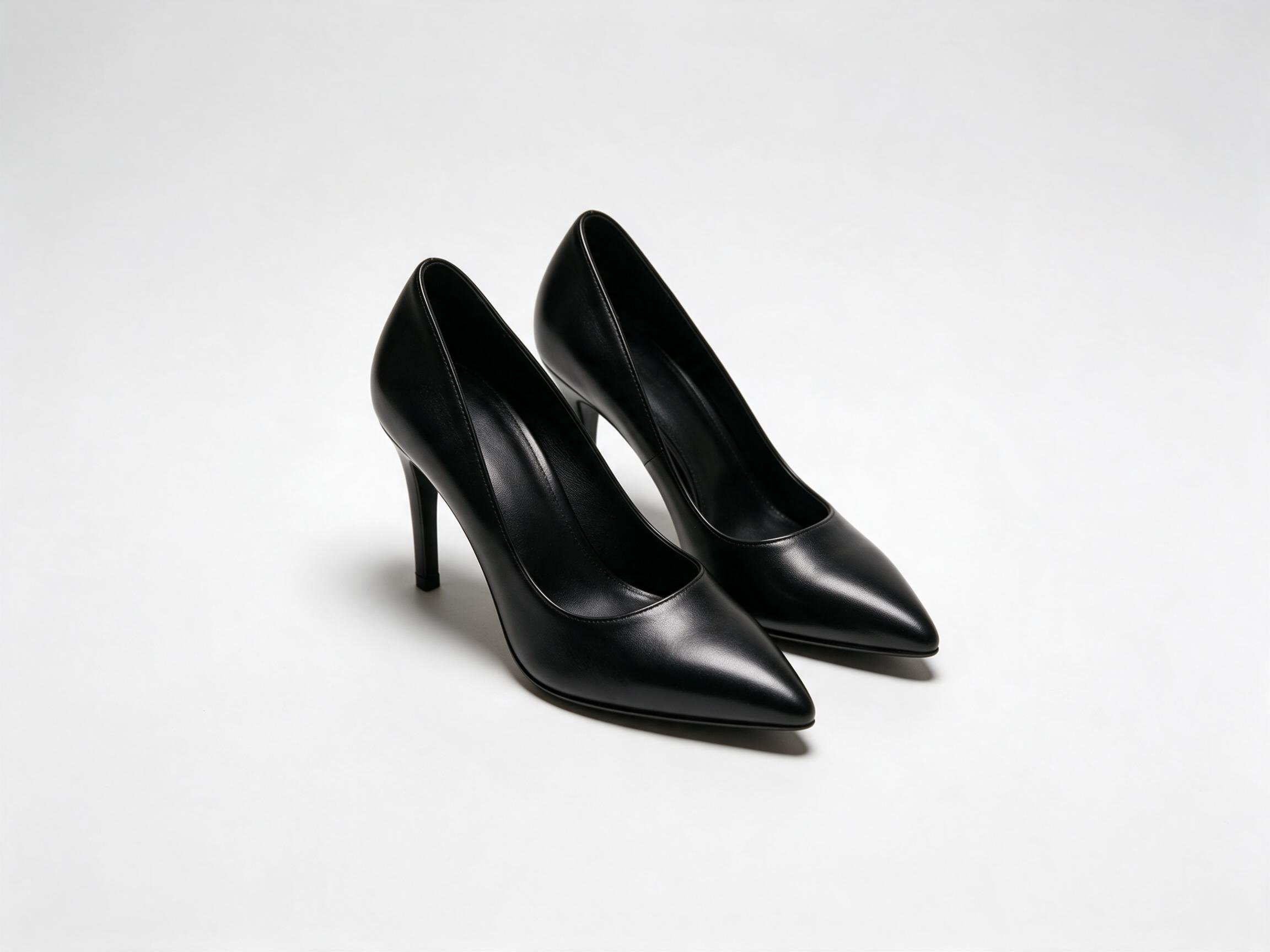
Statement tier — 10 cm stiletto
Heels, evening, and occasion-led retail. Carries the visual signature of the collection. In bulk, the critical control is heel-core reinforcement and heel attachment.
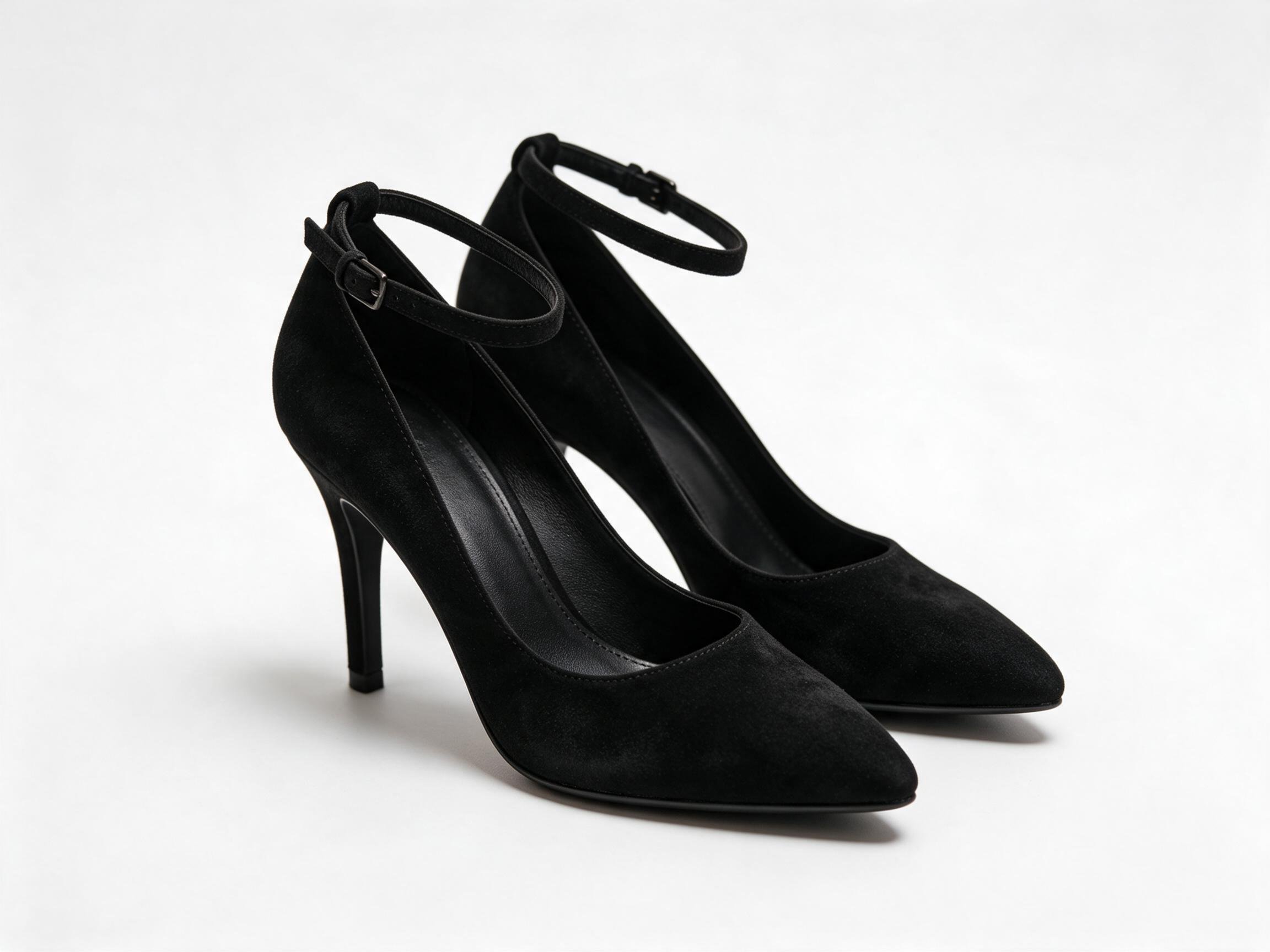
Occasion tier — 8.5 cm ankle-strap
The transitional style: dressy enough for events, wearable for long days. Adds an adjustable buckle strap, so strap stitching and buckle security join the QC list.
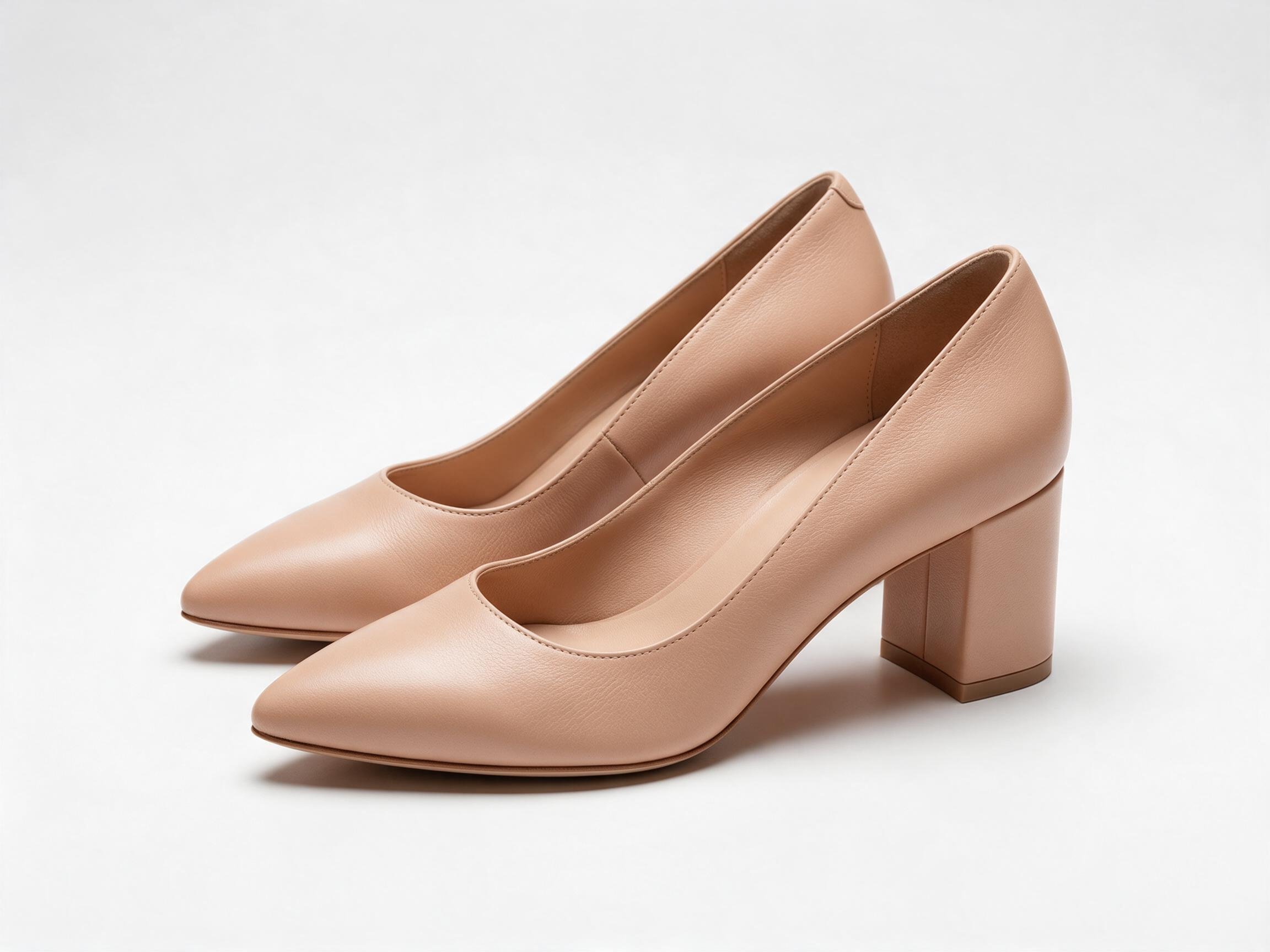
Comfort tier — 5 cm block heel
Office, travel, and long-wear retail. Distributes weight more evenly than a slim heel and is the tier that keeps a range from being purely occasion-driven.
The ladder matters commercially because it lets you buy depth in the middle tier and breadth in the other two. It also gives you a defensible reason to carry three heel constructions rather than one: they cover different wearing occasions, and buyers can merchandise them as a family.
A concrete anchor for the top tier: Aurevia's black leather stiletto heels use smooth black kid leather with a pointed toe and a slim 10 cm stiletto heel built on a reinforced core tested for stability. The footbed is padded with an arch-support contour, the lining is soft leather, and the outsole is rubber with an anti-slip finish. Construction is cemented, and each pair passes a heel-attachment check before shipment.
Material rotation: leather and suede across the calendar
Material is where seasonal range planning usually gets thin. Buyers often plan colors by season and materials by habit, which can leave a fall/winter drop with nothing but a summer-weight finish. Two finishes do most of the work in a women's heel program.
Polished kid leather
Smooth kid leather is the most versatile surface in a heel range. It takes a sharp edge on a pointed toe, holds a high-shine finish, and reads formal enough for both the statement and occasion tiers. It is the natural choice for core colors because it shows color cleanly and takes a durable polish.
Suede
Suede adds texture and gives a collection a second surface without changing the silhouette. A fine, even nap is the quality marker to specify, and color consistency matters more than with smooth leather because nap reflects light differently across a panel. A heel with an ankle strap in suede also becomes a good candidate for a seasonal accent color, since the smaller leather surface area on the strap makes a stronger color easier to control.
The practical rotation: anchor the season in smooth leather in core colors, run suede in the same silhouettes for the transitional months, and reserve the bolder surface-and-color combinations for the tier you want to merchandise as newness. Note that when suede is dyed to order, color is matched against a Pantone reference on OEM orders, which is worth confirming at sample stage rather than after bulk leather is cut.
For the comfort tier, the nude block-heel shoes use soft nude kid leather with a rounded pointed toe and a stable 5 cm block heel on a reinforced core. The block heel distributes weight more evenly across the heel seat, and the insole is padded. The style suits office wear and travel, which is exactly the role the comfort tier plays in a range.
The color palette: two core tiers, one accent tier
Heel color planning is easiest to manage as three tiers rather than a flat swatch list.
- Core tier: black and nude. These sit in every height tier, sell across seasons, and carry the bulk of the buy. They also let you consolidate leather purchasing, which simplifies color consistency across the program.
- Transition tier: one or two mid-tone neutrals — a deep brown, a warm taupe, or a soft grey — used to bridge the season and extend the core story into a second delivery.
- Accent tier: one or two directional colors placed in a single silhouette, usually the occasion or statement tier, where a strong color reads as fashion rather than as risk.
Two rules keep the palette from fragmenting. First, keep black and nude available in every height tier so the range has a floor. Second, limit each accent color to one silhouette and one material; an accent color split across three styles and two finishes is hard to merchandise and harder to buy in bulk.
How many heel types and colors to launch with
This is the decision framework most buyers ask for, so here it is as a starting structure rather than a rule. The counts below are a planning grid, not sales figures.
| Range element | Conservative start | Full seasonal program |
|---|---|---|
| Heel height tiers | 2 (comfort and occasion) | 3 (add statement) |
| Silhouettes per tier | 1 | 1–2 |
| Materials | 1 (smooth leather) | 2 (smooth leather + suede) |
| Core colors | 2 (black, nude) | 2 core |
| Transition colors | 0 | 1–2 |
| Accent colors | 1 | 1–2, each in one silhouette |
Read the grid this way: if you are opening a new heel program, a two-tier, two-core-color structure gives you a coherent offer with the fewest construction variables to control. A full seasonal program adds a third tier, a second material, and a limited accent layer. Both are legitimate; the difference is how much construction and color management you are prepared to run at once. MOQ and lead time vary by model and are confirmed per order, so the grid should be built with your supplier before quantities are fixed.
What changes technically when you scale to bulk
The technical issues that matter at scale are not the same ones that matter at sample stage. Three areas change as volume goes up.
Heel core and heel attachment
A slim heel concentrates load in a small area, so the heel core and the attachment between heel and upper are the first things to standardize. In bulk, this means specifying a reinforced heel core and a heel-attachment check as a standing inspection step rather than an occasional one. On a 10 cm stiletto the load is highest; on a 5 cm block heel it is more evenly distributed, but the attachment still needs a consistent check because it is a bonded or cemented joint in most constructions.
Strap strength on ankle-strap styles
An ankle strap adds a component that a slip-on does not have: a stitched adjustable buckle. At bulk, strap strength and buckle security become part of inspection, because a strap failure reads to the end customer as a defect regardless of how the rest of the shoe performs. Specifying reinforced thread at the strap stitching is a low-cost way to remove a common failure point. Suede color matching to a Pantone reference on OEM orders also belongs at this stage, since a strap is a small panel where a shade variation is more visible than on a large one.
The black suede ankle-strap heels show how these controls sit on one style. They use premium kid suede with a fine, even nap, an adjustable ankle buckle strap stitched with reinforced thread, and a slim 8.5 cm heel on a reinforced core. The footbed is padded, strap strength and heel attachment are both checked before shipment, and suede color can be dyed to a Pantone reference on OEM orders.
Footbed and lining consistency
At sample stage, a padded footbed with an arch-support contour is a feature. At bulk, it is a consistency question: the same foam thickness, the same contour position, and the same lining specification across every size in the run. This is where a multi-stage inspection process earns its place, because a footbed deviation that is invisible in a single size is obvious when a size run is lined up side by side.
Working with a manufacturer on a full range: Aurevia Footwear Co., Ltd. has been based in Quanzhou, China since 2011 and runs OEM/ODM and private-label programs for importers and retail buyers in Europe, North America, and the Middle East. In-house designers turn sketches and tech packs into production-ready samples, and bulk orders go through multi-stage inspection. Because a range involves several heel constructions and materials, the sample round should confirm each tier, not just the hero style.
Supplier questions worth asking before you commit
- For each heel height in the range, how is the heel core reinforced, and is heel attachment a defined check before shipment?
- On ankle-strap styles, which thread is used at the strap stitching and how is buckle security verified?
- For suede, is color matched to a Pantone reference on OEM orders, and at which stage is the match approved?
- How is footbed padding and contour controlled across the full size run, not just the sample size?
- Can the same last and footbed be reused across the leather and suede versions of a silhouette, so the range stays consistent?
- What are the MOQ and lead time for each specific model in the proposed range?
Ask these as a set, because the answers interact. A supplier who can run one heel construction well is not automatically set up to run a three-tier range with two materials; the sample round is where you find out.
FAQ
Should I buy all three heel heights in the first season?
Not necessarily. A two-tier start covering comfort and occasion gives you a coherent range with fewer construction variables. Add the statement tier when you are confident in the selling floor and in the supplier's heel-core controls at the higher load.
Is suede or smooth leather harder to buy in bulk?
Suede adds a color-consistency question because nap reflects light unevenly, so it benefits from a Pantone reference at sample stage. Smooth leather is more forgiving on color matching but demands a clean, unmarked surface on a pointed toe.
What is the biggest quality risk in a women's heel program?
Heel attachment and, on strap styles, strap strength. Both are joint-level failures that read to the end customer as a broken shoe, and both are controlled by defining them as inspection steps rather than assuming them.
Can the range share lasts and footbeds across materials?
Often yes, and doing so improves consistency across the range. Confirm it at sample stage, because the leather and suede versions of one silhouette still need matching footbed padding and contour.
Next step
Build the range on paper first: choose two or three height tiers, decide whether the season runs one material or two, and set your core and accent colors before any style is sampled. Then send that structure to your manufacturer as a brief rather than as a list of individual styles. If you are planning a seasonal heel program, share the tier structure, target materials, and color palette with the Aurevia team, and confirm MOQ and lead time per model as part of the sample round.