
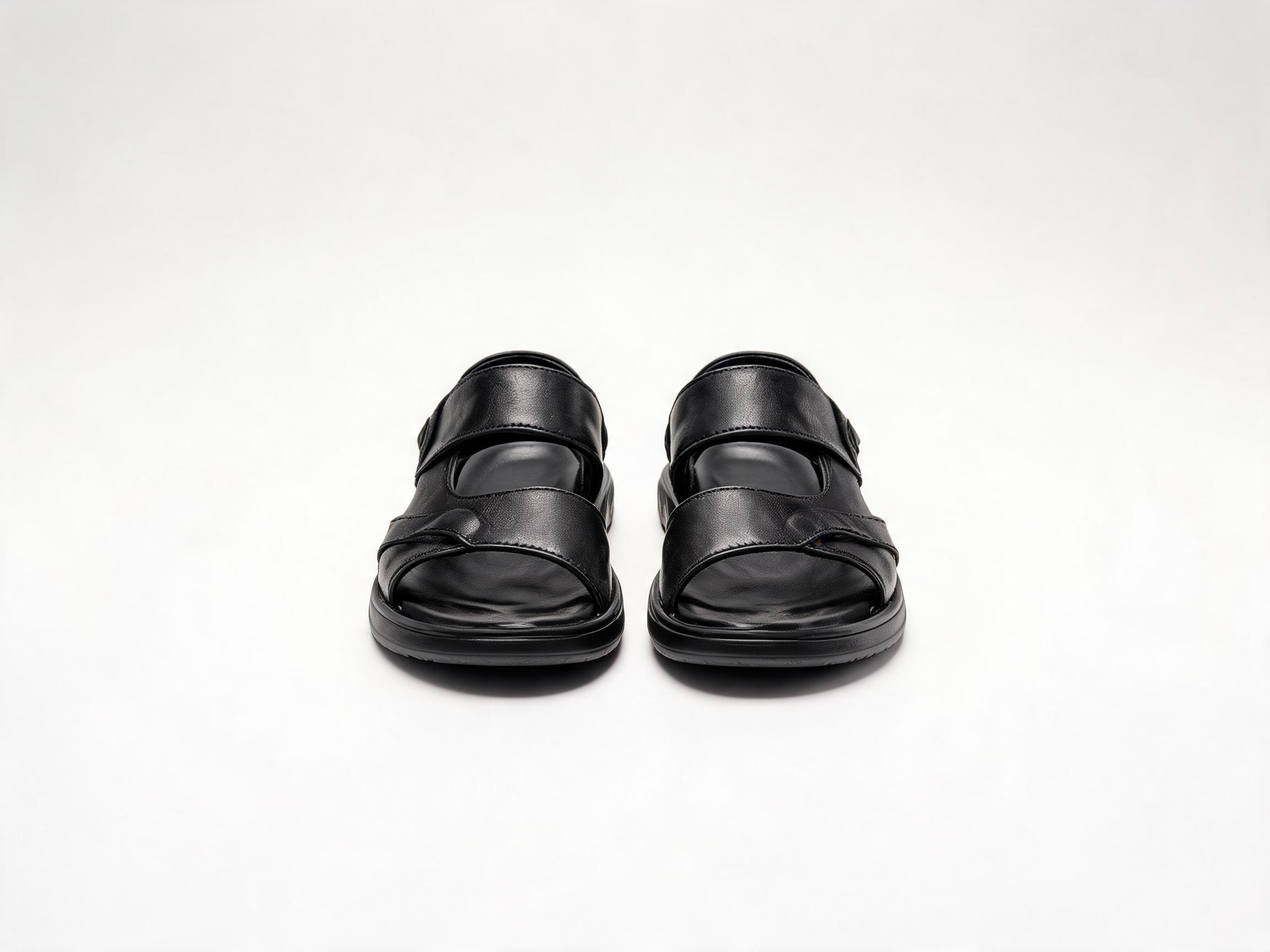
A purchasing guide for importers and wholesalers on evaluating a leather sandals supplier, covering upper leather grades, sole construction and stitching, OEM/ODM cooperation signals, and sampling before committing.
Why the Supplier Matters More Than the Sample
When you source leather sandals, the sample you approve and the shipment you receive can differ in ways that affect returns, repeat orders and your brand's reputation. A supplier that controls leather selection, sole bonding and stitching consistency is better positioned to deliver repeatable quality than one that assembles from mixed sources. This guide gives you a checklist to evaluate a leather sandals supplier on the factors that determine whether a program is repeatable: upper leather, sole construction, stitching, OEM/ODM cooperation and pre-production sampling.
Key Takeaways
- Ask for the leather grade and lining specification, not just "genuine leather".
- Check how the sole is attached: stitched-and-cemented construction is more durable than cementing alone.
- Evaluate OEM/ODM capability through the questions they ask and the samples they provide.
- Always order a sample pair before committing to bulk; confirm current MOQ and lead time with the sales team before ordering.
1. Upper Leather: Grades and What They Mean for Your Order
"Genuine leather" is a broad term. For sandals, the upper leather grade affects appearance, durability and how the product ages. Ask suppliers to specify the grade and lining. For example, our Black Leather Casual Sandals use genuine leather straps with a soft leather lining. That combination matters because the lining contacts the foot directly; a soft leather lining reduces friction compared to synthetic linings.
When evaluating a leather sandals supplier, request the following details:
- Leather type: Full-grain, top-grain, corrected-grain or bonded leather. Each has different durability and appearance retention.
- Thickness: Usually expressed in millimeters. Thicker leather holds shape better but may require different stitching.
- Lining material: Leather, synthetic or unlined. Leather lining is generally more breathable and comfortable.
- Color fastness: Ask whether the supplier tests color fastness, especially for dark colors that may bleed.
- Flex test: Leather should flex without cracking. Ask if flex testing is performed.
A supplier that can answer these questions with specific values, rather than general assurances, is more likely to have consistent material sourcing.
2. Sole Construction and Stitching: Where Durability Is Won or Lost
The outsole attachment is a common failure point in sandals. Cemented construction alone can fail with heat and moisture; stitched-and-cemented construction adds a mechanical bond. The Black Leather Casual Sandals use stitched-and-cemented construction with a lightweight slip-resistant rubber outsole and a flat heel of approximately 2 cm.
When inspecting samples or asking for production details, check:
- Attachment method: Is the sole cemented only, or stitched and cemented? Stitching adds security.
- Stitch density: Ask for stitches per inch or centimeter. Consistent density indicates controlled stitching.
- Outsole material: Rubber, TPR, EVA or PU. Rubber is generally more durable and slip-resistant.
- Heel attachment: Ask if heel-attachment testing is performed. A loose heel is a common return reason.
- Flex testing: The sole should flex without separating from the upper.
Suppliers that perform in-line and final inspection are more likely to catch stitching and bonding defects before shipment. Our three-stage inspection covers incoming materials, in-line production and final inspection, and includes flex, color fastness and heel-attachment testing.
3. OEM/ODM Cooperation: Signals of a Real Partner
OEM/ODM capability is more than a statement on a website. Evaluate it through the supplier's questions and sample process.
Signals to look for:
- They ask about your market and target price. A supplier that understands your positioning can recommend appropriate leather grades and constructions.
- They provide a specification sheet. Clear specs for upper, lining, insole, outsole, sizes and colors indicate organized production.
- They offer custom colors and sizes. Our sandals come in black, brown and tan, with custom colors available, and sizes EU 39-45 / US 6.5-12.
- They have a defined sampling process. Sample pairs in 3-5 days and custom samples in 7-12 days indicate capacity to handle development.
- They state MOQ and lead time clearly. Our MOQ is 100 pairs per color, with a lead time of 25-35 days. Confirm current MOQ and lead time with the sales team before ordering.
- They offer private label and packaging options. Ask about labeling, polybags and carton marking.
A supplier that responds within 48 hours and provides a clear sampling timeline is easier to work with during development.
4. Sampling Before Committing: What to Check and How to Compare
Always order a sample pair before placing a bulk order. Use the sample to verify fit, materials and construction against your specification.
Sample evaluation checklist:
| Area | What to Check |
|---|---|
| Leather | Softness, thickness, color consistency, lining quality |
| Stitching | Even density, no loose threads, reinforcement at stress points |
| Sole | Attachment method, flex, heel security, slip resistance |
| Insole | Cushioning, coverage, stitching |
| Sizing | Fit compared to your size chart; check EU 39-45 / US 6.5-12 range |
| Finish | Clean edges, no glue residue, consistent color |
If the sample meets your requirements, request a production timeline and confirm the warranty. Our sandals come with a 6-month warranty. Also confirm Incoterms: we offer EXW, FOB and CIF.
5. Putting It Together: A Supplier Evaluation Scorecard
Use this scorecard to compare suppliers objectively. Rate each criterion as meets, partially meets or does not meet.
- Leather specification provided: Grade, thickness, lining, color fastness and flex test results.
- Sole construction details: Attachment method, outsole material, heel attachment testing.
- Stitching quality: Sample inspection and stitch density.
- OEM/ODM process: Sampling time, communication responsiveness, customization options.
- MOQ and lead time: Clarity and flexibility. Confirm current MOQ and lead time with the sales team before ordering.
- Quality control: Inspection stages and testing performed.
- Warranty and terms: Warranty period and Incoterms.
A supplier that scores well across these areas is better positioned to support a repeatable leather sandals program.
Frequently Asked Questions
What is the difference between stitched-and-cemented and cemented construction?
Stitched-and-cemented construction combines adhesive with stitching for a mechanical bond, while cemented construction relies on adhesive alone. Stitching generally improves durability at the sole attachment.
How long does sampling take?
Sample pairs are typically available in 3-5 days; custom samples take 7-12 days.
What is the MOQ and lead time?
Our MOQ is 100 pairs per color, with a lead time of 25-35 days. Confirm current MOQ and lead time with the sales team before ordering.
Can I customize colors and sizes?
Yes, we offer black, brown and tan as standard, with custom colors available. Sizes range from EU 39-45 / US 6.5-12.
For more details on our Black Leather Casual Sandals, visit the product page.