
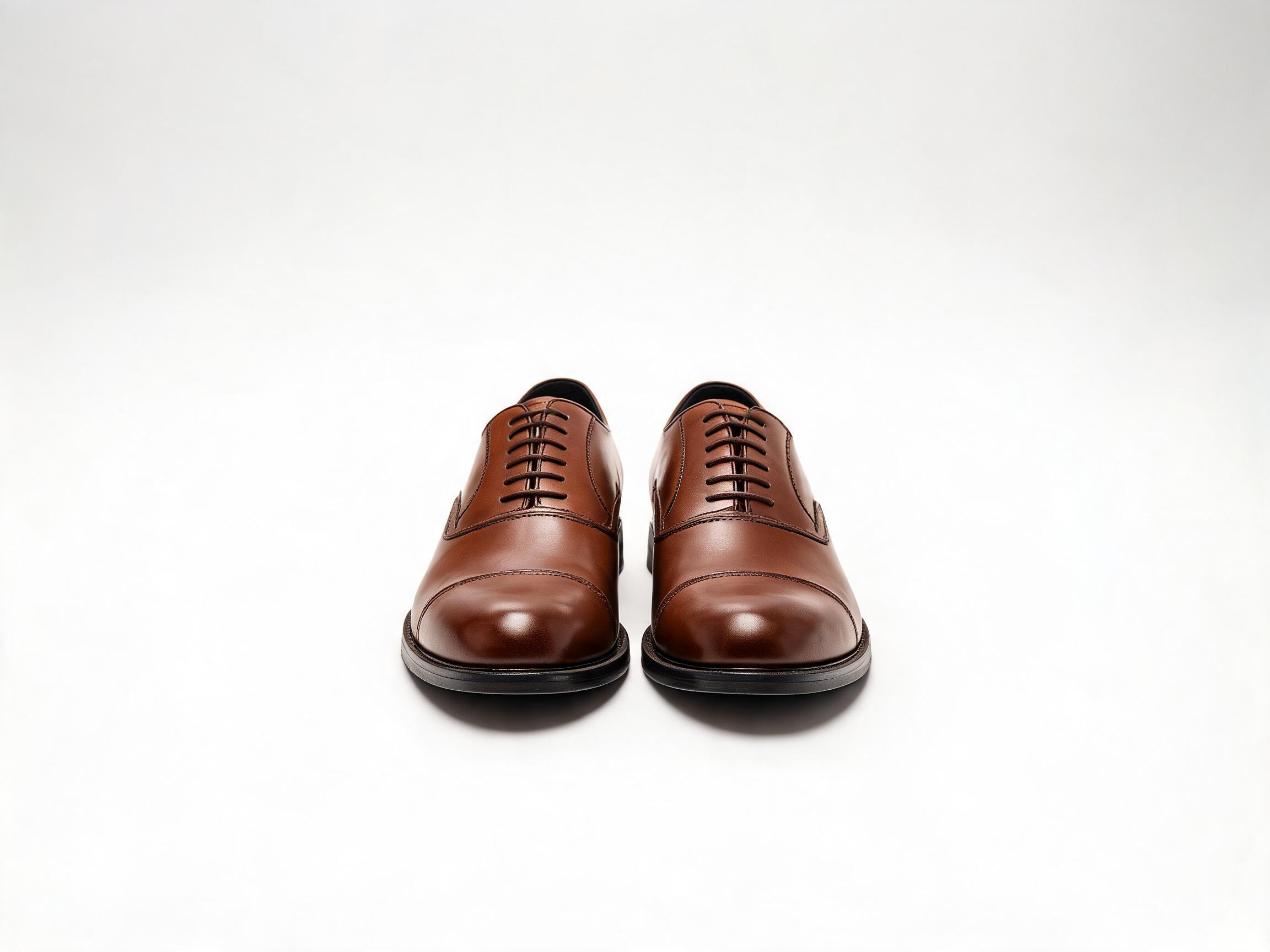
A wholesale buying guide to men's formal shoes: how last shapes and fit grading determine sizing consistency, how to read leather grades in a specification, and how a supplier's ODM style library reduces development cost and time. Includes catalog facts from a Quanzhou OEM/ODM maker and a practical sourcing checklist.
Most men's formal shoe sourcing decisions come down to three things buyers can actually evaluate before placing an order: the last the shoe is built on, the grade of leather in the upper, and how much of the style development the supplier has already done. A supplier that can show you its lasts and its ODM library removes weeks from a typical program.
- Last shape and fit grading determine whether a size run fits your market, not the size label.
- Leather grade should be written into the spec sheet, not left to a photo.
- A supplier ODM style library shortens sampling and reduces tooling cost on first orders.
- Catalog figures here come from a Quanzhou OEM/ODM maker founded in 2011; confirm current MOQ and lead time with the sales team before ordering.
- Why lasts and fit grading matter in wholesale
- Reading leather grades in a specification
- How to use a supplier's ODM style library
- Catalog reference: four styles from one sourcing base
- Sourcing checklist
- FAQ
Why lasts and fit grading matter in wholesale
A last is the foot-shaped form the upper is pulled over. Its length, width, toe spring and heel curve set the shoe's shape. Two suppliers can both list “EU 42” and deliver shoes that fit differently, because the last underneath is different. For mens formal shoes wholesale, the last is the single most important item to review before you commit to a size run.
Fit grading is the second half of that. A size run from EU 39 to EU 45 (the range this maker lists on its Brown Derby Dress Shoes) has to graduate length and width consistently, or your retail buyers will see returns in the middle sizes. Ask the supplier to state which grading scale it uses for each size, and to send one or two physical samples across the run, not only the display size.
Heel height is part of the same brief. The Derby lists a heel of approximately 3 cm; the Cognac Penny Loafer Shoes lists approximately 2.5 cm. Those are small differences, but they change the stance and the look on the shelf, and they should be stated in your PO rather than left to the sample photo.
Reading leather grades in a specification
Formal shoe uppers are usually described by the part of the hide used and the finish applied. The Brown Derby and the Black Cap-Toe Oxford Shoes both list a polished full-grain leather upper, which tells you the top layer of the hide is present and the surface has been finished to a shine. That is a grade statement, and it belongs in your spec sheet alongside the lining and sole.
Three leather-related points are worth writing into a wholesale brief:
- Upper material: name the grade (for example, polished full-grain) and the finish, not just “leather”.
- Lining: the Derby lists a leather lining. Lining material affects feel and is worth specifying separately from the upper.
- Sole and construction: the Derby lists a stitched rubber sole and a cushioned insole. Stitching was previously seen as a durability signal, but in a wholesale spec the construction method should be stated and checked on the physical sample, not inferred from a photo.
Leather is a natural material. Colour and grain can vary between batches, so approve a physical swatch or a production sample against your target before bulk, rather than grading from a catalog image.
How to use a supplier's ODM style library
ODM means the supplier already holds the design and the last, and you customise it with your own materials, branding or minor changes. For a buyer launching a formal shoe line, the ODM library is the fastest route to a sellable range. The alternative — a fully new design — requires new last development, new patterns and new sampling rounds, which adds cost and time before your first order.
A practical way to use the library:
- Match the style to your market. Open lacing (Derby), closed lacing (Oxford), double buckle (Monk) and slip-on (Loafer) are the four core formal silhouettes here. Choose two or three as your opening range rather than developing all four.
- Confirm the shared platform. If the styles share the same last and sole family, you can reduce size-run sampling and keep fit consistent across the range. Ask the supplier which styles share a last.
- Limit changes to what you need. Branding, box, colour and minor trim are typical ODM changes. Each change should be listed on a change sheet and sampled before bulk.
- Plan sampling around the library. This maker lists samples at 3–5 days and custom samples at 7–12 days. Confirm current MOQ and lead time with the sales team before ordering.
Catalog reference: four styles from one sourcing base
The four styles below come from the same Quanzhou sourcing base, which was founded in 2011 and runs OEM/ODM and private-label programs. The figures are the maker's listed specifications.
| Style | Lacing / closure | Upper and build (as listed) | Size range | Notes |
|---|---|---|---|---|
| Brown Derby Dress Shoes | Open lacing (Derby) | Polished full-grain leather upper, leather lining, cushioned insole, stitched rubber sole, heel approx 3 cm | EU 39–45 | Listed MOQ 100 pairs; lead time 30–40 days. Confirm current MOQ and lead time with the sales team before ordering. |
| Black Cap-Toe Oxford Shoes | Closed lacing | Polished full-grain leather upper | EU 39–45 | Cap-toe Oxford for the most formal end of the range. |
| Tan Double Monk Strap Shoes | Double buckle strap | Burnished full-grain leather upper, leather lining, cushioned insole, stitched leather/rubber sole, heel approx 3 cm | EU 39–45 | Buckle closure adds a non-lace option to the range. |
| Cognac Penny Loafer Shoes | Slip-on | Polished full-grain leather upper, hand-sewn penny strap, leather lining, cushioned insole, stitched rubber sole, heel approx 2.5 cm | EU 39–45 | Lower heel changes the silhouette against the Derby. |
Full size and specification details for each style are on the individual product pages and the men's leather shoes catalog. Where a field is not listed above, check the product page or ask the supplier rather than assuming.
On the operations side, this maker reports a three-stage inspection process, a 6-month warranty and a 48-hour response, and ships EXW, FOB or CIF to Europe, North America and the Middle East. Those terms should appear on your quotation so that the cost comparison is like-for-like.
Sourcing checklist
Use this list before you place a mens formal shoes wholesale order. Each item is a question you can put to the supplier and a point you can verify on the sample.
| Area | What to confirm | How to verify |
|---|---|---|
| Last and fit | Last shape, width, and size grading across the run | Physical sample in two sizes; written grading scale |
| Leather grade | Upper grade and finish, lining material | Spec sheet plus approved swatch or production sample |
| Construction | Sole type, construction method, heel height | Sample inspection against the PO line items |
| ODM changes | Which styles share a last; what changes you need | Change sheet signed before sampling |
| Commercial terms | MOQ, lead time, Incoterm | Written quotation; confirm current MOQ and lead time with the sales team before ordering |
| Quality control | Inspection stages, warranty terms | Ask for the inspection process and warranty statement in writing |
FAQ
What is the difference between Derby and Oxford in a wholesale range?
Derby shoes have open lacing, where the quarters sit on top of the vamp; Oxfords have closed lacing, where the quarters are stitched under the vamp. Both are listed here as polished full-grain leather styles in EU 39–45. In a range, the Oxford is the more formal option and the Derby is more adaptable.
How do I choose between ODM and a fully new design?
Choose ODM when your priority is speed and lower development cost, and when an existing last and silhouette fit your market. Choose a new design when you need a last or pattern that is not in the library. ODM sampling is listed at 3–5 days for standard samples and 7–12 days for custom samples; confirm current MOQ and lead time with the sales team before ordering.
What should be on a formal shoe specification sheet?
At minimum: last reference, size range and grading, upper leather grade and finish, lining material, insole, sole and construction, heel height, colour reference and packaging. The Brown Derby page shows how these fields look in practice — polished full-grain upper, leather lining, cushioned insole, stitched rubber sole, heel approx 3 cm, EU 39–45.