
A practical look at what a small-batch first run at a leather footwear OEM actually involves — why minimums are quoted per color and per style, how sampling, size grading and inspection fit together, and how to keep a limited program viable without pretending minimums don't exist.
First-Run Planning for New Brands
"Low MOQ" is not one number you can compare across factories. At a leather footwear OEM, the minimum you are quoted depends on the style, the color, and how much of the process has to be set up from scratch. This article explains what that structure looks like in practice and what a realistic first run asks of a new brand.
Key takeaways
- Minimums are quoted per color and per style, not as a single factory-wide figure, because each combination triggers its own material and tooling setup.
- A first run is not "place an order and wait" — it includes sample rounds, size grading, bulk production and stage-by-stage inspection.
- Limited colorways, a core size range and styles you can repeat do more for viability than chasing the smallest possible quantity.
Why the factory quotes a minimum per color and per style
A buyer new to footwear often expects a supplier to answer "what is your MOQ?" with one number. In practice, a leather shoe factory quotes a minimum that applies to a specific style in a specific colorway. There are concrete reasons for that structure.
Each colorway pulls its own material purchases: leather in the finished color, lining, thread, laces, and any trim that has to match. Those materials come in supplier minimums of their own, so a factory cannot buy a handful of hides in one shade. Changing the style changes the pattern, the lasts, the sole unit and the assembly sequence. A second color of the same style shares the pattern and last but not the material buy; a second style shares almost nothing.
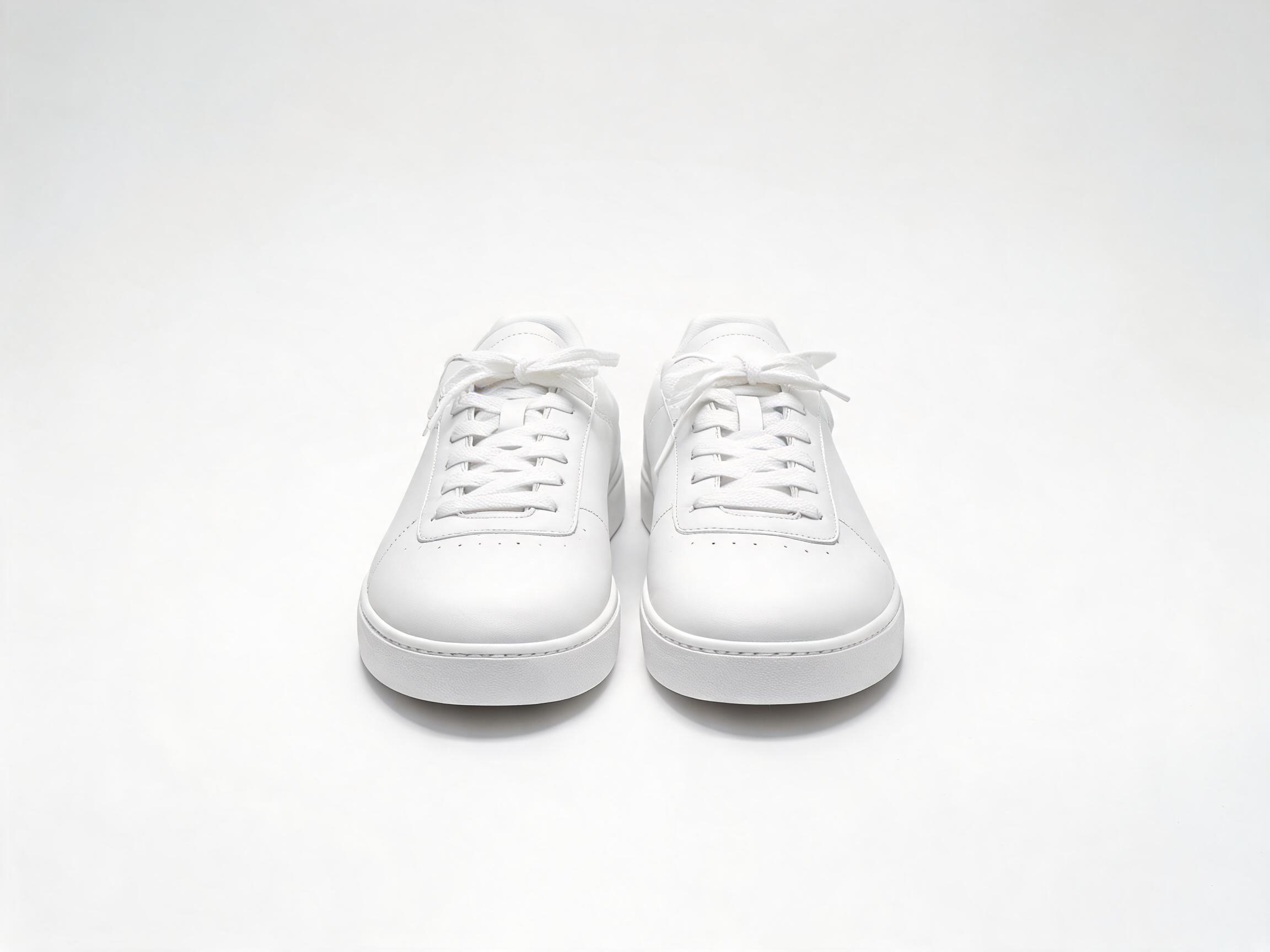
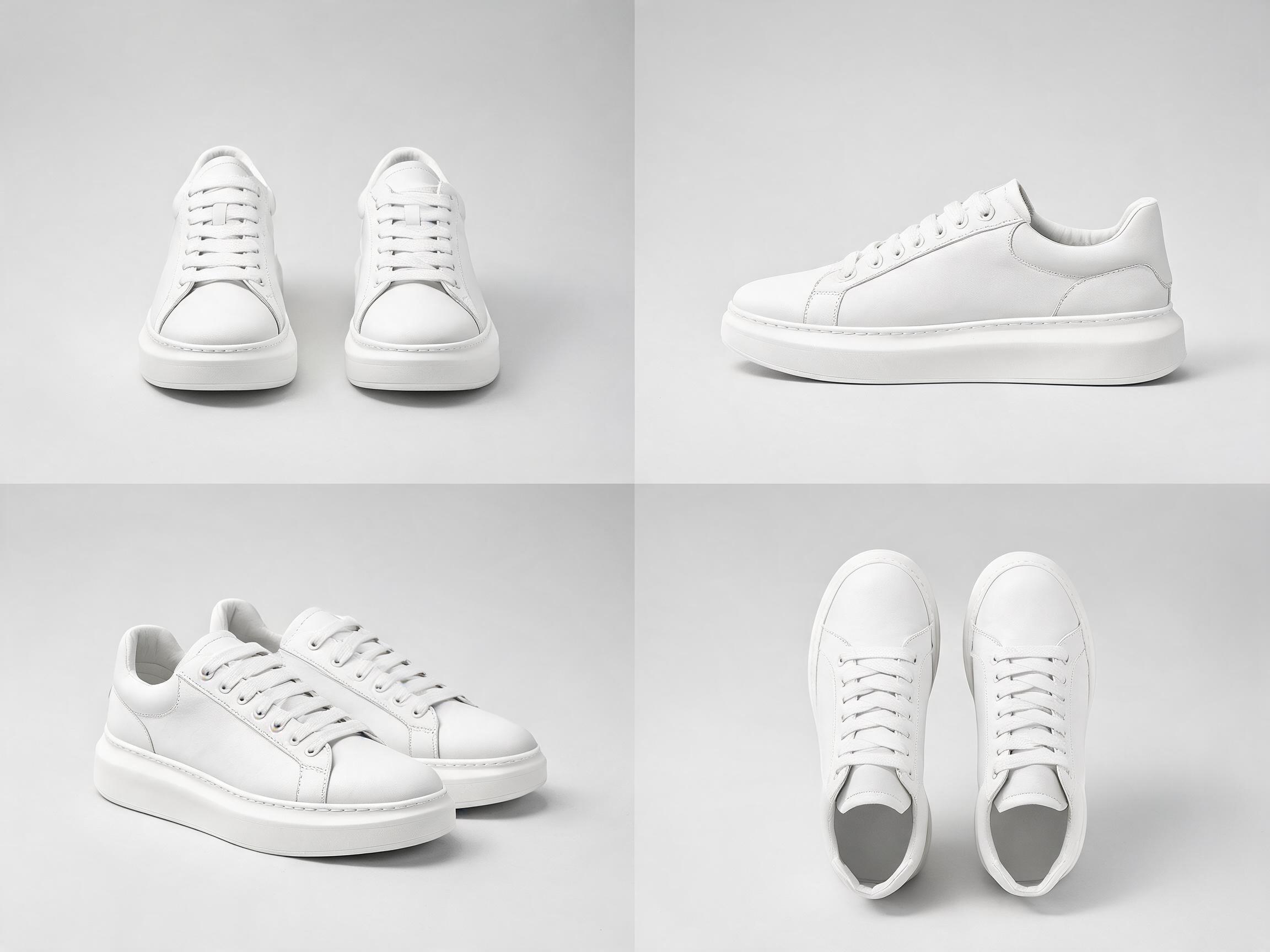
This is why the recorded minimum can differ between a full-grain leather low-top and a casual sandal even from the same workshop. For example, the white leather low-top sneakers carry their own minimum per color, listed on the product page, while the black leather casual sandals are a different category with a different minimum of their own. Neither number is a general factory policy — each reflects the materials and tooling of that product.
When you request a quote for your own design, the figure you get will be based on your style, your colors and your size range. Treat any single "MOQ" quoted without those details as an approximation at best. Confirm it with the factory against your actual tech pack before you build a budget around it.
What a first run actually consists of
The quantity is only one variable. The work around it is what determines whether a first run lands on time and on spec. Here is the sequence at a typical leather footwear OEM.
1. Sampling
Sampling is where the design becomes a physical shoe. You can work from an existing sample or a custom development. Existing samples can usually be shipped in roughly 3–5 days. Customized samples take about 7–12 days after details are confirmed, and the factory can work from a tech pack, a sketch or a reference photo.
Expect more than one round. The first sample tests fit, construction and proportion; later rounds correct color, hardware or sole details. Each round consumes calendar time, so a buyer who needs shoes on shelf by a fixed date should count the sample rounds backward from that date, not forward from the inquiry.
2. Size grading
A single sample in one size proves the design. Selling a run requires every size in the range to fit and to be built the same way. On the white leather low-top, for instance, the range covers EU 39–45. Grading means the pattern is scaled across that range and the factory confirms each size is cut and assembled consistently. If you plan to sell only part of the range, say so early — it affects the material buy and the minimum.
3. Bulk production
Once samples are approved, bulk lead time runs about 30–45 days after sample approval. This window covers material procurement, cutting, stitching, lasting and sole attachment. It starts from approval, not from the inquiry, so the sample phase and the bulk phase should be planned as one timeline.
Shipping terms can be quoted as EXW, FOB or CIF, and the factory exports to Europe, North America and the Middle East. Which term you choose changes who controls and pays for freight, so align it with your own logistics setup rather than defaulting to one.
4. Inspection
Quality control is not a final visual scan. A three-stage inspection covers incoming material, in-line construction and finished shoes. Checks include symmetry, bonding strength, cleanliness and packing accuracy, along with forefoot flex, sole adhesion and color fastness. Inspection reports can be requested, and third-party inspection is welcome. There is a 6-month quality warranty on manufacturing defects.
For a first run, ask when each inspection happens and what happens if a stage fails. That answer tells you more about a factory than the inspection list itself.
How to keep a small program viable
Small batch does not mean the factory shrinks its process. It means you shape your range so the process still makes sense at your volume. Three levers matter most.
Limit the colorways
Every colorway is a separate material buy and a separate line setup. A first collection of one or two colors per style is far easier to run than four. If a color performs, add it on the repeat order when the material buy is already proven.
Start with core sizes
Selling a full size range in every color multiplies the material and grading work. Beginning with the sizes that actually move in your market — and expanding later — keeps the first run focused. This is a merchandising decision as much as a sourcing one, but the factory needs to know it before materials are ordered.
Choose styles you can repeat
A style you can reorder is a style whose pattern, last and materials are already set up. That repeatability is where small programs gain efficiency: the second order of the same style in the same color is far simpler than a new style each season. Building a tight, repeatable core around one or two seasonal experiments is usually more sustainable than a wide, shallow debut line.
First-order planning checklist
| Stage | What to prepare or confirm | Typical timing |
|---|---|---|
| Sourcing | Target style, colors, size range, target retail price, ship-to market | Before inquiry |
| Quote | Confirm minimum per color and per style for your specific design; confirm Incoterm (EXW/FOB/CIF) | After details shared |
| Sample | Tech pack, sketch or reference photo; existing sample 3–5 days, custom sample 7–12 days after confirmation | 1–3 weeks incl. revisions |
| Size grading | Confirm full range to be produced, e.g. EU 39–45 for the low-top | Within sample approval |
| Bulk production | Approve sample, confirm materials and packaging, confirm logo/packaging customization | 30–45 days after approval |
| Inspection | Agree three-stage checkpoints, request inspection reports, arrange third-party inspection if needed | During and after production |
| After-sales | Note 6-month warranty on manufacturing defects; keep records per batch | Post-delivery |
The company behind these products is a B2B footwear manufacturer and exporter established in 2011, based in Quanzhou, China, with a 260-person team. Its main lines are leather boots, sneakers, sandals, loafers and heels for women, men and kids, and OEM/ODM is supported including logo and packaging on the referenced products.
FAQ
- Can I place one order that covers several styles?
- You can plan a collection, but each style and color is quoted against its own minimum. A multi-style order does not automatically reduce the minimum for each one. Confirm the structure of your specific order with the factory.
- How long until I have shoes in hand?
- Roughly: existing samples in 3–5 days or custom samples in 7–12 days after confirmation, plus bulk production of about 30–45 days after sample approval, plus shipping time for your chosen Incoterm and destination.
- Do I need a tech pack?
- A tech pack is the clearest input, but a sketch or reference photo is accepted. The more precise your details, the fewer sample rounds you should need.
- What if I want a different color than the listed product?
- Color changes affect the material buy and the minimum for that colorway. Ask for the minimum per color on your intended shade rather than assuming the page figure applies unchanged.
- Is third-party inspection allowed?
- Yes. Inspection reports can be provided on request and third-party inspection is welcome. Agree the checkpoints at the start of the order.
Share your style, colors, size range and target market, and ask for the minimum per color and per style for your specific design — that is the number your budget actually depends on.