
A step-by-step guide for brand owners and retail buyers on structuring a leather sneaker private-label program—from choosing base constructions and customization layers to managing samples and bulk production without losing brand consistency.
Why the Base Construction Decides Everything Else
Before you pick Pantone chips or design hangtags, you need to lock the base construction. The foundation you choose—low-top cupsole or high-top vulcanized-style—determines the last shape, the sole tooling, the upper pattern, and the range of customization that makes commercial sense.
For a leather private-label line, two constructions cover most brand positions:
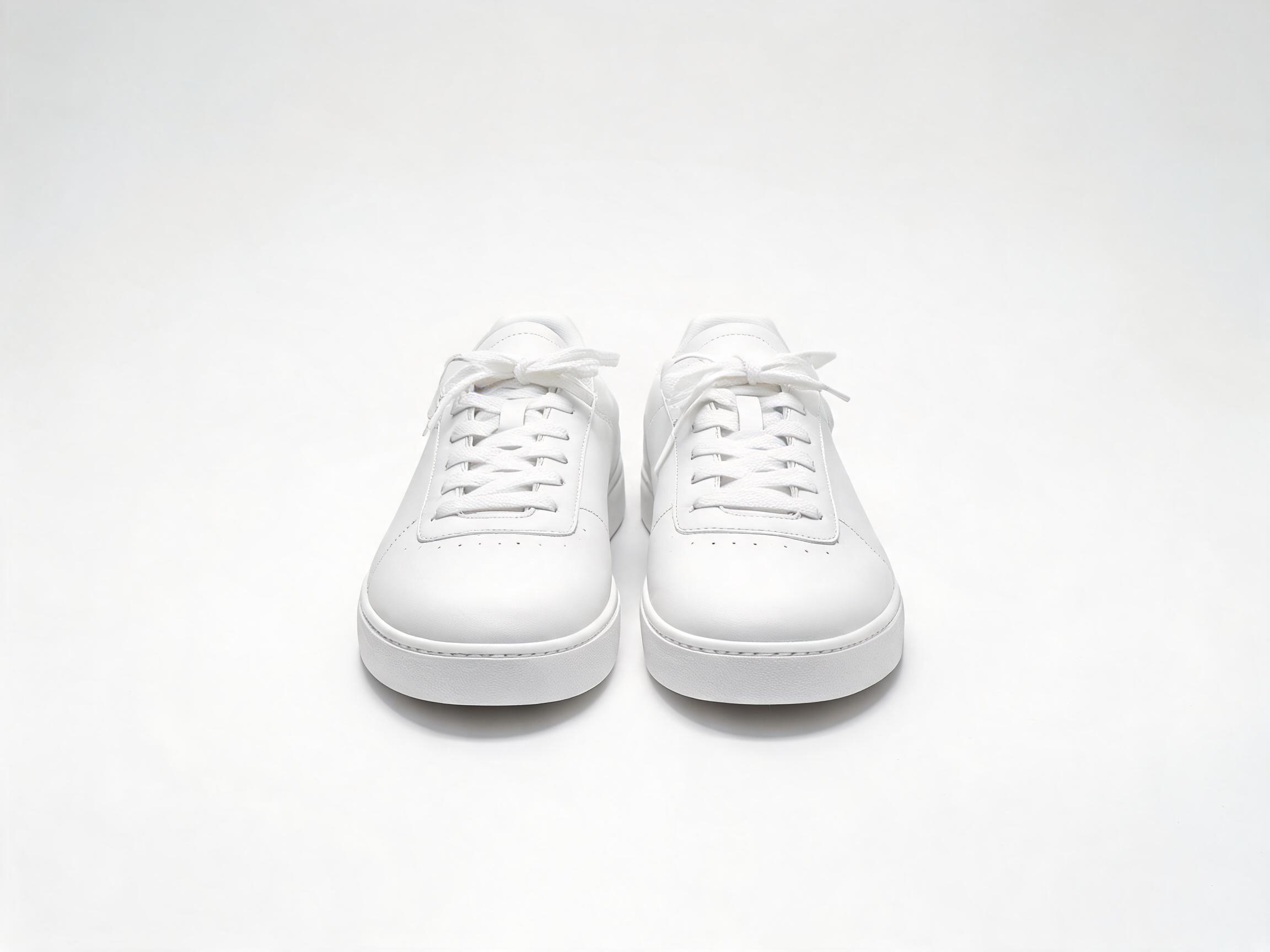
- Low-top cupsole: A clean, low-profile silhouette built around an EVA midsole and rubber cupsole. The upper sits on a board last, and the sole is cemented to the upper. This is the workhorse for minimalist, everyday leather sneakers. The white leather low-top sneakers from Aurevia Footwear use a full-grain leather upper, breathable textile lining, EVA midsole, and rubber cupsole with a heel height of about 2.5 cm.
- High-top vulcanized-style: A taller upper with a padded ankle collar, often paired with a vulcanized-style rubber outsole. The construction allows for side zipper options and a more streetwear-leaning look. The black leather high-top sneakers from Aurevia follow this pattern: full-grain leather upper, padded ankle collar, vulcanized-style rubber outsole, and lace-up with optional side zipper.
Both constructions are available in EU 39–45 / US 6.5–12 and support OEM/ODM with logo and packaging. The choice between them is not about which is “better”—it is about which matches your brand’s silhouette, target retail price band, and the customization layers you plan to sell.
Customization Layers: What You Can Change and What It Costs
Private-label sneaker programs succeed when the customization is structured in layers. Each layer adds perceived value but also adds tooling, sampling time, and quality-control points. Here is the practical breakdown for a leather line.
Upper Color via Pantone Matching
Full-grain leather uppers can be dyed or finished to match a Pantone reference. Aurevia supports Pantone color matching for both base models—white, black, or custom. The key is to approve a physical swatch on the actual leather, not just a digital Pantone code. Leather absorbs and reflects color differently than paper or fabric, so a lab dip or sample upper in your target color is the only reliable approval step.
Sole Color and Compound
The rubber cupsole or vulcanized-style outsole can be produced in a custom color. For cupsole constructions, the EVA midsole can also be tinted. Keep in mind that sole color changes may require a minimum tooling run or a color batch commitment; confirm the feasible range with your factory before you finalize the design.
Insole Branding
Insole branding is one of the lowest-cost, highest-visibility customization layers. Options include heat-embossed logos, printed logos, or woven labels. For leather sneakers, a debossed logo on a leather-topped insole reads as premium; a printed foam insole is more cost-effective for volume programs.
Logo Placement
Typical placements are the lateral quarter, the tongue, the heel counter, and the sockliner. Embossing, debossing, printing, and metal hardware are all possible. Decide early whether your logo is a subtle emboss or a high-contrast print—this affects the upper pattern and the sample approval timeline.
Private-Label Boxes and Hangtags
Packaging is part of the product. Aurevia supports custom packaging as part of its OEM/ODM service. For a leather line, specify the box board grade, print method (offset or digital), and whether you need a hangtag, tissue paper, or dust bag. Packaging artwork should be approved alongside the shoe sample so that bulk production is not held up by a late packaging sign-off.
From Sample to Bulk: Keeping Brand Consistency
The sample stage is where brand consistency is won or lost. A private-label program typically runs two sample rounds: an existing sample (3–5 days) to confirm the base construction and fit, followed by a customized sample (7–12 days) with your colors, logos, and packaging. Bulk lead time is approximately 30–45 days after sample approval.
To keep the bulk run consistent with the approved sample, treat the approved sample as the reference standard. That means:
- Seal the sample: Keep a signed, dated approval sample at the factory and, ideally, one at your office. Every bulk inspection should reference this physical sample, not a photo.
- Lock the specification sheet: Record leather article, lining, midsole/outsole compound, thread color, logo placement, and packaging details. Any change after approval should trigger a new sample round.
- Use the three-stage inspection: Aurevia runs a three-stage inspection process that includes forefoot flex and sole adhesion checks. These are the two failure points most likely to affect a leather sneaker’s comfort and durability. Ask for the inspection reports and review them against your approved sample.
- Plan for third-party inspection: Third-party inspection is welcome. If your retail channel requires it, schedule the inspection before the bulk shipment leaves the factory.
Aurevia Footwear Co., Ltd. has been producing footwear in Quanzhou, China, since 2011 and offers a 6-month quality warranty on its sneaker lines. The warranty covers manufacturing defects; it is not a substitute for your own inspection protocol.
Structuring the Program: A Step-by-Step Sequence
| Step | Action | Typical Timeline |
|---|---|---|
| 1 | Select base construction (low-top cupsole vs high-top vulcanized-style) | 1–2 weeks |
| 2 | Request existing samples to confirm fit and silhouette | 3–5 days |
| 3 | Define customization layers: upper Pantone, sole color, insole branding, logo placement, packaging | 1–2 weeks |
| 4 | Approve customized sample | 7–12 days |
| 5 | Lock specification sheet and seal approval sample | 1 week |
| 6 | Bulk production with three-stage inspection | 30–45 days after sample approval |
This sequence assumes you have your brand assets ready—logo files, Pantone references, and packaging artwork. Delays usually come from indecision on customization, not from production itself.
Common Pitfalls in Leather Sneaker Private Label
- Approving color on a screen: Pantone matching on leather requires a physical swatch. Screen colors vary.
- Changing specs after sample approval: Each change resets the sample clock and can compromise consistency.
- Ignoring sole adhesion: A leather upper is only as good as its bond to the sole. The forefoot flex and sole adhesion checks exist for a reason—review them.
- Late packaging decisions: Packaging is a critical path item. Approve it with the sample.
FAQ
Can I mix low-top and high-top constructions in one order?
Yes, but each construction has its own tooling and minimum production batch. Aurevia produces both models; confirm the combined order structure with the factory.
How long does a customized sample take?
Customized samples typically take 7–12 days. Existing samples are available in 3–5 days.
What is the bulk lead time?
Bulk production is approximately 30–45 days after sample approval.
Do you support third-party inspection?
Yes, third-party inspection is welcome. Schedule it before shipment.
What is the quality warranty?
Aurevia offers a 6-month quality warranty on its sneaker lines, covering manufacturing defects.
To start your private-label program, review the white leather low-top sneakers and black leather high-top sneakers as base references, then contact Aurevia Footwear Co., Ltd. with your target construction, customization layers, and quantity requirements.