
A practical guide for boutique buyers and private-label brands on what monk strap shoes are, how single and double buckle styles differ, and which specification points to settle with a factory before ordering. Includes the Tan Double Monk Strap Shoe as a worked reference for materials, buckle hardware, packaging and customization.
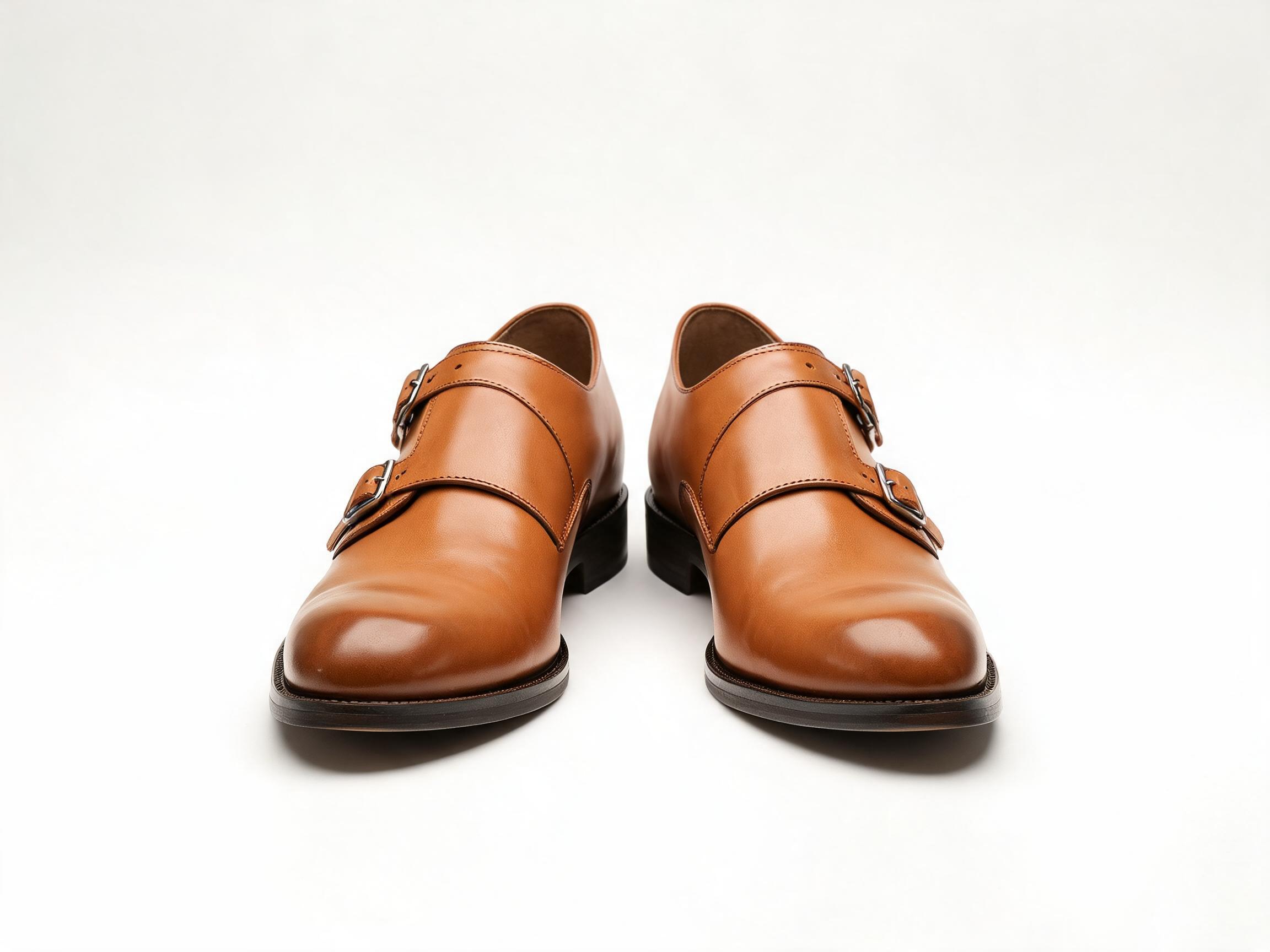
A monk strap shoe is a lace-free dress shoe closed with one or more straps and buckles across the instep. The style sits alongside the Oxford and Derby in the formal range, but its closure is a strap rather than laces, so the upper reads as cleaner and the buckle becomes the visible detail. For buyers, the practical question is not only what the shoe is, but how single and double buckle versions differ and how to write a specification a factory can quote against.
Key points for buyers
- A monk strap shoe has no laces; the upper is closed by a strap and buckle.
- Single buckle = one strap crossing the instep; double buckle = two straps and two buckles.
- Buckle count changes the pattern, the number of hardware parts per pair, and how the shoe reads on shelf.
- Specify leather type, lining, sole construction, hardware finish, sizing scale and packaging before asking for a quotation.
- Confirm current MOQ and lead time with the sales team before ordering.
- What makes a shoe a monk strap
- Monk strap vs Oxford and Derby
- Single vs double buckle: what actually changes
- A reference double buckle build: Tan Double Monk Strap Shoe
- Customization points to specify before ordering
- Quality checks and what they cover
- Questions to settle with the factory
What makes a shoe a monk strap
The defining element is the closure. The upper is built as a whole without a lacing gap; a strap crosses the instep and fastens with a buckle, usually on the outer side of the shoe. Because there are no laces or eyelet facings, the vamp and quarters run in a continuous line, and the buckle sits forward where it can be seen.
That has two consequences for a buyer assembling a range. First, the shoe needs a different upper pattern from a laced style, so it is a separate development item rather than a variant of an Oxford. Second, the buckle is both a functional fastener and a visible trim component, which means hardware finish, corrosion resistance and attachment strength belong in the specification, not just the leather.
Monk strap vs Oxford and Derby
The comparison buyers ask about most is with the two standard laced dress shoes. The distinction is straightforward and qualitative:
| Style | Closure | Visual character |
|---|---|---|
| Oxford | Laces, closed lacing | Formal, restrained, minimal hardware |
| Derby | Laces, open lacing | Slightly more relaxed than Oxford, still lace-based |
| Single monk strap | One strap and buckle | Clean, dressy, one focal point |
| Double monk strap | Two straps and two buckles | More hardware, stronger visual statement, dresses up or down more easily |
In a shop display, the lace-free upper is what separates monk straps from the rest of a formal wall. The buckle count then separates the two monk versions from each other.
Single vs double buckle: what actually changes
Both styles share the same construction logic — no laces, strap closure, buckle on the outer side. The difference is how many straps cross the instep and how much hardware the pair carries.
Single buckle
One strap, one buckle. The upper pattern is simpler, the buckle sits as a single accent, and the overall line is quieter. On shelf it reads as a formal shoe with one deliberate detail. Fewer hardware parts per pair also means fewer components to specify and inspect.
Double buckle
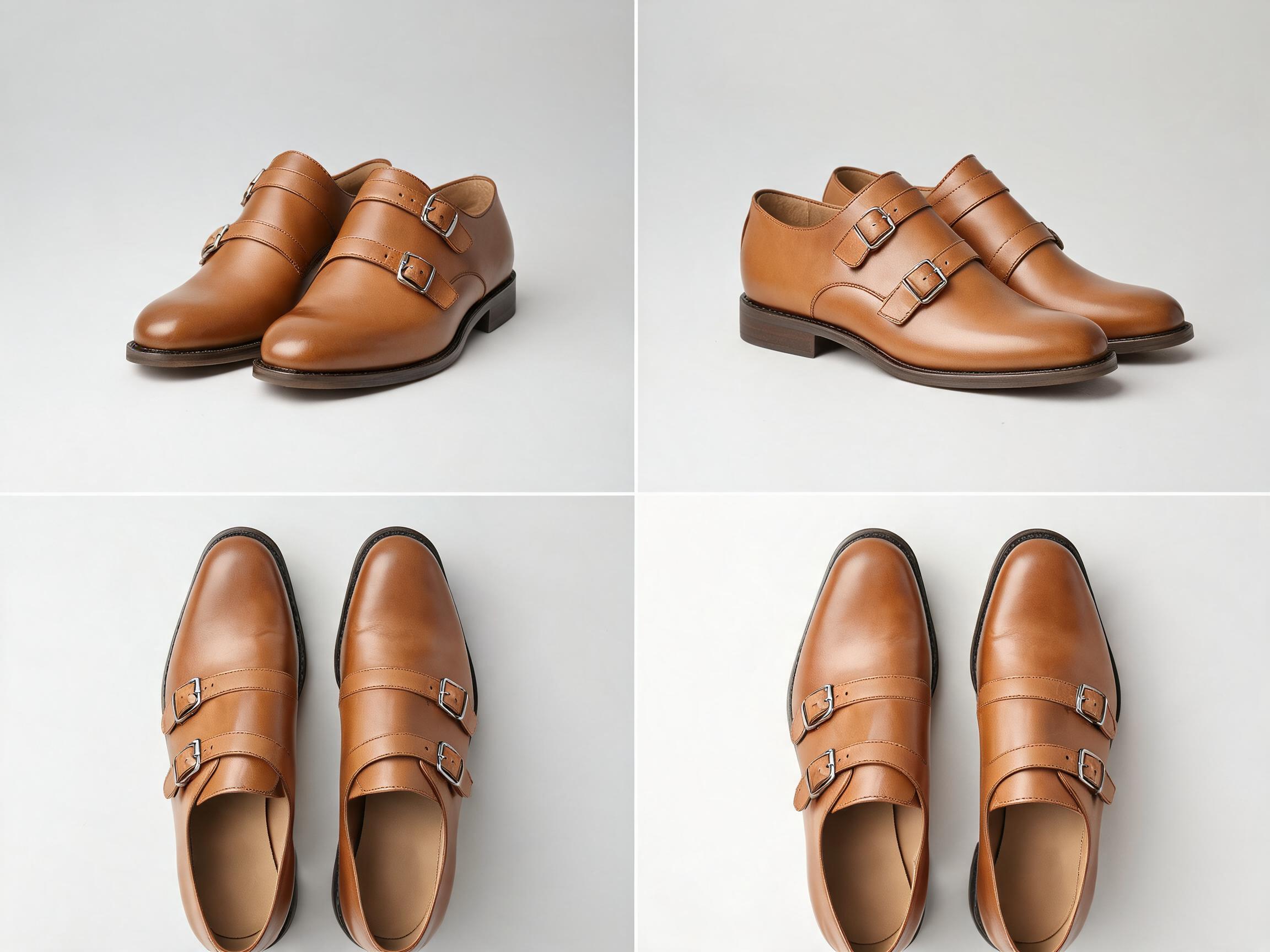
Two straps, two buckles, one above the other. The pattern is more involved: two strap runs, two buckle attachments and more stitching to keep aligned across sizes. Visually the pair carries a stronger hardware presence, which is why double buckle styles are often used as the slightly more expressive option in a formal or smart-casual range. It also raises the number of buckles that must pass the same hardware checks — per pair, per carton, per order.
Neither style is inherently better made. The choice is a range decision: how much hardware your customer wants on the instep, and how much pattern and hardware complexity you want to manage in one style.
A reference double buckle build: Tan Double Monk Strap Shoe
Our own double buckle model is useful as a concrete reference for the specification points a buyer has to pin down. The Tan Double Monk Strap Shoes are built with a burnished full grain calf leather upper, a leather lining and a cushioned leather insole, on a stitched leather and rubber sole with a heel height of about 3 cm.
| Specification | Detail |
|---|---|
| Upper | Burnished full grain calf leather |
| Closure | Double monk strap; metal buckles tested for corrosion resistance |
| Lining | Leather |
| Insole | Cushioned leather |
| Sole | Stitched leather and rubber |
| Heel height | Approx. 3 cm |
| Sizes | EU 39–45 / US 6.5–12 |
| Colors | Tan, brown, black, custom |
| Packaging | Individual box + dust bag + export carton |
| Weight | Approx. 0.7 kg per pair |
| Carton quantity | 20 pairs per carton |
| Customization | OEM/ODM; buckle hardware, sole material, color and embossed logo |
| Quality control | Three-stage inspection incl. buckle strength, color fastness, sole adhesion |
| After-sales | 6-month warranty; 48-hour response |
The weight and carton figures are what a buyer needs for freight estimates, and the size run on both EU and US scales means you can plan a label for either market without re-cutting the pattern. For the double strap style specifically, the two buckles per shoe — four per pair — are the component to keep visible in the inspection plan.
Customization points to specify before ordering
OEM/ODM work on this model can change the buckle hardware, the sole material, the color and the embossed logo. Each of those is a separate decision with its own implications:
- Buckle hardware. Finish and shape drive the look; both need to be named in the spec, and each proposed finish has to pass the same corrosion-resistance check as the standard part. On a double buckle shoe the hardware quantity doubles, so agree it per pair.
- Sole material. The standard build is stitched leather and rubber. If your market needs a different sole, state it explicitly rather than leaving it open — a stitched construction is part of the current specification.
- Color. Tan, brown and black are listed; custom colors are possible. Where color is critical, name the target and ask how color fastness will be checked on that specific finish.
- Logo. Embossed logo is available. Confirm placement and size so the embossing does not interfere with the strap run.
- Packaging. Individual box, dust bag and export carton are the standard. If your retail program needs different packaging, raise it as a separate line item.
Quality checks and what they cover
The three-stage inspection on this model covers buckle strength, color fastness and sole adhesion. Read that list literally: it tells you which failure modes are being checked on this product. Buckle strength matters more on a double buckle style because there are twice as many buckles doing the same job. Color fastness is relevant to burnished leathers, where the finish is the visual selling point. Sole adhesion is a construction check for a stitched leather and rubber sole.
A test records the result under the conditions it was run in. It is not a forecast of how a pair will wear in a specific climate or use pattern, and it does not replace your own acceptance criteria. If your market has retail standards for hardware or color, state them up front so they can be addressed in the inspection scope rather than after the goods are packed.
Questions to settle with the factory
Two commercial numbers have to come from the sales team rather than from an article: the minimum order quantity and the production lead time. Confirm current MOQ and lead time with the sales team before ordering, since these are quoted per order and per specification — a custom buckle finish or a custom color is not the same production run as the standard tan pair.
Beyond those, the questions worth asking before you commit a purchase order:
- Does the size run cover both EU and US labeling, and how should the size label be printed for my market?
- For a custom color, how is color fastness checked on that finish?
- For changed buckle hardware, which finish and shape are being quoted, and is the corrosion-resistance test applied to that part?
- What does the inspection record show for each of the three stages, and can I see it before shipment?
- How are the shoes packed — box, dust bag, carton — and what is the carton weight and count for freight planning?
The straightforward answer to what monk strap shoes are is: lace-free dress shoes closed by a strap and buckle. The sourcing answer is that the buckle count is a pattern decision, a hardware-count decision and a range-positioning decision. Decide which one your assortment needs, put the leather, lining, sole, hardware finish and packaging into a written spec, and confirm MOQ and lead time with the sales team before the order goes in.