
A practical side-by-side comparison of white label footwear and private label footwear with a China factory — how the two models differ in design control, specification ownership, sampling and reorder consistency, plus a decision path and the points to confirm in writing before you commit.
Brand Launch Decision
You have decided to sell footwear under your own name. The next question is which sourcing model fits the brand you are building — and with a China factory, the answer usually sits somewhere between two working models: white label footwear and private label footwear. This article compares them under the same conditions: same buyer, same category, same factory relationship.
Key takeaways
- White label means shipping a factory's proven design under your brand with light customization. Private label means your spec drives design, materials and branding at a deeper level.
- The tradeoff is not quality versus cost. It is speed and proven demand versus differentiation and specification ownership.
- Neither model is the default answer for every brand. The right one follows from how much design control your brand actually needs, and how fast you need a first order.
- Terminology is not standardized. What a supplier calls "private label" may include far less than you assume, so pin down scope in writing.
What the two models mean in factory terms
Strip away the marketing language and both models describe who controls the design and how far the factory's existing product is changed.
White label footwear
The factory already makes the style. It has tooling, patterns, lasts and a repeat production history behind it, and it ships that design under your brand. Customization is real but lighter: your logo on the box, a hangtag, and often your branding on the insole. The shoe itself is the factory's design, so you are buying a proven silhouette rather than a new one.
Private label footwear
Your specification drives the product. You define the design intent, materials, color direction and branding, and the factory develops the shoe against that brief. The line between the two models is not a wall — it is a depth of involvement, and different factories place it in different positions.
That is the practical risk. In some markets "private label" is used loosely for any order carrying a buyer's logo. In others it implies full development from your spec. Before you compare quotes, ask the supplier to list exactly what is included: which elements they change, which they hold fixed, and which are treated as development work.
The comparison, under consistent conditions
The table below assumes one buyer, one category and one factory relationship. The point is not to declare a winner — it is to show what each model asks of you.
| Decision factor | White label | Private label |
|---|---|---|
| Time to first order | Shorter. Development work is lighter because the reference product already exists in production. | Longer. Sample rounds and approvals come before production. |
| Design control | Limited to branding and light finishing on an existing design. | Extends to design intent, materials, color and construction details within the factory's capability. |
| Brand differentiation | Lower on the shoe itself; differentiation comes from your branding and merchandising. | Higher, because the product can carry features and finishes specific to your line. |
| Specification ownership | The factory owns the base specification; you own branding elements. | You drive the specification; the factory translates it into production-ready form. |
| Sample and development work | Typically confirmation of branding placement and finish on a known style. | More rounds: references or sketches become samples, then revisions before sign-off. |
| Reorder consistency | Straightforward — the base style is already a repeat item. | Depends on how completely your specification is documented so a reorder matches the approved sample. |
| Suits this buyer profile | New brands, importers testing demand, retail chains needing a proven look fast. | Brands with a defined design point of view, or buyers building a signature line they will repeat. |
Read the table as a set of dependencies rather than a scorecard. A white label order still requires you to control branding quality and packaging. A private label order still requires the factory to have the capability to execute your brief — design intent you cannot manufacture is not a sourcing advantage.
Where the two models meet: the Black Leather Loafers example
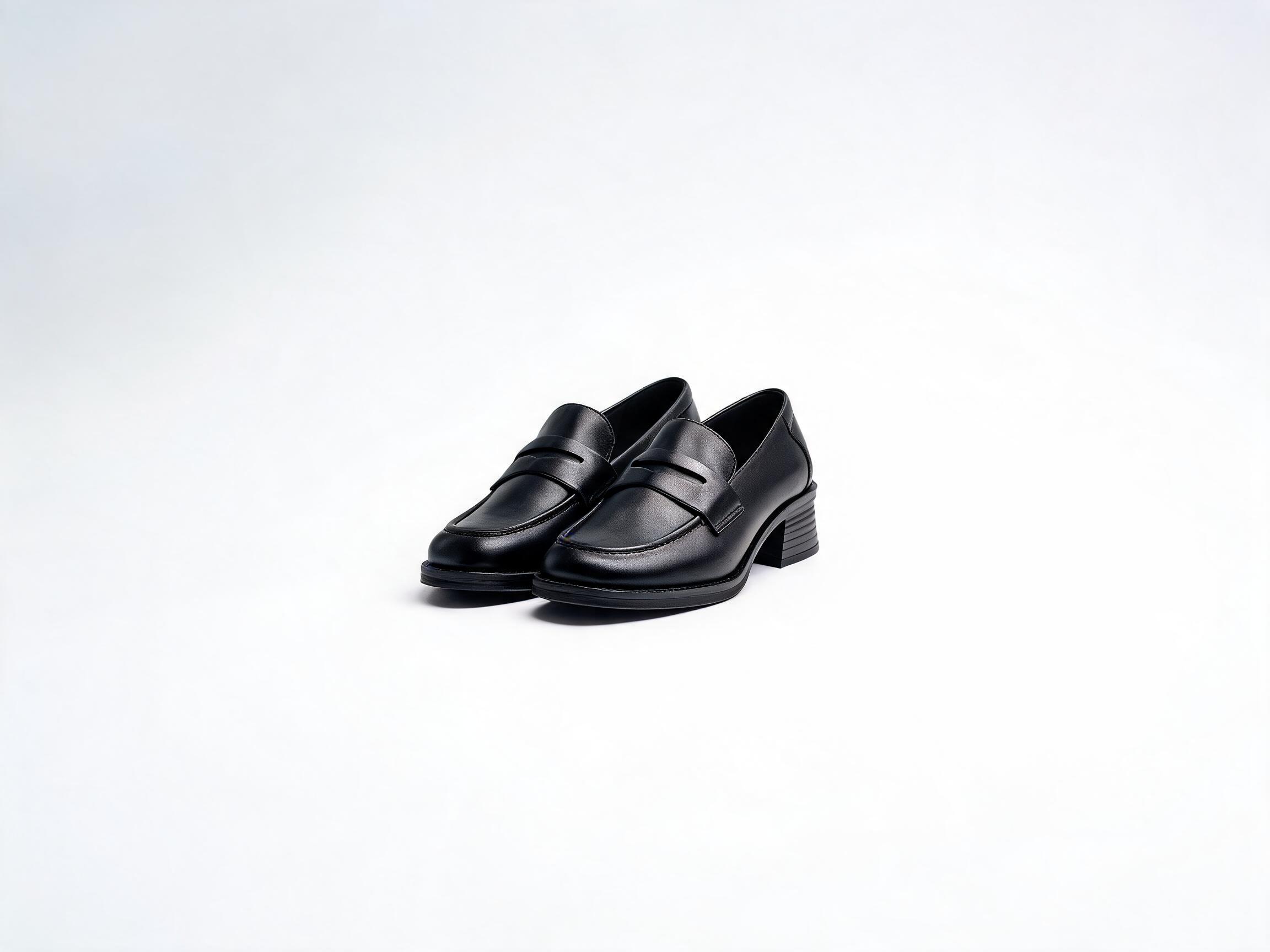
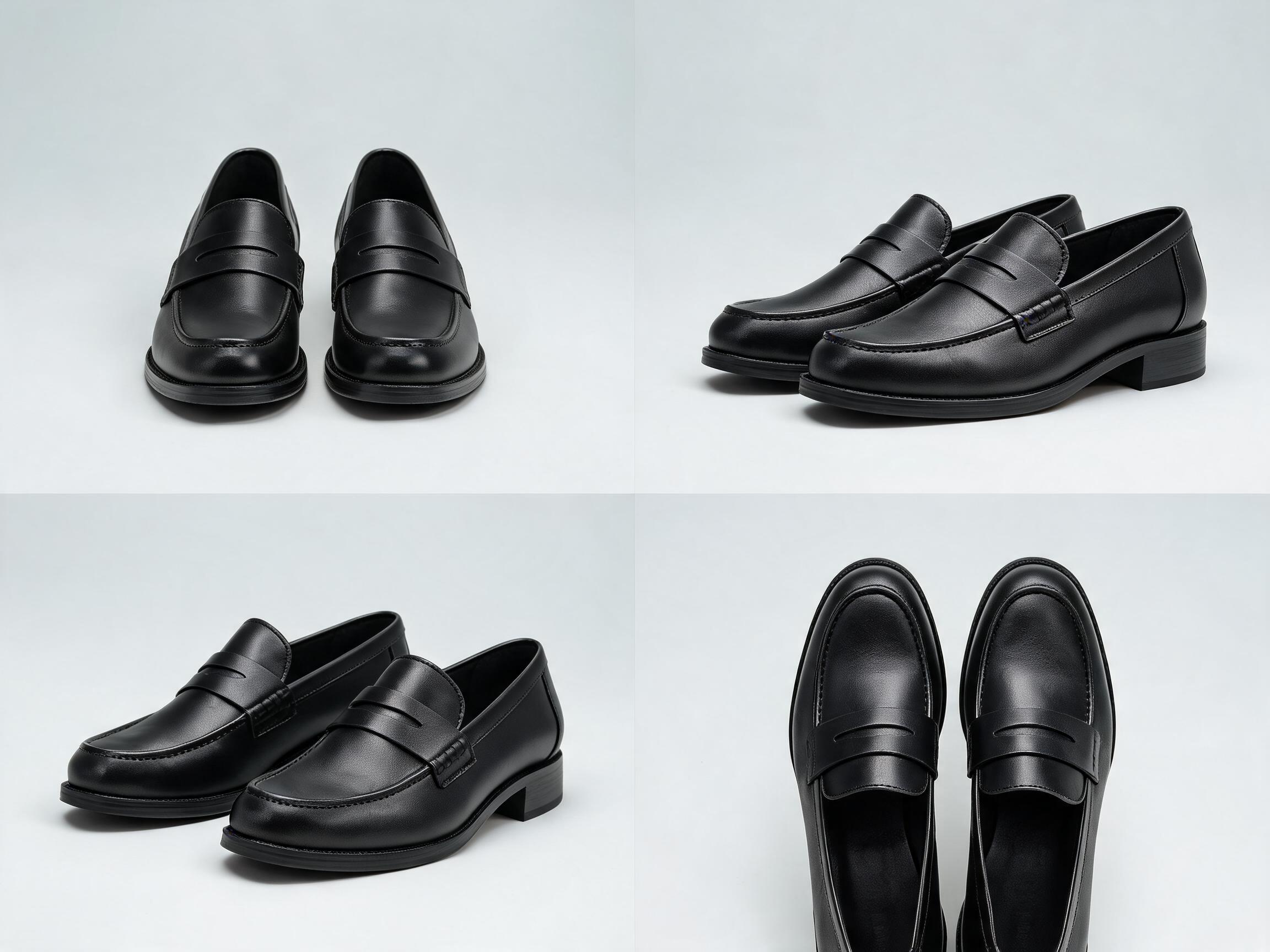
The cleanest way to see the boundary is to look at a style that sits on both sides of it. The Black Leather Loafers are a women's slip-on loafer in polished calf leather, with a penny-strap silhouette, a low block heel of approximately 3 cm, leather lining, a cushioned insole and a rubber anti-slip outsole. Sizes run EU 35–41 / US 5–10, and the standard color range is black, brown and burgundy.
This is a good example because the base loafer already exists as a repeat style. A buyer wanting it under their own brand can go the white label route and take the shoe largely as it stands, adding branded packaging and insole branding.
But the same platform also supports a deeper level of buyer input. Confirmed OEM/ODM options for this model include leather color matching to a Pantone reference, heel height changes, insole branding, sole material changes, metal or fabric trims, and private-label boxes and hangtags. Custom colors outside the standard range are also available as an option.
So the choice is not really "two different shoes." It is how much of that customization list you actually use. A buyer who takes the standard color, standard heel and standard sole, and adds insole branding plus private-label boxes and hangtags, is working close to a white label model. A buyer who specifies a Pantone-matched leather color, changes the heel height and reworks the sole material is working closer to private label — on the same base style.
That is a useful framing for your first conversation with a factory: instead of asking "do you do white label or private label," you can ask which items on the customization list apply to your order, and which of them require development work rather than a straightforward substitution.
A short decision path
Work through the buyer-side questions first. They narrow the model before you ever compare suppliers.
Ask yourself
- Does my brand need a product that looks different from what is already on the shelf, or does it need a credible product fast?
- Will I repeat this style across seasons, or is this a test of demand?
- Do I have a defined design direction — colors, heel height, materials — or only a general category in mind?
- Who on my side can review samples and approve a specification, and does that person have the time a development cycle requires?
- If the product succeeds, do I need to be able to reorder the exact same specification?
Then ask the factory
- Which elements of this model can be changed, and which are fixed?
- For the elements you can change, which are treated as substitutions and which require new development?
- Can you turn our sketches or reference images into a production-ready sample?
- What does your sample process look like from brief to approved sample?
- How will my specification be recorded so a reorder matches what I approved?
You do not need a factory to answer all of these in one reply. You need consistent answers, and you need them in a form you can keep.
What to confirm in writing before committing
Whichever model you choose, the same few items decide whether the order runs smoothly later.
- Scope definition. A written list of what the factory's "white label" or "private label" includes: which design elements they control, which you control, and which count as development work.
- Branding elements. Exactly where your brand appears — insole, box, hangtag, trims — and in what form.
- Specification document. For a private label order especially, the approved specification should be recorded in a document both sides hold, covering materials, color references and construction details.
- Color and material references. Where a Pantone reference is used, state the reference number rather than a color name.
- Approved sample. Confirm what the approved sample represents and that it is retained as the production reference.
- Commercial terms. Minimum order quantity, pricing and lead time differ by supplier and by order. These are not fixed by the model name — confirm the figures that apply to your specific order in writing.
Frequently asked questions
Is white label footwear lower quality than private label?
No. The two models describe design ownership and customization depth, not material or construction grade. A white label order is made on the factory's existing specification; a private label order is made on yours. Quality depends on the specification and the factory's execution in both cases.
Can I start with white label and move to private label later?
Yes, and many brands do. Starting on a proven style lets you test demand and your own branding execution. Moving to private label later means adding specification work — color references, material changes, construction details — on a base you already understand. If you plan to do this, ask the factory early which elements can be changed on the base style.
What counts as private label if my order only changes packaging?
It depends entirely on the supplier's definition. Packaging-only customization is often closer to white label in factory terms, because the shoe itself is unchanged. Clarify with the supplier what they mean, and get the scope in writing rather than relying on the label.
If I use a factory's existing design, can I still specify my own colors?
On a model like the Black Leather Loafers, leather color matching to a Pantone reference is a confirmed option, along with heel height changes, insole branding, sole material changes, metal or fabric trims, and private-label boxes and hangtags. Which of these applies to your order, and how each is handled commercially, should be confirmed with the factory.
Next step
Bring the factory a specific brief: the model you are considering, the elements you want to change, and how you intend to reorder. The Black Leather Loafers are a useful reference point because they sit on the boundary between the two models — the same base style, with a defined list of customization options, can serve either route. Ask which options apply to your order, ask how your specification will be recorded, and put the answers in writing. That single conversation will tell you more about which model fits your brand than any general comparison can.