A process-level guide for importers and distributors vetting wholesale bulk shoes suppliers — how to test real capacity, keep sample and bulk aligned, structure in-line and third-party inspection, and use phased delivery and repeat-order mechanics to protect a bulk commitment.
Supplier Evaluation
A structural shoe order fails slowly. The first samples look right, the deposit clears, and the problems only surface when boxes arrive and left and right pairs no longer match. This guide covers what to verify in a wholesale bulk shoes supplier before money moves, and what to agree in writing so the bulk run stays aligned with the approved sample.
Key takeaways
- Test capacity with a live sample order and a dated delivery commitment, not with a catalogue or a factory floor tour.
- Approve the sample as a written reference — a physical pair plus photographs of the components you care about — so bulk can be measured against something fixed.
- Agree in-line inspection points and third-party inspection rights before the deposit, not after the first complaint.
- Split the bulk order into phased deliveries, and tie repeat orders to the same product lines rather than to best-effort scheduling.
What "capacity" actually means for a wholesale bulk shoes supplier
Buyers searching for wholesale bulk shoes suppliers usually mean one of two things by capacity. The first is output — can this factory produce the volume I need. The second, and the one that causes most disputes, is stability — can it produce that volume at the same quality, on the same schedule, while other customers are also ordering.
A supplier can be honest about output and still fail on stability. The two need separate checks.
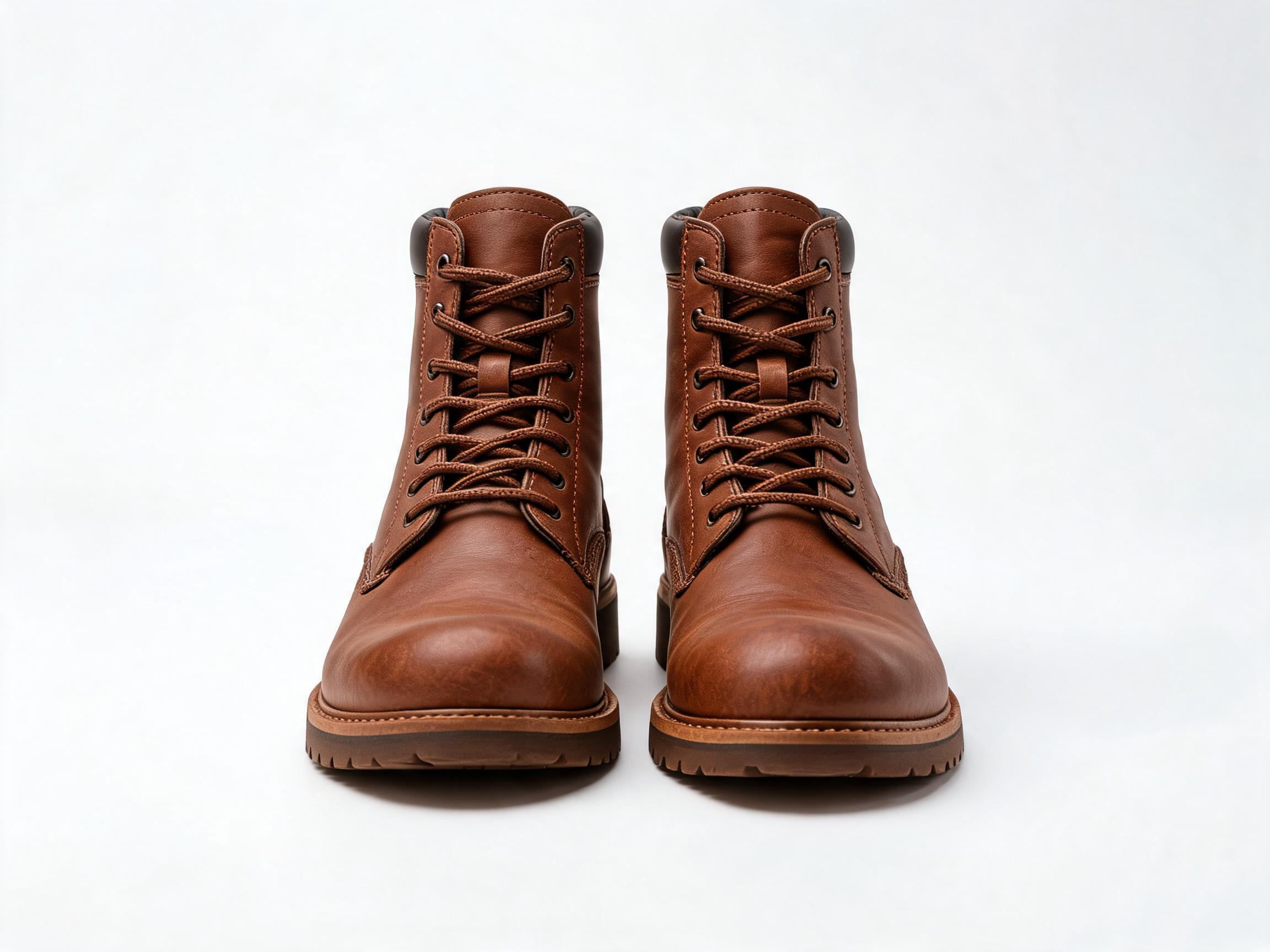
Output is questioned by asking for a commitment in units, in a dated delivery window, for a specific construction. A verbal "yes, no problem" is not an answer. A quotation that states the article, the size range, the delivery term and a date is. For example, a brown leather work boot with oiled full-grain leather, a reinforced toe cap and a lug rubber outsole in EU 39–46 is a different production commitment from a low-top sneaker, and a supplier should be able to quote them separately without mixing them into one generic capacity figure.
Stability is questioned by asking what happens to this order when a peak season arrives. Aurevia's practice is to run dedicated product lines, so repeat styles stay on stable schedules during peak periods. Whether a supplier can offer something similar is a specific question, and it has a specific answer: which line, which season, and what happens to my order if another customer's volume rises.
The pre-deposit evaluation: what to verify and in what order
Before the deposit, work through four layers. Each one should produce a document or a physical proof, not an assurance.
1. Product-level facts in writing
Ask for the construction detail of the exact article you intend to buy. "Genuine leather upper" is not enough. Compare how specific each record is:
| Article | Recorded construction facts to hold the supplier to | Size range |
|---|---|---|
| Brown Leather Work Boots | Oiled full-grain leather; reinforced toe cap; lug rubber outsole (oil- and slip-resistant); breathable textile lining; cushioned anti-fatigue insole; speed-hook lacing | EU 39–46 |
| White Leather Low-Top Sneakers | Full-grain leather upper; breathable textile lining; rubber cupsole; cemented construction | EU 39–45 |
| Black Cap-Toe Oxford Shoes | Full-grain leather; stitched-and-cemented build; hand-finished details | EU 39–45 |
These are the facts a bulk order should be able to reproduce. If the supplier cannot state them at this level for their own product, the bulk run has no reference point.
2. A sample order, treated as a test rather than a formality
Samples are usually treated as a courtesy. Make the sample order do real work. Ask for the sample in the size range you actually sell, in the colourway you intend to repeat, and ask what the supplier changes between sample pairs and bulk pairs. Some changes are legitimate process differences; others are substitutions that shift cost. You want to know which is which before the volume is committed.
Also ask how the supplier handles leather matching. Aurevia cuts from matched hides so that left and right pairs share grain and shade — a detail that matters most in a bulk run, where mismatched pairing appears gradually across cartons rather than in one visible sample.
3. The quality system, described as stages
Ask the supplier to walk you through their inspection stages. A description that names stages and what is checked at each is usable; a description that says "strict quality control" is not.
In Aurevia's process, every bulk order passes three inspection stages:
- Incoming material checks — leather thickness, colour and grain are checked before cutting.
- In-line construction checks — stitching and lasting are monitored while the order is being built, not only at the end.
- Final finished-shoe inspection — symmetry, bonding strength, cleanliness and packing accuracy.
On top of that, random pairs per batch are forefoot flex-tested and checked for colour fastness and sole adhesion. That last set is the part that separates a real QC process from a visual check: flex and adhesion failures are exactly what a buyer discovers weeks after delivery, when the pasteboard has already been recycled.
4. Trade terms and the commercial frame
Aurevia quotes EXW, FOB and CIF. Confirm which term your quotation uses before comparing suppliers, because the same unit price under different terms is not the same cost. This is also the moment to confirm which documents travel with each shipment and who is responsible for the inspection you intend to commission.
Keeping sample and bulk aligned
Sample-to-bulk drift is the most expensive failure in wholesale shoe sourcing, because it is invisible until the goods are on the water. Drift usually enters in four places: hide selection, component substitution, workmanship tolerance and packing.
The way to control it is to convert the approved sample into a reference that survives the sampling stage. Keep the signed sample pair, and add photographs of the details that matter to you — the grain on the vamp, the stitching density on the cap, the outsole edge, the label position. A photograph of a specific defect threshold is a better bulk acceptance criterion than an adjective like "clean" or "neat".
Then ask the supplier to confirm, in writing, what is monitored during production for this article. In-line checks during stitching and lasting are what catch a change before cartons are packed. If you only inspect at the end, you are inspecting an outcome; if the process includes in-line checks, you are inspecting a cause.
Inspection rights: agree them before the deposit
Buyers often request inspection access after a problem appears, when the supplier has every reason to restrict it. Set the terms at the quotation stage. Four points are worth writing down:
- Where and when. Whether inspection happens at the factory before packing, at the port, or both.
- Who. Whether you may appoint a third-party inspection body. Aurevia's practice is that third-party inspection is welcome and inspection reports are shared on request — but do not assume this of every supplier. Ask, and get the answer in writing.
- What is checked. Refer to the reference sample and your photographs. Include the specific technical checks (forefoot flex, colour fastness, sole adhesion) in the inspection scope rather than leaving them to the supplier's own routine.
- What happens if it fails. The result of a failed inspection should be defined in advance: rework, replacement, a delivery adjustment, or a hold. An inspection clause with no consequence clause is a formality.
Phased delivery: a structure that protects both sides
For a first bulk order, phased delivery is the most practical risk control available. Instead of one shipment, split the order into batches delivered against agreed checkpoints. The first batch proves the run; later batches confirm that quality holds once the line has settled into routine.
The structure protects the buyer because the deposit is not exposed to a single unverified shipment. It protects the supplier because acceptance criteria are tested early, when corrections are still cheap.
| Phase | What it proves | What the buyer should check before releasing the next batch |
|---|---|---|
| Approved sample | Construction and finish meet the specification | Signed reference pair, detail photographs, written construction facts |
| First bulk batch | The line reproduces the sample at volume | Inspection report; results of flex, colour fastness and sole adhesion checks; packing accuracy |
| Middle batches | Consistency holds over repeated runs | Batch-to-batch comparison against the reference; left/right grain and shade matching |
| Repeat order | The same product line and schedule are available again | Confirmation of line allocation and delivery window before the deposit |
The last row is where many sourcing relationships quietly weaken. A supplier that produced a good first order may place your repeat style onto a shared line in the next peak season. Ask directly whether the style will be run on the same line, and what happens to your delivery window if their order book fills.
Repeat-order mechanics: what to lock in before the second order
By the second order, the relationship should be documented rather than remembered. Three items make the biggest difference:
- Style continuity. Confirm that the reference sample and specification stay attached to the style, so a new production cycle does not restart the learning curve.
- Line allocation. Dedicated product lines are how repeat styles keep stable schedules during peak season. Ask for that allocation to be confirmed per order window.
- Inspection continuity. Ask for the same inspection stages and the same technical checks on the repeat, and ask for the reports. A supplier whose QC is genuinely routine will not find this difficult; one whose QC was assembled for the first order will.
Aurevia supplies markets in Europe, North America and the Middle East, and quotes EXW, FOB and CIF — practical points to confirm when repeat volumes are being planned around regional delivery windows.
Common mistakes that turn a bulk order into a dispute
- Treating the sample as marketing material. If you did not sign it and photograph the details, you have no reference for the bulk run.
- Accepting a capacity figure without a date. Volume without a delivery window is not a commitment.
- Leaving inspection rights out of the quotation. Access negotiated after a problem is access negotiated from weakness.
- Comparing prices across different trade terms. EXW and CIF quotations are not comparable without adjustment.
- Letting the first order be the only test. Repeat-order stability is a separate question, and it needs to be asked before the second deposit.
FAQ
How do I check a supplier's real capacity before placing a bulk order?
Place a live sample order against a dated delivery commitment and a written specification, then ask which production line will run your volume and how that line is scheduled during peak season. A supplier who answers those two questions specifically is showing you a process; a supplier who answers with a total capacity number is showing you a brochure.
Is a third-party inspection always available?
It depends on the supplier. Aurevia's practice is that third-party inspection is welcome and inspection reports are shared on request. For any supplier, including this one, confirm the arrangement in writing before the deposit and define what happens if the inspection fails.
What should the sample and the bulk order share?
Construction and finish, measured against a signed reference pair and detail photographs. For leather footwear, that includes left/right grain and shade matching, which is where bulk runs most often drift from a single approved sample.
Why split a first bulk order into phases?
It tests the run while corrections are still cheap and limits how much deposit is exposed to an unverified first shipment. Each phase should have a defined set of checks that release the next batch.
Next step
If you are evaluating a first or repeat bulk order, start with the specification. The three reference styles above show the level of construction detail Aurevia commits to in writing:
- Brown Leather Work Boots — oiled full-grain leather, reinforced toe cap, EU 39–46
- White Leather Low-Top Sneakers — full-grain leather, rubber cupsole, EU 39–45
- Black Cap-Toe Oxford Shoes — full-grain leather, stitched-and-cemented, EU 39–45
Send the style, the size mix and your target delivery window, and ask for a quotation that states the trade term, the delivery date and the inspection arrangement. Those three lines are what make a capacity claim checkable.